📌 In this guide20 sections
- A short history of Hampi
- Best time to visit Hampi
- How to reach Hampi
- A 3-day Hampi itinerary
- Best sunrise and sunset points
- Adventure in Hampi
- Getting around Hampi
- Where to stay
- Food in Hampi
- How much does a Hampi trip cost?
- Hampi with children
- Festivals and events
- Photography tips for Hampi
- A day trip to Badami, Aihole and Pattadakal
- Who this trip suits
- What to pack
- Hampi travel tips and mistakes to avoid
- Combining Hampi with other destinations
- Plan your Hampi trip with The Vacation Code
- Frequently asked questions
Every Hampi travel guide should begin at dawn on Matanga Hill. You climb the rough rock steps in the dark, torch in hand, and settle on the summit as the first light spreads across an extraordinary landscape: an ocean of honey-coloured granite boulders, some the size of houses, balanced impossibly on top of each other, with the towers of ancient temples rising between banana plantations and the silver curve of the Tungabhadra River. As the sun appears, the whole world turns gold. Five hundred years ago, this was the capital of one of the greatest empires in Indian history.
Hampi, in central Karnataka, was the heart of the Vijayanagara Empire, which ruled much of southern India from the 14th to the 16th centuries. At its height, travellers from Persia and Portugal described it as one of the largest and richest cities in the world, with markets selling diamonds and pearls by the heap. Today its ruins, spread across more than 25 square kilometres, form a UNESCO World Heritage Site, and the mix of history, dramatic scenery and laid-back village life makes it one of India's most magical destinations.
This Hampi travel guide covers the history, the best time to visit, how to get there, a 3-day itinerary, sunrise and sunset spots, getting around, where to stay, food, costs and tips.
A short history of Hampi
The Vijayanagara Empire was founded in 1336 by the brothers Harihara and Bukka, and reached its golden age under Krishnadevaraya in the early 16th century, when art, literature, architecture and trade flourished. The city was built around sacred sites linked to the Ramayana: Hampi is identified with Kishkindha, the monkey kingdom of Sugriva and Hanuman. In 1565, after the Battle of Talikota, the capital was sacked by an alliance of Deccan sultanates and abandoned, leaving its temples and palaces to the boulders and the centuries.
Best time to visit Hampi
- October to February: the best season, with pleasant days and cool evenings. December and January are the busiest months.
- March to May: very hot, often above 38°C; sightseeing is best at dawn and dusk.
- June to September: monsoon, with green landscapes, full rivers and fewer tourists, but coracle rides may be suspended when the river is high.
- Hampi Utsav: a cultural festival of music, dance and light shows among the ruins, usually held in the cooler months; check dates each year.
How to reach Hampi
- By train: the nearest major station is Hosapete (Hospet), about 13 kilometres away, with trains from Bengaluru, Hyderabad and Goa. The overnight train from Bengaluru is popular.
- By air: the small Jindal Vijaynagar airport at Toranagallu has limited flights; Hubballi and Bengaluru airports have more options.
- By road: Hampi is about 340 kilometres from Bengaluru, roughly six to seven hours by car or overnight bus.
A 3-day Hampi itinerary
Day 1: The Sacred Centre and Hemakuta Hill
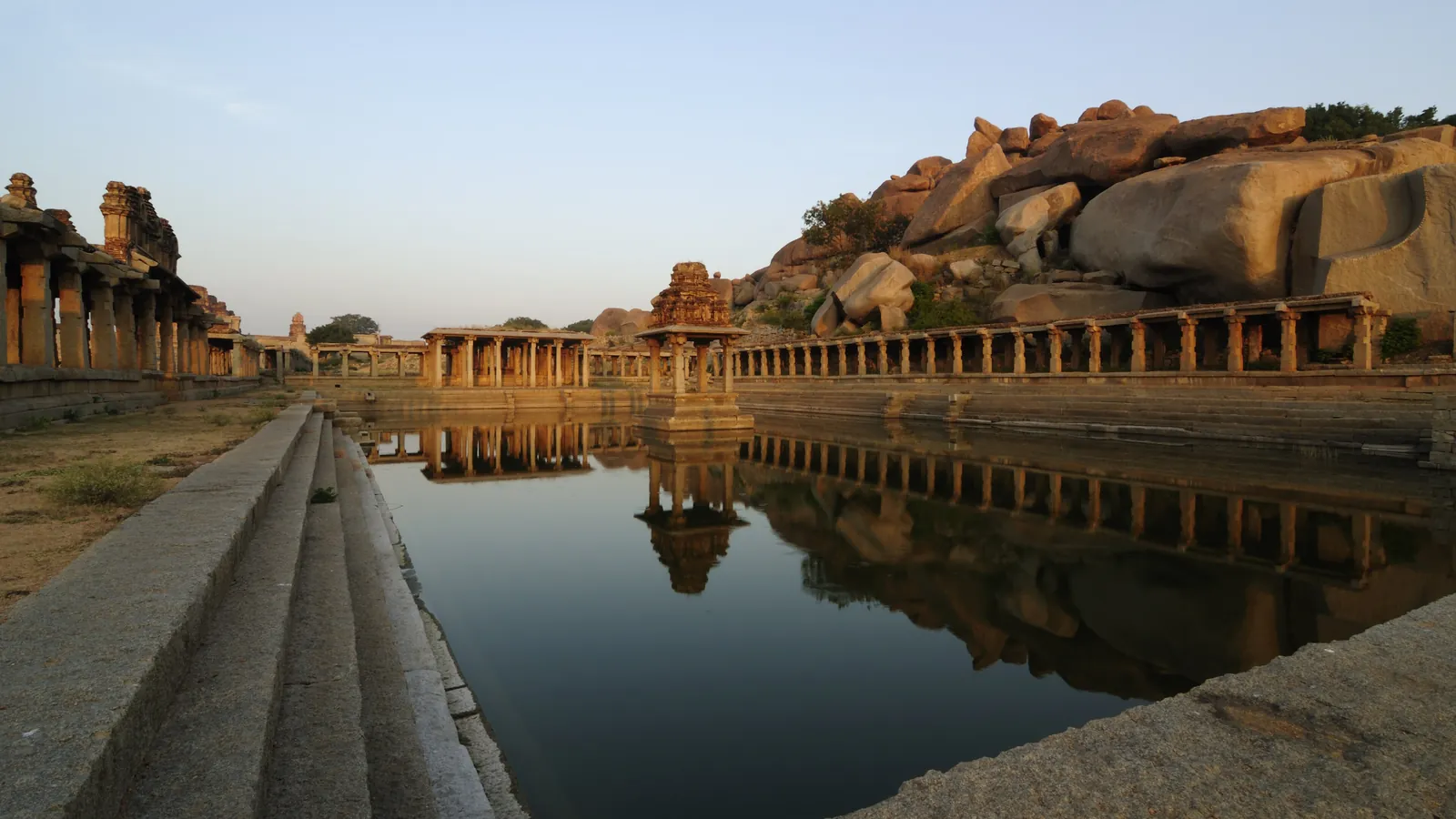
Start at the Virupaksha Temple, a living temple dedicated to Lord Shiva, with origins even older than the empire and a towering gopuram about 50 metres high. Inside, look for a small dark chamber where light passing through a hole projects an inverted image of the gopuram onto the wall, like a natural pinhole camera. Walk along the old Hampi Bazaar, lined with stone pavilions where traders once sold precious goods.
Climb Hemakuta Hill, dotted with small early temples, to watch the sunset over the Virupaksha Temple and the boulder landscape. Visit the giant monolithic statues of Kadalekalu Ganesha and Sasivekalu Ganesha on the slopes.
Day 2: The Royal Centre and Vittala Temple
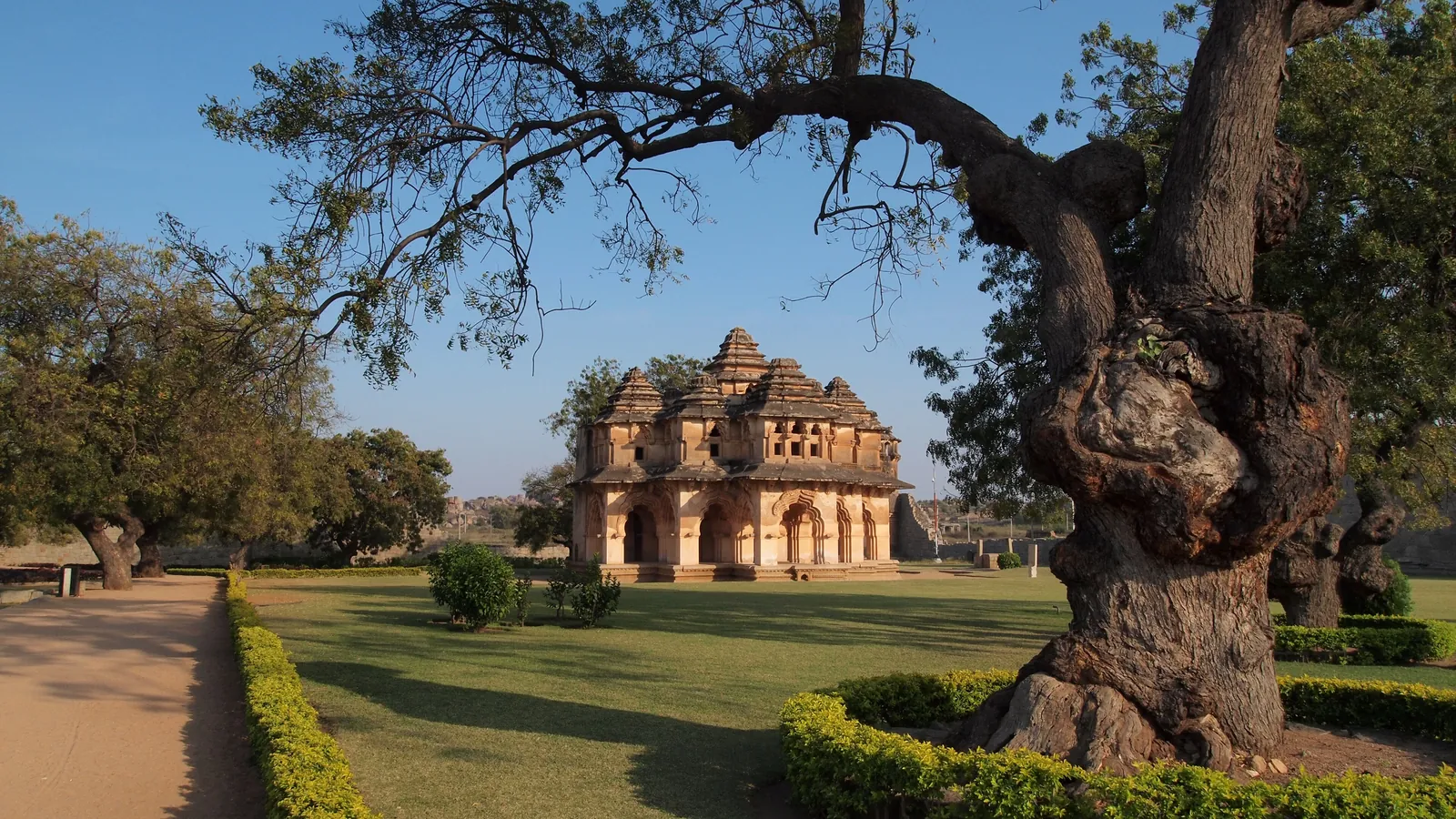
Rent a bicycle or scooter and head to the Royal Centre. See the Lotus Mahal, a graceful pavilion blending Hindu and Islamic architecture, the Elephant Stables, a long building with domed chambers for the royal elephants, the Queen's Bath, the Mahanavami Dibba, a great platform where kings watched festivals, and the Hazara Rama Temple, with walls carved with scenes from the Ramayana.
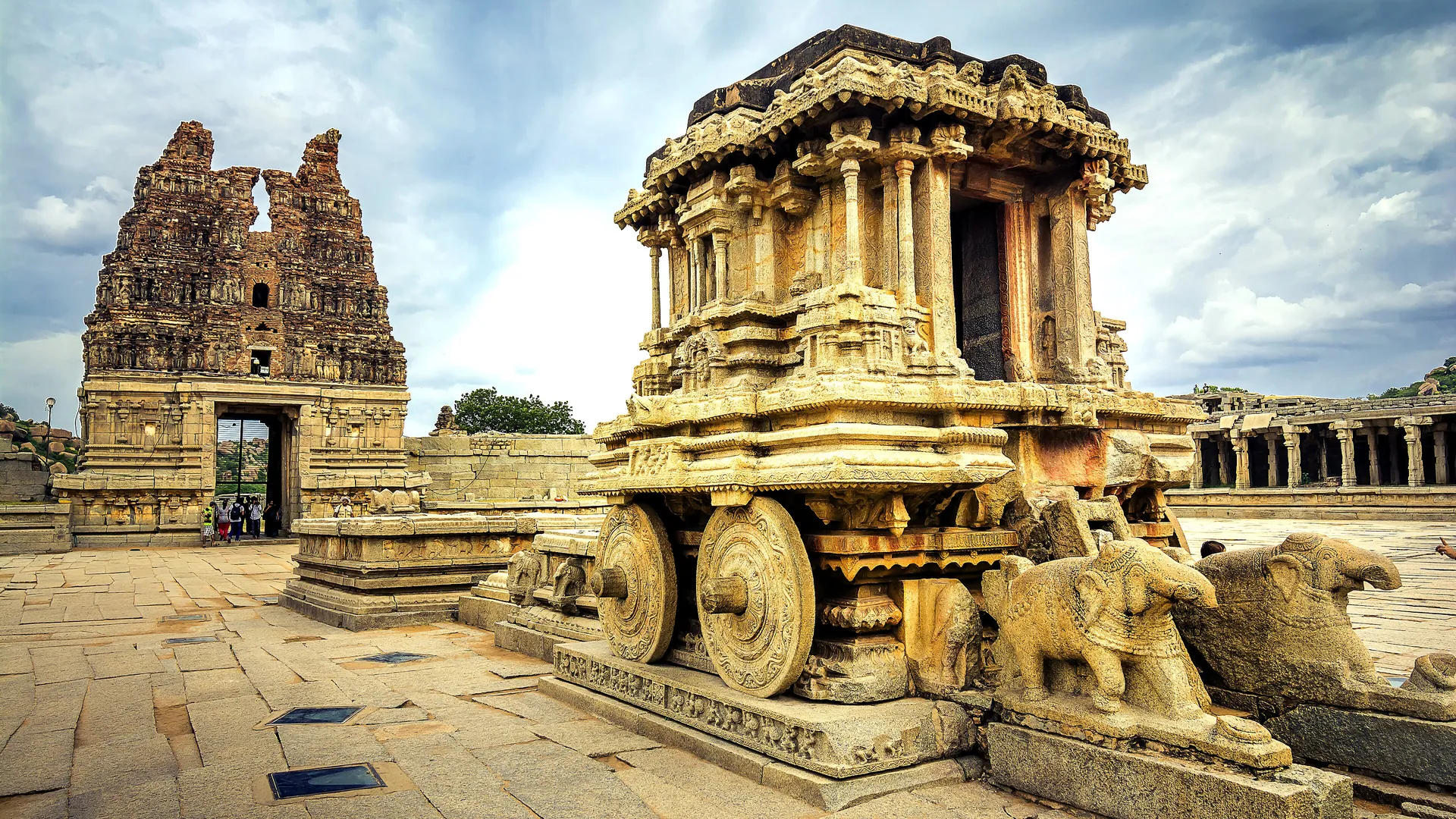
In the afternoon, visit the Vittala Temple, the finest monument in Hampi. Its famous stone chariot, a shrine to Garuda carved in the shape of a temple car, appears on India's ₹50 note, and its musical pillars were said to produce musical notes when tapped; they are now protected and cannot be touched. Walk back along the riverside path past ruined shrines and the King's Balance.
Day 3: Across the river and Anjanadri Hill
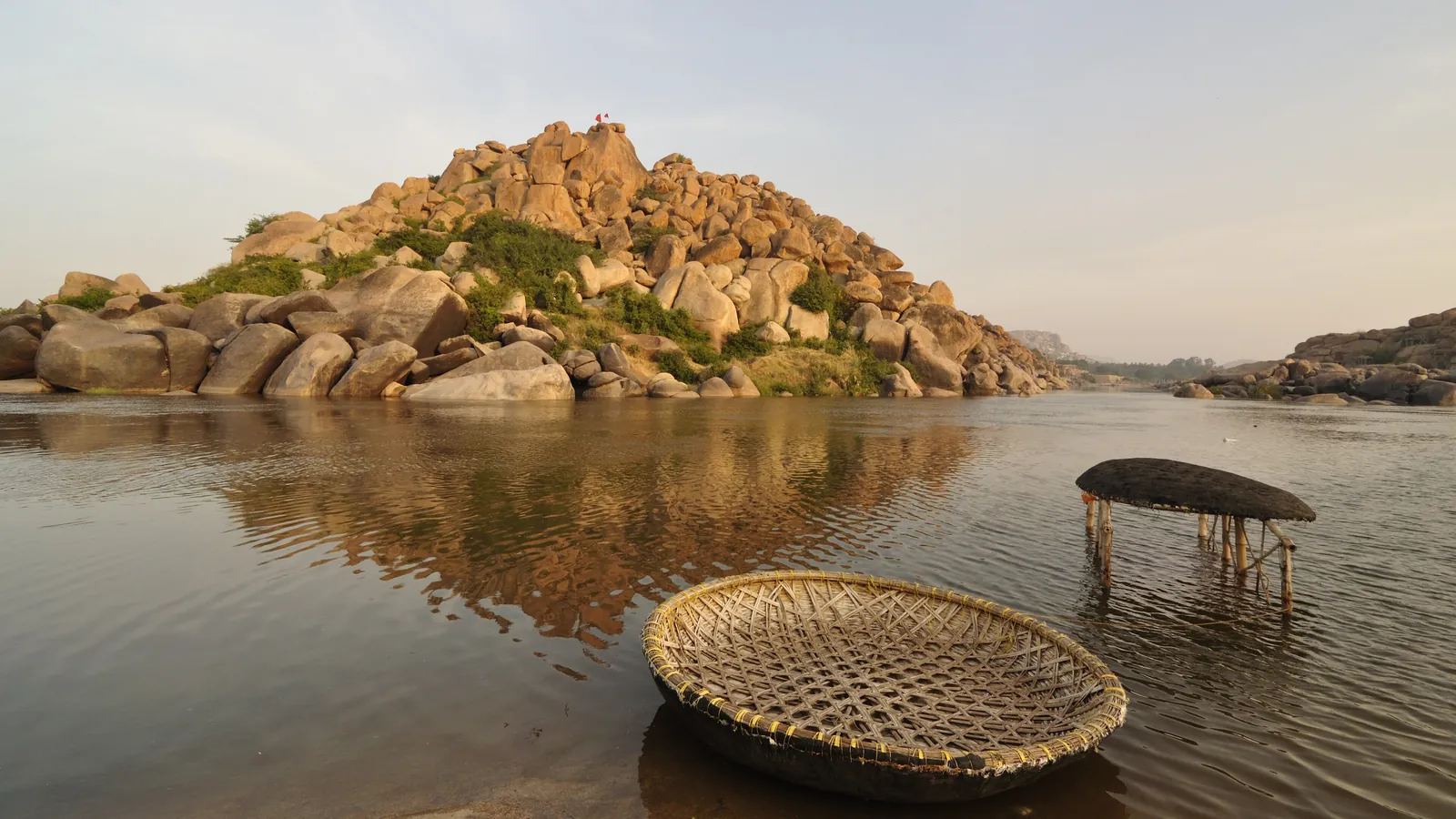
Cross the Tungabhadra by boat or bridge to the Anegundi side, a quieter area of villages, paddy fields and older ruins. Climb about 575 steps up Anjanadri Hill, believed by many to be the birthplace of Lord Hanuman, for a spectacular sunset view over the river, rice fields and boulders. Relax at Sanapur Lake, surrounded by boulders, and take a coracle ride, a round bamboo boat spun gently by local boatmen.
Best sunrise and sunset points
- Matanga Hill: the classic sunrise with views over the whole site.
- Hemakuta Hill: easy access, great for sunset over Virupaksha.
- Anjanadri Hill: a stunning sunset over the river and paddy fields.
- Malyavanta Hill: quieter, with a Rama temple at the top.
- Sanapur Lake: peaceful sunsets among the boulders.
Adventure in Hampi
Hampi is one of India's top bouldering destinations, attracting climbers from around the world to its granite formations. Local operators rent crash pads and guide beginners. Cycling through the ruins, cliff jumping at the lakes (only where safe and permitted) and coracle rides add to the fun.
Getting around Hampi
- Bicycles: the best way to explore at your own pace; electric bicycles are also available.
- Scooters and mopeds: for longer distances, with a valid licence and helmet.
- Auto-rickshaws: can be hired for a full day of sightseeing.
- Battery cars: run between some monuments, such as the Vittala Temple.
- Walking: the riverside trail between Virupaksha and Vittala is beautiful.
Where to stay
- Hampi village: guesthouses near the Virupaksha Temple; simple and close to the sights.
- Anegundi and Sanapur: quieter homestays and boutique resorts among paddy fields and boulders.
- Hosapete: larger hotels, about 13 kilometres away.
- Heritage resorts: a few luxury properties built in traditional style near Kamalapura.
Food in Hampi
Hampi is a vegetarian town around the temple area, and alcohol is generally not served near the sacred centre. Enjoy South Indian breakfasts of idli, dosa and upma, North Karnataka meals with jolada rotti (sorghum flatbread) and ennegai (stuffed brinjal curry), and relaxed cafes serving Israeli, Italian and continental food across the river. Drink fresh coconut water and sugarcane juice to stay cool.
How much does a Hampi trip cost?
- Train from Bengaluru: ₹400 to ₹2,000 each way depending on class.
- Guesthouses: ₹1,000 to ₹3,000 per night; boutique resorts ₹5,000 and up.
- Bicycle or scooter rental: ₹150 to ₹500 per day.
- Auto-rickshaw for a day: ₹1,200 to ₹2,000.
- Entry fees: a combined ticket covers Vittala Temple, Lotus Mahal and Elephant Stables.
- Food: ₹500 to ₹1,000 per person per day.
A 3-day Hampi trip typically costs ₹8,000 to ₹20,000 per person, including travel from Bengaluru, stay, transport and food.
Hampi with children
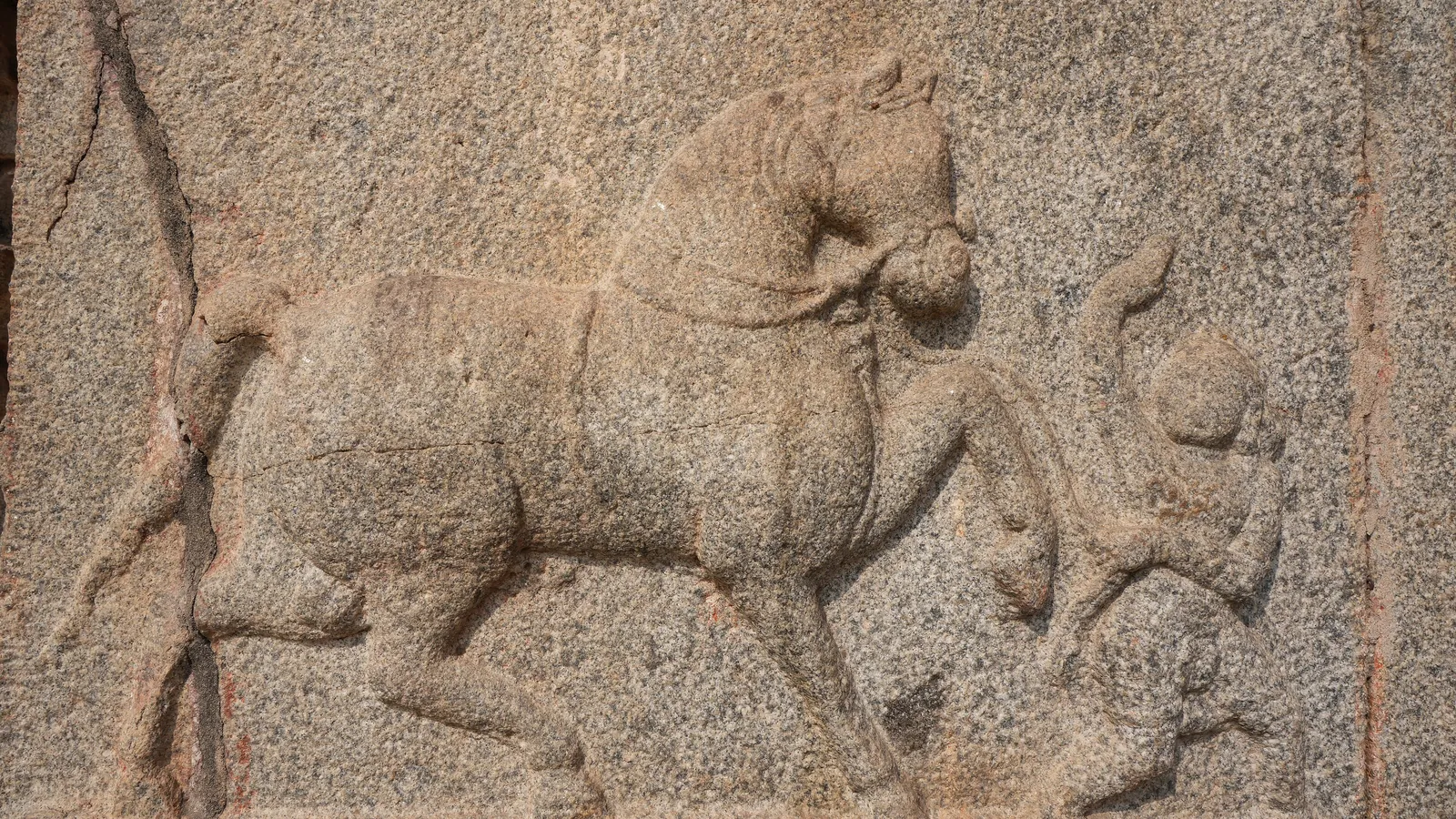
Children love Hampi's giant boulders, coracle rides and stories of kings, elephants and the monkey kingdom of the Ramayana. Plan short sightseeing sessions in the morning and late afternoon, use an auto-rickshaw rather than cycling long distances with young children, and let them spot the carved animals on temple walls. The Elephant Stables and the stone chariot are always favourites.
Festivals and events
The Hampi Utsav, organised by the Karnataka government, brings music, classical dance, puppet shows and light-and-sound performances to stages set among the ruins, with the monuments lit up at night. The Virupaksha Temple celebrates its own festivals, including a chariot festival in spring, when a huge wooden chariot is pulled through the bazaar by devotees. Check dates before you travel, as accommodation fills up quickly.
Photography tips for Hampi
- Shoot the boulders at sunrise and sunset, when the granite glows orange.
- Use the arches and pillars of temple halls to frame distant towers.
- Visit the Vittala Temple at opening time for photos without crowds.
- Carry a wide-angle lens for temple complexes and a zoom for distant hilltop shrines.
- Drones require permission and are restricted at protected monuments.
A day trip to Badami, Aihole and Pattadakal
About three hours from Hampi, three sites trace the early history of South Indian temple architecture. Badami has four rock-cut cave temples from the 6th century, carved into red sandstone cliffs above a lake. Aihole, often called the cradle of Indian temple architecture, has more than a hundred early temples, including the unusual apsidal Durga Temple. Pattadakal, a UNESCO World Heritage Site, shows northern and southern styles side by side. Hire a car for a long day trip, or stay overnight in Badami.
Who this trip suits
History and architecture lovers can spend days exploring. Backpackers and friends love the cafes, cycling and sunsets. Couples enjoy the boutique resorts and quiet sunsets. Families find the stories of the Ramayana and kings fascinating for children, though the heat and walking require planning. Photographers find Hampi endlessly photogenic.
What to pack
- Light, breathable clothing that covers shoulders and knees for temples.
- A wide-brimmed hat, sunglasses and sunscreen.
- Comfortable walking shoes and sandals that are easy to remove at temples.
- A reusable water bottle; you will need lots of water.
- A torch for sunrise climbs.
Hampi travel tips and mistakes to avoid
- Do not try to see everything in one day. Hampi deserves at least two to three days.
- Start early. Midday heat is intense, especially from March onwards.
- Hire a guide for the Royal Centre and Vittala Temple to understand the history; look for licensed guides.
- Respect the monuments: do not climb on ruins, carve names or touch the protected musical pillars.
- Carry cash, as ATMs are limited near the sites.
Combining Hampi with other destinations
Hampi fits well into a longer trip through Karnataka and Goa. Combine it with Badami, Aihole and Pattadakal, the cave temples and early Chalukyan monuments about three hours away, or head west to Goa and Gokarna. Read our Gokarna trip guide and offbeat Goa guide.
Plan your Hampi trip with The Vacation Code
This Hampi travel guide is your key to exploring one of India's most spectacular heritage sites. Our team can plan transport, stays and guides. Explore our Chikmagalur trek and Coorg coffee estate retreat for more of Karnataka, read about unreal places in India, or browse all our tours.
Frequently asked questions
What is the best time to visit Hampi?
October to February is the best time, with pleasant weather. March to May is very hot, and the monsoon from June to September is green but coracle rides may be suspended.
How many days are enough for Hampi?
Two to three days is ideal to explore the Sacred Centre, the Royal Centre, the Vittala Temple, sunrise and sunset points, and the Anegundi side across the river.
How do I reach Hampi from Bengaluru?
Take an overnight train or bus from Bengaluru to Hosapete, about 13 kilometres from Hampi, or drive about 340 kilometres.
What is Hampi famous for?
Hampi is famous for the ruins of the Vijayanagara Empire, including the Vittala Temple's stone chariot, the Virupaksha Temple, the Lotus Mahal and its dramatic boulder landscape.
Which is the best sunrise point in Hampi?
Matanga Hill offers the most famous sunrise view over the ruins and boulders. Hemakuta Hill and Anjanadri Hill are popular for sunset.
How much does a Hampi trip cost?
A 3-day Hampi trip typically costs 8,000 to 20,000 rupees per person including travel from Bengaluru, stay, local transport and food.
Is the stone chariot of Hampi on an Indian currency note?
Yes. The stone chariot at the Vittala Temple appears on the back of India's 50-rupee note.