📌 In this guide14 sections
- Why a Japan Korea tour works so well
- Visas for a Japan Korea tour
- Best time for a Japan Korea tour
- The 12-day Japan Korea tour route, day by day
- Getting around Japan and Korea
- Vegetarian and Indian food in Japan and Korea
- Etiquette tips for Japan and Korea
- Who this trip suits
- How much does a Japan Korea tour cost?
- Practical tips for your Japan Korea tour
- What to pack
- Mistakes to avoid
- Plan your Japan Korea tour with The Vacation Code
- Frequently asked questions
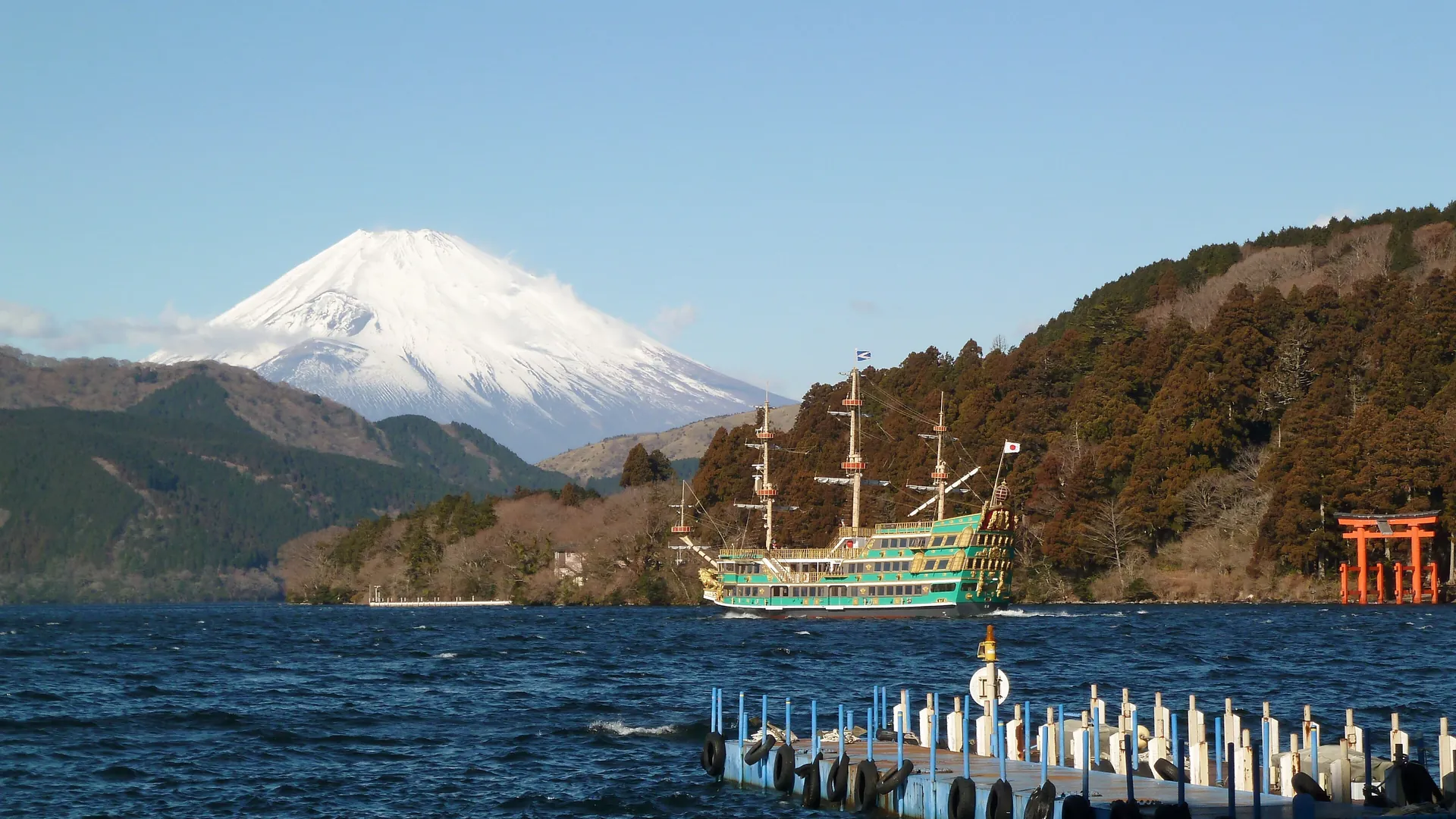
A Japan Korea tour is two journeys in one. On the sixth morning you stand on the shore of Lake Ashi in Hakone as a replica pirate ship glides across the water, a red torii gate floats at the edge of the forest, and, if the clouds are kind, the snow-capped cone of Mount Fuji appears above the hills like a painting. Five days later you are in Seoul, walking through the gates of a 14th-century royal palace as a group of teenagers in rented silk hanbok take selfies, while a K-pop song drifts out of a cafe across the road.
Japan and South Korea are neighbours, but they feel remarkably different. Japan is quiet, precise and deeply traditional beneath its high-tech surface. Korea is energetic, warm and fast-moving, with a pop culture that has conquered the world. Seeing both on one trip makes each more interesting, and with a short flight of about two hours between Tokyo and Seoul, it is easy to do.
This guide covers everything Indian travellers need to know: the two visas and the order to apply for them, the best seasons, a detailed twelve-day route, the bullet train and other experiences you should not miss, how to eat well as a vegetarian, what everything costs, and the etiquette that will help you feel at home in both countries.
Why a Japan Korea tour works so well
- Contrast: ancient temples and shrines in Kyoto and Nara, then royal palaces and hanok villages in Seoul. Tokyo's order and calm, then Seoul's buzz.
- Efficiency: both countries have superb public transport, spotless cities and excellent safety, so you see a lot without stress.
- Short hop between them: Tokyo to Seoul is roughly a two to two and a half hour flight.
- Something for everyone: history, food, nature, shopping, anime, K-dramas, theme parks and technology.
- Great seasons: both countries are spectacular in spring blossom and autumn colour.
Visas for a Japan Korea tour
Indian passport holders need a visa for both countries, and both must be arranged before you leave India.
Japan visa
Japan has made the process much simpler for Indian tourists. Ordinary passport holders can now apply for a single-entry short-term tourist visa through the online JAPAN eVISA system, for stays of up to 90 days, without a sticker in the passport. Applications can be made up to three months before travel, and the consular fee is modest. The traditional route through VFS Global remains available. Documents typically include your passport, photograph, bank statements, income tax returns, a day-by-day itinerary and hotel or tour bookings.
South Korea visa
India is not on Korea's visa waiver list, and the K-ETA does not apply to Indian passport holders, so you need a regular tourist visa. Applications are submitted through authorised visa centres in several Indian cities. For short single-entry tourist visas, the fee is around ₹3,600 plus a service charge of roughly ₹1,100, and standard processing typically takes about ten working days, with faster options available at extra cost.
Order matters: since both visas are stamped or issued against the same passport, plan your timeline so that both are in hand at least two weeks before departure. We usually recommend starting the Korean application first, as it takes longer and needs your passport. Our team shares the exact document checklist and itinerary letters for both.
Best time for a Japan Korea tour
- Late March to mid-April (spring): cherry blossom season. Japan's sakura usually peaks in Tokyo, Kyoto and Osaka in the last week of March and first week of April, and Seoul's blossoms follow a little later. The most beautiful and most expensive time; book months ahead. See our Japan cherry blossom guide for the details.
- May: pleasant, green and a little quieter, though Japan's Golden Week holidays in late April and early May are very busy.
- June to August (summer): hot and humid, with the rainy season in June and July in both countries, and typhoons possible from August. Good for festivals, but tiring for sightseeing.
- October to November (autumn): the second great season. Crisp weather and blazing red and gold maple leaves in Kyoto, Hakone and Seoul's palaces.
- December to February (winter): cold, often below freezing in Seoul, but clear skies give the best views of Mount Fuji, and winter illuminations light up gardens such as Nabana no Sato.
The 12-day Japan Korea tour route, day by day
This is the route of our Best 12 Days Japan and Korea Delights tour, which travels west to east across Japan before flying to Seoul.
Day 1: Arrival in Osaka
Land at Kansai International Airport, built on an artificial island in Osaka Bay, and transfer to your hotel. Osaka is Japan's food capital and a relaxed, friendly city, a gentle introduction to the country. Rest, or step out to the nearest convenience store, a konbini, to discover one of Japan's great everyday pleasures.
Day 2: Hiroshima and Miyajima by bullet train
Your first ride on the shinkansen, Japan's bullet train, takes you from Osaka to Hiroshima in about an hour and a half at speeds approaching 300 kilometres an hour, so smooth that a coin balanced on the windowsill will not fall. In Hiroshima, visit the Peace Memorial Park and museum and the Atomic Bomb Dome, the skeletal ruin preserved as a UNESCO World Heritage Site in memory of 6 August 1945. It is a moving, sobering visit, and an essential one.
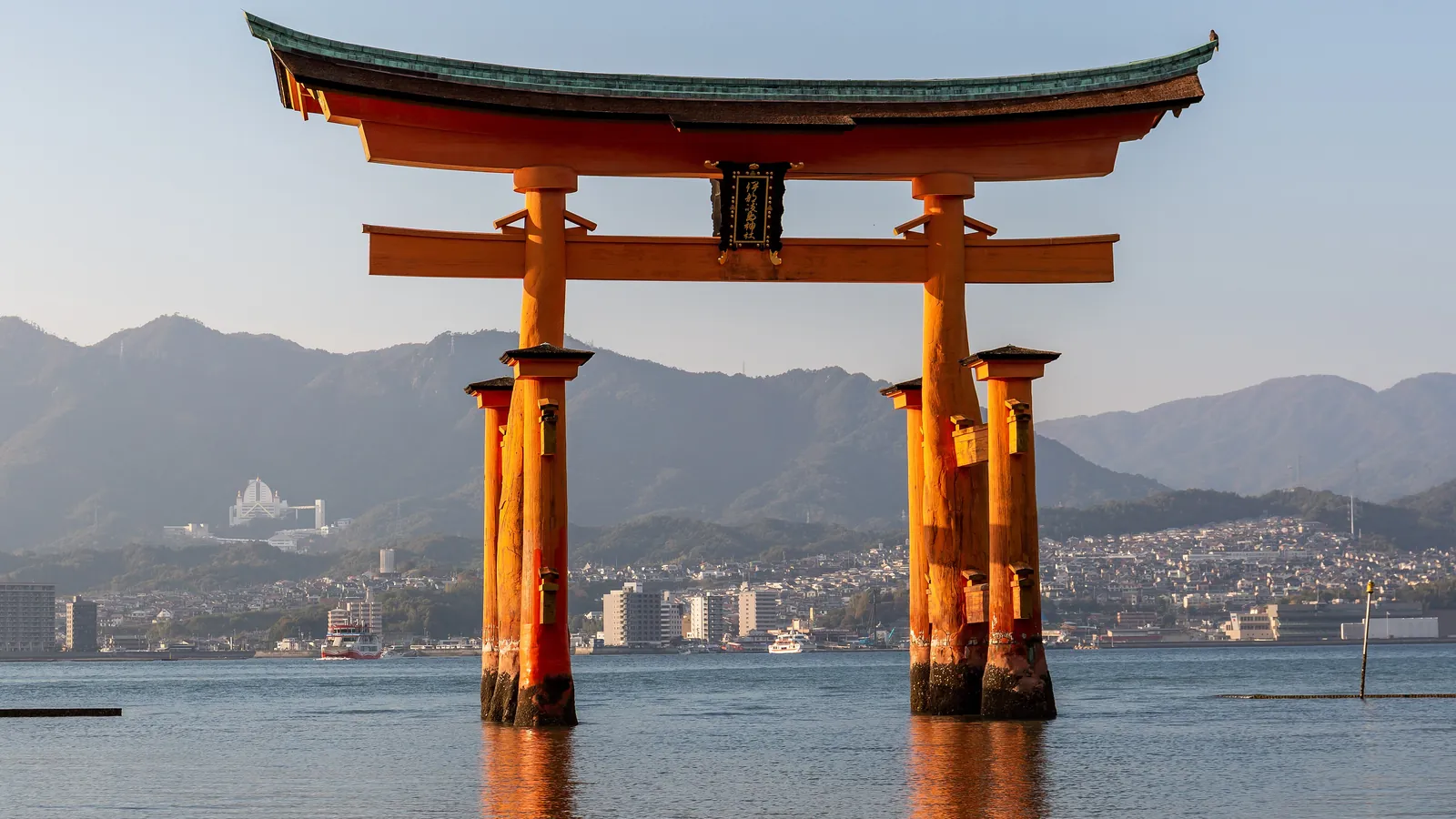
Then take the ferry to Miyajima island to see the Itsukushima Shrine and its famous vermilion torii gate, which appears to float on the sea at high tide. Tame deer wander the streets; keep your paper maps and snacks out of reach. Return to Osaka by bullet train.
Day 3: Osaka Castle, the Umeda Sky Building and Dotonbori
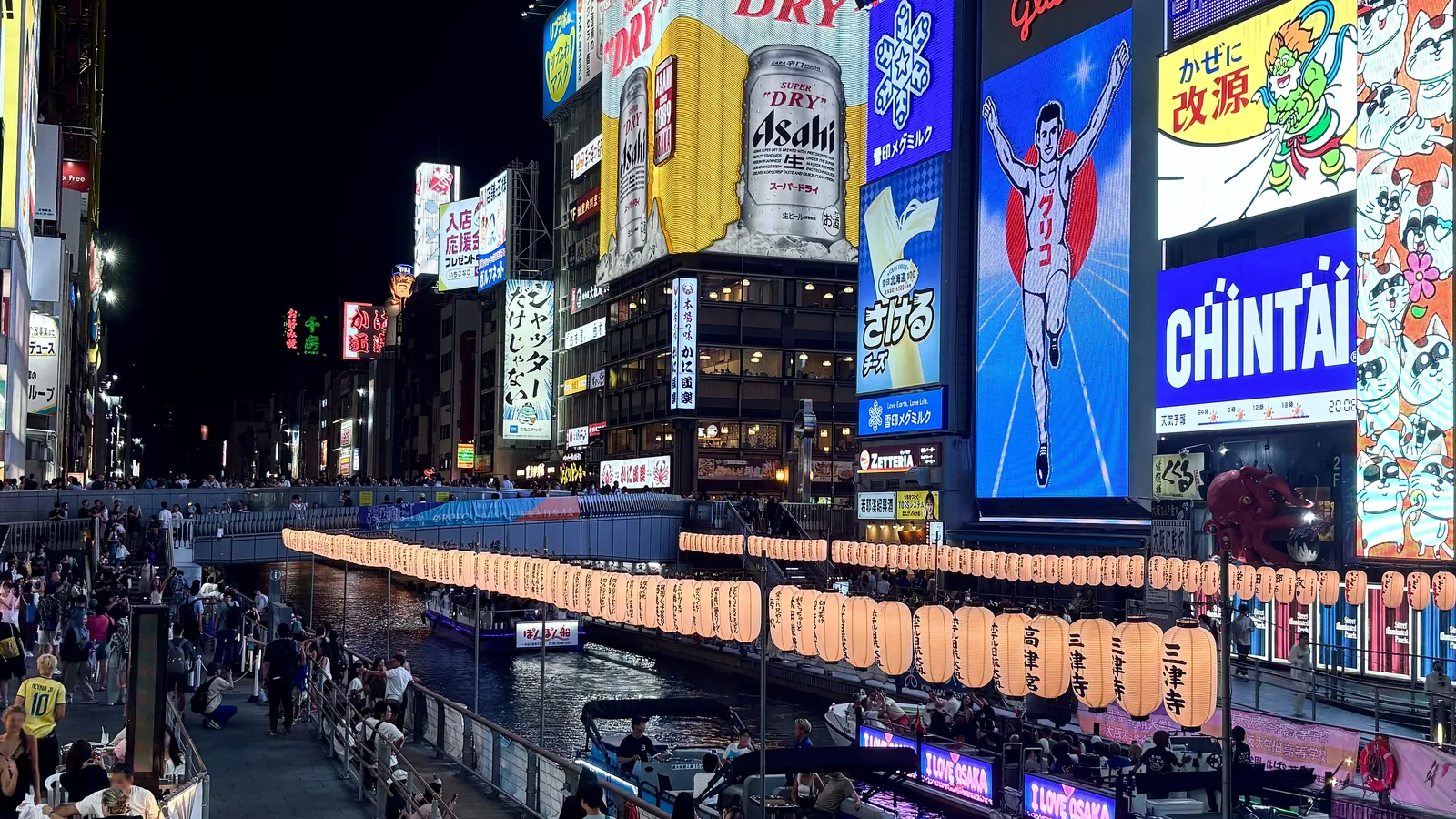
Explore Osaka Castle, a symbol of the city surrounded by moats and stone walls and set in a large park. Ride up to the Umeda Sky Building's Floating Garden Observatory, an open-air deck linking two towers high above the city. In the evening, head to Dotonbori, the neon-lit canal district famous for its giant signs, including the running man of the Glico sign, and its street food.
Day 4: Kyoto: the Bamboo Grove, Kinkakuji and Fushimi Inari
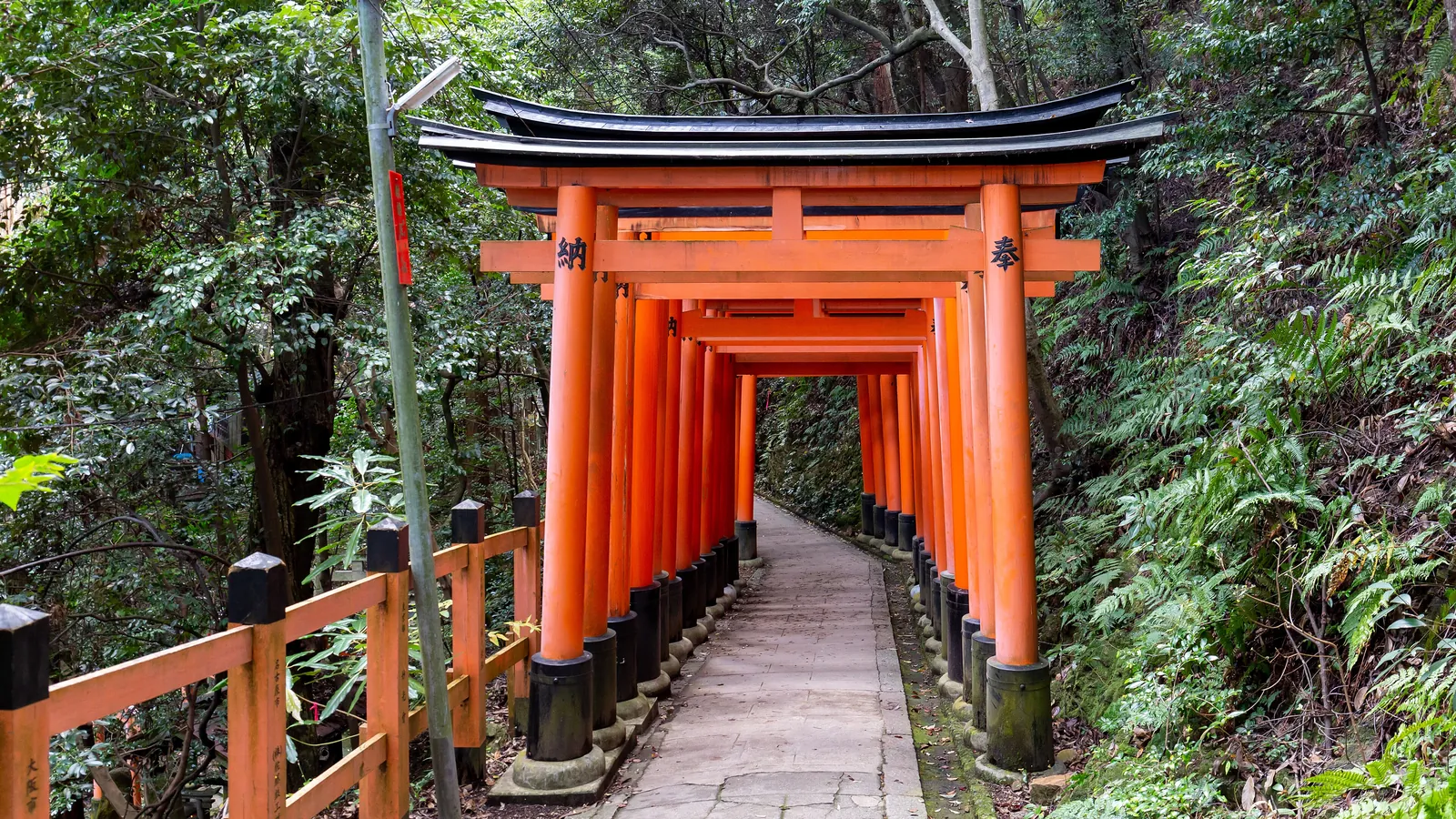
Kyoto was Japan's imperial capital for more than a thousand years and has around 1,600 temples and 400 shrines, 17 of which together form a UNESCO World Heritage Site. Start early at the Arashiyama Bamboo Grove, where towering green stalks creak in the wind. Visit Kinkakuji, the Golden Pavilion, its top floors covered in gold leaf and reflected in a still pond. Finish at Fushimi Inari Taisha, where thousands of bright orange torii gates, donated by businesses and individuals, form tunnels winding up the forested mountain. Even a short walk through the first section is unforgettable.
With extra time, Kyoto rewards slow exploration: the wooden terrace of Kiyomizu-dera, the lanes of the Higashiyama district, and the Gion quarter, where you may glimpse a geiko or maiko hurrying to an appointment in the evening. Be respectful and never block their way for photographs.
Day 5: Nara Deer Park, Todaiji and Nabana no Sato
Nara, Japan's first permanent capital in the 8th century, is famous for its free-roaming deer, considered messengers of the gods. Buy special crackers called shika senbei and watch the deer bow for them. Visit Todaiji, one of the largest wooden buildings in the world, which houses a colossal bronze Buddha about 15 metres tall.
In the evening, visit Nabana no Sato, a flower park near Nagoya famous for its spectacular seasonal illuminations, with tunnels of light and vast glowing landscapes. Overnight in the Nagoya area.
Day 6: Mt. Fuji and Hakone: the Owakudani ropeway and Lake Ashi
Travel to Hakone, a hot-spring resort area in the mountains near Mount Fuji. Ride the ropeway over Owakudani, a steaming volcanic valley where eggs boiled in the sulphurous springs turn black. Local legend says each black egg adds seven years to your life. Then cruise across Lake Ashi on one of its pirate-ship replicas, with views of Mount Fuji on clear days. At 3,776 metres, Fuji is Japan's highest mountain and a sacred symbol of the country. It is often hidden by cloud, especially in summer, so enjoy it if it appears.
Day 7: Tokyo: Asakusa, the Skytree, Odaiba and teamLab
Enter the world's largest metropolitan area. Start at Asakusa, where the Kaminarimon gate and its giant lantern lead to Senso-ji, Tokyo's oldest temple, along a shopping street full of snacks and souvenirs. Visit the Tokyo Skytree, at 634 metres one of the tallest towers in the world. Explore Odaiba, a waterfront district on reclaimed land with views of the Rainbow Bridge. Finally, step into teamLab Planets, an immersive digital art museum where you walk barefoot through water and rooms of light and flowers. Children and adults alike find it magical.
Day 8: Tokyo: Disneyland (optional) or a free day
Choose between Tokyo Disneyland or DisneySea, a favourite with families, or a free day to explore. Ideas: the scramble crossing and shopping in Shibuya, the Meiji Shrine and Harajuku's Takeshita Street, the electronics and anime shops of Akihabara, the gardens of the Imperial Palace, or the observation decks of Shinjuku for a view of Fuji on a clear morning.
Day 9: Tokyo to Seoul
Fly from Tokyo to Seoul, a journey of about two to two and a half hours. Arrive at Incheon International Airport, one of the best airports in the world, and transfer to your hotel. In the evening, explore a neighbourhood such as Myeongdong, famous for street food stalls and Korean skincare shops.
Day 10: Seoul: Gyeongbokgung, Bukchon Hanok Village and Nami Island
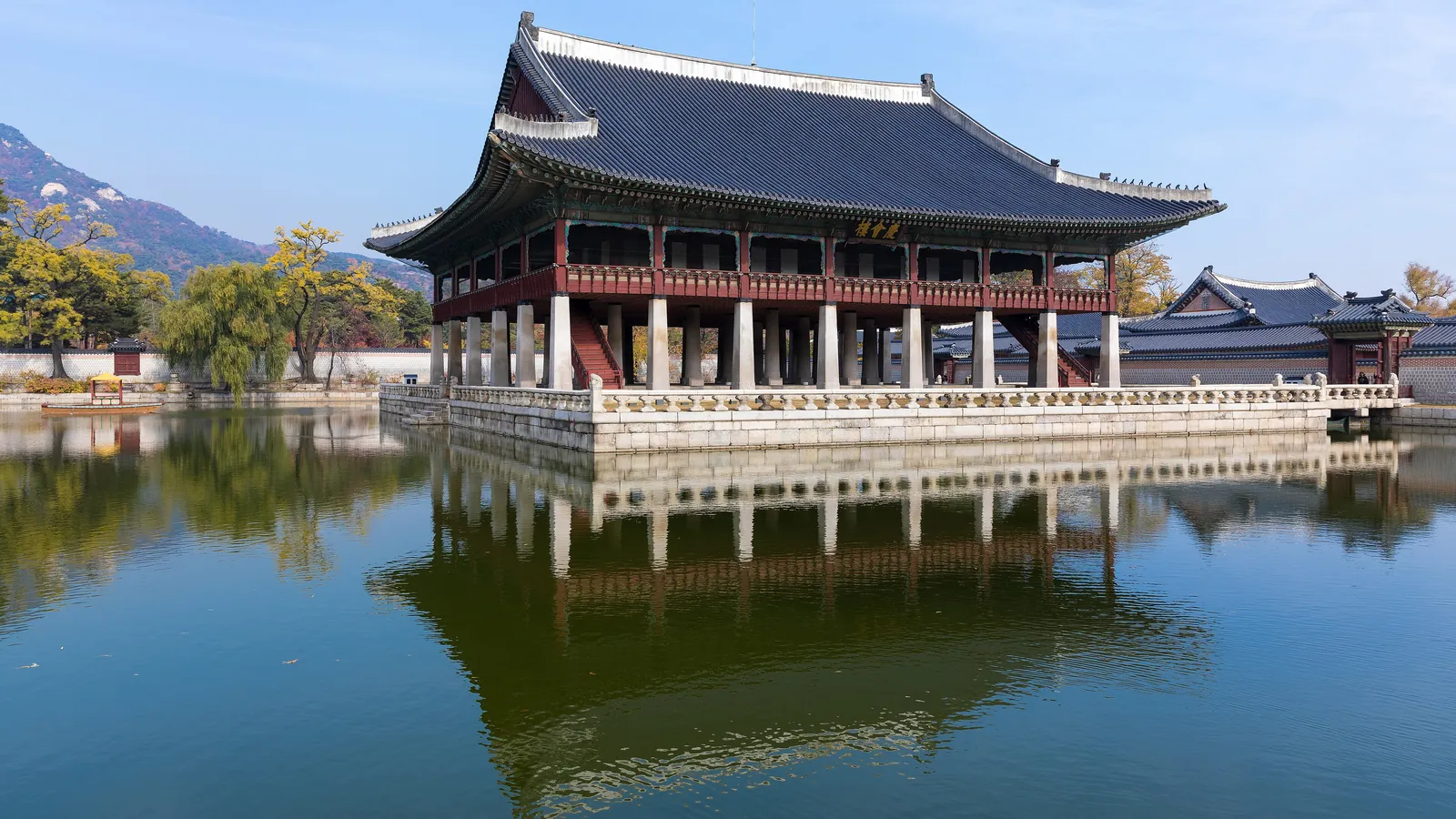
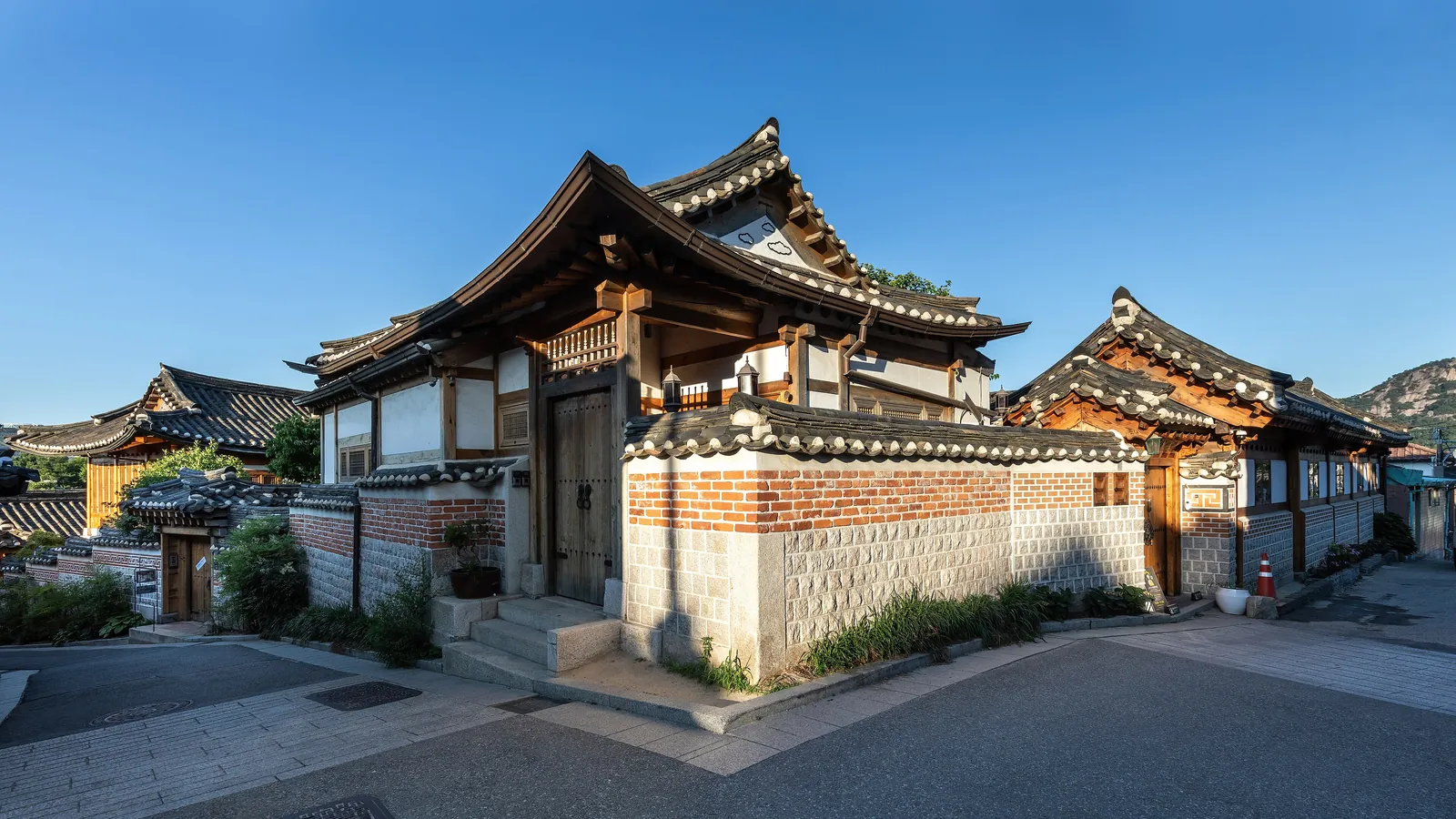
Visit Gyeongbokgung, the grandest of Seoul's royal palaces, first built in 1395 by the Joseon dynasty. Watch the colourful changing of the guard ceremony at the main gate. Visitors wearing hanbok, the traditional Korean dress, get free entry, and rental shops nearby make it easy to join in. Walk through Bukchon Hanok Village, a hillside neighbourhood of traditional wooden houses with tiled roofs. People still live here, so keep your voice down and respect the signs.
In the afternoon, travel to Nami Island, about 60 kilometres from Seoul, a half-moon shaped river island famous for its tree-lined avenues. It became hugely popular after appearing in the K-drama Winter Sonata, and it is beautiful in every season, especially autumn.
Day 11: The DMZ and free time in Seoul
Take a guided tour to the Demilitarized Zone, the heavily fortified buffer between North and South Korea. Tours typically include the Imjingak park, the Third Infiltration Tunnel dug from the North, and the Dora Observatory, from which you can look across into North Korea. It is one of the most fascinating and unusual experiences in Asia. Note that DMZ tours can be changed or suspended at short notice for security reasons, so keep plans flexible, and carry your passport, which is required.
Spend the rest of the day on your own: shop in Hongdae or Dongdaemun, visit the N Seoul Tower on Namsan mountain for a view of the city lights, or try a Korean barbecue dinner.
Day 12: Departure from Seoul
Transfer early to Incheon airport for your flight home, with memories of two very different, equally wonderful countries.
Getting around Japan and Korea
On our tour, all transfers, the bullet train and the Tokyo to Seoul flight are arranged. If you explore on free days:
- IC cards: in Japan, rechargeable cards such as Suica or Pasmo, also available in phone wallets on some devices, work on trains, subways, buses and in convenience stores. In Korea, the T-money card does the same.
- Subways: both Tokyo and Seoul have huge but very logical subway systems with English signs and announcements.
- Taxis: clean and safe, but expensive in Japan. In Japan, the rear doors open and close automatically; do not slam them.
- Apps: Google Maps works well in Japan. In Korea, local apps such as Naver Map or KakaoMap are often more accurate for walking and transit directions.
Vegetarian and Indian food in Japan and Korea
Food is one of the biggest questions for Indian travellers, and it deserves honesty: Japan and Korea are not easy for strict vegetarians. Many dishes that look vegetarian contain fish stock, such as Japanese dashi, or fish sauce and shrimp paste, as in most Korean kimchi.
That said, it is very manageable with a little planning:
- Indian restaurants: Osaka, Kyoto, Tokyo and Seoul all have Indian restaurants. On our tour, ten dinners and eight lunches are at Indian restaurants, which takes most of the worry away.
- Japanese options: vegetable tempura, inari sushi (rice in sweet fried tofu), cucumber and pickled plum sushi rolls, onigiri rice balls with umeboshi, and shojin ryori, the Buddhist temple cuisine of Kyoto, which is fully vegetarian.
- Korean options: bibimbap without meat or egg, Korean pancakes (pajeon) with vegetables, and Buddhist temple food, which is vegetarian and often vegan.
- Convenience stores: 7-Eleven, Lawson and FamilyMart sell fresh sandwiches, fruit, salads and snacks, though labels are mostly in Japanese or Korean. Translation apps with a camera feature help.
- Useful phrase: carry a card in Japanese and Korean explaining that you do not eat meat, fish or egg, including stock.
For non-vegetarians and flexible eaters, this is one of the world's great food trips: Osaka's takoyaki and okonomiyaki, Kyoto's refined kaiseki, Tokyo's sushi and ramen, and Seoul's Korean barbecue, tteokbokki and fried chicken.
Etiquette tips for Japan and Korea
- Remove your shoes when entering homes, many traditional restaurants, temples and some hotels. Wear socks without holes.
- Keep quiet on trains. In Japan, phone calls on trains are considered rude.
- No tipping. In Japan, tipping can even cause confusion. Good service is simply expected.
- Carry your rubbish. Public bins are rare in Japan; carry a small bag and take your litter back to the hotel.
- Chopsticks: never stick them upright in rice or pass food from chopstick to chopstick, which are associated with funerals.
- Bow lightly in Japan when greeting or thanking people. In Korea, a slight nod or bow is also polite, and use two hands to give or receive things from elders.
- Queue patiently. Both countries queue carefully for trains, buses and lifts.
Who this trip suits
Families love the bullet train, deer at Nara and Miyajima, teamLab, Tokyo Disneyland and Nami Island. Both countries are extremely safe and clean, with good facilities for children.
Couples will find cherry blossom or autumn season deeply romantic, from Kyoto's temples to Nami Island's avenues.
K-drama and anime fans will be in heaven, from Akihabara and Harajuku to Seoul's filming locations.
Older parents can manage comfortably on an escorted tour, though there is a lot of walking and some steps at temples and shrines. Comfortable shoes are essential.
History lovers will be moved by Hiroshima and the DMZ, and fascinated by Kyoto, Nara and the Korean palaces.
How much does a Japan Korea tour cost?
- Visas: Japan's eVISA consular fee is modest; the Korean tourist visa costs roughly ₹4,500 to ₹5,000 including service charges.
- Flights: an open-jaw ticket from India into Osaka and out of Seoul typically costs ₹55,000 to ₹1,00,000 per person in economy, depending on season and route.
- Hotels: ₹8,000 to ₹20,000 or more per night for a double room in good city locations; rooms in Japan are often compact.
- Bullet train: a single shinkansen trip such as Osaka to Hiroshima costs several thousand rupees per person.
- Food: ₹2,000 to ₹5,000 per person per day, less if you use convenience stores for some meals.
- Attractions: teamLab, Skytree and Disneyland tickets range from roughly ₹1,500 to ₹6,000 each.
Our Best 12 Days Japan and Korea Delights tour starts at ₹2,75,000 per person, with eleven nights in three-star hotels in Osaka, Nagoya, Tokyo and Seoul, breakfast daily, ten dinners and eight lunches at Indian restaurants, group transfers, bullet train tickets, the Tokyo to Seoul flight, and entry to the major sights including Miyajima, the Hiroshima Peace Memorial Museum, Kinkakuji, teamLab Planets, the Hakone ropeway and Lake Ashi cruise, the DMZ, Nami Island and Gyeongbokgung. Check the tour page for what is included on your departure.
Practical tips for your Japan Korea tour
- Apply for both visas early, ideally two months before travel.
- Carry some cash. Cards work widely in cities, but some small shops, shrines and rural places in Japan prefer cash. Japanese 7-Eleven ATMs usually accept Indian cards.
- Get a data eSIM or pocket Wi-Fi for maps and translation.
- Pack light. Stations have stairs, and hotel rooms are small. Many hotels can forward large bags between cities for a fee.
- Plug adapters: Japan uses flat two-pin Type A plugs; Korea uses round two-pin Type C or F plugs.
- Carry a small towel and hand sanitiser. Some public toilets in Japan lack paper towels.
- Check medicines. Japan has strict rules on some common medicines, including certain cold and allergy tablets. Carry prescriptions and check the rules before you fly.
What to pack
- Comfortable, easy slip-on shoes. You will walk 15,000 steps on many days and take shoes off at temples and restaurants.
- Layers for the season: a light jacket for spring and autumn evenings, a proper winter coat, gloves and thermals from December to February, and breathable cotton plus an umbrella in summer.
- A compact umbrella. Showers are common in both countries.
- A small coin purse. Japan uses many coins, and you will collect them fast.
- A few ready-to-eat Indian snacks for long days, such as khakhra, theplas or ready meals. Declare food if asked at customs, and avoid meat products.
- Printed copies of your visas, hotel bookings and itinerary, alongside digital copies.
Mistakes to avoid
Assuming vegetarian means vegetarian. Fish stock and fish sauce hide in many dishes. Ask, use a translation card, and rely on Indian and temple restaurants.
Planning around a guaranteed Fuji view. The mountain is often hidden by cloud. Enjoy Hakone for itself.
Leaving the Korean visa too late. It takes longer than Japan's eVISA and needs your passport.
Overpacking. Big suitcases are a burden on trains and in small hotel rooms.
Treating Bukchon and Gion as theme parks. People live and work there. Be quiet and respectful.
Plan your Japan Korea tour with The Vacation Code
Bullet trains, floating torii, golden temples, Mount Fuji, royal palaces and the DMZ: a Japan Korea tour packs a lifetime of memories into twelve days. Our Best 12 Days Japan and Korea Delights tour handles the hotels, bullet train, flight, sightseeing and Indian meals, and our team guides you through both visa applications.
Travelling only to Japan in spring? Read our Japan cherry blossom guide and see our Best 9 Days Japan Cherry Blossom tour, or browse all our international tours.
Frequently asked questions
Do Indians need a visa for Japan and South Korea?
Yes, both. Japan offers a single-entry tourist eVISA for Indian ordinary passport holders, applied for online. South Korea requires a regular tourist visa applied for through authorised visa centres in India, and the K-ETA does not apply to Indian passport holders.
How many days are needed for a Japan Korea tour?
Twelve days is ideal to cover Osaka, Hiroshima, Kyoto, Nara, Hakone and Tokyo in Japan and Seoul with Nami Island and the DMZ in Korea. With ten days you can do a shorter version with fewer stops.
What is the best time for a Japan Korea tour?
Late March to mid-April for cherry blossoms and October to November for autumn colours are the best seasons. Summer is hot, humid and rainy, and winter is cold but offers clear views of Mount Fuji.
Is vegetarian food available in Japan and Korea?
It is possible but needs planning, because many dishes use fish stock or fish sauce. Indian restaurants, Buddhist temple cuisine, vegetable tempura, inari sushi and meatless bibimbap are good options. Escorted tours often include Indian meals.
How long is the flight from Tokyo to Seoul?
The flight from Tokyo to Seoul takes roughly two to two and a half hours.
Is the DMZ tour safe?
DMZ tours are run under strict security and are considered safe for visitors. They can be changed or suspended at short notice, and you must carry your passport.
How much does a Japan and Korea trip cost from India?
Flights typically cost 55,000 to 1,00,000 rupees per person in economy. A 12-day escorted Japan and Korea tour with hotels, many meals, the bullet train, the Tokyo to Seoul flight and sightseeing starts at about 2,75,000 rupees per person.