
- Why Rishikesh is India's adventure capital
- Understanding the rafting stretches
- Brahmpuri to Rishikesh (about 9 km)
- Shivpuri to Rishikesh (about 16 km)
- Marine Drive to Rishikesh (about 24 km)
- Kaudiyala to Rishikesh (about 36 km)
- Rapids explained: what the grades mean
- When is the rafting season?
- Your first rafting trip, step by step
- Safety: what good operators do
- Camping near Rishikesh
- What a camp is like
- Choosing a camp
- Beyond rafting: other adventures in Rishikesh
- Bungee jumping and the giant swing
- Cliff jumping and body surfing
- Kayaking
- Trekking and waterfalls
- Camping activities
- The spiritual side of Rishikesh
- The Ganga Aarti
- The bridges and temples
- Yoga and meditation
- The Beatles Ashram
- Day trips from Rishikesh
- Haridwar and the Har Ki Pauri aarti
- Devprayag
- Kunjapuri Temple sunrise
- Rajaji National Park
- Rishikesh for families, groups and corporate teams
- A wellness weekend in Rishikesh
- Food in Rishikesh
- A three-day Rishikesh adventure weekend
- Day 1: Delhi to Rishikesh, camp evening
- Day 2: Rafting, cliff jumping and the Ganga Aarti
- Day 3: Bungee or yoga, and return
- How to reach Rishikesh
- What does a Rishikesh weekend cost?
- What to pack for Rishikesh
- Rishikesh in winter versus summer
- Mistakes to avoid
- Plan your Rishikesh adventure with The Vacation Code
- Frequently asked questions about Rishikesh rafting
- Which rafting stretch is best for beginners in Rishikesh?
- Is river rafting in Rishikesh safe for non-swimmers?
- When is rafting closed in Rishikesh?
- What is the minimum age for rafting in Rishikesh?
- How much does rafting in Rishikesh cost?
- Is alcohol allowed in Rishikesh?
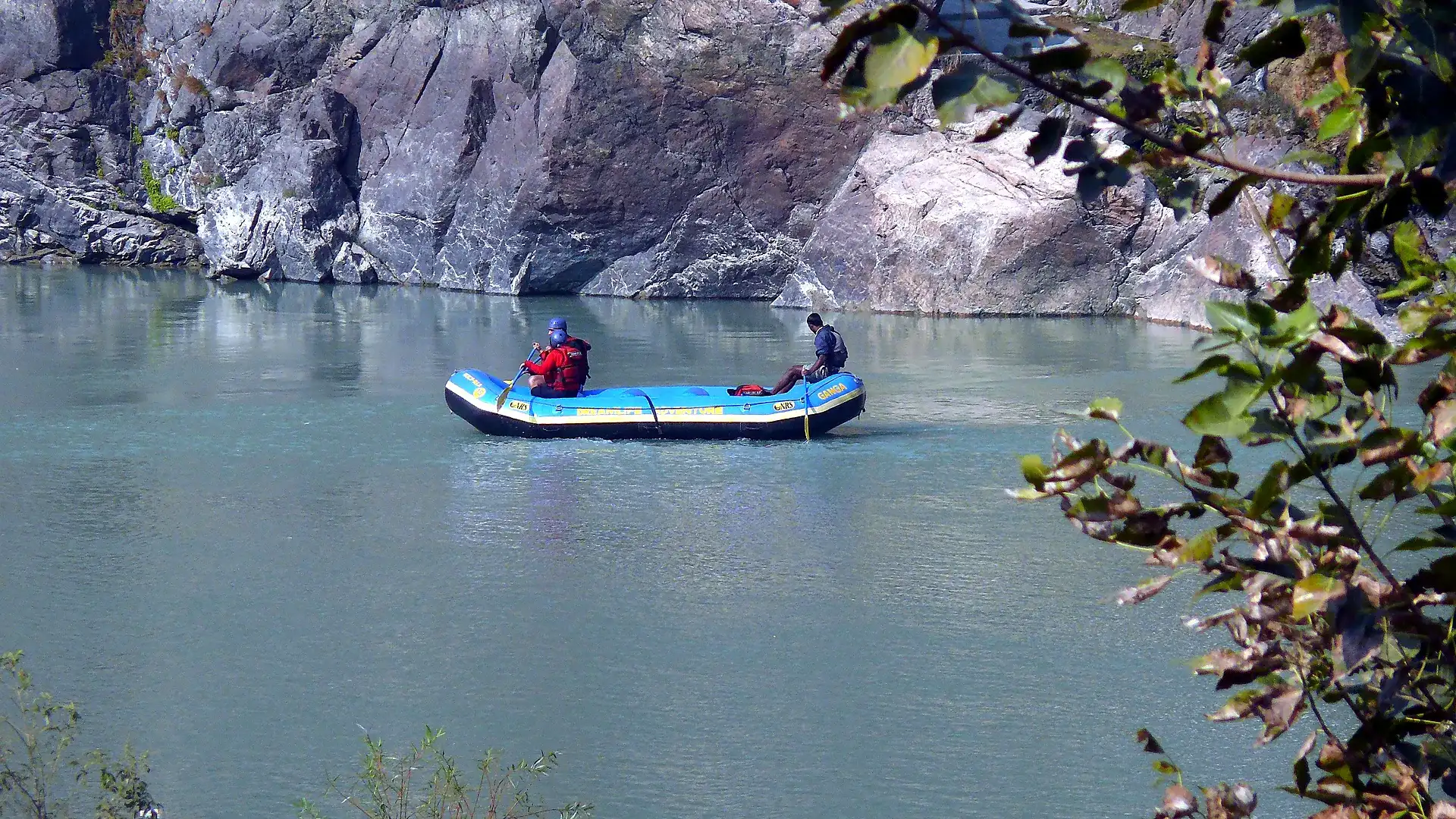
The guide at the back of the raft shouts "Forward! Forward! Hard forward!" and eight people dig their paddles into the Ganga at once. The river ahead drops away into a churning white mess of waves called, with dark humour, the Roller Coaster. For about fifteen seconds, the world becomes water: it hits you in the face, pours down your back, lifts the front of the raft into the sky and slams it down again. Someone screams. Someone else laughs. And then you are through, spinning gently in calm green water, soaked, breathless and grinning like children. "Next rapid," says the guide, "is bigger."
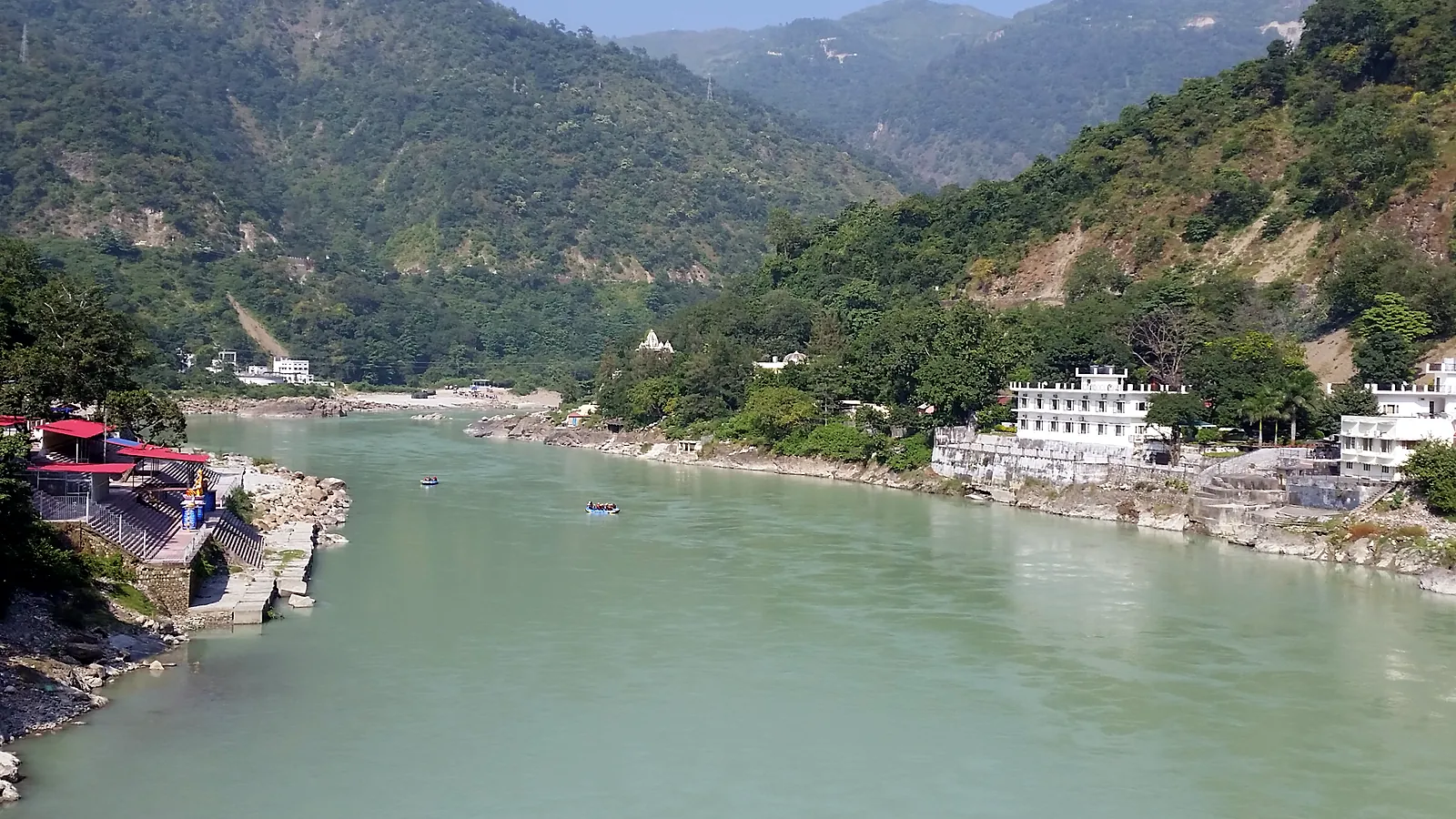
Rishikesh is where most Indians go for their first taste of adventure, and there is nowhere better to do it. The Ganga leaves the Himalaya here, emerald green and cold, running fast through a forested gorge before it spreads into the plains at Haridwar. The river offers some of the best commercial rafting in Asia, the riverside forests are full of camps, and the town itself, famous as the yoga capital of the world, balances all that adrenaline with temples, ashrams and the evening Ganga Aarti.
This guide will help you plan the perfect Rishikesh weekend: which rafting stretch to choose for your group, how the rapids work, when the season runs, what the safety rules are, where to camp, what else to do from bungee jumping to yoga, where to eat, and a practical three-day plan from Delhi.
Why Rishikesh is India's adventure capital
Rishikesh sits in Uttarakhand at the foothills of the Himalaya, about 240 kilometres north of Delhi. It is the point where the Ganga emerges from the mountains, and its location gives it a rare combination of qualities.
- World-class rafting close to a major city. Few places in the world have grade III and IV rapids within a six-hour drive of a capital.
- Adventure for every level. From gentle floats suitable for children to challenging rapids for thrill-seekers, plus bungee jumping, giant swings, cliff jumping, zip-lining, kayaking and trekking.
- Spiritual depth. Rishikesh is one of the holiest towns in Hinduism, with ashrams, temples and the famous Ganga Aarti, and it attracts yoga practitioners from all over the world.
- Easy logistics. Good roads, a nearby airport and railway, and an established industry of camps and rafting operators.
Understanding the rafting stretches
Commercial rafting in Rishikesh is run on several stretches of the Ganga upstream of the town, and all of them end near Rishikesh itself. The stretch you choose determines how long you spend on the water and how many rapids you run. Distances are approximate.
Brahmpuri to Rishikesh (about 9 km)
The shortest and gentlest stretch, with a few small grade I and II rapids. It takes around an hour and a half and is ideal for families with younger children, nervous first-timers and anyone who wants a taste of rafting without the big waves.
Shivpuri to Rishikesh (about 16 km)
The most popular stretch and our recommendation for most first-timers. It takes around two and a half to three hours and includes several exciting grade II and III rapids with names like Roller Coaster, Golf Course and Club House. Most trips on this stretch include a chance to jump into the river and body-surf in calm sections, and a stop at a cliff where you can jump into the water. It gives you real excitement without being frightening.
Marine Drive to Rishikesh (about 24 km)
A longer trip, around three and a half to four hours, covering all the rapids of the Shivpuri stretch plus several more upstream. It suits groups who want more time on the water and more rapids.
Kaudiyala to Rishikesh (about 36 km)
The longest and most challenging stretch, taking five to six hours or a full day with a lunch break. It includes some of the most powerful rapids on the river, graded III and IV, such as The Wall. It is for adventurous, fit rafters and usually requires a higher minimum age. The scenery on the upper section, through a deep, forested gorge, is spectacular.
Rapids explained: what the grades mean
Rapids are graded on an international scale from I to VI.
- Grade I: moving water with small waves. Very easy.
- Grade II: straightforward rapids with some waves and clear channels. Easy and fun.
- Grade III: bigger, irregular waves and stronger currents that require manoeuvring. Exciting, and you will get very wet.
- Grade IV: powerful, turbulent rapids that require precise manoeuvring. Challenging.
- Grades V and VI: extremely difficult or dangerous, and not run commercially in Rishikesh.
Rapid grades change with water levels. In spring, as snowmelt raises the river, rapids become bigger and more powerful. In autumn and winter, the water is lower, clearer and colder, and some rapids become more technical. Your guide will brief you on current conditions.
When is the rafting season?
Rafting in Rishikesh runs from roughly mid-September or October to June. It is suspended during the monsoon, usually from July to mid-September, when the river becomes too high and dangerous. Exact dates are set by the authorities each year.
- October and November: pleasant weather, clear green water and moderate rapids. Excellent for first-timers.
- December to February: cold air and very cold water. Rafting is still great fun but you will want a wetsuit, and camps get chilly at night.
- March to June: the peak season. Warm weather makes jumping into the river a joy, and rising snowmelt makes the rapids bigger and more exciting in May and June. Weekends are crowded, so book in advance.
Your first rafting trip, step by step
If you have never rafted before, knowing exactly what happens takes most of the nerves away.
Getting to the start. You will meet your operator at their office or camp and be driven upstream to the starting point with the rafts strapped to the roof of a jeep or on a trailer. Leave your valuables in the vehicle or at camp.
Kitting up. At the riverbank, guides hand out life jackets, helmets and paddles. The life jacket should be tight enough that it does not ride up over your chin when the guide pulls on the shoulders. This is the most important moment of the day; do not let anyone rush it.
The safety briefing. Your guide will explain how to hold the paddle (one hand on the T-grip at the top), how to sit on the side of the raft with your feet tucked under the tube or into foot holds, and the commands: "Forward", "Back paddle", "Stop", "Get down" (crouch into the raft and hold the rope) and "Left" or "Right". They will explain what to do if you fall in and how they will pull you back into the raft. Listen carefully and ask questions.
The first calm stretch. The guide will practise the commands with the group in calm water so that everyone paddles together. Timing matters more than strength.
The rapids. As you approach a rapid, the guide will call commands. Paddle hard when told, and keep paddling through the waves; it is what keeps the raft stable. You will get thoroughly soaked, and it is enormous fun.
The calm sections. Between rapids, the guide will often let you jump into the river and float downstream alongside the raft in your life jacket. The water is cold but wonderful on a hot day. Many trips also stop at a sandy beach or cliff for jumping.
The finish. Trips end on a beach near Rishikesh, where vehicles or your camp team will pick you up. Change into dry clothes and have something to eat; paddling makes you hungry.
Safety: what good operators do
Rafting in Rishikesh is regulated, and with a good operator, it is very safe. Still, you are on a powerful river, and safety should be your first question when choosing an operator.
What to expect from a responsible operator:
- A thorough safety briefing before you get on the water, covering paddling commands, how to sit, what to do if you fall in, and how to be rescued.
- Good-quality life jackets that are fitted properly, and helmets for every rafter.
- Certified, experienced river guides trained in rescue and first aid.
- A safety kayaker accompanying rafts on bigger stretches, ready to help anyone who falls out.
- Valid licences and registration with the authorities.
- A minimum age policy. Operators typically set a minimum age of around 12 to 14 for the Shivpuri stretch and older for Kaudiyala. Younger children can often do the Brahmpuri stretch.
Your responsibilities:
- Tell the operator honestly if you cannot swim. You can still raft; the guide will seat you appropriately.
- Keep your life jacket and helmet on at all times on the water.
- Listen to the guide and follow commands instantly.
- Do not raft after drinking alcohol.
- If you fall in, stay calm, float on your back with your feet pointing downstream and up, and wait for rescue.
- Pregnant women and people with heart conditions, epilepsy, recent surgery or serious back problems should not raft.
Camping near Rishikesh
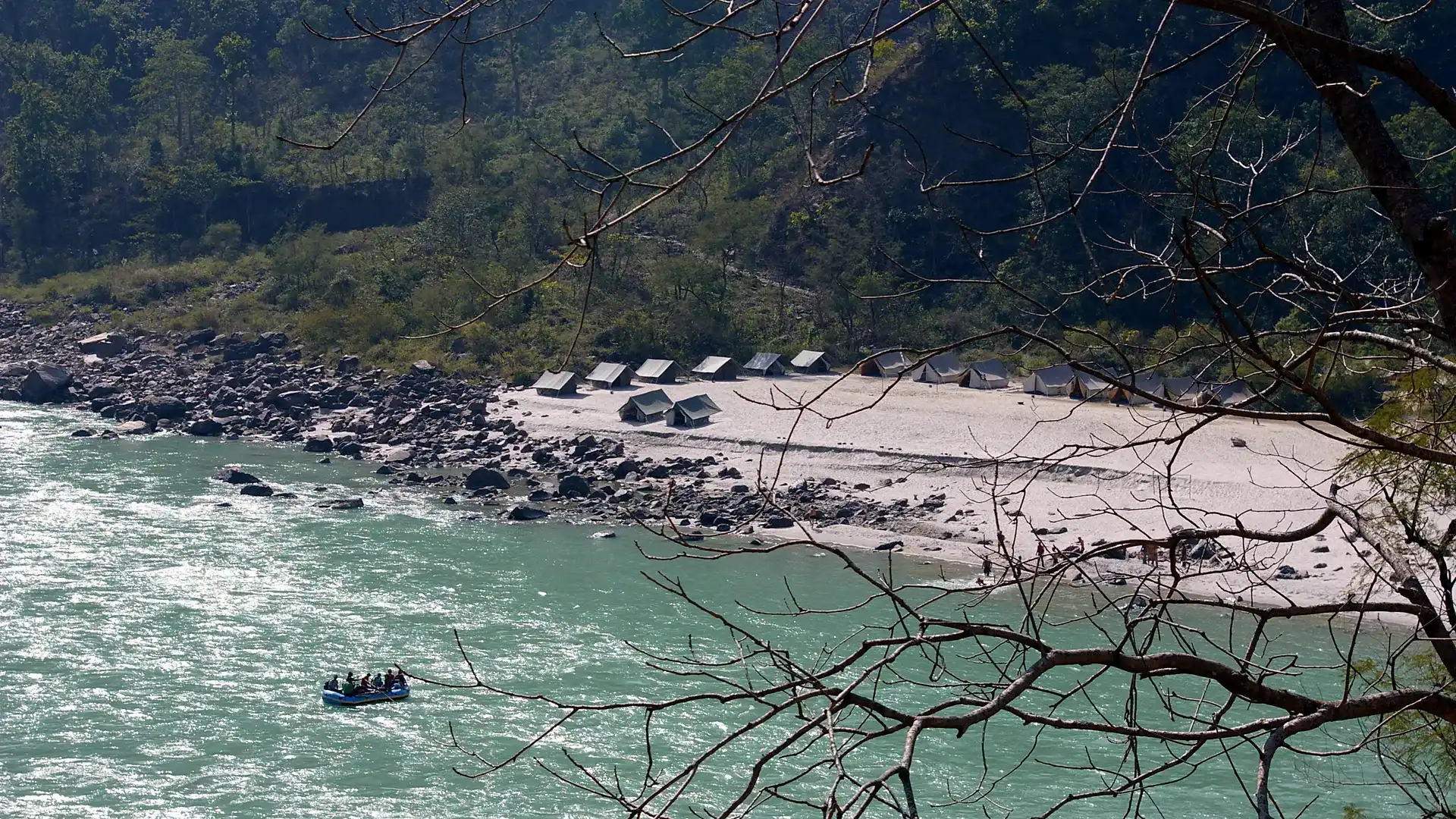
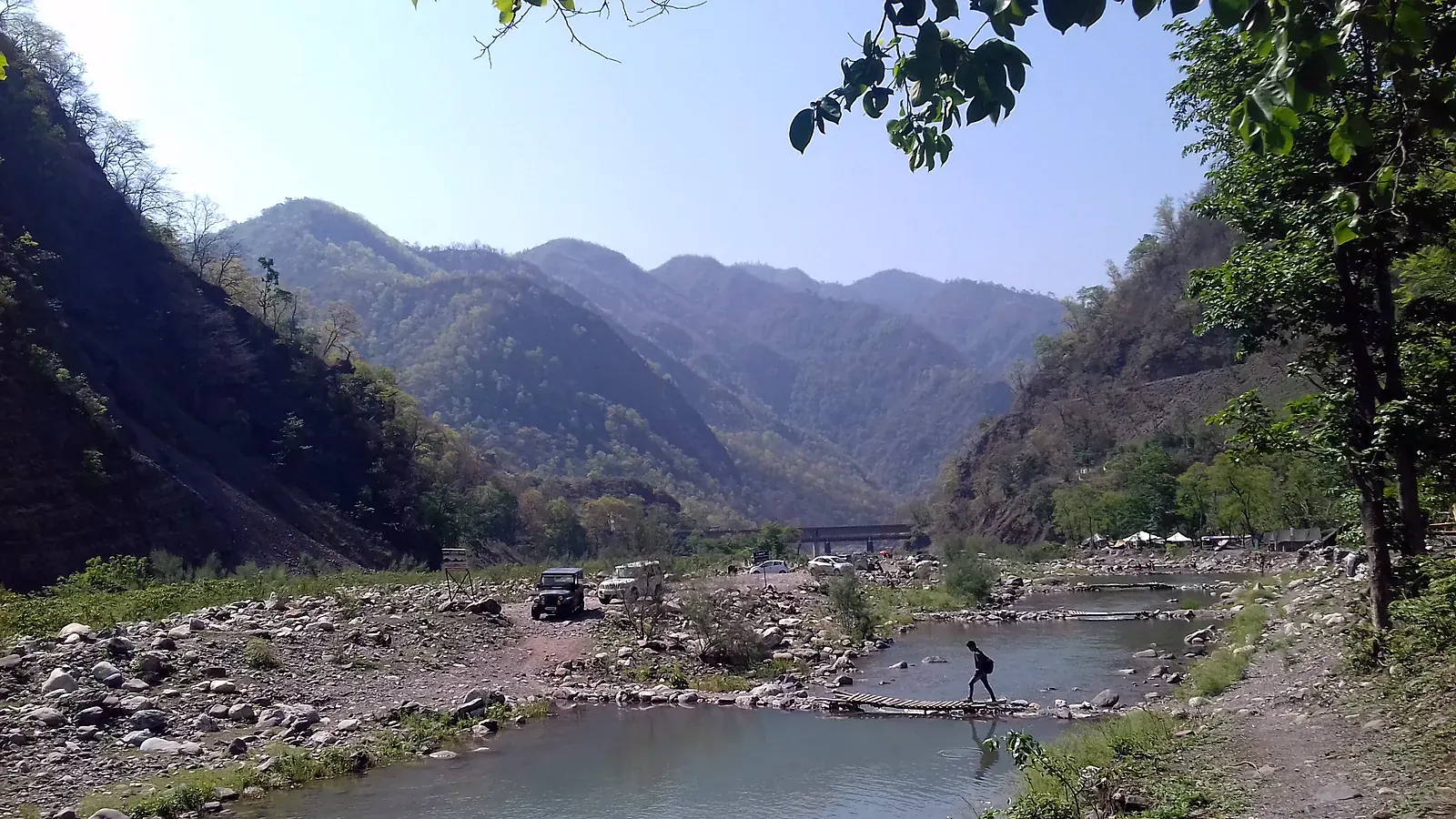
For many people, the camp is as much a part of the Rishikesh experience as the rafting. Most camps are located upstream of Rishikesh in the Shivpuri area, in forest clearings and on terraces above the river, about 16 kilometres from town.
What a camp is like
Camps range from simple Swiss tents with shared bathrooms to comfortable luxury tents with attached bathrooms, proper beds and even air coolers. Most include all meals, served buffet-style, and offer evening bonfires, music and activities such as volleyball, badminton, short treks and rappelling. Some have swimming pools. Regulations have moved many camps back from the immediate riverbank to protect the environment, but many still offer river views or short walks down to the water.
Choosing a camp
- Location: camps near Shivpuri are closest to the most popular rafting starting point.
- Bathrooms: attached bathrooms are worth the small extra cost, especially for families.
- Food: check what is included. Rishikesh camps serve vegetarian food.
- Atmosphere: some camps are lively and cater to college groups; others are quiet and family-friendly. Read reviews and ask.
- Package inclusions: many camps sell packages including rafting, meals and activities, which are usually better value.
Beyond rafting: other adventures in Rishikesh
Bungee jumping and the giant swing
Rishikesh is home to one of the highest bungee jumping platforms in India, at Mohan Chatti, about 15 kilometres from Rishikesh, where you jump from a platform cantilevered over a rocky gorge. The same site offers a giant swing, in which you free-fall before swinging out across the valley, and a flying fox zip-line. These activities are run with international safety standards and have age, weight and health requirements. Book in advance, especially on weekends.
Cliff jumping and body surfing
On the Shivpuri stretch, most rafting trips stop at a rock where you can jump several metres into a deep pool of the river. With a life jacket on, it is thrilling and safe. Your guide will also invite you to jump into the river in calm sections and float alongside the raft.
Kayaking
Several schools offer introductory kayaking courses on calm stretches of the Ganga, as well as multi-day courses for those who want to learn properly.
Trekking and waterfalls
Short treks from Rishikesh take you to the Neer Garh waterfall, a series of cascades in the forest, and the Kunjapuri Temple, a hilltop shrine where you can watch sunrise over the Himalayan peaks. Longer treks lead into the hills around the Rajaji National Park.
Camping activities
Many camps organise rappelling, rock climbing, archery and short jungle walks. They are especially fun for families and groups.
The spiritual side of Rishikesh
The Ganga Aarti
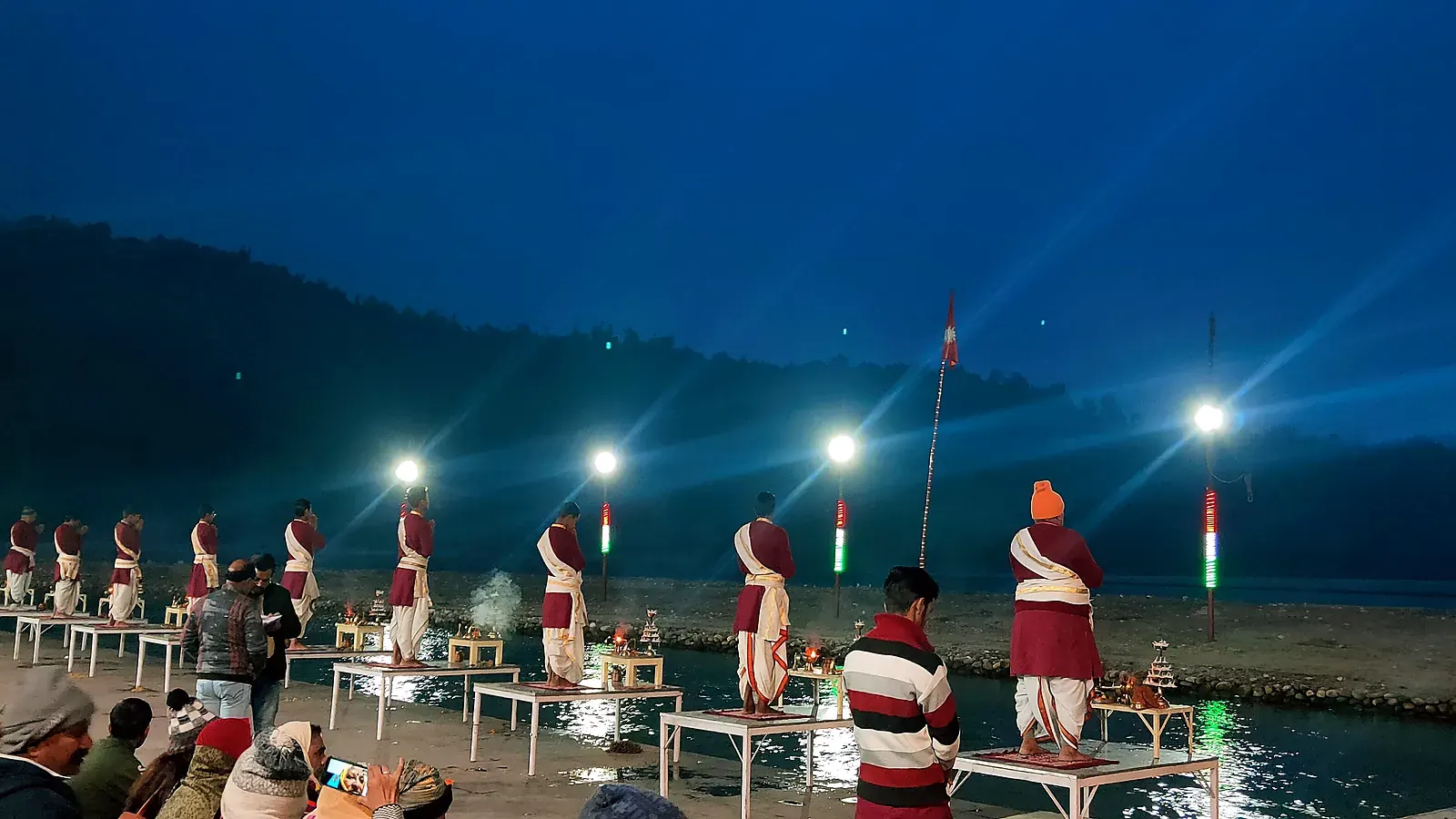
Every evening at dusk, priests perform the Ganga Aarti, an offering of fire, flowers, chanting and music to the river. The most famous aartis are held at Parmarth Niketan ashram, in the Swargashram area, and at Triveni Ghat, the town's largest bathing ghat. At Parmarth, the aarti is led by the ashram's young students in saffron robes, with devotional songs and a large fire ceremony by the water. Floating a small leaf boat of flowers and a lamp, a diya, onto the river is a beautiful ritual. Arrive early for a good spot.
The bridges and temples
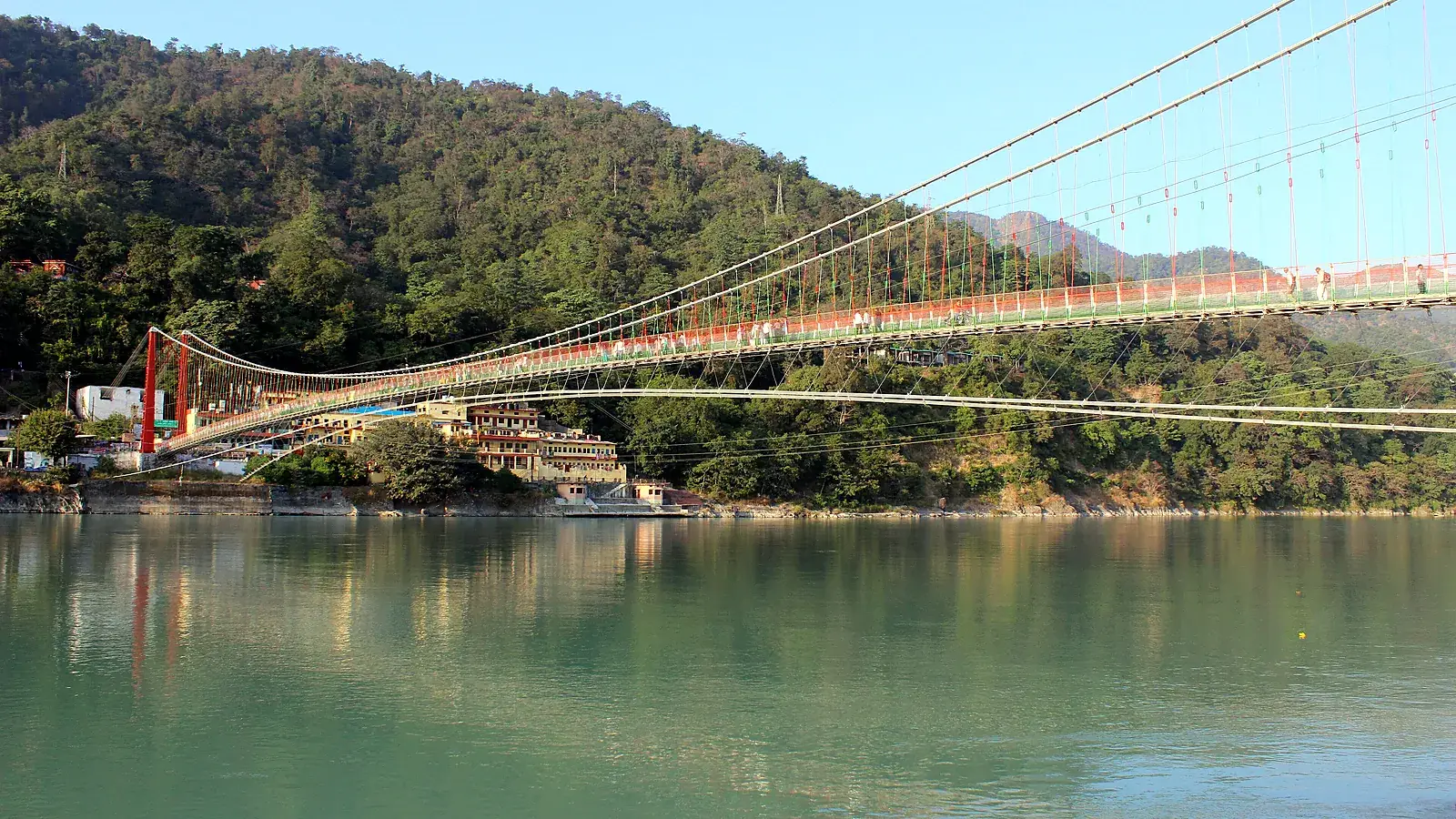
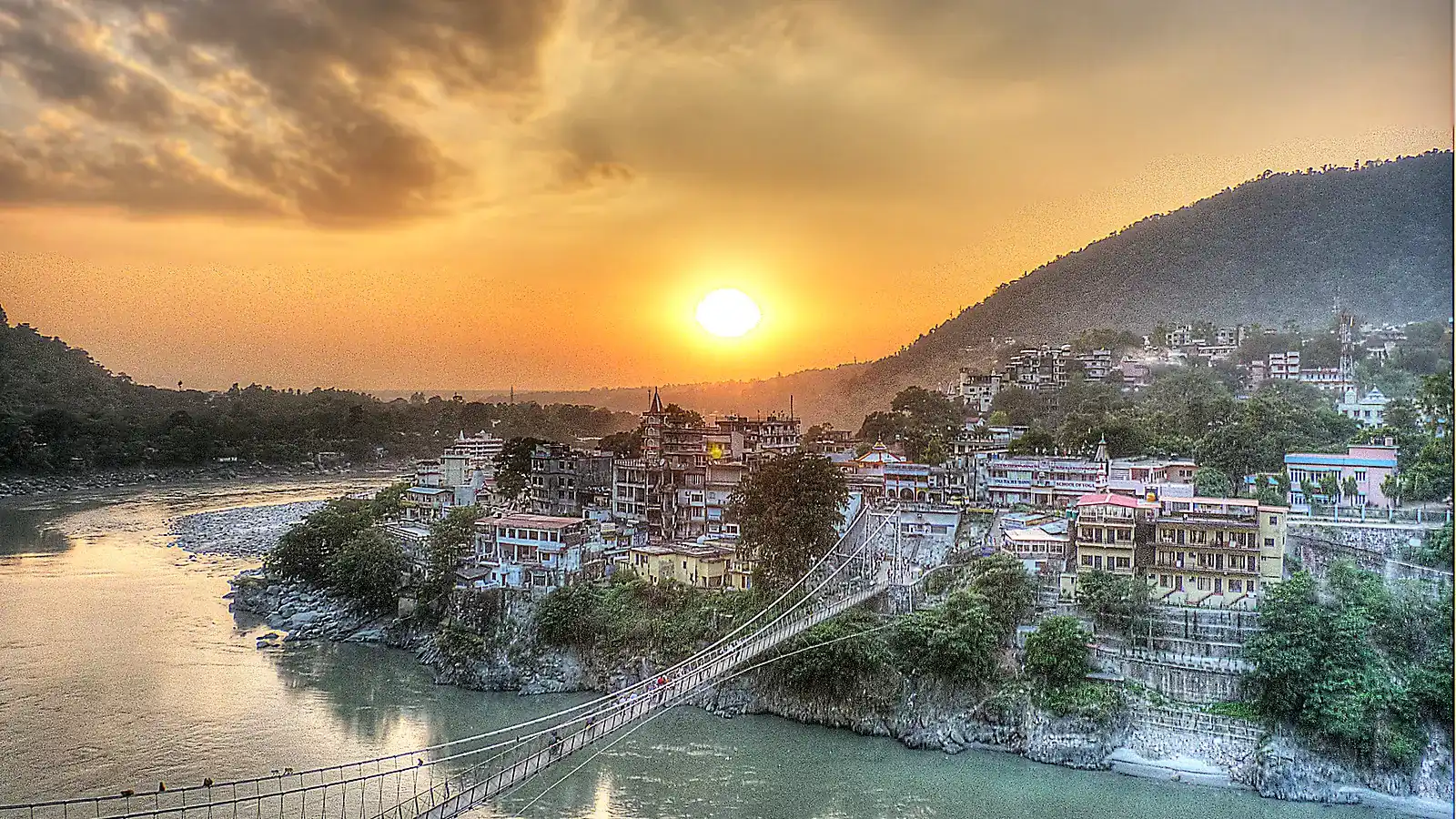
Rishikesh's iconic suspension bridges cross the Ganga between the two banks. Ram Jhula connects the Swargashram area with Sivananda Nagar, while the historic Lakshman Jhula, which appears in countless photographs of Rishikesh, is linked to the legend that Lakshman crossed the river here on a jute rope. Pedestrian access on the old Lakshman Jhula has been restricted in recent years for safety, and a new bridge has been built nearby, so check current access when you visit. The multi-storey Trayambakeshwar Temple and the Swarg Niwas Temple near the bridge offer fine views of the river.
Yoga and meditation
Rishikesh is known as the yoga capital of the world, and it has hundreds of ashrams and yoga schools offering drop-in classes, week-long retreats and teacher training courses. Even on a short weekend, joining a morning yoga class by the river is a wonderful way to balance the adrenaline of rafting. The International Yoga Festival, usually held in March at Parmarth Niketan, attracts practitioners from around the world.
The Beatles Ashram
The ashram of Maharishi Mahesh Yogi, where the Beatles stayed in 1968 and wrote many of their songs, is now known as the Beatles Ashram or Chaurasi Kutia. It is a peaceful, slightly overgrown complex of meditation huts and buildings covered in colourful murals and graffiti. It is a lovely place to wander for an hour.
Day trips from Rishikesh
Haridwar and the Har Ki Pauri aarti
Haridwar, about 25 kilometres downstream, is one of the seven holiest cities in Hinduism and the place where the Ganga enters the plains. Its most famous ghat, Har Ki Pauri, is said to bear the footprint of Lord Vishnu. The evening aarti here is grander and more crowded than in Rishikesh, with thousands of pilgrims, huge brass lamps and the river filled with floating diyas. It is an overwhelming and moving experience. Arrive at least an hour early, keep your belongings close, and be prepared for crowds, especially on weekends and festivals. You can also take a cable car to the hilltop temples of Mansa Devi and Chandi Devi.
Devprayag
About 70 kilometres upstream, in the mountains, Devprayag is where the Alaknanda and Bhagirathi rivers meet and officially become the Ganga. The confluence is striking: one river is green, the other grey-brown, and you can see the line where they join. The small town is built on steep slopes above the confluence, and the Raghunath temple is an important pilgrimage site. The drive along the river through the gorge is beautiful.
Kunjapuri Temple sunrise
An early morning drive of about an hour from Rishikesh takes you to the Kunjapuri Devi Temple, perched on a hilltop at about 1,650 metres. On clear mornings, the sunrise over the valleys with the snow peaks of the Garhwal Himalaya on the horizon, including Bandarpoonch and Chaukhamba, is spectacular. It is a short climb of a few hundred steps from the parking area.
Rajaji National Park
Rajaji National Park, stretching between Rishikesh, Haridwar and Dehradun, is home to Asian elephants, leopards, deer and hundreds of bird species. Jeep safaris run from gates near Rishikesh and Haridwar during the park's open season, usually from mid-November to mid-June.
Rishikesh for families, groups and corporate teams
Families with children will find Rishikesh easy and rewarding. Choose the gentle Brahmpuri stretch for younger children, book a camp with attached bathrooms and a range of activities, and include a visit to the aarti, which children often love for its colour and music. Evenings around the bonfire, short walks to the waterfall and simple camp games keep everyone busy.
Groups of friends and college groups tend to go for the Shivpuri or Marine Drive stretches, bungee jumping and livelier camps. Book well ahead for long weekends.
Corporate teams increasingly choose Rishikesh for offsites, because rafting is a natural team-building exercise. Nobody gets through a rapid unless everyone paddles together. Many camps offer conference tents, structured team activities, rappelling, treasure hunts and bonfire dinners, and some can arrange facilitators for team workshops.
A wellness weekend in Rishikesh
Not everyone comes to Rishikesh for the rapids. If you want a quieter, restorative weekend, stay in an ashram or a riverside wellness retreat instead of a camp. Start the day with a sunrise yoga class, followed by a simple sattvic breakfast. Spend the morning at a meditation session or an Ayurvedic massage, and the afternoon reading in a café by the river or walking along the ghats. Attend the Ganga Aarti in the evening, and go to bed early. Ashrams such as Parmarth Niketan offer rooms and daily programmes of yoga, meditation and satsang, with rules such as fixed meal times and no alcohol. It is an entirely different side of Rishikesh, and many visitors find it just as memorable as rafting.
Food in Rishikesh
Rishikesh is a holy town, and meat and alcohol are not permitted in the main town area. This makes it one of the easiest places in India for vegetarian travellers. The food scene is surprisingly international, thanks to the yoga community: you will find cafés serving everything from Israeli breakfasts and wood-fired pizza to smoothie bowls, alongside classic North Indian thalis, chole bhature, aloo puri and lassi. Riverside cafés in the Tapovan and Lakshman Jhula areas are perfect for long, lazy lunches with views of the river.
At camps, meals are vegetarian and usually include North Indian dishes, with Maggi and pakoras at the evening bonfire.
A three-day Rishikesh adventure weekend
Day 1: Delhi to Rishikesh, camp evening
Leave Delhi early in the morning to avoid traffic. The drive takes five to six hours via Meerut and Haridwar. Arrive at your camp near Shivpuri by lunchtime. After lunch, relax, explore the camp and walk down to the river. In the evening, gather around the bonfire for music, snacks and stories.
Day 2: Rafting, cliff jumping and the Ganga Aarti
After breakfast, set off for your rafting trip. For most groups, the Shivpuri to Rishikesh stretch is ideal. You will be transported to the starting point, given a safety briefing and fitted with life jackets and helmets. Spend the next three hours tackling rapids, jumping into the river and cliff jumping. The trip ends near Rishikesh.
After lunch in a riverside café in Tapovan, walk across the bridge to the Swargashram side, explore the temples and markets, and make your way to Parmarth Niketan or Triveni Ghat for the Ganga Aarti at sunset. Return to camp for dinner and a bonfire.
Day 3: Bungee or yoga, and return
Choose your finale. Adventure-seekers can head to Mohan Chatti for bungee jumping, the giant swing or the flying fox. Those looking for calm can join a morning yoga class, walk to the Neer Garh waterfall or visit the Beatles Ashram. After lunch, drive back to Delhi, arriving in the evening.
How to reach Rishikesh
- By road: Rishikesh is about 240 kilometres from Delhi, a drive of five to six hours. Buses, including Volvo services, run regularly from Delhi's ISBT Kashmere Gate.
- By train: the most convenient major railway station is Haridwar, about 25 kilometres away, with fast trains from Delhi taking around four to five hours. There is also a station at Yog Nagri Rishikesh with limited services.
- By air: Jolly Grant Airport in Dehradun is about 20 kilometres from Rishikesh, with flights from major cities.
What does a Rishikesh weekend cost?
- Rafting: roughly ₹600 to ₹1,000 per person for Brahmpuri, ₹800 to ₹1,500 for Shivpuri, ₹1,500 to ₹2,000 for Marine Drive and ₹2,000 to ₹3,500 for Kaudiyala, depending on the operator and season.
- Camping: ₹1,500 to ₹5,000 per person per night, including meals, depending on the camp.
- Bungee jumping: usually several thousand rupees per jump, with discounted combinations for the swing and flying fox.
- Travel from Delhi: ₹600 to ₹1,500 by bus, or ₹4,000 to ₹6,000 for a private cab one way.
Our Rishikesh Whitewater Rafting & Ganga Camping Weekend and our Rafting & High-Adrenaline Adventure Camp each start at ₹5,499 per person for three days and two nights, including the camp, meals, rafting and activities.
What to pack for Rishikesh
- Quick-dry clothes for rafting: synthetic t-shirts and shorts or track pants. Avoid jeans and cotton.
- Sandals or floaters with straps that will not come off in the water. Flip-flops will be lost in the first rapid.
- A change of clothes and a towel for after rafting.
- Sunscreen and sunglasses with a strap.
- A waterproof pouch for your phone, or leave it behind.
- A light jacket for evenings, and warm layers in winter.
- Modest clothes for temples and the aarti, covering shoulders and knees.
- Insect repellent for the camp.
- A torch for walking around the camp at night.
Rishikesh in winter versus summer
The same weekend feels very different depending on the month. In winter, from December to February, the air is crisp, the river is at its clearest and most beautiful jade green, and the town is calmer. The water is very cold, around 10 to 12 degrees Celsius, so most operators provide wetsuits, and you will appreciate a hot shower and a bonfire afterwards. Camps can drop close to freezing at night, so pack warm layers. In summer, from April to June, the sun is strong, jumping into the river is pure relief, and melting snow from the high Himalaya makes the rapids bigger and bouncier. It is the most popular time, and camps and rafting slots fill up on weekends. Spring and autumn sit comfortably in between, and many regulars consider October and March the best months of all.
Mistakes to avoid
Choosing a stretch that is too hard or too easy. Be honest about your group's comfort level. Shivpuri suits most first-timers.
Choosing an operator only on price. Safety equipment and guide experience matter far more than a few hundred rupees.
Wearing cotton and flip-flops. Wet cotton is cold and heavy; flip-flops disappear in rapids.
Carrying valuables on the raft. Leave phones, wallets and jewellery at camp, or use a proper waterproof case.
Visiting during the monsoon expecting to raft. Rafting is suspended roughly from July to mid-September.
Skipping the Ganga Aarti. It is the perfect counterpoint to the adventure, and many visitors say it was the highlight of their trip.
Leaving rubbish by the river. The Ganga is sacred and fragile. Carry your waste back and avoid plastic.
Plan your Rishikesh adventure with The Vacation Code
Rishikesh is perfect for a quick escape from Delhi and the NCR, whether you are a group of friends, a college gang, a family or a corporate team. Our Rafting & Ganga Camping Weekend and Rafting & Adventure Camp packages combine licensed operators, comfortable camps, vegetarian meals and the Ganga Aarti into one easy booking.
Want a bigger mountain adventure? Read our Kedarkantha winter trek guide or Hampta Pass trek guide, or browse all our weekend getaways and adventure trips.
Frequently asked questions about Rishikesh rafting
Which rafting stretch is best for beginners in Rishikesh?
The Shivpuri to Rishikesh stretch, about 16 kilometres with grade II and III rapids, is ideal for most beginners. Families with young children or very nervous first-timers can choose the shorter, gentler Brahmpuri stretch.
Is river rafting in Rishikesh safe for non-swimmers?
Yes. You wear a life jacket and helmet throughout, and guides are trained in rescue. Tell your operator that you cannot swim so they can seat and brief you accordingly.
When is rafting closed in Rishikesh?
Rafting is suspended during the monsoon, usually from July to mid-September, when the river is too high. The season runs from around mid-September or October until June.
What is the minimum age for rafting in Rishikesh?
It depends on the stretch and operator. The Shivpuri stretch typically requires rafters to be around 12 to 14 or older, while the gentle Brahmpuri stretch may accept younger children. The Kaudiyala stretch usually requires adults.
How much does rafting in Rishikesh cost?
Prices range from about ₹600 to ₹1,000 for the Brahmpuri stretch, ₹800 to ₹1,500 for Shivpuri, and up to ₹3,500 for the long Kaudiyala stretch, depending on the operator and season.
Is alcohol allowed in Rishikesh?
No. Rishikesh is a holy town, and meat and alcohol are not permitted within the town area. Camps and restaurants serve vegetarian food.
