📌 In this guide15 sections
- The two routes into Spiti
- Best time for a Spiti Valley road trip
- A 9-day Spiti Valley road trip itinerary
- Altitude safety: acute mountain sickness
- Getting there and around
- Spiti by motorbike
- Where to stay
- Food in Spiti
- How much does a Spiti Valley road trip cost?
- What to pack
- Winter Spiti
- Responsible travel in Spiti
- Mistakes to avoid
- Plan your Spiti Valley road trip with The Vacation Code
- Frequently asked questions
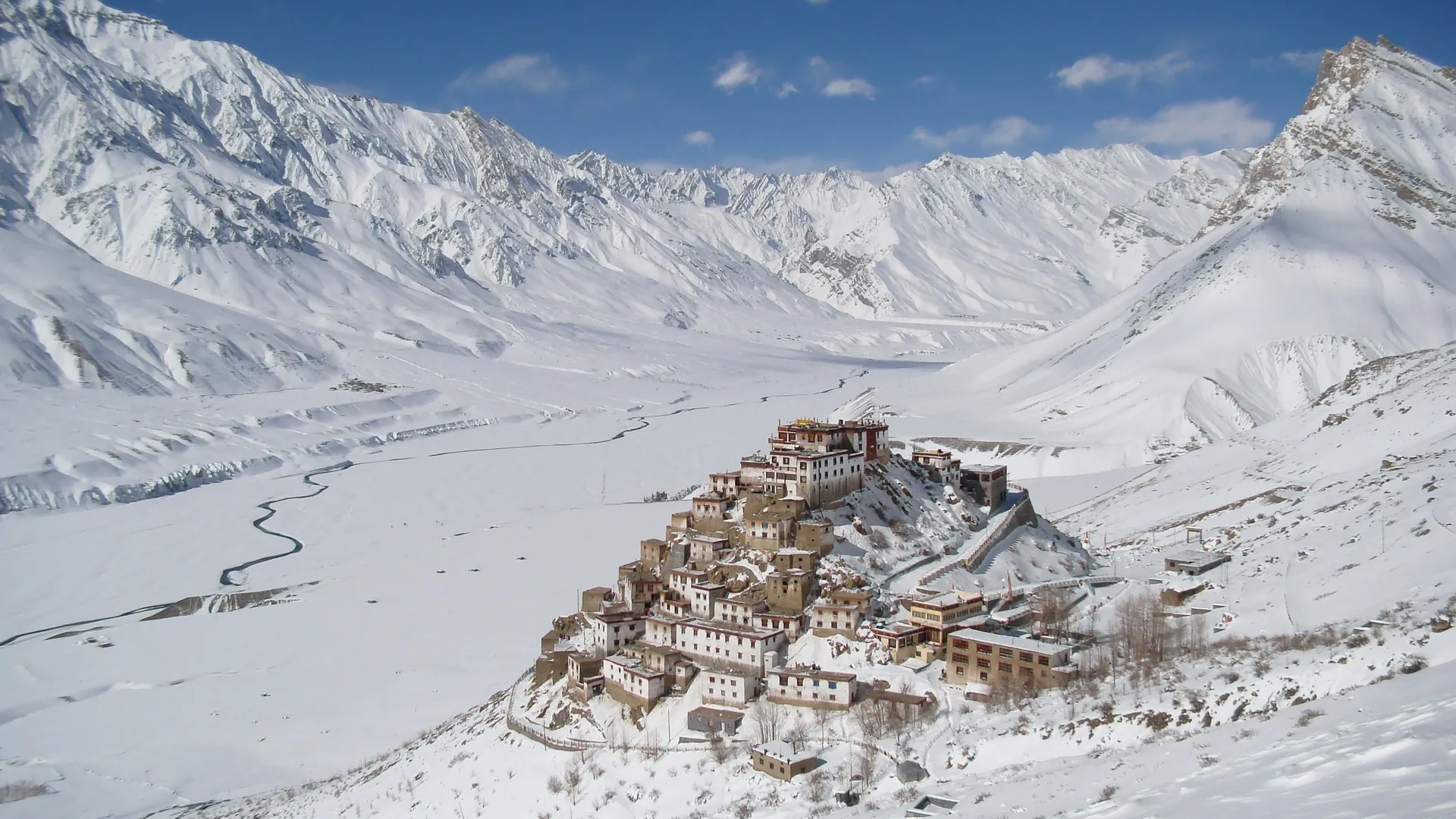
A Spiti Valley road trip is one of those journeys you talk about for the rest of your life. The road narrows to a ledge carved into a cliff, the Spiti River roaring hundreds of metres below. Then the valley opens into a vast, silent landscape of ochre mountains, wind-carved spires and blue sky, and there on a conical hill, like a scene from Tibet, stands Key Monastery, its whitewashed buildings stacked on top of one another. Monks in maroon robes cross the courtyard. A prayer wheel creaks. You are at around 4,000 metres in one of the most remote inhabited valleys in India.
Spiti, in the Lahaul and Spiti district of Himachal Pradesh, is a cold desert tucked behind the Himalayan wall, bordering Tibet. Its name means "the middle land", between India and Tibet, and its culture is Tibetan Buddhist, with monasteries more than a thousand years old. For adventurous Indian travellers, bikers and photographers, the Spiti circuit, looping from Shimla through Kinnaur to Kaza and out over the Kunzum Pass to Manali, is the ultimate road trip.
This guide covers both routes, the best time, a 9-day itinerary, altitude safety, where to stay, what to eat, costs, packing and winter Spiti.
The two routes into Spiti
Via Shimla and Kinnaur (the lower route)
This route follows the Sutlej and Spiti rivers from Shimla through Narkanda, Rampur, Reckong Peo and Nako to Kaza. It is open for most of the year, subject to landslides and snow, and climbs gradually, which helps acclimatisation. It passes through the apple orchards and villages of Kinnaur, the dramatic Kinnaur Kailash range and the famous cliffside road sections.
Via Manali, the Atal Tunnel and Kunzum Pass (the high route)
This route crosses the Atal Tunnel under the Rohtang Pass, then follows rough roads past Chhatru and Batal and over the Kunzum Pass, at about 4,550 metres, into Spiti. It is usually open only from about June to October, depending on snow. The road between Gramphu and Losar is among the toughest in the Himalaya, with river crossings and loose rocks.
The best plan: enter via Shimla and Kinnaur for gradual acclimatisation, and exit via Kunzum Pass to Manali, completing the full circuit.
Best time for a Spiti Valley road trip
- June to September: the full circuit is usually open, with pleasant days and cold nights. The monsoon affects Kinnaur with landslides, but Spiti itself receives little rain as it lies in the rain shadow.
- September to mid-October: clear skies, golden fields and fewer crowds. Arguably the best time.
- November to April: winter Spiti via Shimla only, with snow, temperatures far below zero and the chance to see snow leopards. For experienced travellers with local support.
A 9-day Spiti Valley road trip itinerary
Day 1: Shimla to Narkanda or Sarahan
Drive from Shimla through Kufri and Narkanda's apple country. Stay in Narkanda, or continue to Sarahan to visit the beautiful wooden Bhimakali Temple.
Day 2: To Kalpa or Sangla
Follow the Sutlej River to Reckong Peo and climb to Kalpa, where the Kinnaur Kailash range rises directly opposite, glowing pink at sunrise. Alternatively, detour into the Sangla Valley to Chitkul, one of the last villages before the Tibetan border.
Day 3: Kalpa to Nako
Drive through dramatic gorges along the narrow cliffside roads of Kinnaur, past the confluence of the Spiti and Sutlej rivers at Khab, to Nako, a village of stone houses around a small lake at about 3,600 metres. Rest and let your body adjust to the altitude.
Day 4: Nako to Tabo
Climb the Malling Nallah and descend into Spiti at Tabo. The Tabo Monastery, founded in 996 AD, is one of the oldest continuously functioning Buddhist monasteries in the Himalaya, with mud-walled halls containing ancient murals and statues; it is sometimes called the Ajanta of the Himalayas. Visit the caves above the village used for meditation.
Day 5: Tabo to Kaza via Dhankar and Pin Valley
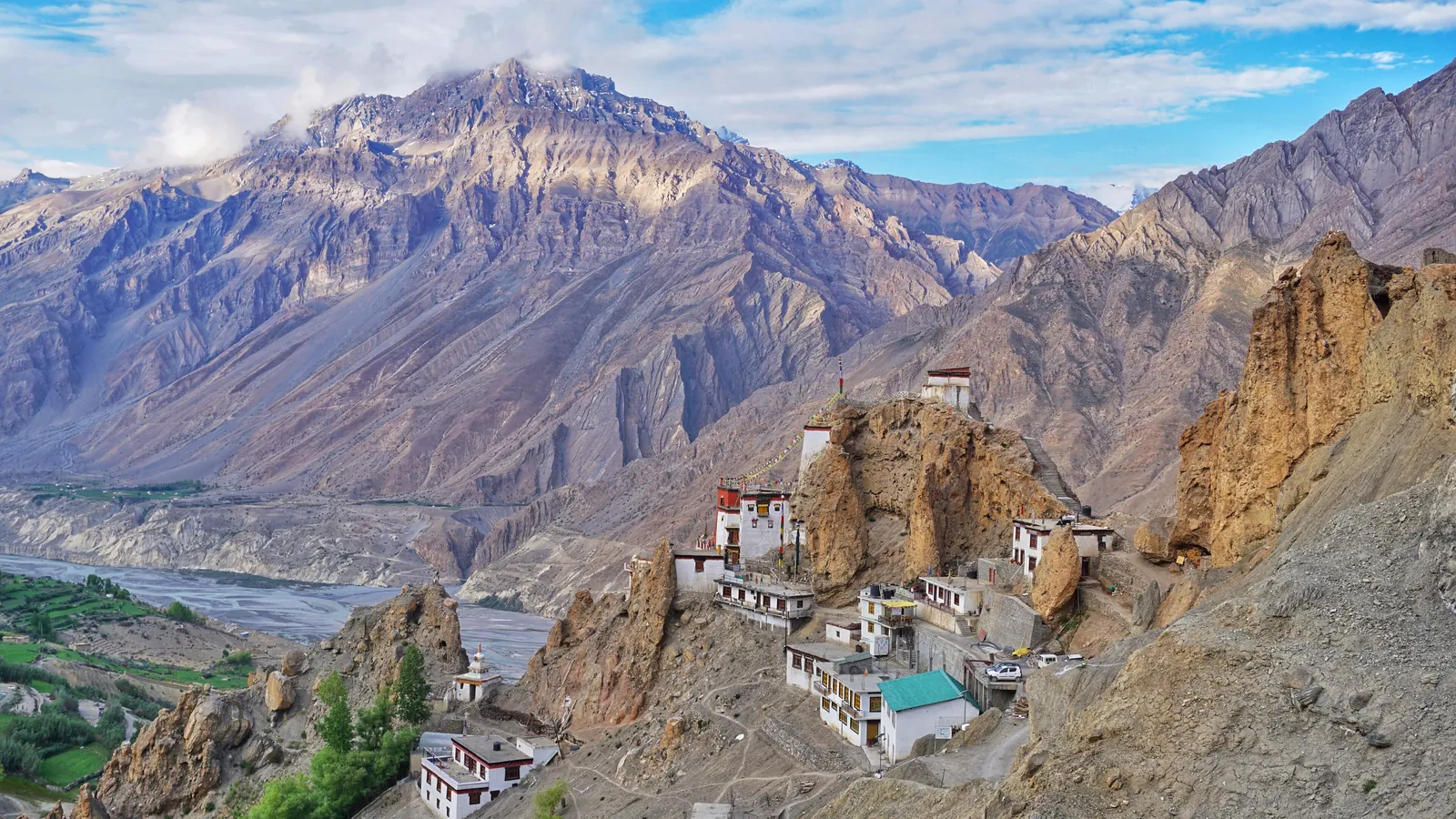
Visit the dramatic Dhankar Monastery, perched on a crumbling ridge above the confluence of the Spiti and Pin rivers, and hike to Dhankar Lake if you are acclimatised. Take a detour into the Pin Valley, a national park home to ibex and snow leopards, with colourful mountains. Continue to Kaza, the main town of Spiti.
Day 6: Key, Kibber and Chicham
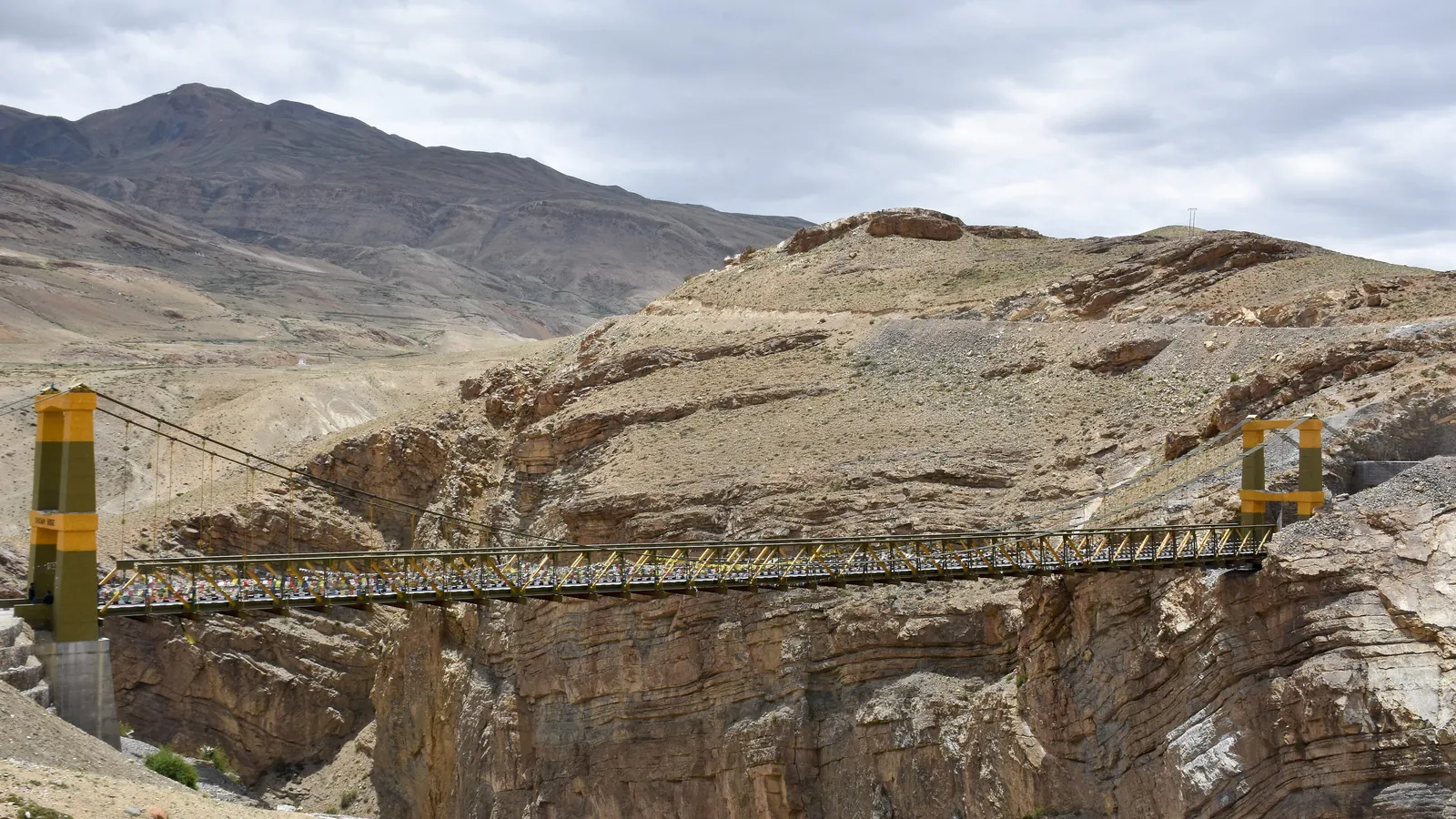
Visit Key Monastery, the largest monastery in Spiti and the iconic image of the valley, and share butter tea with the monks. Continue to Kibber, one of the highest villages in the region, and cross the Chicham Bridge, a suspension bridge spanning a deep gorge, among the highest bridges in Asia. In winter, Kibber is the base for snow leopard expeditions.
Day 7: Langza, Hikkim and Komic
Drive up to three high villages. Langza, with its giant Buddha statue overlooking the valley, is famous for fossils of marine creatures, a reminder that these mountains were once under the Tethys Sea. Hikkim has what is often called the world's highest post office, at about 4,400 metres; send a postcard home. Komic is among the highest villages in Asia connected by road, with a monastery at around 4,500 metres.
Day 8: Kaza to Chandratal
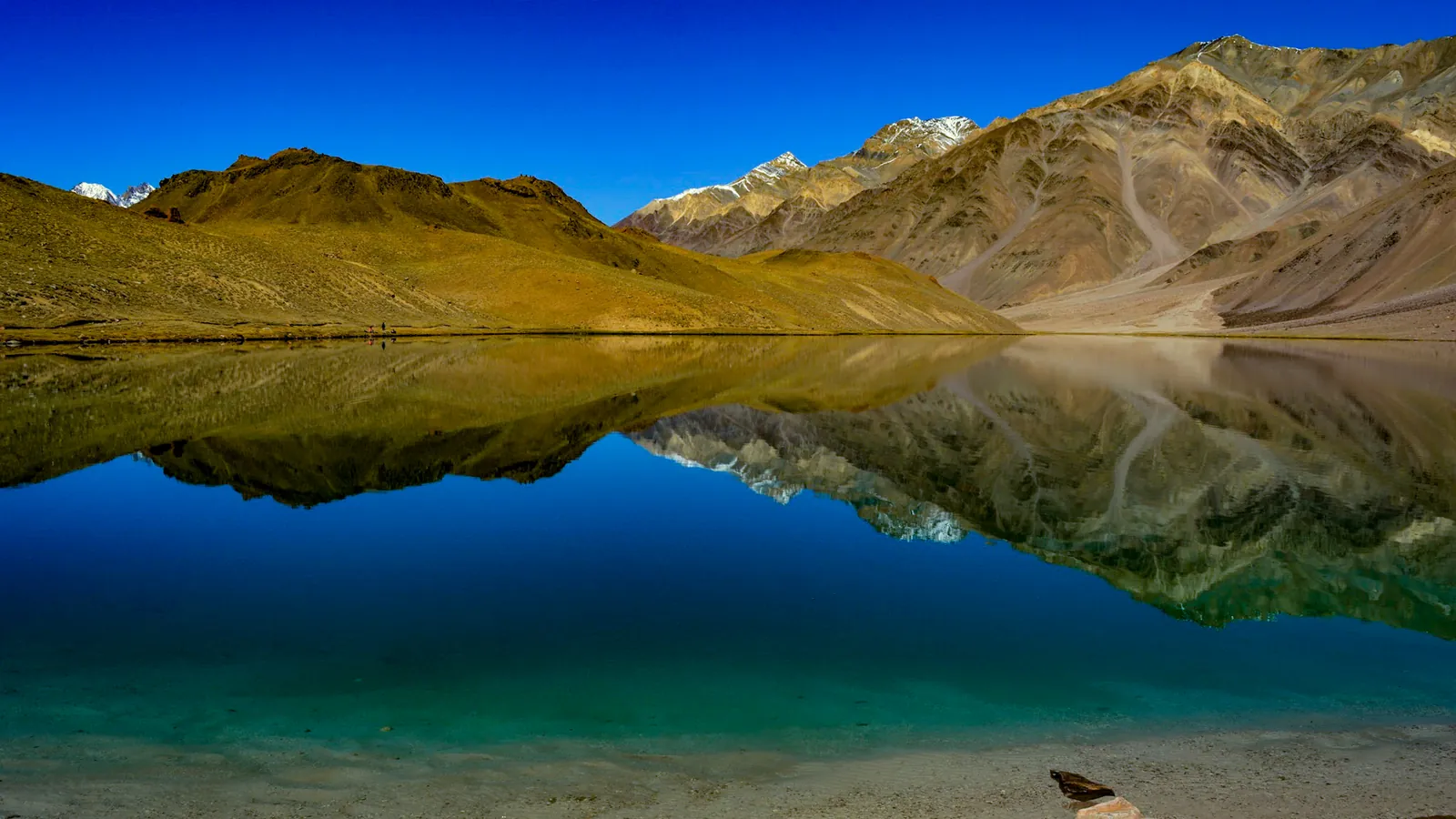
Drive west through Losar and over the Kunzum Pass, stopping at the Kunzum Mata temple, to Chandratal, the crescent-shaped "Moon Lake" at about 4,300 metres, whose colour shifts from blue to emerald through the day. Stay in a camp nearby and enjoy one of the most spectacular star-filled skies in India.
Day 9: Chandratal to Manali
Tackle the rough road through Batal and Chhatru to Gramphu and through the Atal Tunnel to Manali, ending your circuit with a hot shower and a well-earned meal.
Altitude safety: acute mountain sickness
Much of Spiti lies between 3,500 and 4,500 metres, where acute mountain sickness (AMS) is a real risk. Symptoms include headache, nausea, dizziness, fatigue and trouble sleeping.
- Ascend gradually via Kinnaur and spend a night at Nako or Tabo before Kaza.
- Drink plenty of water and avoid alcohol and smoking.
- Rest on arrival and avoid strenuous activity on the first day at altitude.
- Consult a doctor before the trip about preventive medication.
- Descend immediately if symptoms become severe, such as confusion or breathlessness at rest.
- Older travellers and those with heart or lung conditions should seek medical advice before visiting.
Getting there and around
- Self-drive: an SUV with good ground clearance is ideal; bikers love the route but need experience on broken roads and river crossings.
- Taxi with driver: the most comfortable option; hire a local Himachal driver experienced with mountain roads.
- Buses: HRTC buses run from Shimla and Reckong Peo to Kaza, and seasonally from Manali, for budget travellers with time.
- Fuel: fill up in Reckong Peo and Kaza; there are very few petrol pumps in between.
- Connectivity: mobile networks are limited; BSNL and Jio work in Kaza and some villages.
Spiti by motorbike
The Spiti circuit is a rite of passage for Indian bikers. Rent a sturdy motorcycle in Shimla or Manali, or ride your own, and travel with a backup vehicle or group if possible. Carry spare tubes, tools, fuel cans for the long stretch between Kaza and the Atal Tunnel, and riding gear for cold and dust. Water crossings near Chhatru and Batal are best tackled early in the morning, when glacial streams are lower.
If you prefer not to ride, many travellers join organised Spiti road trips in shared vehicles, which are good value for solo travellers and come with experienced local drivers.
Where to stay
- Homestays: the best way to experience Spiti culture, especially in Langza, Komic, Kibber and Demul, with warm families and home-cooked food.
- Hotels and guesthouses: available in Kaza, Tabo and Nako.
- Camps: near Chandratal in season.
Food in Spiti
Expect simple, warming food: momos, thukpa and thenthuk noodle soups, butter tea, barley bread, and rice, dal and vegetables in homestays. Try seabuckthorn juice, made from a local berry rich in vitamin C. Kaza has cafes serving pizza, pasta and Israeli food in season. Carry snacks and dry fruits for long drives.
How much does a Spiti Valley road trip cost?
- Taxi with driver for the circuit: roughly ₹35,000 to ₹60,000 for 9 to 10 days, split among the group.
- Homestays: ₹1,200 to ₹2,500 per person per night including meals.
- Hotels: ₹2,500 to ₹6,000 per night.
- Camps at Chandratal: ₹2,000 to ₹4,000 per person with meals.
- Fuel for self-drive: budget generously; mountain driving uses more fuel.
A 9-day Spiti trip typically costs ₹25,000 to ₹50,000 per person for a group sharing a taxi and homestays, plus travel to Shimla.
What to pack
- Warm layers even in summer: thermals, fleece, down jacket, gloves and a woollen cap.
- Sunglasses, sunscreen and lip balm for the harsh high-altitude sun.
- Sturdy shoes and a walking stick for hikes.
- A basic medical kit, including altitude medication advised by a doctor.
- Cash; ATMs are limited to Kaza and a few towns, and often run out.
- Reusable water bottle and purification tablets.
Winter Spiti
From December to March, Spiti transforms into a frozen world, with temperatures falling to -20°C or lower. Only the Shimla route is open, and roads may close after heavy snowfall. The reward is a snow-covered landscape, frozen waterfalls and the chance to spot the elusive snow leopard with local trackers around Kibber. Winter Spiti is for experienced travellers, ideally with a local operator who arranges heated homestays, 4x4 vehicles and backup plans.
Responsible travel in Spiti
- Carry your plastic back out; waste management in remote villages is limited.
- Use refill stations instead of buying bottled water.
- Walk clockwise around monasteries and ask before photographing monks and locals.
- Choose homestays to support local families.
- Stay on marked roads and never pick fossils; it is illegal and damages the heritage.
Mistakes to avoid
Entering from Manali without acclimatisation. Going straight to high altitude increases AMS risk.
Driving at night. Mountain roads are dangerous after dark.
Relying on digital payments. Networks are patchy; carry cash.
Rushing. Spiti rewards slow travel; build in buffer days for landslides.
Plan your Spiti Valley road trip with The Vacation Code
A Spiti Valley road trip is the adventure of a lifetime. If you love the high Himalaya, join our Hampta Pass trek, which crosses into the Spiti desert and often visits Chandratal, or our Leh Ladakh bike expedition. Read our Hampta Pass trek guide and Leh Ladakh bike trip guide, or browse all our tours.
Frequently asked questions
What is the best time for a Spiti Valley road trip?
June to mid-October is the best time, when both the Shimla-Kinnaur route and the Manali-Kunzum Pass route are usually open. September offers clear skies and fewer crowds.
Which route is better for Spiti, Shimla or Manali?
Entering via Shimla and Kinnaur is better for gradual acclimatisation, and exiting via the Kunzum Pass to Manali completes the full circuit.
How many days are needed for the Spiti circuit?
Eight to ten days is ideal for the full Spiti circuit from Shimla through Kinnaur to Kaza and out via Chandratal to Manali.
Is there a risk of altitude sickness in Spiti?
Yes. Much of Spiti lies between 3,500 and 4,500 metres. Ascend gradually, stay hydrated, rest on arrival and descend if symptoms become severe.
Do Indians need a permit for Spiti?
Indian citizens generally do not need a special permit for the main Spiti circuit, while foreign nationals need an Inner Line Permit for certain areas near the border.
Where is the world's highest post office?
The post office in Hikkim village in Spiti, at about 4,400 metres, is often called the highest post office in the world.
Can I visit Spiti in winter?
Yes, via the Shimla route, but temperatures fall far below zero and roads may close after snowfall. Winter Spiti suits experienced travellers with local support.