📌 In this guide15 sections
- Why an Uzbekistan trip is worth it
- Uzbekistan e-visa for Indians
- Best time for an Uzbekistan trip
- An 8-day Uzbekistan itinerary
- The Mughal connection
- Food in Uzbekistan
- Where to stay
- Getting around Uzbekistan
- What to pack
- How much does an Uzbekistan trip cost?
- Practical tips
- Mistakes to avoid
- Who an Uzbekistan trip suits
- Plan your Uzbekistan trip with The Vacation Code
- Frequently asked questions
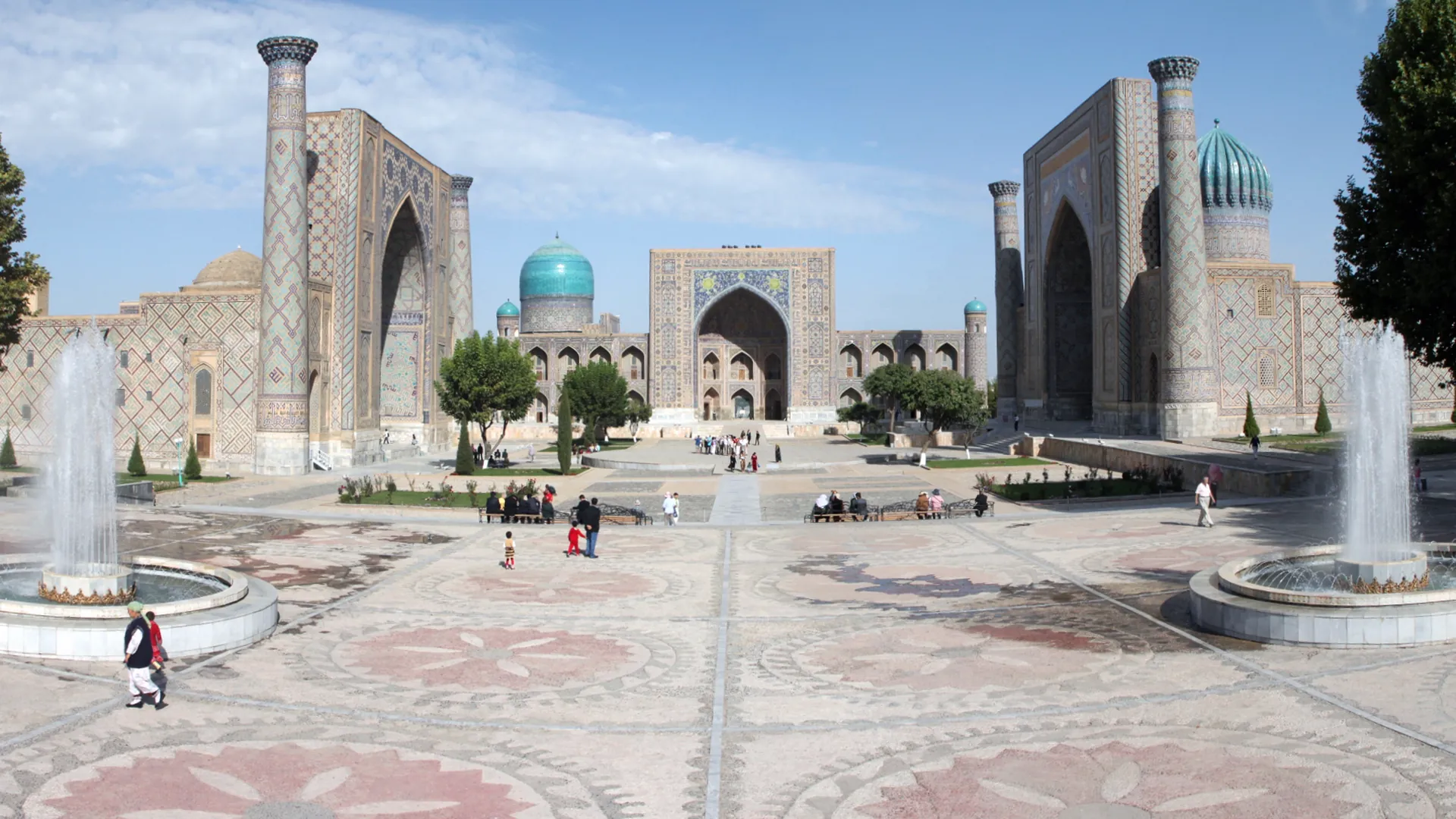
An Uzbekistan trip changes the way many Indians see their own history. In Samarkand, you stand in the Registan, a vast square framed on three sides by madrasas covered in turquoise, cobalt and gold tiles, their portals soaring above you. A short walk away, in a quiet garden, stands the Gur-e-Amir, the ribbed blue-domed mausoleum of Timur, the conqueror known in India as Tamerlane. His descendant Babur, born in Uzbekistan's Fergana Valley, marched south in 1526 and founded the Mughal Empire. The domes, gardens and geometry you see here found their way, generations later, into Humayun's Tomb and the Taj Mahal.
Uzbekistan, at the heart of Central Asia, was for centuries a crossroads of the Silk Road, where caravans carrying silk, spices, paper and ideas passed between China, India, Persia and Europe. Its great cities, Samarkand, Bukhara and Khiva, are among the most beautiful in the Islamic world, and many of their monuments are UNESCO World Heritage Sites. Yet it remains wonderfully uncrowded. With an easy e-visa, a short three-hour flight from Delhi and modern high-speed trains linking the cities, it is one of the most rewarding new destinations for Indian travellers.
This guide covers the e-visa, the best time to go, an 8-day itinerary, food, costs and practical tips for your Uzbekistan trip.
Why an Uzbekistan trip is worth it
- Breathtaking architecture: tiled domes, minarets and madrasas unlike anything else in the world.
- Deep links with India: the Mughal dynasty traces its roots to this land.
- Easy logistics: an online e-visa and the fast Afrosiyob trains between Tashkent, Samarkand and Bukhara.
- Great value: hotels and food are inexpensive.
- Legendary hospitality: Uzbeks love Bollywood, and older generations often greet Indians warmly with the names of Raj Kapoor and Mithun Chakraborty.
Uzbekistan e-visa for Indians
Indian citizens can apply for an Uzbekistan e-visa online through the official government portal, for a fee of around US$20, typically issued within a few working days. It usually allows a stay of up to 30 days. Print a copy and carry it with you. Your passport should be valid for at least three months beyond your trip, although six months is safer. Check the official portal for the latest rules before applying.
Best time for an Uzbekistan trip
- April to May: spring flowers, green countryside and pleasant temperatures of about 20 to 28°C. The Navruz festival in March celebrates the Persian New Year.
- September to October: warm, clear days, harvest season and bazaars overflowing with melons, grapes and pomegranates. Arguably the best time.
- June to August: very hot, often above 40°C in Bukhara and Khiva. Sightseeing is best early and late in the day.
- November to March: cold, sometimes snowy, but quiet and atmospheric, with the lowest prices.
An 8-day Uzbekistan itinerary
Day 1: Arrive in Tashkent
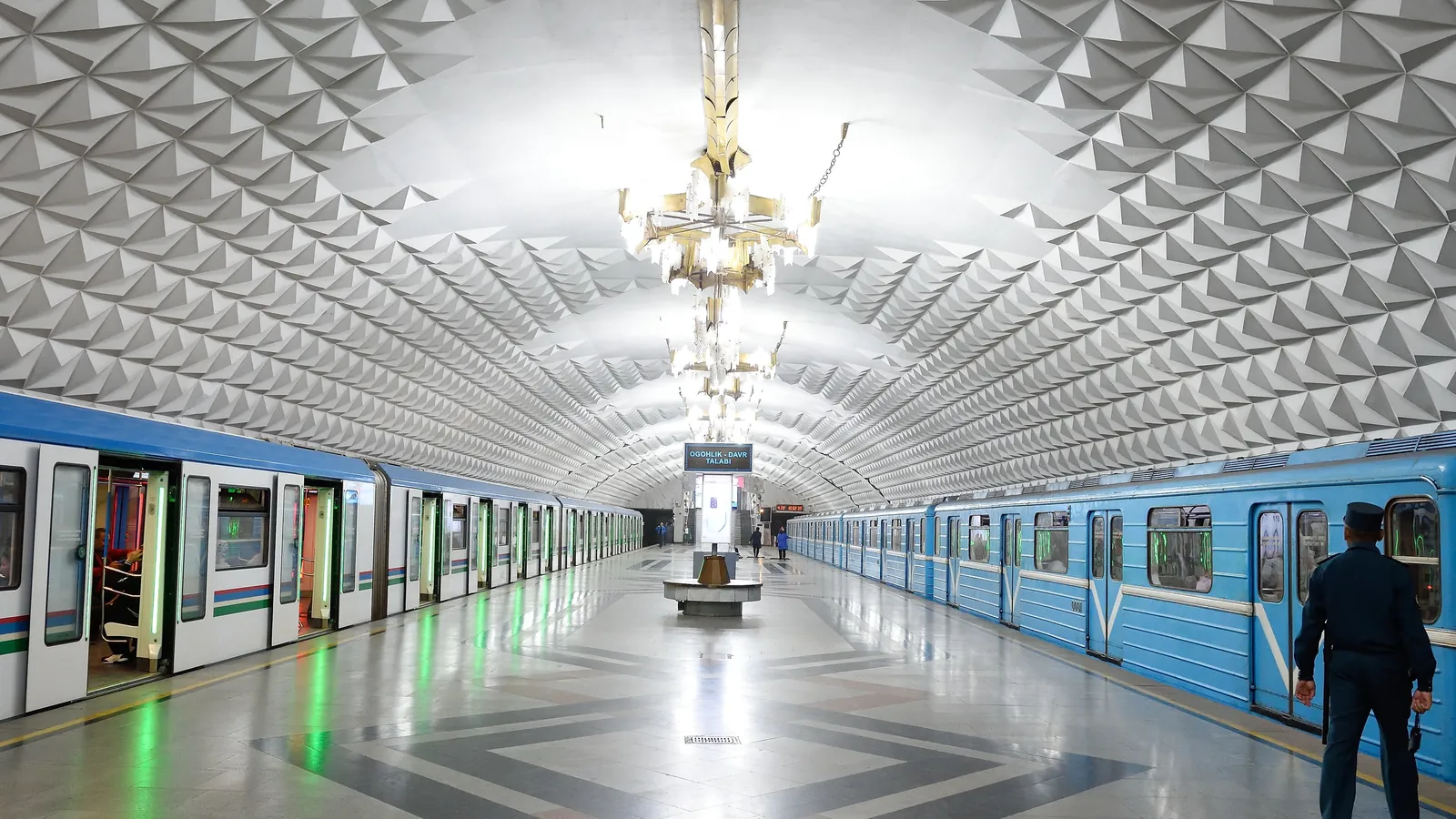
Fly about three hours from Delhi to Tashkent, the capital. Tashkent was largely rebuilt after a devastating earthquake in 1966, so it is a city of wide avenues, parks and Soviet-era architecture. In the evening, ride the Tashkent Metro, whose stations are decorated like palaces, with chandeliers, marble columns and mosaics; each station has its own theme.
Day 2: Tashkent sightseeing
Visit the Khast Imam complex, home to one of the oldest Qurans in the world, the Uthman Quran, dating from the 7th century. Explore Chorsu Bazaar, a huge domed market piled with spices, dried fruits, nuts, bread and colourful textiles. See Amir Timur Square and the Museum of Applied Arts. Take the high-speed Afrosiyob train to Samarkand in the afternoon, a journey of about two to two and a half hours.
Day 3: Samarkand, the Registan
Samarkand is more than 2,500 years old and was the capital of Timur's empire in the 14th century. Spend the morning at the Registan, the magnificent square with three madrasas: Ulugh Beg, Sher-Dor, famous for its tiger-like lions chasing deer, and Tilya-Kori, whose interior glitters with gold. Return at night when the buildings are lit up. Visit the Gur-e-Amir, Timur's mausoleum, where the ribbed turquoise dome and gilded interior are breathtaking. This mausoleum is considered an important architectural ancestor of the great Mughal tombs of India.
Day 4: Samarkand, Shah-i-Zinda and Ulugh Beg
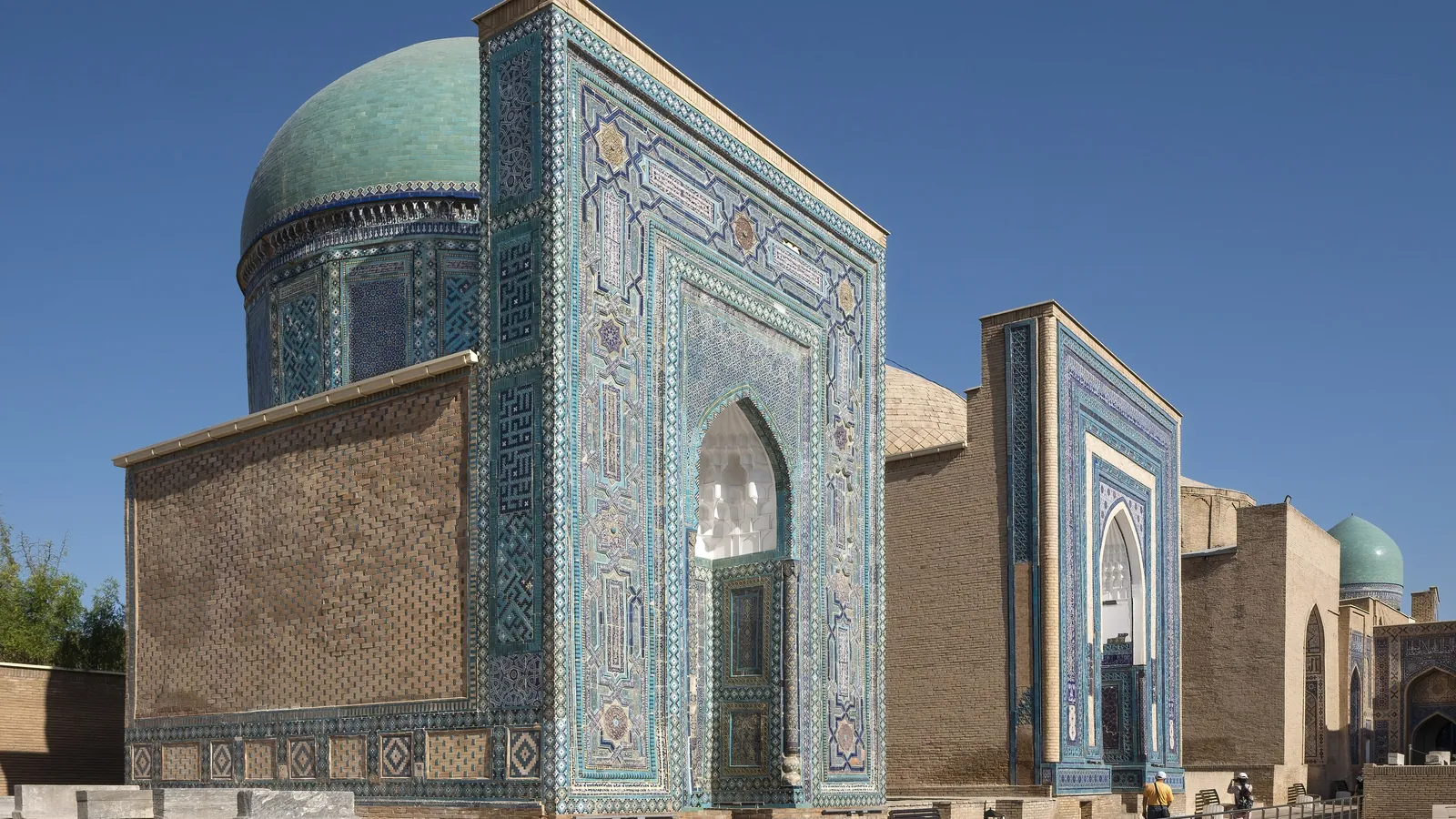
Walk through Shah-i-Zinda, an avenue of mausoleums climbing a hillside, covered in some of the finest tilework in the Islamic world, every shade of blue imaginable. Visit the ruins of the Bibi-Khanym Mosque, once among the largest mosques in the world, and the Siyob Bazaar for bread, halva and dried fruit. See the remains of the Ulugh Beg Observatory, where Timur's grandson, a remarkable astronomer, catalogued more than a thousand stars in the 15th century. Visit a paper workshop at Konigil, where traditional silk paper is still made by hand.
Day 5: Train to Bukhara
Take the train to Bukhara, about 1.5 to 2 hours on the fast service. Bukhara feels like a living museum, with more than 140 protected monuments in its historic centre. In the evening, relax at Lyabi-Hauz, a plaza around an old pool shaded by mulberry trees, lined with teahouses.
Day 6: Bukhara
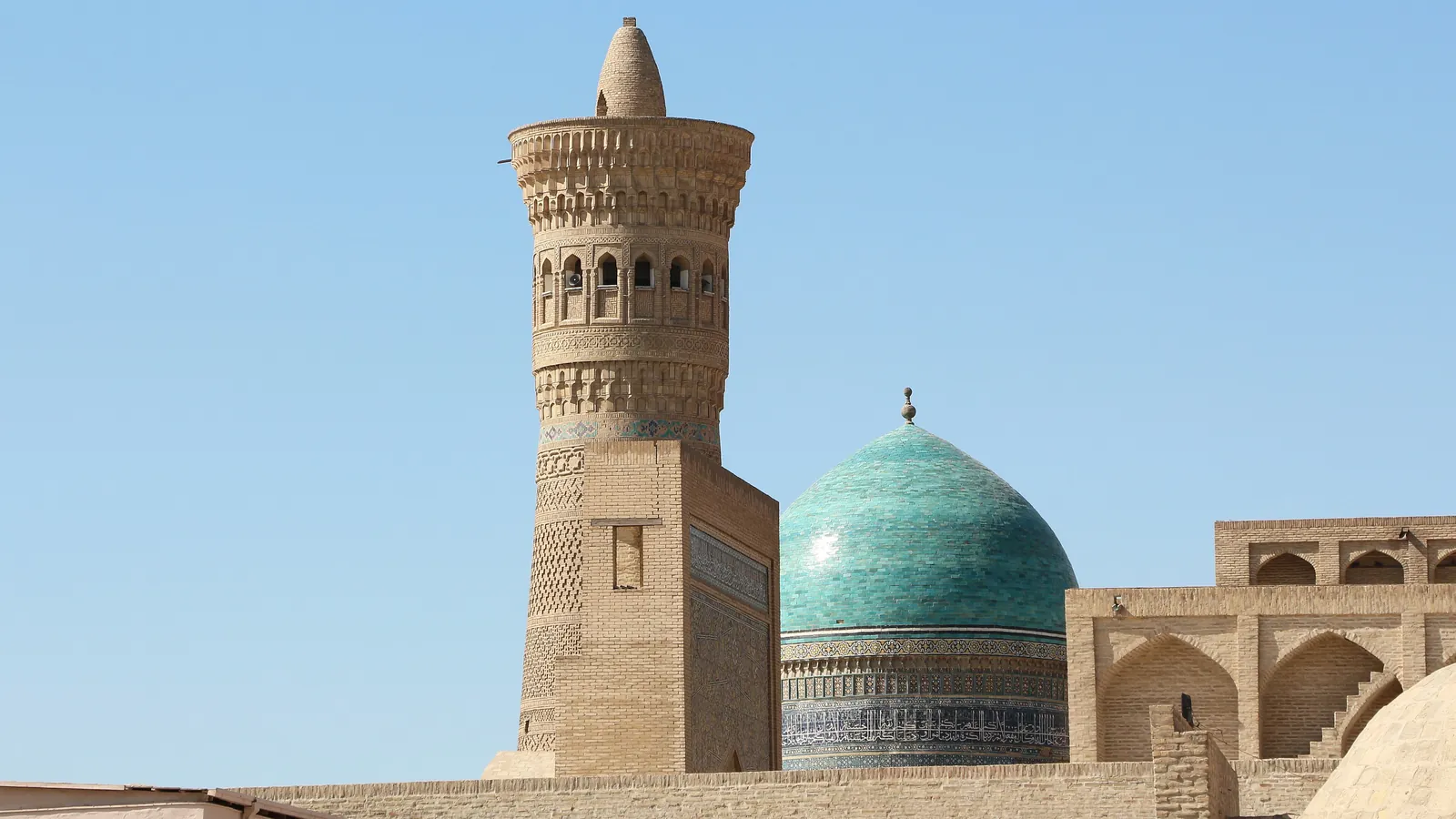
Visit the Po-i-Kalyan complex, dominated by the Kalyan Minaret, built in 1127 and so impressive that Genghis Khan is said to have spared it when he destroyed the rest of the city. Explore the Ark, the fortress of the emirs, the tiny four-towered Chor Minor, the 10th-century Samanid Mausoleum, and the domed trading bazaars where carpets, ceramics, suzani embroidery and knives are sold. Watch a folk music and fashion show in a madrasa courtyard in the evening.
Day 7: Khiva
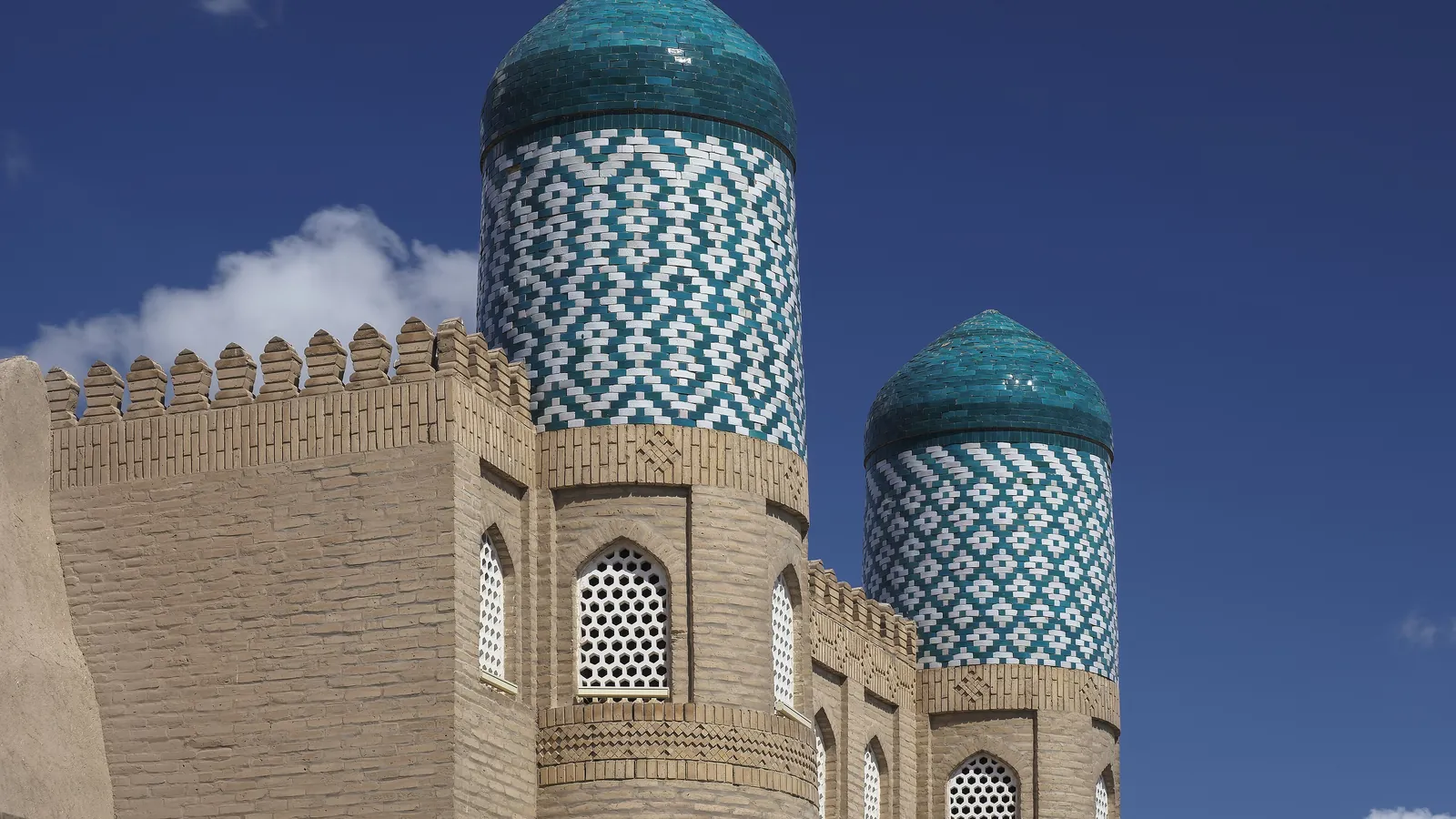
Travel to Khiva by train or road, about six to seven hours across the Kyzylkum desert, or take a short flight to Urgench. Khiva's walled inner town, Itchan Kala, is a UNESCO World Heritage Site that looks like a set from a Silk Road film: mud-brick walls, tiled minarets, madrasas and palaces. Climb a minaret for sunset over the rooftops, and admire the unfinished, turquoise-tiled Kalta Minor minaret.
Day 8: Return to Tashkent and fly home
Fly from Urgench to Tashkent and connect to your flight home to India.
The Mughal connection
Babur, the founder of the Mughal Empire, was born in 1483 in Andijan in the Fergana Valley of present-day Uzbekistan. A descendant of Timur on his father's side and of Genghis Khan on his mother's side, he ruled Samarkand briefly as a young man before losing it and turning south to Kabul and then India. His memoir, the Baburnama, lovingly describes the gardens and melons of his homeland. The Persian-inspired architecture of Timur's Samarkand, with its double domes, iwans and charbagh gardens, influenced the Mughal monuments that followed, from Humayun's Tomb in Delhi to the Taj Mahal in Agra. Visiting Samarkand with this in mind gives the trip a special resonance for Indian travellers.
Food in Uzbekistan
Uzbek cuisine is hearty and bread-centred. The round non bread, baked in clay tandoor ovens and stamped with patterns, is sacred and served with every meal. Plov, rice cooked with carrots, onions and spices, is the national dish; it is usually made with meat, but vegetarian versions can be requested. Vegetarians can enjoy samsa filled with pumpkin or potato, fresh salads, yoghurt, soups, fresh fruit, and an astonishing variety of dried fruits and nuts. Tea is served everywhere, green or black. Tashkent and Samarkand have Indian restaurants, and many hotels will prepare vegetarian meals on request. Carry some snacks for long journeys.
Where to stay
- Tashkent: modern hotels in the city centre.
- Samarkand: hotels within walking distance of the Registan.
- Bukhara: charming boutique guesthouses in restored merchants' houses near Lyabi-Hauz.
- Khiva: guesthouses inside the walls of Itchan Kala for the full atmosphere.
Getting around Uzbekistan
- High-speed trains: the Afrosiyob service links Tashkent, Samarkand and Bukhara quickly and comfortably. Book on the official railway website or through a local agent, ideally a few weeks ahead.
- Regular trains: slower overnight trains reach Khiva and Urgench and are an experience in themselves.
- Domestic flights: save time between Tashkent and Urgench (for Khiva).
- Taxis: use the Yandex Go app in cities for fair fares.
- Walking: the old centres of Samarkand, Bukhara and Khiva are best explored on foot.
What to pack
- Comfortable walking shoes for cobbled streets and uneven paving.
- Layers: warm days can turn to cool evenings in spring and autumn.
- A scarf for women visiting mosques, and clothing that covers shoulders and knees.
- Sunscreen, sunglasses and a hat for the desert sun.
- Snacks from home for long train and road journeys.
- Cash in US dollars or euros to exchange, plus a card.
How much does an Uzbekistan trip cost?
- Return flights Delhi to Tashkent: typically ₹25,000 to ₹45,000 per person.
- e-Visa: around US$20.
- Hotels: ₹3,000 to ₹7,000 per night for comfortable mid-range hotels and boutique guesthouses.
- Trains: high-speed tickets typically cost ₹1,500 to ₹4,000 per journey; book ahead.
- Domestic flight Urgench to Tashkent: roughly ₹5,000 to ₹10,000.
- Entry fees and guides: modest; a local guide in each city adds a lot.
- Food: ₹1,000 to ₹2,000 per person per day.
A comfortable 8-day Uzbekistan trip typically costs ₹70,000 to ₹1,10,000 per person including flights, visa, hotels, trains and food.
Practical tips
- Book trains early. Afrosiyob high-speed seats sell out, especially in spring and autumn.
- Carry som in cash. Cards are increasingly accepted in hotels and larger shops, but markets and small shops prefer cash. ATMs are common in the big cities.
- Dress modestly at mosques and madrasas; women may want a scarf.
- Learn a few words: assalomu alaykum for hello and rahmat for thank you. Russian is widely spoken.
- Bargain politely in the bazaars.
- Keep your hotel registration slips. Hotels register foreign guests, and you may be asked for proof when leaving.
Mistakes to avoid
Visiting in July and August without a plan. Midday heat in Bukhara and Khiva is intense; sightsee early and late.
Skipping Khiva because it is far. It is one of the most atmospheric places in Central Asia.
Rushing Samarkand. Give it at least two days, and see the Registan both by day and by night.
Not booking trains in advance. Popular trains fill up weeks ahead.
Who an Uzbekistan trip suits
History lovers will be enthralled. Photographers find endless inspiration in the tiles and light. Couples and friends enjoy the romance of the Silk Road. Families with older children love the trains, bazaars and stories. Older parents will find it comfortable with good planning, although there is a fair amount of walking.
Plan your Uzbekistan trip with The Vacation Code
An Uzbekistan trip takes you into the heart of the Silk Road and the story of the Mughals. Our team can arrange hotels, train tickets, guides and flights. For more Central Asian adventures, read our guides to Almaty, Baku and Georgia, see our list of visa free and e-visa countries for Indians, explore our escorted Japan and Korea tour, or browse all our international tours.
Frequently asked questions
Do Indians need a visa for an Uzbekistan trip?
Yes. Indian citizens can apply online for an Uzbekistan e-visa costing around US$20, usually issued within a few working days and valid for stays of up to 30 days.
How much does an 8-day Uzbekistan trip cost?
A comfortable 8-day Uzbekistan trip typically costs 70,000 to 1,10,000 rupees per person including flights, visa, hotels, trains and food.
What is the best time for an Uzbekistan trip?
April to May and September to October offer the most pleasant weather. Summer is very hot, especially in Bukhara and Khiva, and winter is cold but quiet.
What is the connection between Uzbekistan and the Mughals?
Babur, founder of the Mughal Empire, was born in Andijan in present-day Uzbekistan and was a descendant of Timur, whose Samarkand architecture influenced later Mughal monuments.
How long is the flight from Delhi to Tashkent?
Direct flights from Delhi to Tashkent take about three hours.
Is vegetarian food available in Uzbekistan?
It takes some planning. Try pumpkin or potato samsa, non bread, salads, yoghurt, soups and dried fruit, ask for vegetarian plov, and look for Indian restaurants in Tashkent and Samarkand.
How do I travel between Samarkand and Bukhara?
The high-speed Afrosiyob train connects Tashkent, Samarkand and Bukhara. Samarkand to Bukhara takes about 1.5 to 2 hours. Book tickets in advance.