- Why Chikmagalur?
- When to visit Chikmagalur
- How to reach Chikmagalur
- Where to stay
- Coffee estate homestays
- Plantation resorts
- Chikmagalur town
- The story of coffee in Chikmagalur
- From seed to cup: how coffee is made
- Trekking Mullayanagiri
- Two ways up
- Tips for Mullayanagiri
- Baba Budangiri and Manikyadhara Falls
- Waterfalls of Chikmagalur
- Hebbe Falls
- Jhari Falls
- Kallathigiri Falls
- Lakes and wildlife: Hirekolale, Ayyanakere and Bhadra
- Kemmangundi and Z Point
- Kudremukh: a trek for the adventurous
- Belur and Halebidu: masterpieces of Hoysala art
- Sringeri and Horanadu
- Food in Chikmagalur
- A two- to three-day Chikmagalur itinerary
- Day 1: Bangalore to Chikmagalur, Belur and a plantation walk
- Day 2: Mullayanagiri sunrise, Baba Budangiri and the falls
- Day 3: Hebbe or Jhari Falls and return
- Chikmagalur for every kind of traveller
- Chikmagalur in the monsoon
- How much does a Chikmagalur weekend cost?
- Practical tips
- What to take home
- What to pack
- Mistakes to avoid
- Chikmagalur or Coorg?
- Travel responsibly in the Malnad hills
- Plan your Chikmagalur escape with The Vacation Code
- Frequently asked questions about Chikmagalur
- How many days are enough for Chikmagalur?
- How difficult is the Mullayanagiri trek?
- What is the best time to visit Chikmagalur?
- How far is Chikmagalur from Bangalore?
- Why is Chikmagalur called the birthplace of Indian coffee?
- Can we visit Belur and Halebidu from Chikmagalur?
Nearly four hundred years ago, a Sufi saint named Baba Budan was returning to India from the pilgrimage to Mecca. Passing through the port of Mocha in Yemen, he did something the Arabs guarded jealously against: he hid seven coffee beans, the story goes, in his beard, and smuggled them home. At the time, coffee could only leave Arabia roasted or boiled, so that no one else could grow it. Baba Budan planted his seven seeds in the hills near his cave in what is now Chikmagalur, and from those seven beans, the story says, grew India's entire coffee industry.
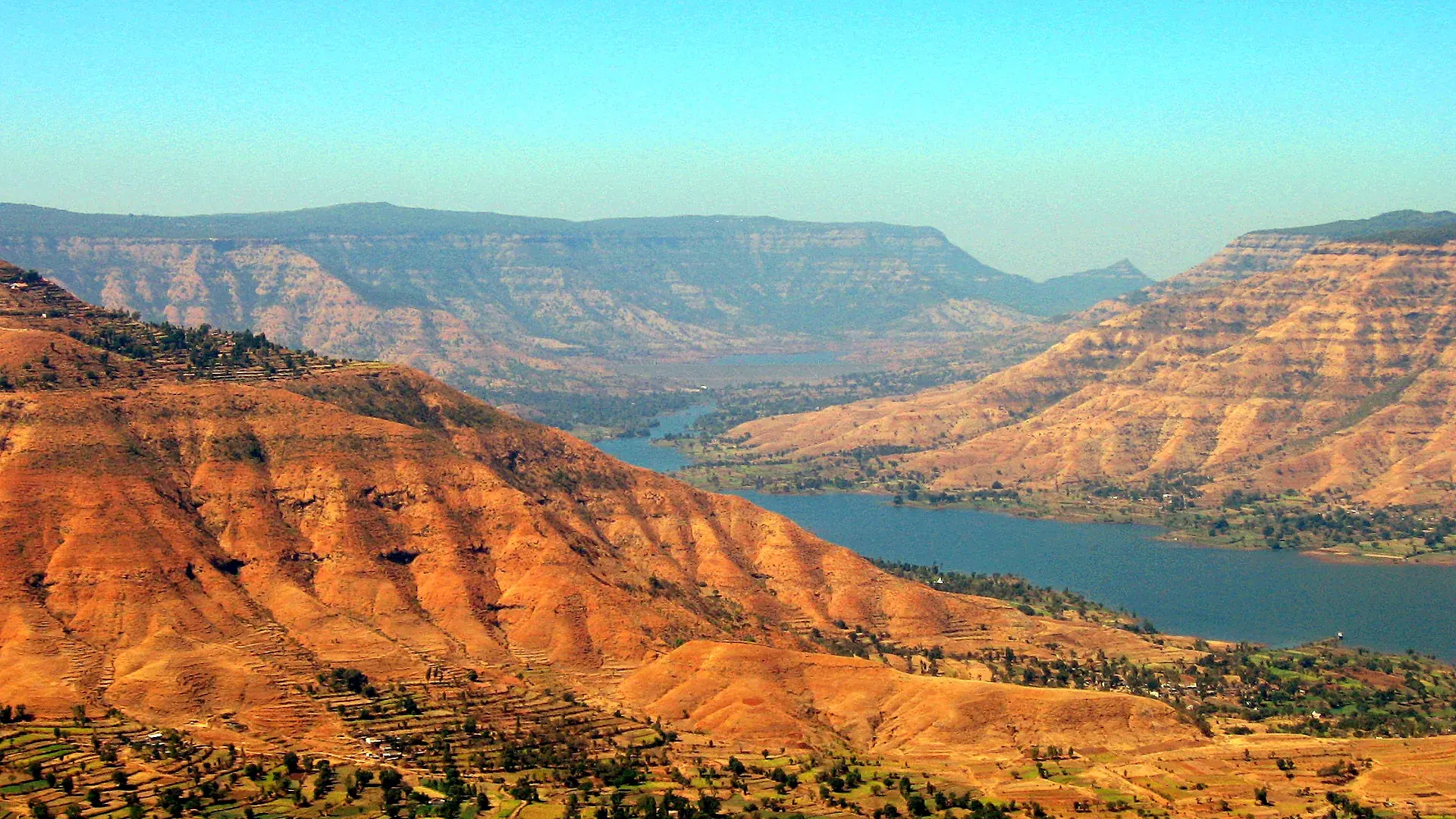
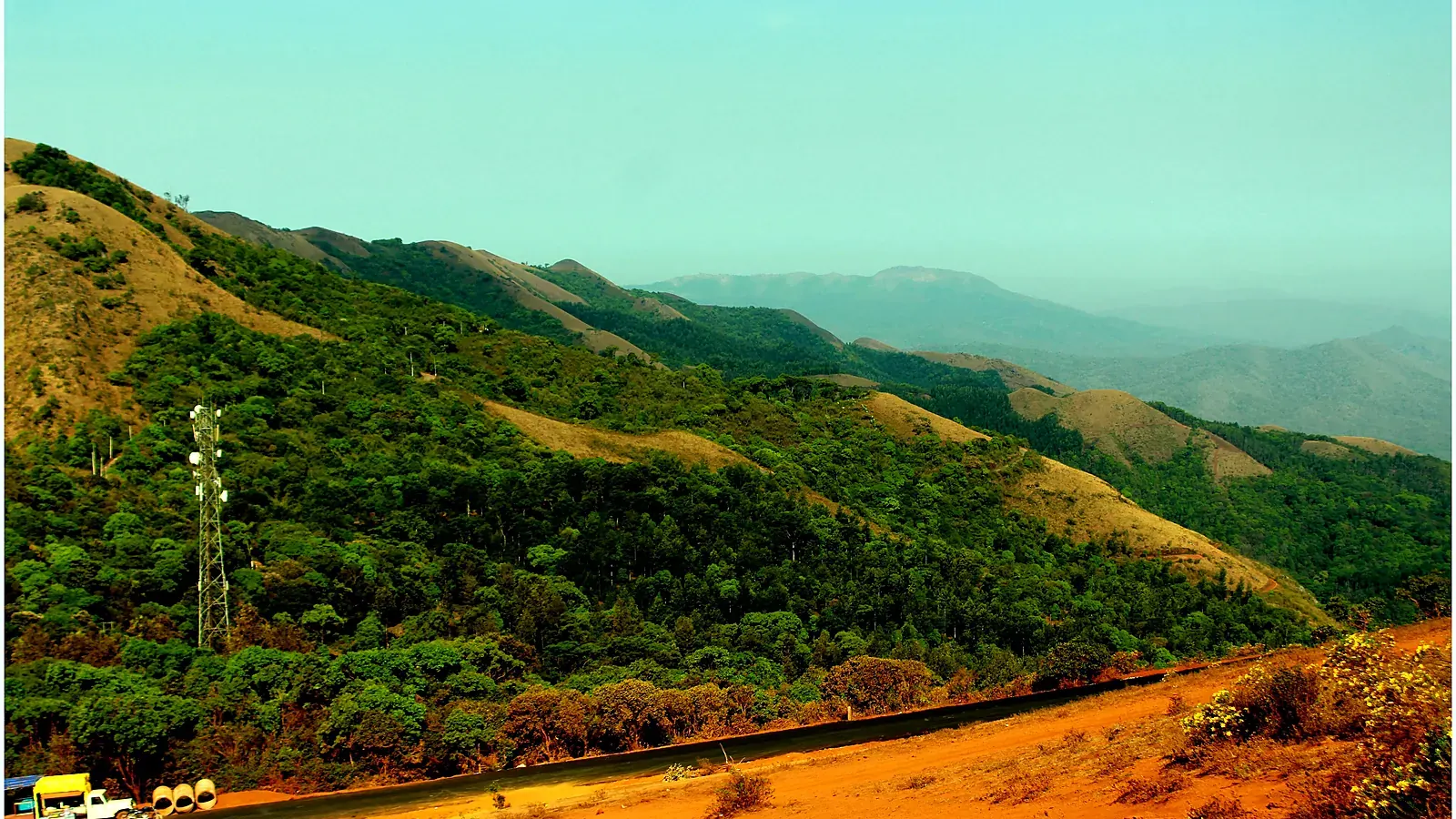
Whether or not every detail of the legend is true, the hills where it happened, still known as the Baba Budangiri range, remain one of the most beautiful places in South India. Chikmagalur, officially Chikkamagaluru, is a district of coffee estates, rolling green hills, cloud forests and waterfalls in the Western Ghats of Karnataka. It is home to Mullayanagiri, the highest peak in the state, and it is one of the most rewarding weekend escapes from Bangalore, particularly for people who love to walk, trek and breathe clean mountain air.
This guide covers everything you need to plan a trip: the best season, where to stay, how to trek Mullayanagiri, the waterfalls, temples and viewpoints worth your time, the region's food, a two- to three-day itinerary, costs and practical tips.
Why Chikmagalur?
It is the birthplace of Indian coffee. You can walk through estates that have grown coffee for generations, learn how it is processed and drink it fresh from the source.
It has the highest peaks in Karnataka. Mullayanagiri, at about 1,930 metres, and the neighbouring Baba Budangiri range offer short but spectacular treks with sweeping views over the Western Ghats.
It is less crowded than Coorg. Chikmagalur has grown in popularity, but it remains quieter and more rugged than its better-known neighbour.
It combines nature with heritage. The magnificent Hoysala temples of Belur and Halebidu, recognised by UNESCO, are about an hour away, and the ancient temple town of Sringeri is within reach.
It is easy to reach. At around five hours from Bangalore by road, it is perfect for a two-day weekend.
When to visit Chikmagalur
September to March is the best time. After the monsoon, the hills are green and the waterfalls are full, and the weather is cool and pleasant, often chilly at night from November to February. This is the best season for trekking and sightseeing. The coffee harvest, from roughly November to February, adds interest to plantation visits.
March and April bring the coffee blossom after the first showers, when the estates are white with flowers and fragrant for a few days. Afternoons get warmer.
June to August is the monsoon. The rainfall is heavy, the hills are wrapped in mist and the waterfalls are thunderous. It is atmospheric and beautiful, but treks can be slippery, leeches are common, views are often hidden by cloud and some roads, particularly to viewpoints, can be closed. It suits travellers who want a cosy estate stay rather than active sightseeing.
Weekends from October to January can be very busy, especially on the road to Mullayanagiri. Travel on weekdays if you can.
How to reach Chikmagalur
By road. Chikmagalur town is about 245 kilometres from Bangalore, a drive of around five hours via Hassan. The route is good, with plenty of breakfast stops. KSRTC and private buses run regularly from Bangalore.
By rail. Chikmagalur has a railway station with limited connections. Kadur and Birur, about 40 kilometres away, are better connected, and Hassan is a convenient railhead with trains from Bangalore.
By air. The nearest major airports are Mangaluru, about 150 kilometres away, and Bangalore.
Where to stay
Coffee estate homestays
Like Coorg, Chikmagalur has many homestays on working coffee plantations, run by families who have farmed here for generations. Staying on an estate lets you wake up to birdsong and mist over the coffee bushes, take a guided plantation walk and enjoy home-cooked Malnad food. Choose one close to the areas you want to explore. Estates on the Mullayanagiri and Baba Budangiri side are convenient for treks and viewpoints, while those near Kemmangundi are closer to Hebbe Falls.
Plantation resorts
Several resorts in Chikmagalur offer luxury cottages, pools, spas and fine dining on large estates. Some have remarkable views over the hills and valleys.
Chikmagalur town
Staying in town is practical and cheaper but lacks the atmosphere of the estates.
The story of coffee in Chikmagalur
After Baba Budan planted his seeds, coffee spread slowly through the hills around his shrine, grown mostly in small gardens for local use. The real transformation came in the 19th century, when British planters, attracted by the cool climate, high rainfall and fertile soil, established large commercial estates across Chikmagalur, Coorg and neighbouring regions. Coffee became a major export, and the plantations reshaped the landscape and economy of the hills.
Chikmagalur has remained at the heart of Indian coffee ever since. The Central Coffee Research Institute, founded in the 1920s at Balehonnur in the district, has developed many of the coffee varieties grown in India today. Today, the district is home to thousands of estates, from small family farms of a few acres to large corporate plantations, and many of India's specialty coffee brands source their beans from these hills. You can learn more at the Coffee Museum run by the Coffee Board in Chikmagalur town, which explains the history, cultivation and processing of coffee.
From seed to cup: how coffee is made
A plantation walk becomes far more interesting when you understand what you are looking at. Here is the journey of a coffee bean in Chikmagalur.
Growing. Coffee plants are shrubs, pruned to a height that makes picking easy, and planted under a canopy of tall shade trees such as silver oak, jackfruit and native forest trees. Black pepper vines climb the shade trees, and cardamom, oranges and areca nut are often grown alongside, which is why estates here feel more like forests than farms.
Blossoming. After the first rains of spring, the coffee bushes burst into clusters of white, jasmine-scented flowers, which last only a few days. Planters watch anxiously for the "blossom showers", because a good bloom means a good crop.
Ripening and picking. Over the following months, the flowers turn into green berries, called cherries, which ripen to a deep red by winter. From roughly November to February, pickers move through the estate harvesting ripe cherries by hand, often going over the same bushes several times.
Processing. The cherries are processed in one of two main ways. In the washed method, the skin and pulp are removed, the beans are fermented to remove the sticky layer around them, washed and dried. In the natural or dry method, whole cherries are dried in the sun on large yards for several weeks. You may see coffee drying in the sun, being raked regularly, if you visit during harvest.
Curing, roasting and brewing. The dried beans are hulled to remove their parchment layer, graded and sorted, and sold as "green coffee". Roasting develops the flavour, and the degree of roast, from light to dark, changes it dramatically. Many estates will show you the process and let you taste coffees side by side. It is a revelation for anyone used only to instant coffee.
Trekking Mullayanagiri
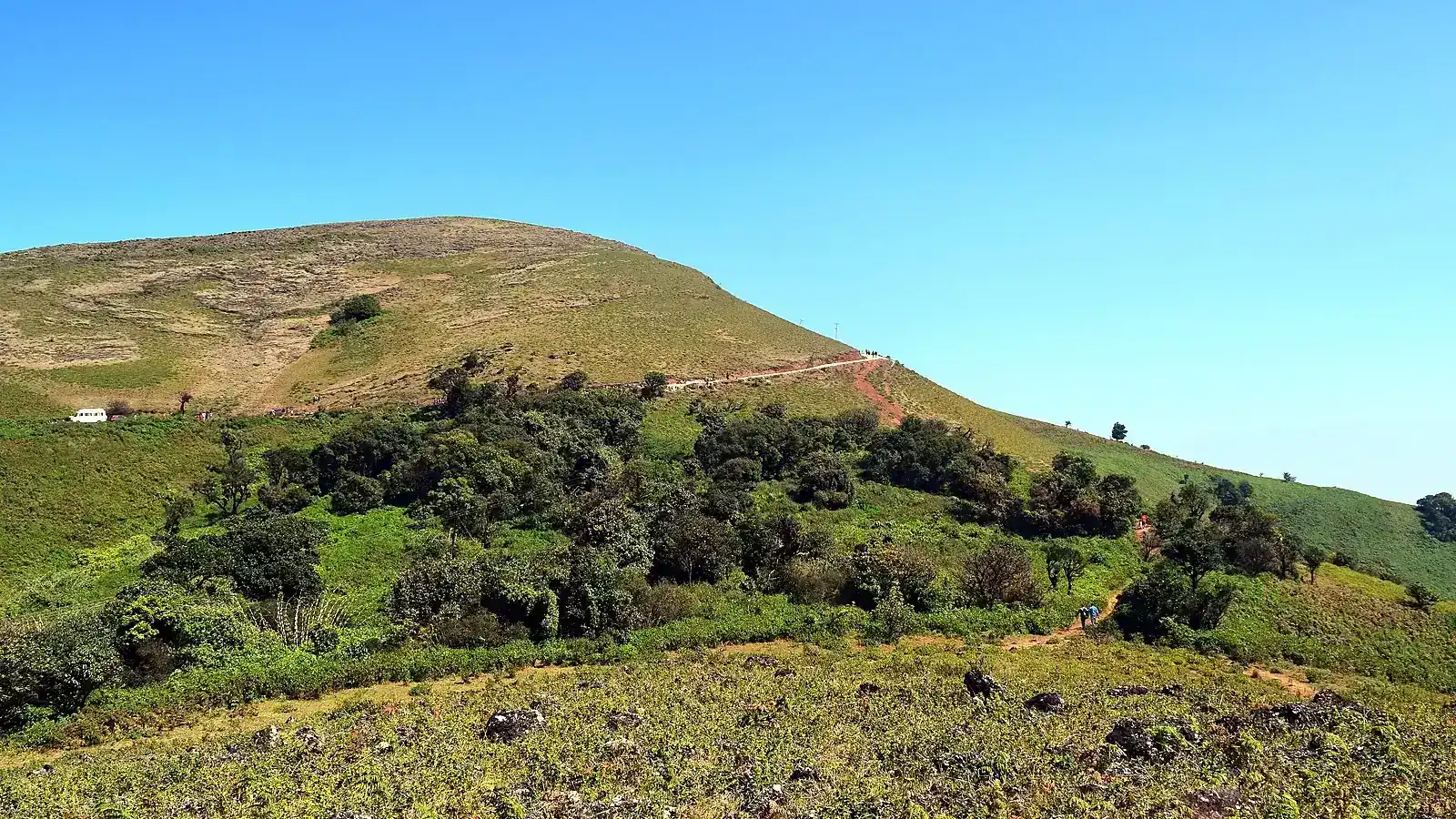
Mullayanagiri is the highest peak in Karnataka, rising to about 1,930 metres in the Baba Budangiri range. It takes its name from the small Mullappa Swamy temple on its summit, dedicated to a sage who is said to have meditated in a cave nearby. From the top, on a clear day, you see an extraordinary panorama of rolling hills, forests, plantations and the distant ranges of the Western Ghats. In the early morning, the valleys below are often filled with a sea of clouds.
Two ways up
The road and the steps. A narrow, winding road climbs from Chikmagalur town to a parking area close to the summit, about 20 kilometres away. From there, a flight of several hundred steps leads to the temple at the top. It takes around 20 to 30 minutes and is manageable for most people, including families. This is how most visitors reach the summit.
The trek from Sarpadhari. For a proper hike, start from the base at Sarpadhari, meaning "the snake's path", about 4 kilometres below the summit. The trail climbs steeply through grassland and shola forest, with narrow sections and loose rocks. It takes about two to three hours up. It is a rewarding moderate hike with far fewer people than the road route, and the sense of achievement at the top is much greater. It is best done early in the morning, with an experienced local guide, especially in misty weather.
Tips for Mullayanagiri
- Start early. Arrive at sunrise for the sea of clouds and to beat the crowds. On weekends, traffic on the narrow road can be heavy by mid-morning.
- Check access rules. The authorities sometimes regulate vehicle access, set timings or require online booking on busy days and during the monsoon. Check current rules before you go.
- Carry water and a light jacket. It is windy and cold at the top, even on sunny days.
- Wear shoes with grip. The trail and steps can be slippery in mist.
- Do not litter. The fragile grasslands suffer from plastic waste left by visitors.
Baba Budangiri and Manikyadhara Falls
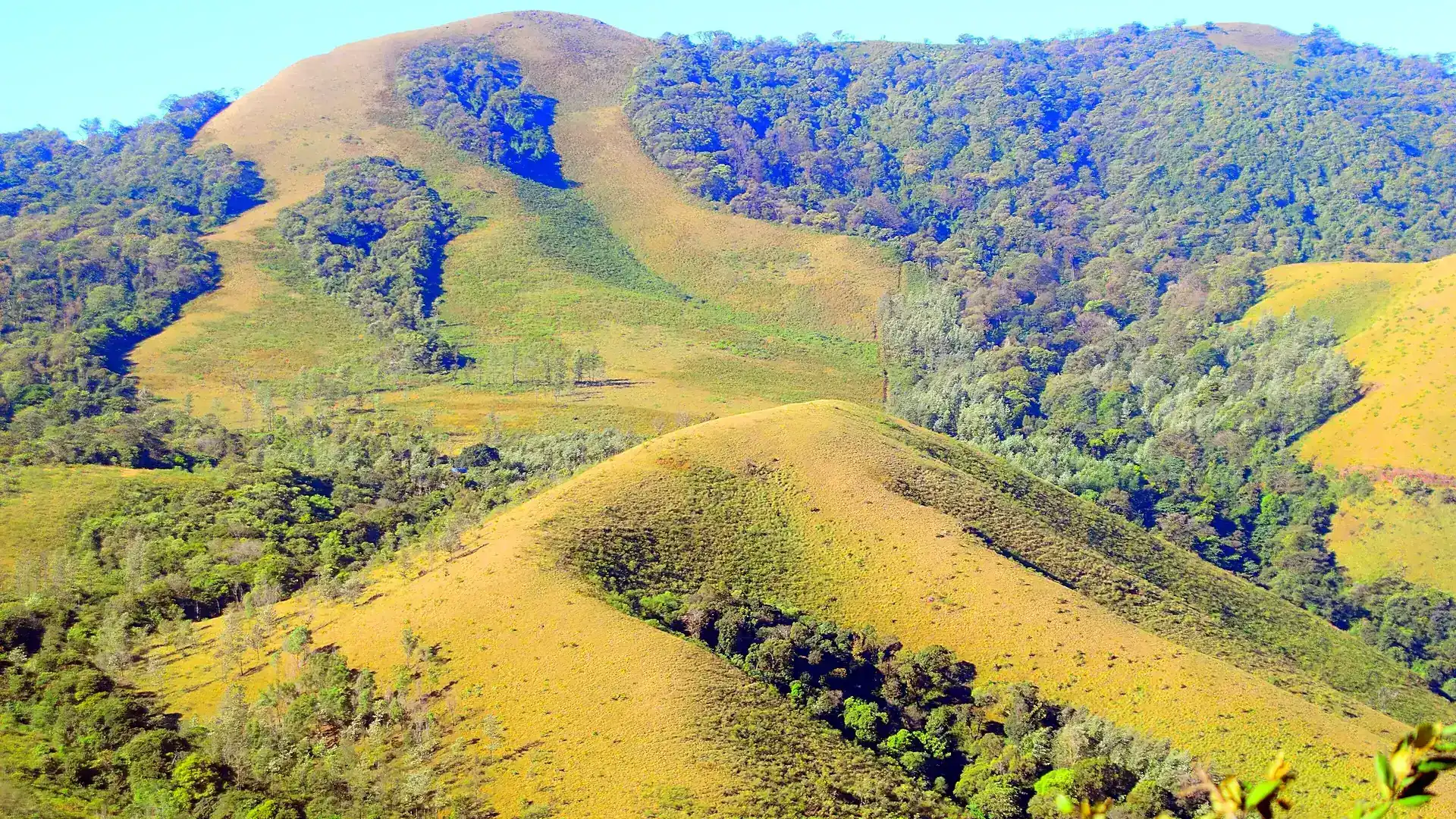
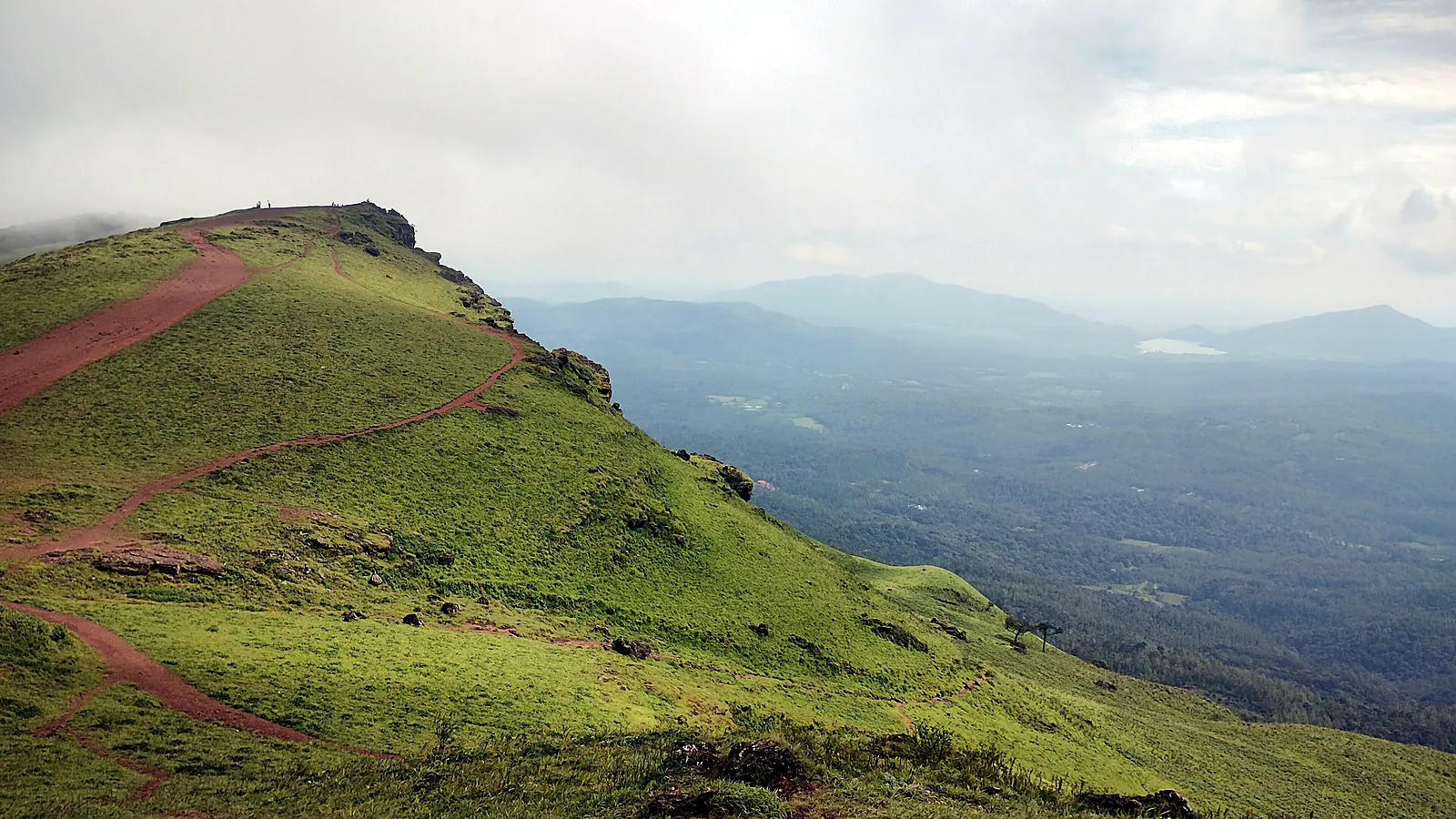
Close to Mullayanagiri, the Baba Budangiri hills are named after the saint who, according to legend, brought coffee to India. The shrine on the hill, associated with Baba Budan and also revered by Hindus as a seat of the sage Dattatreya, has long been a place of devotion for both communities. The drive along the ridge between Mullayanagiri and Baba Budangiri is one of the most spectacular in South India, with grassy hills on either side and views stretching for miles.
Nearby, Manikyadhara Falls is a small, gentle waterfall where water falls in fine droplets like pearls. Pilgrims believe the water has healing properties.
Waterfalls of Chikmagalur
Hebbe Falls
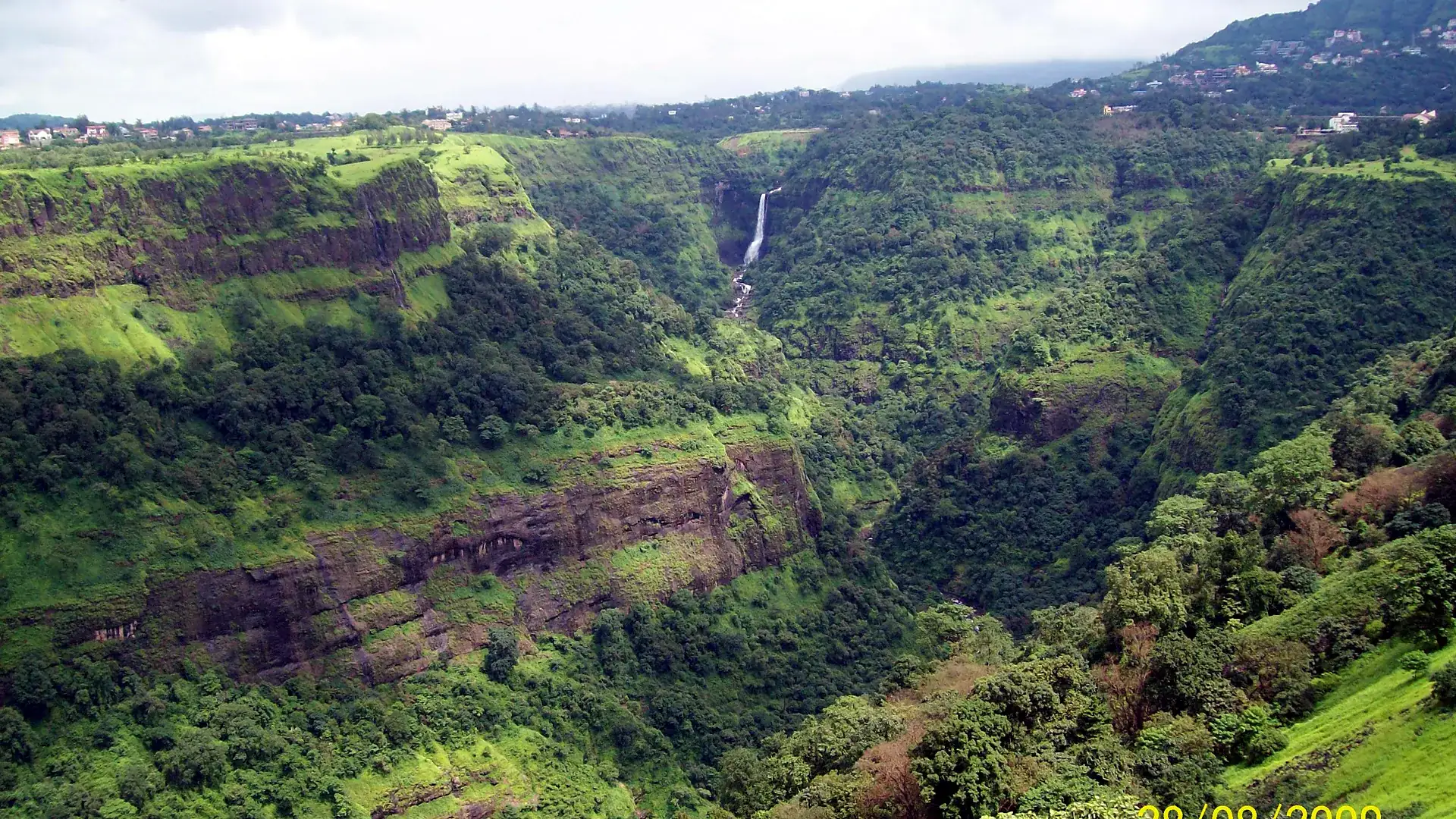
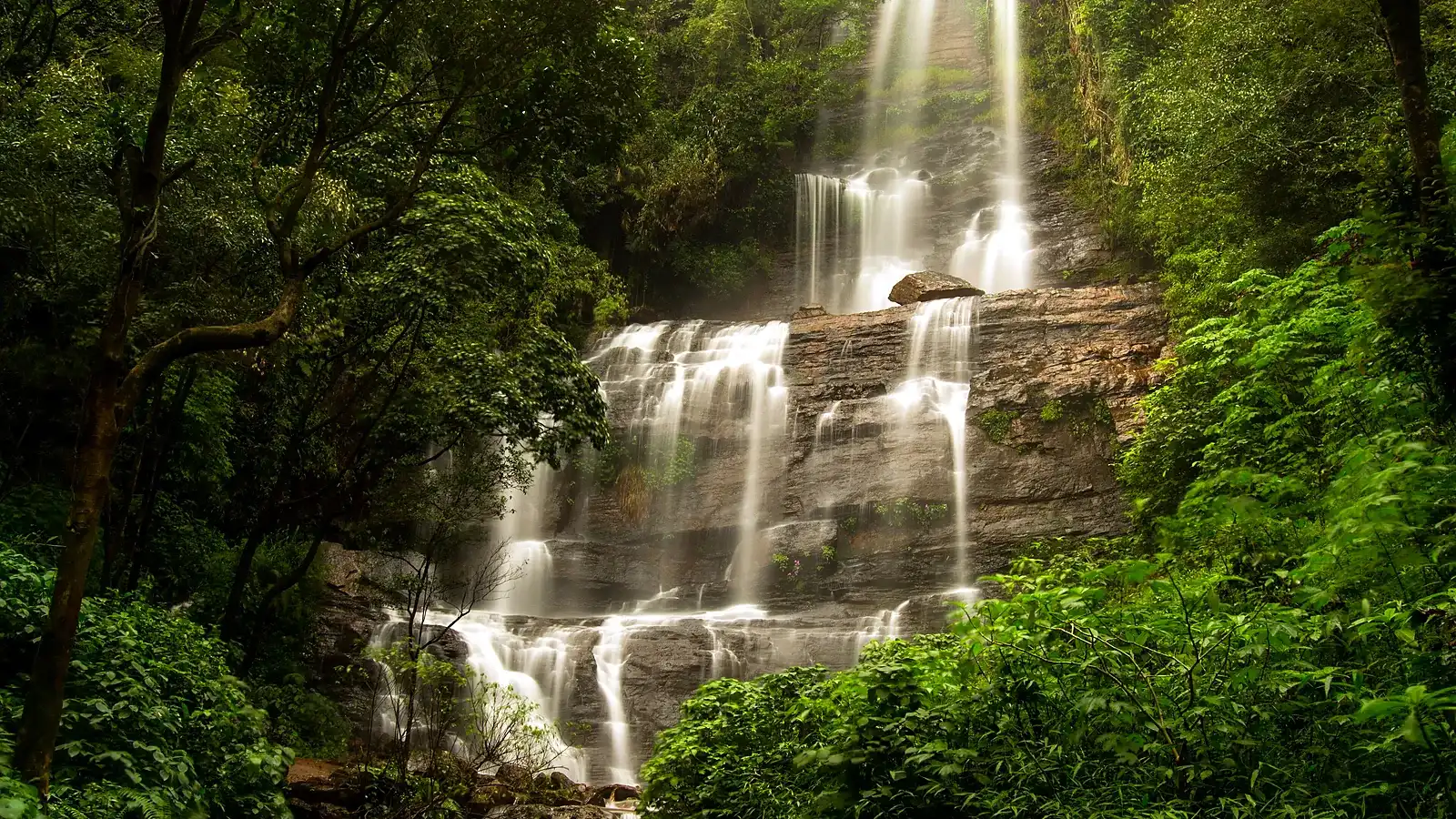
Near Kemmangundi, Hebbe Falls is one of the most beautiful waterfalls in Karnataka, plunging down in two stages known as the big and small falls. It is reached by a jeep ride through coffee estates followed by a short walk and a stream crossing. The falls are at their best from September to December. Access is sometimes restricted during heavy rain, so check before going.
Jhari Falls
Also known as Buttermilk Falls for its milky white water, Jhari Falls lies in the middle of coffee estates near Attigundi and is reached by a bumpy jeep ride. It is a lovely spot for a dip in the cool pool at its base when conditions are safe.
Kallathigiri Falls
About 10 kilometres from Kemmangundi, Kallathigiri Falls cascades down beside an old temple dedicated to Lord Veerabhadra, built partly into the rock. It is easy to reach and makes a good stop on the way to Kemmangundi.
Lakes and wildlife: Hirekolale, Ayyanakere and Bhadra
Chikmagalur is not only about hills and coffee. A few quieter places reward travellers who want a slower day.
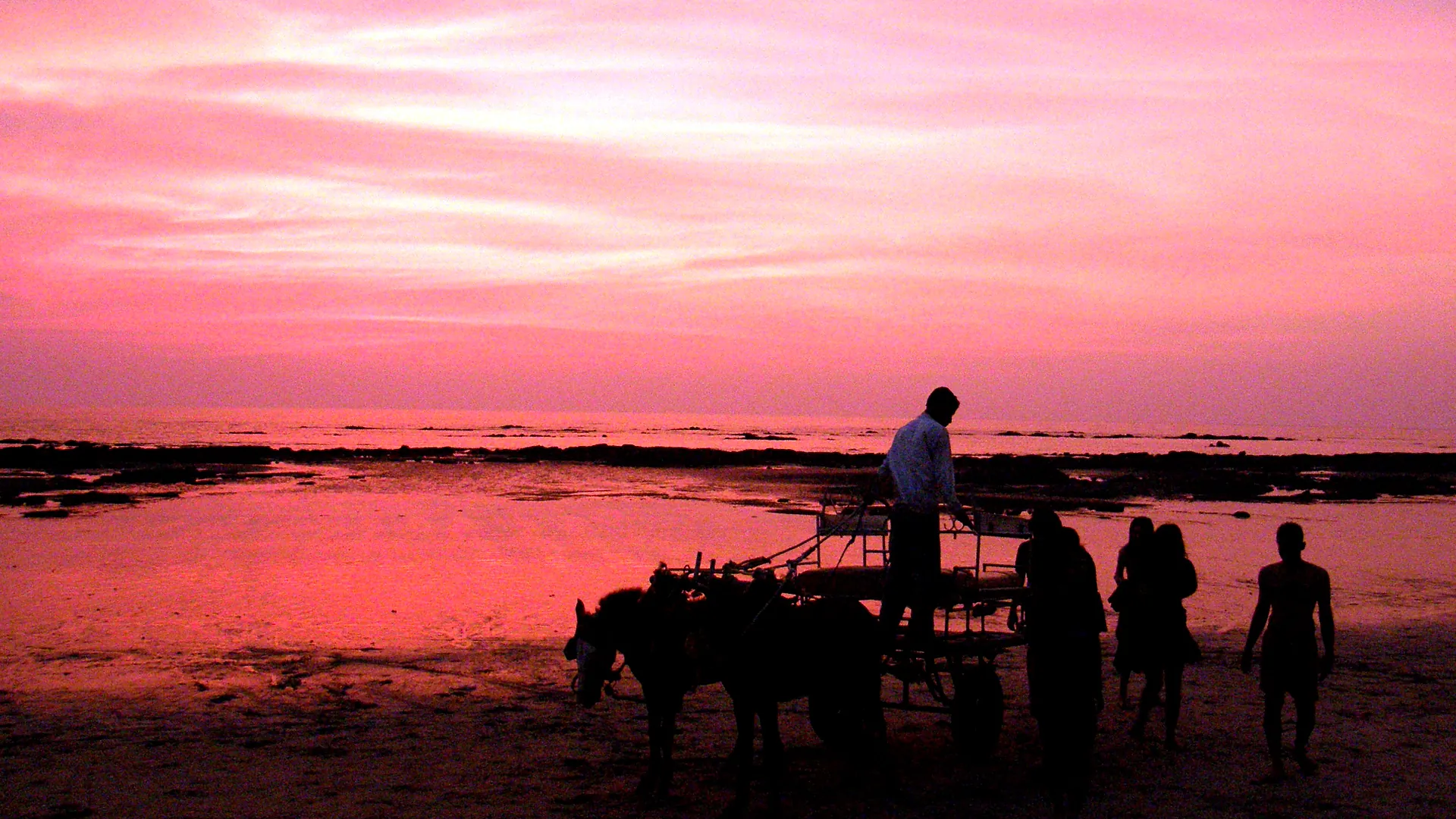
Hirekolale Lake, about 10 kilometres from town, is a calm reservoir surrounded by the Mullayanagiri and Baba Budangiri hills. It is best at sunset, when the hills are reflected in the still water and the sky turns orange and pink. There are no facilities, just a quiet road, the lake and the view. It makes a perfect end to a day of sightseeing.
Ayyanakere Lake, near Sakharayapatna, is one of the oldest lakes in Karnataka, said to have been built in the Hoysala period. Surrounded by the Shakunagiri hill, it is peaceful and good for birdwatching, and a small temple on the hill offers views over the water.
Bhadra Tiger Reserve, in the district's southwest, protects forests along the Bhadra river and its reservoir. It is home to tigers, leopards, elephants, gaur, sambar and more than 250 species of birds. Safaris and boat rides on the reservoir are run through the forest department's lodges. Tiger sightings are never guaranteed, but the forest itself, particularly on a quiet morning boat ride, is beautiful.
Kemmangundi and Z Point
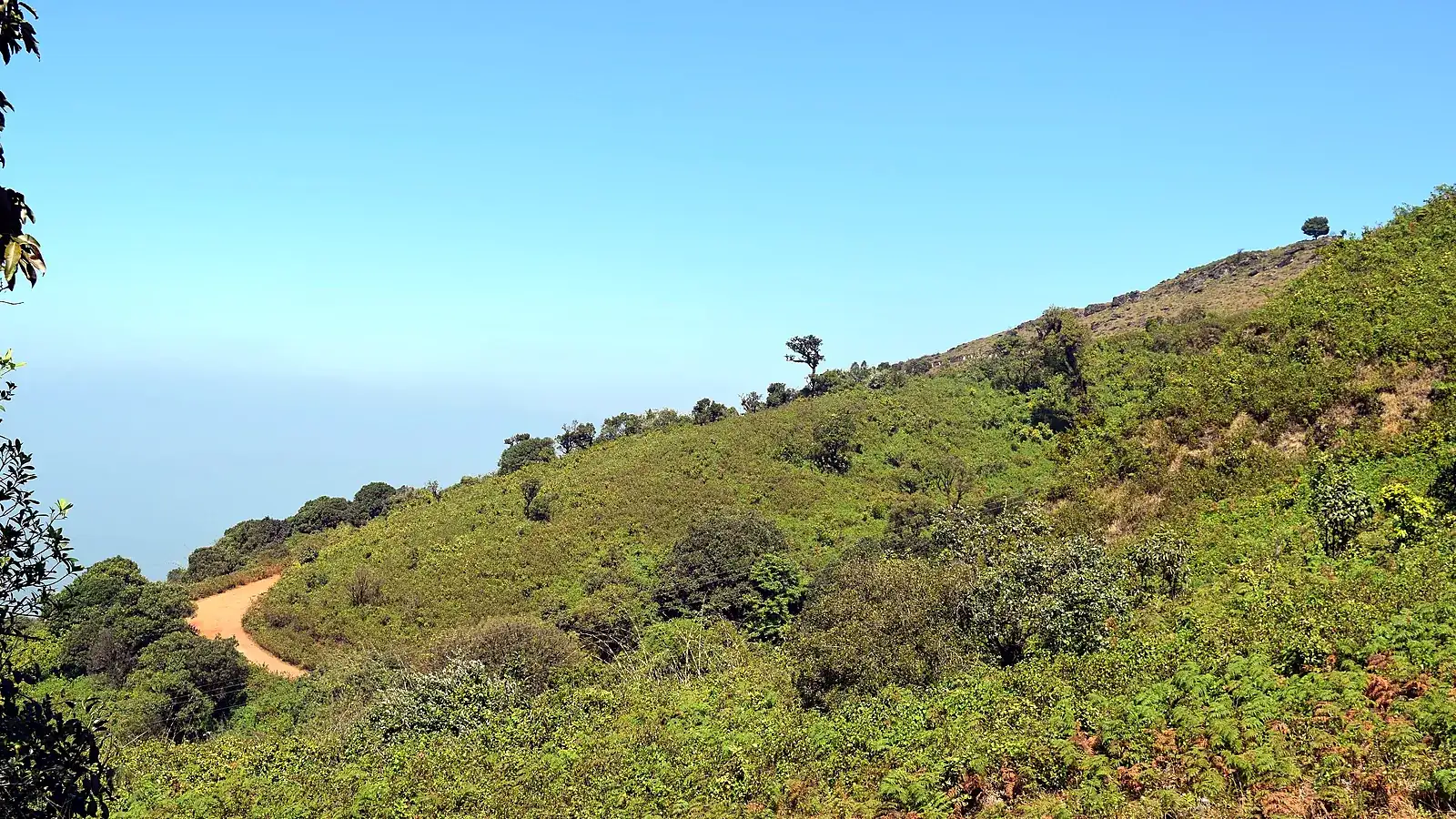
Kemmangundi, about 55 kilometres from Chikmagalur town at around 1,430 metres, was once the summer retreat of the Mysore maharajas. Its ornamental gardens and old guest houses have a faded charm. From here, a short trek leads to Z Point, a dramatic viewpoint on the edge of the hills with views over the valleys and, at sunset, a sky that seems to go on forever. The Rock Garden and the Raj Bhavan viewpoint are also worth a visit.
Kudremukh: a trek for the adventurous
About 100 kilometres southwest of Chikmagalur town, Kudremukh National Park protects one of the largest tracts of shola forest and grassland in the Western Ghats. Kudremukh Peak, at about 1,890 metres, is named for its resemblance to a horse's face. The trek to the summit, about 18 kilometres return from the base at Mullodi, crosses streams, shola forests and endless rolling grasslands, and is widely considered one of the most beautiful treks in South India. It requires forest department permission and a registered guide, and numbers are regulated, so book in advance. It is a full day's hike and best suited to fit trekkers.
Belur and Halebidu: masterpieces of Hoysala art
No trip to Chikmagalur is complete without visiting the temples of Belur and Halebidu, about an hour away in the neighbouring Hassan district. Built by the Hoysala dynasty in the 12th and 13th centuries, they are among the finest examples of stone carving anywhere in the world, and together with the temple at Somanathapura they have been inscribed as a UNESCO World Heritage Site, the Sacred Ensembles of the Hoysalas.
The Chennakeshava Temple at Belur, dedicated to Lord Vishnu, was completed in the early 12th century. Its outer walls are covered with an astonishing density of carvings, including elephants, lions, horses, scenes from the epics and dozens of graceful bracket figures of dancers and musicians known as madanikas. Inside, polished lathe-turned pillars gleam in the dim light.
The Hoysaleswara Temple at Halebidu, the former Hoysala capital, is a twin temple dedicated to Lord Shiva, with even more elaborate outer walls: friezes of hundreds of elephants, each different, and scenes from the Ramayana and Mahabharata. Hire a licensed guide at each site; the stories carved into the stone come alive with explanation.
Sringeri and Horanadu
For spiritually inclined travellers, Sringeri, about 90 kilometres from Chikmagalur, is home to the Sringeri Sharada Peetham, the first of the four monasteries established by Adi Shankaracharya in the 8th century. The beautiful Vidyashankara Temple, with its twelve zodiac pillars, stands on the banks of the Tunga river, where large fish gather to be fed. Nearby, Horanadu is known for the Annapoorneshwari Temple, where every visitor is served a meal.
Food in Chikmagalur
Chikmagalur's food belongs to the Malnad tradition, the cuisine of the rainy hill regions of Karnataka. Expect dishes built on rice, coconut, local vegetables and bamboo, with dishes such as akki roti (rice flatbread), kadubu (steamed rice dumplings), kesuvina ele preparations using colocasia leaves, bamboo shoot curry and mushroom curry in season. Neer dosa and kori rotti (chicken curry with crisp rice wafers, a coastal influence) are also popular. Homestays serve some of the best food, often with vegetables from their own gardens.
Vegetarian travellers are well looked after, with plenty of South Indian and North Indian restaurants in town. And of course, there is the coffee. Drink it at your estate and buy freshly roasted beans or powder from a local roaster before you leave.
A two- to three-day Chikmagalur itinerary
Day 1: Bangalore to Chikmagalur, Belur and a plantation walk
Leave Bangalore early and drive via Hassan. Stop at Belur (and, if time allows, Halebidu) to see the Hoysala temples. Continue to your estate homestay in Chikmagalur and check in. In the late afternoon, take a guided plantation walk to see how coffee, pepper and cardamom are grown. Enjoy a home-cooked Malnad dinner.
Day 2: Mullayanagiri sunrise, Baba Budangiri and the falls
Wake before dawn and drive to Mullayanagiri for sunrise. Trek from Sarpadhari if you want a proper hike, or climb the steps from the upper parking area. After breakfast, drive along the ridge to Baba Budangiri and Manikyadhara Falls. After lunch, head towards Kemmangundi for Kallathigiri Falls and sunset at Z Point. Return to your homestay.
Day 3: Hebbe or Jhari Falls and return
Take a jeep ride to Hebbe Falls or Jhari Falls in the morning. After lunch, buy coffee and spices in town and drive back to Bangalore, arriving in the evening.
If you have only a weekend, combine Days 2 and 3 by visiting Mullayanagiri at sunrise and Jhari Falls in the afternoon, and return on Sunday evening.
Chikmagalur for every kind of traveller
For friends and trekkers. Build the trip around the outdoors: the Mullayanagiri trek from Sarpadhari at sunrise, Kudremukh with a permit, a jeep ride to Jhari Falls and evenings around a bonfire at an estate. Weekday trips avoid the crowds on the peaks.
For couples. Choose a secluded estate cottage or a plantation resort with a view, and plan slow days: a sunrise at Mullayanagiri, a private plantation walk and coffee tasting, sunset at Hirekolale Lake and a candlelit dinner. The monsoon is especially romantic if you do not mind the rain.
For families. Take the road and steps to the top of Mullayanagiri rather than the trek, visit the Coffee Museum, Kallathigiri Falls and the gardens at Kemmangundi, and combine the trip with Belur and Halebidu, which children often find fascinating once a guide points out the carved animals and stories. Choose a homestay with easy access and simple food options.
For heritage lovers. Spend a full day at Belur and Halebidu, add the lesser-known Hoysala temples nearby, and continue to Sringeri for its temples on the Tunga river.
Chikmagalur in the monsoon
From June to August, Chikmagalur receives heavy rain and the whole district turns a deep, glowing green. Waterfalls that are thin trickles in summer become roaring torrents, streams cross every road and mist drifts through the estates for days at a time. It is a wonderful season for a slow, cosy stay, with plantation walks between showers, hot pakoras and endless coffee on the verandah.
It is not the season for ambitious treks. Trails become slippery, leeches are everywhere, views from the peaks are often hidden by cloud, and access to some viewpoints and waterfalls may be restricted for safety. If you visit in the monsoon, keep plans flexible, drive only in daylight, carry leech socks and rain gear, and ask your homestay hosts for the latest local advice. Late August and September, as the rains ease, offer the best of both worlds: full waterfalls and clearing skies.
How much does a Chikmagalur weekend cost?
- Estate homestay: ₹2,500 to ₹6,000 per night for a couple, often including breakfast and dinner.
- Plantation resort: ₹8,000 to ₹25,000 per night.
- Car and driver from Bangalore: ₹9,000 to ₹14,000 for a two- to three-day trip.
- Jeep rides to falls: ₹1,500 to ₹2,500 per jeep.
- Entry fees and guides: a few hundred rupees per person.
Our Chikmagalur Mullayanagiri Peak Trek & Coffee Estate Trails and Chikmagalur Peak Trek & Coffee Plantation Stay packages start at ₹4,899 per person for two days and one night, including the estate stay, meals, a guided trek and a plantation walk.
Practical tips
- Travel on weekdays if possible. Weekend traffic to Mullayanagiri can be extremely heavy.
- Check road and access rules for Mullayanagiri, Baba Budangiri and the waterfalls before you set out, particularly in the monsoon.
- Drive carefully. Hill roads are narrow and winding, and mist can reduce visibility to a few metres.
- Carry cash for jeep rides, small shops and entry fees.
- Mobile networks are patchy on estates and in the hills.
- Book homestays early for long weekends.
- Respect local rules: no alcohol or loud music at viewpoints and religious sites.
What to take home
Chikmagalur is a wonderful place to shop for food. Buy freshly roasted coffee beans or powder from estates and local roasters, where you can often choose the blend and chicory ratio for filter coffee. Look for whole black pepper and cardamom from the plantations, which are far more aromatic than supermarket spices; local honey, often collected from estates; homemade chocolates made with local coffee; and pickles and jams made by homestay families. Ask your hosts where they shop; their recommendations are usually the best.
What to pack
- Comfortable walking or trekking shoes with good grip.
- A light jacket or fleece; the peaks are windy and cold, especially at sunrise.
- A raincoat in the monsoon and a small umbrella at other times.
- Sunscreen, a cap and sunglasses.
- Leech socks in the monsoon.
- A reusable water bottle and snacks for the treks.
- Modest clothing for temples.
Mistakes to avoid
Reaching Mullayanagiri late in the day on a weekend. You will spend hours in traffic on a narrow road. Go at sunrise.
Trying to cover Chikmagalur, Kudremukh and Sringeri in one weekend. They are far apart on slow roads. Choose one region.
Skipping Belur and Halebidu. They are among the greatest monuments in India, and they are on the way.
Swimming at waterfalls in the monsoon. Currents are powerful and rocks are slippery. Follow local advice.
Leaving plastic on the hills. Carry your waste back and help keep Chikmagalur beautiful.
Chikmagalur or Coorg?
Bangalore travellers often ask which of the two coffee regions to visit first. Both are beautiful, and both offer estate stays, waterfalls and excellent food, but they have different personalities. Chikmagalur is more rugged and dramatic, with higher peaks, grassy ridges and better treks, plus the Hoysala temples nearby. It suits active travellers and anyone who loves hiking. Coorg is gentler and more settled, with a distinctive Kodava culture, a richer food tradition, the Tibetan settlement at Bylakuppe and a wider range of resorts. It suits families and couples looking for a relaxed break. The honest answer is to visit both, on separate weekends. Our Coorg guide will help you plan the second trip.
Travel responsibly in the Malnad hills
Chikmagalur's grasslands and shola forests are some of the most important water sources in Karnataka, feeding rivers that supply millions of people downstream. They are also under pressure from growing tourism. Stick to marked trails, do not light fires or leave plastic on the hills, avoid off-road driving on the grasslands, keep music off at viewpoints and waterfalls, and support local homestays and coffee growers. Small choices, repeated by thousands of visitors, decide whether these hills stay beautiful.
Plan your Chikmagalur escape with The Vacation Code
Chikmagalur is perfect for a short, active weekend: a sunrise trek, a waterfall, a plantation walk and the best coffee of your life. Our Mullayanagiri Peak Trek & Coffee Estate Trails package handles the estate stay, guided trek and transport, and we can add Belur and Halebidu on the way.
If you love coffee country, read our Coorg weekend guide too, or browse our weekend getaways from Bangalore.
Frequently asked questions about Chikmagalur
How many days are enough for Chikmagalur?
Two days cover the highlights: Mullayanagiri, Baba Budangiri, a waterfall and a plantation walk. Three days let you add Belur and Halebidu or Hebbe Falls at a comfortable pace.
How difficult is the Mullayanagiri trek?
From the upper parking area, it is a short climb of several hundred steps suitable for most people. The trek from Sarpadhari, about 4 kilometres up, is moderate and steep, taking two to three hours.
What is the best time to visit Chikmagalur?
September to March is the best time, with green hills, full waterfalls and cool weather ideal for trekking. The monsoon, from June to August, is beautiful but very wet.
How far is Chikmagalur from Bangalore?
Chikmagalur town is about 245 kilometres from Bangalore, a drive of roughly five hours via Hassan.
Why is Chikmagalur called the birthplace of Indian coffee?
According to legend, the Sufi saint Baba Budan smuggled seven coffee beans from Yemen in the 17th century and planted them in the Baba Budangiri hills of Chikmagalur, starting coffee cultivation in India.
Can we visit Belur and Halebidu from Chikmagalur?
Yes. Both temple towns are about an hour from Chikmagalur and can be visited on the way from Bangalore or as a half-day trip.