- Where is Alibaug?
- Best time to visit Alibaug
- How to get to Alibaug from Mumbai
- Passenger ferry from the Gateway of India
- Ro-Ro ferry with your car
- By road
- The ferry crossing: what to look out for
- The beaches of Alibaug
- Alibaug Beach
- Kihim Beach
- Nagaon Beach
- Varsoli Beach
- Akshi and Revdanda
- Kashid Beach
- Mandwa and Awas
- Kolaba Fort: walk to it at low tide
- Kanhoji Angre and the Maratha navy
- Other forts and historic sites
- Murud-Janjira
- Korlai Fort
- The Magen Aboth Synagogue
- Temples
- Village life on the Konkan coast
- Activities beyond the beach
- What to eat in Alibaug
- Where to stay: glamping, villas, resorts and homestays
- Alibaug for families, friends, couples and workations
- Alibaug in the monsoon
- A two-day Alibaug itinerary
- Day 1: Ferry, Kolaba Fort and sunset
- Day 2: Beaches and a slow return
- A day trip south: Revdanda, Korlai, Kashid and Murud-Janjira
- Reading the tides: a quick guide
- How much does an Alibaug weekend cost?
- Shopping and souvenirs
- Practical tips
- Travel responsibly
- What to pack
- Mistakes to avoid
- Plan your Alibaug escape with The Vacation Code
- Frequently asked questions about Alibaug
- How do I reach Alibaug from Mumbai?
- Do ferries to Alibaug run in the monsoon?
- Can you walk to Kolaba Fort?
- Which is the best beach in Alibaug?
- What is the best time to visit Alibaug?
- Is Alibaug good for vegetarians?
There are few better ways to begin a weekend than on the upper deck of a ferry leaving the Gateway of India on a Saturday morning. Behind you, the Taj Mahal Palace hotel and the Mumbai skyline shrink into the haze. Seagulls follow the boat, diving for the snacks that passengers throw from the rails. Fishing boats with coloured flags bob in the harbour, and ahead, across the water, a low green line of coconut palms slowly takes shape. An hour later, you step off at Mandwa into a different world: slower, greener, quieter, with the smell of the sea and frying fish in the air.
Alibaug is Mumbai's beach backyard. It sits on the Konkan coast directly across the harbour from the city, close enough to reach in under two hours by ferry, yet it feels far removed from the noise and crowds of the metropolis. Its long, casuarina-lined beaches, sea forts, coconut groves, old Maratha and Portuguese history and fantastic Konkani food make it one of the best short getaways in western India. In recent years, it has also become a hotspot for villas, boutique stays and beach glamping.
This guide covers how to get there (the ferry versus the Ro-Ro versus the road), the best beaches for different moods, how to walk to Kolaba Fort at low tide, the forts and temples worth visiting, what to eat, where to stay and a relaxed two-day plan.
Where is Alibaug?
Alibaug is a coastal town in the Raigad district of Maharashtra, about 95 kilometres from Mumbai by road but only around 20 kilometres across the water from the city as the gull flies. The name "Alibaug" is often said to come from a wealthy local man called Ali, who owned orchards and gardens (baug) here. The wider Alibaug region includes a string of beach villages stretching north and south of the town, each with its own character.
Historically, the region was a stronghold of the Maratha navy in the early 18th century under the admiral Kanhoji Angre, who controlled much of the Konkan coast and whose sea forts challenged the British, Portuguese and Dutch. The Portuguese, based further south at Chaul and Korlai, also left their mark. Alibaug is also home to one of the old Bene Israel Jewish communities of the Konkan, whose synagogue still stands in the town.
Best time to visit Alibaug
October to February is the best time. The weather is pleasant, the sea is calm, the skies are clear for sunsets and ferries run regularly. Winter evenings on the beach are lovely.
March to May is hot and humid but still popular, especially for villas with pools. Mornings and evenings on the beach remain pleasant.
June to September is the monsoon. The coast turns lush and green, and the sea becomes rough and dramatic. Passenger ferries from the Gateway of India are usually suspended for the monsoon, roughly from late May until August or September, because of rough seas; you will need to go by road or check whether the Ro-Ro ferry is operating. Swimming in the sea is dangerous during this period, and water sports are shut. The monsoon suits people who want a villa with a pool and a quiet, rainy weekend.
How to get to Alibaug from Mumbai
Passenger ferry from the Gateway of India
The classic way to reach Alibaug is by catamaran or ferry from the Gateway of India to Mandwa jetty. Several operators run frequent services from early morning to evening in season, and the crossing takes about 45 minutes to an hour. Tickets usually include a connecting bus from Mandwa to Alibaug town, about 20 kilometres away. It is fast, scenic and fun, and it avoids the long road journey entirely. Buy tickets at the counters near the Gateway or online, and arrive early on weekends when queues can be long.
Ro-Ro ferry with your car
A roll-on, roll-off (Ro-Ro) ferry connects the Ferry Wharf (Bhaucha Dhakka) in south Mumbai with Mandwa, carrying cars, bikes and passengers. The crossing takes about an hour, and it lets you take your own car across without the long drive around the harbour. It is popular with families and groups travelling with luggage. Book in advance on weekends and check the schedule, which can change in bad weather.
By road
Alibaug is about 95 kilometres from Mumbai by road, via Panvel and Pen, taking around two and a half to three and a half hours depending on traffic. It is the only option when the sea is too rough for ferries. Newer road and bridge links across the harbour have made parts of the journey faster, so check the latest routes.
Tip: the ferry and Ro-Ro are much faster than the road on weekends. Ferries back to Mumbai in the late afternoon on Sundays fill up quickly, so plan your return.
The ferry crossing: what to look out for
The ferry is not just transport; it is one of the best short boat rides in India, and a little attention makes it far more enjoyable. Try to get a seat on the open upper deck if your ferry has one. As you leave the Gateway of India, look back for the classic view of the Gateway itself and the Taj Mahal Palace hotel beside it, the same view that greeted ships arriving in Bombay a century ago.
Out in the harbour, you will pass anchored cargo ships, naval vessels, fishing trawlers and the busy traffic of the port. To one side, you may see Elephanta Island, home to the famous rock-cut cave temples dedicated to Lord Shiva. Gulls follow the boat all the way across, swooping for snacks. On clear winter mornings, the sunlight on the water is beautiful, and on the return trip in the late afternoon, the Mumbai skyline glows gold as you approach. Hold on to hats and sunglasses on the open deck, as the wind can be strong.
The beaches of Alibaug
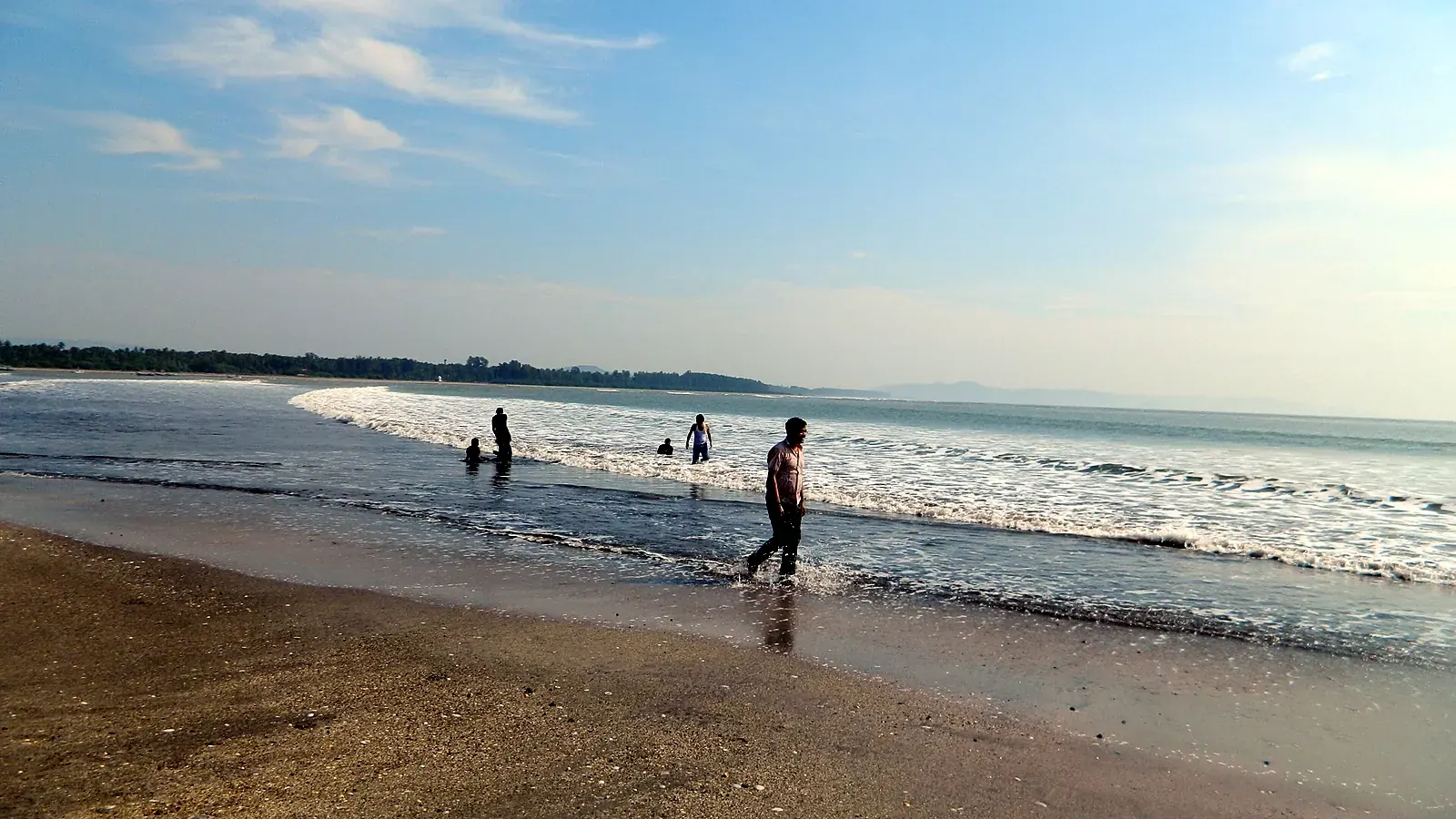
Alibaug Beach
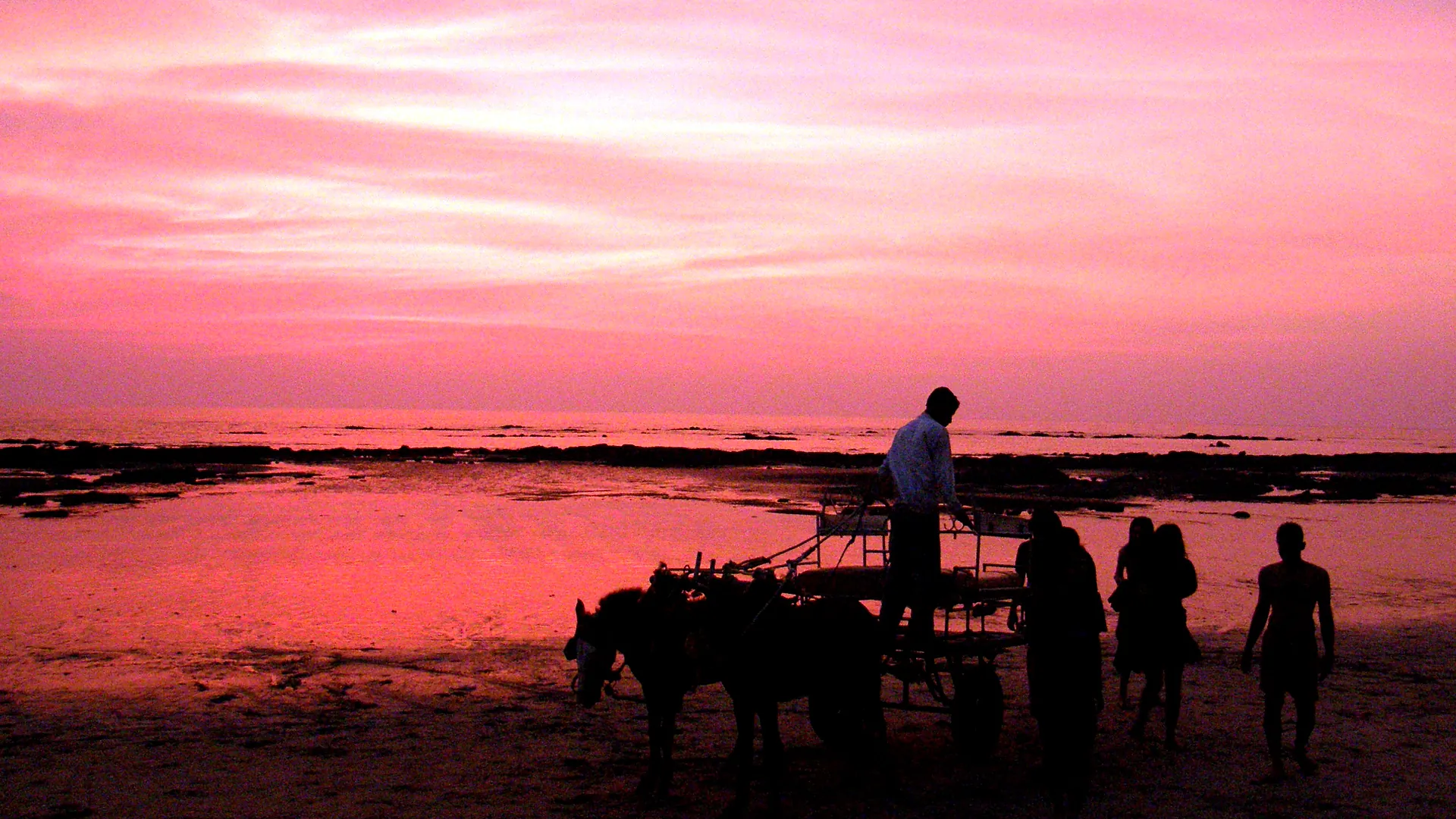
The town's main beach faces Kolaba Fort and is lively, with snack stalls, horse carts and families. It is not the cleanest or quietest beach, but it is the starting point for the walk to the fort at low tide and a fun place for sunset.
Kihim Beach
North of Alibaug, Kihim is one of the prettiest and most peaceful beaches in the region, with soft sand, rocky outcrops, casuarina and coconut groves and lovely sunsets. Its surrounding woods were once famous for birdlife and butterflies, and the renowned ornithologist Salim Ali spent time in the area. It is ideal for long walks and quiet evenings.
Nagaon Beach
South of Alibaug, Nagaon is a long, clean beach lined with casuarina trees and known for water sports such as parasailing, jet skiing, banana boat rides and bumper rides, in season. It is popular with families and groups and has plenty of homestays and cottages nearby.
Varsoli Beach
Close to the town, Varsoli is a calm, relatively uncrowded beach with clean sand and gentle waves, backed by a line of resorts and homestays. It is a good choice if you want a quiet beach close to the town's facilities.
Akshi and Revdanda
Akshi is a quiet fishing village beach, good for birdwatching near its creek. Revdanda, further south, has a long beach and the ruins of an old Portuguese fort, whose walls run through coconut groves.
Kashid Beach
About 30 kilometres south of Alibaug, Kashid is often considered the most beautiful beach in the region, with white sand, clear water and hills and casuarina trees framing the bay. It is popular for water sports and makes a good day trip or an alternative base.
Mandwa and Awas
Near the ferry jetty, Mandwa and neighbouring Awas are quiet beaches with views back across the harbour towards the Mumbai skyline, beautiful at sunset.
Kolaba Fort: walk to it at low tide
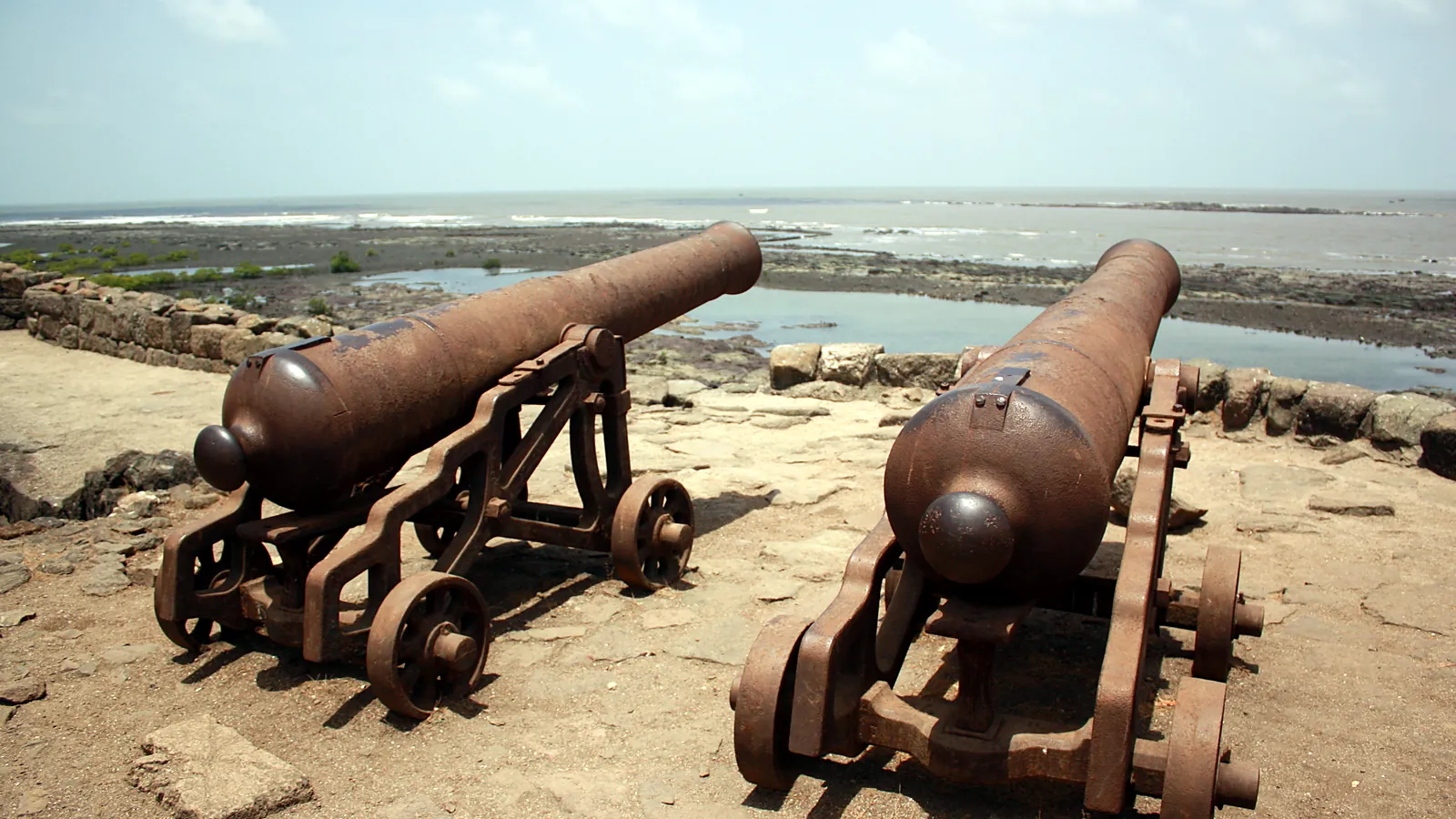
Kolaba Fort (also called Kulaba Fort) stands on a rocky island just off Alibaug beach. Around 300 years old, it was a key naval base of the Maratha admiral Kanhoji Angre. Its thick walls enclose temples, including one to Lord Ganesha, and a freshwater well that, remarkably, provides sweet water despite being surrounded by the sea.
The fort's unique feature is how you reach it. At low tide, the sea recedes and you can walk across the sand and rocks from Alibaug beach to the fort in about 15 to 20 minutes. At high tide, it becomes an island, reached by horse carts that splash through the shallows or by boat when the water is deeper. Always check the tide times before walking across, and start back well before the tide turns; the water returns faster than you expect, and people have been caught out. Your hotel or local shopkeepers will know the timings.
Kanhoji Angre and the Maratha navy
To understand Alibaug's forts, you need to know about Kanhoji Angre, one of the most remarkable naval commanders in Indian history. In the late 17th and early 18th centuries, as European powers competed for control of India's seas and trade, Kanhoji Angre commanded the Maratha fleet along the Konkan coast. From his bases at Kolaba, Vijaydurg and Suvarnadurg, his fast, lightly armed ships controlled shipping along hundreds of kilometres of coastline, taxing merchant vessels and fighting off repeated attacks by the British East India Company, the Portuguese and the Dutch.
The Europeans called him a pirate. Maharashtra remembers him as the "Shivaji of the seas", a defender of the coast who was never defeated in battle during his lifetime. Kolaba Fort was his headquarters, and his family's tombs and memorials can still be seen in Alibaug. Knowing this history makes the walk across the sand to Kolaba Fort far more meaningful: you are walking into the command centre of one of India's great naval powers. The Indian Navy has honoured his legacy by naming a naval establishment after him.
Other forts and historic sites
Murud-Janjira
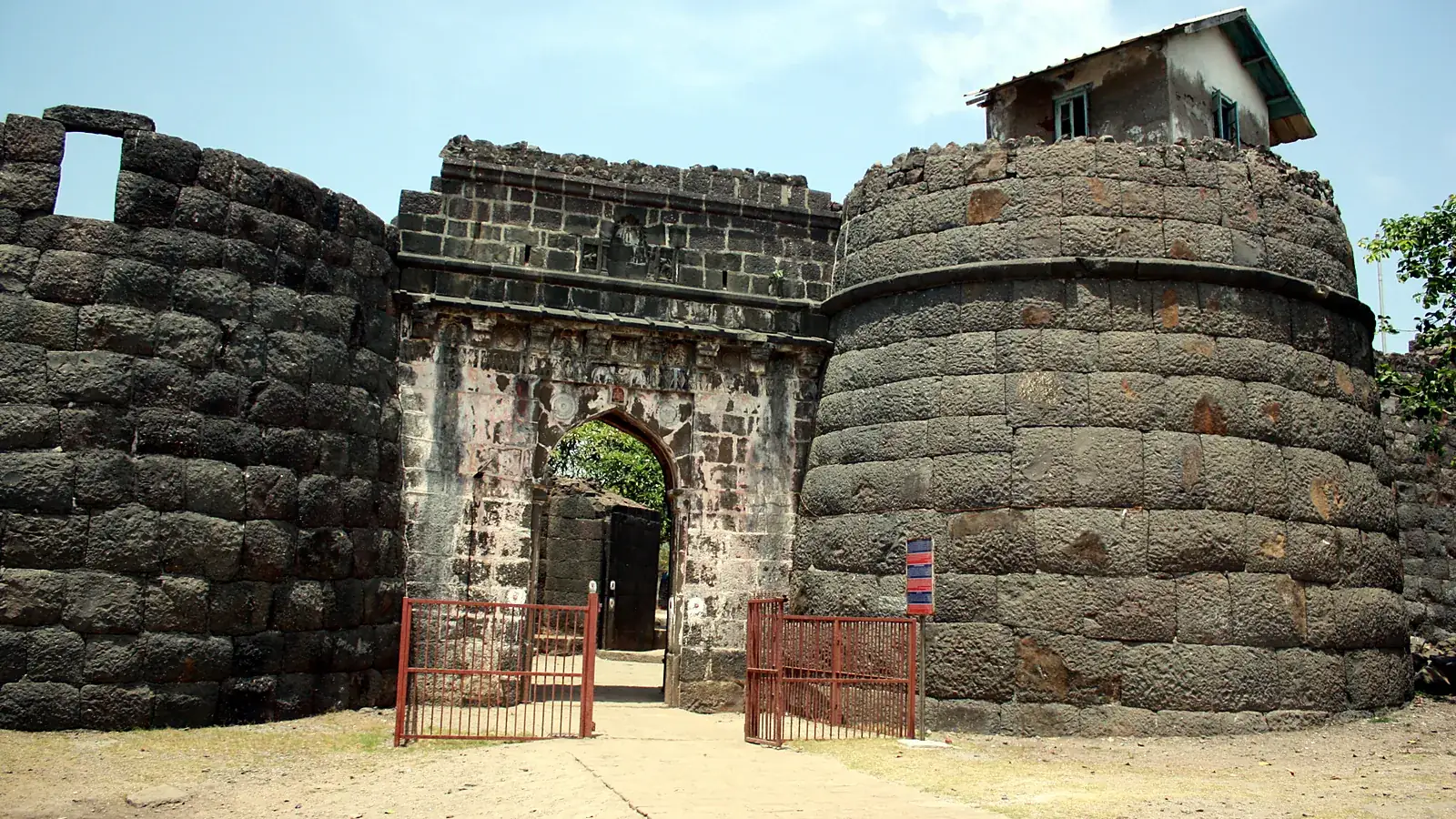
About 55 kilometres south of Alibaug, Murud-Janjira is one of the most impressive sea forts in India. Built on an oval rock island by the Siddis, it was famously never conquered despite repeated attempts by the Marathas, Portuguese and British. Its massive walls, bastions and cannons are remarkably well preserved. The fort is reached by sailboat from Rajpuri jetty, and boats depend on the sea conditions and tide. It is closed during the monsoon. Combine it with a visit to Kashid beach for a full day.
Korlai Fort
Near Revdanda, the Portuguese Korlai Fort sits on a narrow promontory with a lighthouse, offering sweeping views of the sea and the Kundalika river mouth. The village below is known for its unique Portuguese-based creole language, spoken by a small community.
The Magen Aboth Synagogue
In the heart of Alibaug town, the Magen Aboth Synagogue, built in the 19th century, is one of the old synagogues of the Bene Israel community, a Jewish community that has lived on the Konkan coast for centuries. It is a peaceful and fascinating reminder of the region's diverse history.
Temples
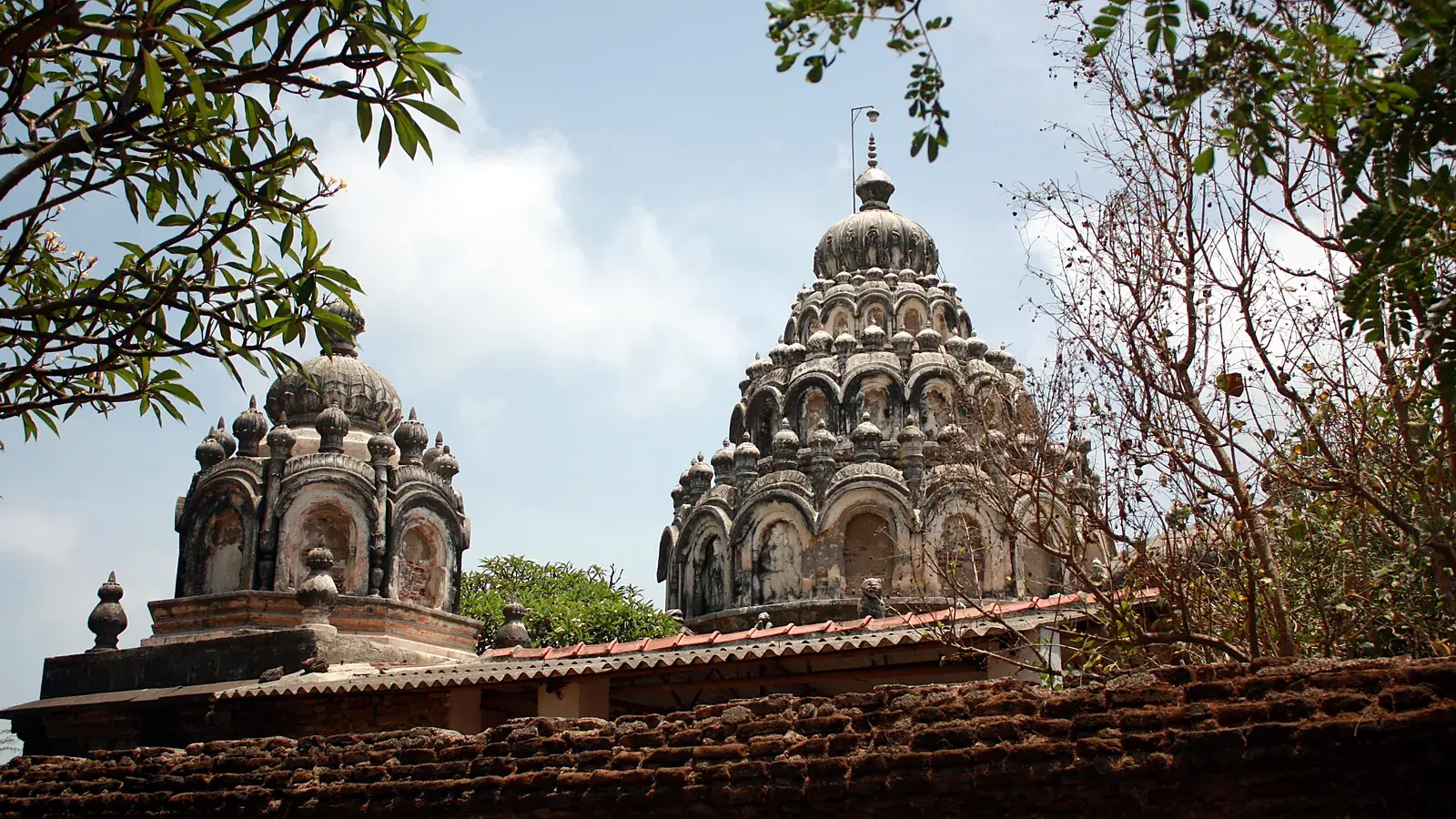
Kanakeshwar Temple, a Shiva temple on a hilltop about 12 kilometres from Alibaug, is reached by a climb of several hundred steps through the forest, with views over the coast. The Vikram Vinayak Temple at Salav, south of Alibaug, is a modern temple set in landscaped gardens.
Village life on the Konkan coast
Away from the beaches, the Alibaug region is a landscape of wadis, the shaded coconut, betel nut and mango groves that surround traditional Konkani homes, with red-tiled roofs, cool verandahs and wells in the courtyard. Cycling or walking through these villages in the early morning, when women are sweeping courtyards and drawing rangoli, is one of the gentlest pleasures of a stay here.
Along the shore, Koli fishing villages are busy in the mornings as boats return with the catch, and fish is sorted and sold on the beach. In the dry season, you may see fish laid out on racks to dry in the sun. Near the creeks, salt pans shimmer in the heat, and mangroves shelter herons, egrets, kingfishers and, in winter, migratory birds. Akshi's creek and the marshes around Kihim are especially good for birdwatching early in the morning. Please be respectful when visiting villages: ask before taking photographs of people and homes, and keep to public paths.
Activities beyond the beach
- Water sports at Nagaon and Kashid in season: parasailing, jet skis, banana boats, speed boats and bumper rides. Use licensed operators with life jackets.
- Kayaking and paddleboarding on calm creeks and backwaters, offered by some adventure operators.
- Cycling through coconut groves and villages, often arranged by homestays and resorts.
- Sunset sailing and catamaran cruises off the coast, a lovely way to end the day.
- Birdwatching in the creeks and mangroves around Akshi and Kihim.
- Art and culture: the sculpture museum at Sasawane, dedicated to the celebrated sculptor V. P. Karmarkar, displays his remarkable life-size works near the beach.
What to eat in Alibaug
Alibaug is part of the Konkan coast, and its food is one of the best reasons to visit. Seafood is the star: fresh pomfret, surmai (kingfish), bombil (Bombay duck), prawns and crabs, usually coated with a spicy rava or rice flour masala and fried, or cooked in coconut-based curries. Try a Konkani fish thali, with fish curry, fried fish, rice, bhakri and sol kadhi.
Sol kadhi, a pink drink made from kokum and coconut milk, is the perfect accompaniment to spicy food, cooling and slightly tangy. Vade kombdi, fluffy fried bread with chicken curry, is another local favourite.
Vegetarians will not go hungry. Look for a vegetarian Konkani thali with amti (a tangy dal), vegetable curries cooked with coconut, bharli vangi (stuffed brinjal), ghavan (rice crepes) or bhakri, rice and sol kadhi. Many homestays cook beautiful vegetarian meals if you ask, and Alibaug's growing café scene serves everything from wood-fired pizza to salads and smoothie bowls. Local kokum syrup, alphonso mango products in season and dried fish for non-vegetarians make good souvenirs.
Where to stay: glamping, villas, resorts and homestays
Beach glamping. Several operators now offer luxury tents close to the beach, with proper beds, attached bathrooms, bonfires and barbecues. It is a lovely way to be close to the sea without roughing it.
Private villas. Alibaug has become famous for its private villas and holiday homes, many with pools and large gardens. They are ideal for families and groups of friends.
Resorts. Beach resorts near Varsoli, Nagaon and Kashid offer pools, restaurants and activities.
Homestays. Village homestays near Nagaon, Kihim and Akshi offer simple rooms, local food and a friendly, authentic atmosphere at lower prices.
Book early for long weekends, Christmas and New Year.
Alibaug for families, friends, couples and workations
Families love Alibaug because it is so easy: a short ferry ride, a beach with gentle waves in winter, horse-cart rides to Kolaba Fort, water sports for older children and villas with pools for everyone else. Keep a close eye on children in the sea, as currents can change quickly and many beaches do not have lifeguards.
Groups of friends tend to rent villas with pools, spend lazy days at Nagaon or Kashid, and end evenings with barbecues and bonfires at a glamping site. Book early for long weekends.
Couples will enjoy the quieter beaches of Kihim, Awas and Varsoli, sunset sailing trips, beach glamping under the stars and long, slow Konkani lunches. A weekday visit in winter is ideal.
Remote workers have discovered Alibaug too. Many villas and homestays now have reliable Wi-Fi and workspaces, and the combination of a short commute to Mumbai when needed, quiet surroundings and a beach at the end of the working day makes it a popular workation spot. Check internet speeds with your host before booking.
Alibaug in the monsoon
From June to September, Alibaug changes character completely. The sea turns grey-green and wild, waves crash against the forts, the villages and wadis become intensely green, and the beaches empty of crowds. Passenger ferries from the Gateway of India usually stop, water sports are banned, and swimming in the sea is dangerous and prohibited. But for a quiet weekend in a villa with a pool, long walks along the shore at a safe distance from the waves, hot bhajiyas and the sound of rain on a tiled roof, the monsoon is deeply atmospheric. Drive via Pen or check whether the Ro-Ro is running, and stay well back from the sea on rough days.
A two-day Alibaug itinerary
Day 1: Ferry, Kolaba Fort and sunset
Take a morning ferry from the Gateway of India to Mandwa and continue to Alibaug. Check into your stay and have a Konkani lunch. In the afternoon, check the tide times and walk across to Kolaba Fort at low tide. Return to Alibaug Beach or head to Varsoli for sunset. In the evening, enjoy a bonfire and dinner at your glamping site or villa.
Day 2: Beaches and a slow return
Spend the morning at Nagaon for water sports or at Kihim for a quiet walk. After a seafood or vegetarian thali lunch, head to Mandwa for an afternoon ferry back to Mumbai, watching the city skyline rise out of the sea as you approach.
With a third day, visit Kashid and Murud-Janjira, or Korlai and Revdanda.
A day trip south: Revdanda, Korlai, Kashid and Murud-Janjira
If you have a third day, the coastal road south of Alibaug makes a wonderful full-day trip. Leave after an early breakfast and drive to Revdanda, where the old Portuguese walls run through coconut groves beside the sea. Cross the Kundalika river to Korlai and climb to the fort and lighthouse for sweeping views over the river mouth. Continue to Kashid for a swim (in season, and only where it is safe) and a late seafood or vegetarian lunch at one of the beach shacks. In the afternoon, drive on to Rajpuri and take a sailboat across to Murud-Janjira, timing your visit so that you have at least an hour inside the fort. Return to Alibaug in the evening, or stay overnight near Kashid or Murud for a more relaxed pace. Boat services to Janjira depend on the sea and tide, so check timings locally, and remember that the fort is closed in the monsoon.
Reading the tides: a quick guide
Tides matter more in Alibaug than almost anywhere else near Mumbai, because they decide whether you can walk to Kolaba Fort and how the beaches look. The sea rises and falls twice a day, roughly every six hours, and the timings shift by around 50 minutes each day. Around full and new moons, the difference between high and low tide is greatest, which exposes more sand and rock at low tide and brings the water higher at high tide. Tide tables for the Alibaug and Mumbai coast are easily found online and in weather apps. Plan to start walking to the fort about an hour before low tide and to be back on the beach well before the water turns. If in doubt, ask the horse-cart drivers on the beach; they know the sea better than any app.
How much does an Alibaug weekend cost?
- Passenger ferry: a few hundred rupees per person each way, depending on the operator and class.
- Ro-Ro ferry: charged per vehicle and per passenger, usually more than the passenger ferry.
- Homestays: ₹2,000 to ₹5,000 per night for a double room.
- Glamping and resorts: ₹4,000 to ₹15,000 per night.
- Private villas: ₹10,000 to ₹50,000 or more per night for a group.
- Local transport: autos and taxis are available; hiring a car for the day is convenient for exploring.
- Food and activities: ₹1,500 to ₹4,000 per day for two, depending on water sports.
Our Alibaug Beachfront Glamping & Catamaran Sunset package starts at ₹4,999 per person for two days and one night, including beach glamping, meals, the ferry and a sunset catamaran experience.
Shopping and souvenirs
Alibaug is not a shopping destination, but a few local products make lovely souvenirs. Look for kokum syrup and dried kokum for making sol kadhi at home, alphonso mango pulp and preserves in season, homemade pickles and papads, Konkani masalas for fish and vegetables, and, for non-vegetarians, dried fish such as bombil, which is packed to travel. Small local shops and homestay hosts are often the best sources.
Practical tips
- Check tide times before walking to Kolaba Fort, and never linger as the tide turns.
- Check ferry schedules, especially in the monsoon and during rough weather.
- Swim only where it is safe and allowed. Currents can be strong, and there are few lifeguards. Never swim in the monsoon.
- Carry cash for autos, small eateries and water sports.
- Hire a car or auto for the day to explore different beaches, as they are spread out.
- Book return ferries early on Sundays.
Travel responsibly
Alibaug's beaches, mangroves and villages are fragile, and weekend crowds leave their mark. Take your rubbish back with you, avoid single-use plastic on the beach, do not drive vehicles on the sand, keep music down near villages and nesting birds, choose water-sports operators who follow safety rules, and support local homestays, eateries and fisherfolk. Respect the forts as protected monuments: do not climb on crumbling walls or leave graffiti.
What to pack
- Light cotton clothes, swimwear and a cover-up.
- Sunscreen, sunglasses and a hat.
- Comfortable sandals for walking to the fort over wet sand and rocks.
- Insect repellent for evenings.
- A light jacket for winter nights and the ferry deck.
- A waterproof pouch for your phone.
Mistakes to avoid
Driving on a Saturday morning when the ferry is running. The ferry is quicker and far more pleasant.
Walking to Kolaba Fort without checking the tide. Getting stranded or caught by rising water is a real risk.
Expecting ferries in the monsoon. Passenger ferries from the Gateway are usually suspended for several months.
Staying only at the main beach. Alibaug's best beaches, like Kihim, Varsoli and Kashid, are a short drive away.
Missing the Konkani food. A fish thali or a vegetarian Konkani meal with sol kadhi is essential.
Plan your Alibaug escape with The Vacation Code
Alibaug is the ultimate quick escape from Mumbai: a ferry ride, a beach, a fort you can walk to and the best seafood on the coast. Our Alibaug Beachfront Glamping & Catamaran Sunset package takes care of the ferry, stay, meals and a sunset catamaran.
For more weekend escapes, read our Lonavala monsoon guide and our Mahabaleshwar strawberry guide, or browse all our weekend getaways.
Frequently asked questions about Alibaug
How do I reach Alibaug from Mumbai?
Take a passenger ferry from the Gateway of India to Mandwa jetty, about 45 minutes to an hour, followed by a bus to Alibaug. You can also take the Ro-Ro ferry with your car from the Ferry Wharf, or drive about 95 kilometres via Panvel and Pen.
Do ferries to Alibaug run in the monsoon?
Passenger ferries from the Gateway of India are usually suspended during the monsoon, roughly from late May until August or September, due to rough seas. Check the Ro-Ro schedule or travel by road.
Can you walk to Kolaba Fort?
Yes, at low tide you can walk across the sand and rocks from Alibaug beach to Kolaba Fort in about 15 to 20 minutes. At high tide, it is reached by horse cart or boat. Always check the tide times.
Which is the best beach in Alibaug?
Kihim is best for peace and sunsets, Nagaon for water sports, Varsoli for a calm beach close to town, and Kashid, about 30 kilometres away, for white sand and clear water.
What is the best time to visit Alibaug?
October to February offers pleasant weather, calm seas and regular ferries. The monsoon is green and beautiful but ferries are suspended and swimming is unsafe.
Is Alibaug good for vegetarians?
Yes. While seafood is famous, vegetarian Konkani thalis with amti, coconut vegetable curries, bhakri and sol kadhi are widely available, and cafés and homestays cater well to vegetarians.