- Understanding Ladakh before you ride
- The best time for a Ladakh bike trip
- Altitude sickness and acclimatisation: the most important section
- Symptoms to watch for
- How to acclimatise properly
- Permits for Nubra, Pangong and beyond
- Choosing your motorcycle
- Renting in Leh
- Riding at altitude
- Road conditions: what to expect
- The seven-day Ladakh bike itinerary
- Day 1: Arrive in Leh and rest
- Day 2: Acclimatisation and Leh sightseeing
- Day 3: Monasteries, Magnetic Hill and Sangam
- Day 4: Leh to Nubra Valley over Khardung La
- Day 5: Nubra to Pangong Tso via the Shyok route
- Day 6: Pangong to Leh via Chang La
- Day 7: Depart Leh
- Nubra Valley in more depth
- Pangong Tso: getting the most from your night by the lake
- Riding pillion, and women riders in Ladakh
- Riding in from Manali or Srinagar
- What does a Ladakh bike trip cost?
- Food and water on the road
- What to pack for a Ladakh bike trip
- Riding gear
- Clothing
- Health and essentials
- For the bike
- Connectivity
- Responsible riding in Ladakh
- Mistakes first-timers make in Ladakh
- Ride Ladakh with The Vacation Code
- Frequently asked questions about a Ladakh bike trip
- What is the best month for a Leh Ladakh bike trip?
- How many days are needed for a Ladakh bike trip?
- Is a Ladakh bike trip safe for beginners?
- Do I need a permit for Nubra Valley and Pangong?
- How do I avoid altitude sickness in Ladakh?
- Which bike is best for Ladakh?
Every rider in India has a Ladakh story, or wants one. It usually starts years before the trip itself, with a photograph of a motorcycle parked beside an impossibly blue lake, or a friend's reel of a winding road climbing into bare brown mountains under a sky so blue it looks painted. And then one day the conversation changes from "someday" to "this year", and the planning begins.
A motorcycle trip through Ladakh is one of the great road journeys of the world. You ride over some of the highest motorable passes on Earth, through a high-altitude desert where the landscape changes colour every hour, past ancient Buddhist monasteries perched on cliffs, and down to a lake that shifts from turquoise to deep blue as clouds pass overhead. It is exhilarating, humbling and, if you prepare properly, entirely achievable for ordinary riders.
That last part matters. Ladakh is not dangerous if you respect it, but it is unforgiving if you do not. Altitude, cold, remote roads and long distances between fuel and help mean preparation is not optional. This guide covers everything a first-timer needs: when to go, how to acclimatise, permits, choosing and riding a bike at altitude, the main routes, a seven-day itinerary centred on Leh, Nubra Valley and Pangong Tso, costs and a packing list. Whether you ride with a group or plan it yourself, you will know exactly what you are getting into.
Understanding Ladakh before you ride
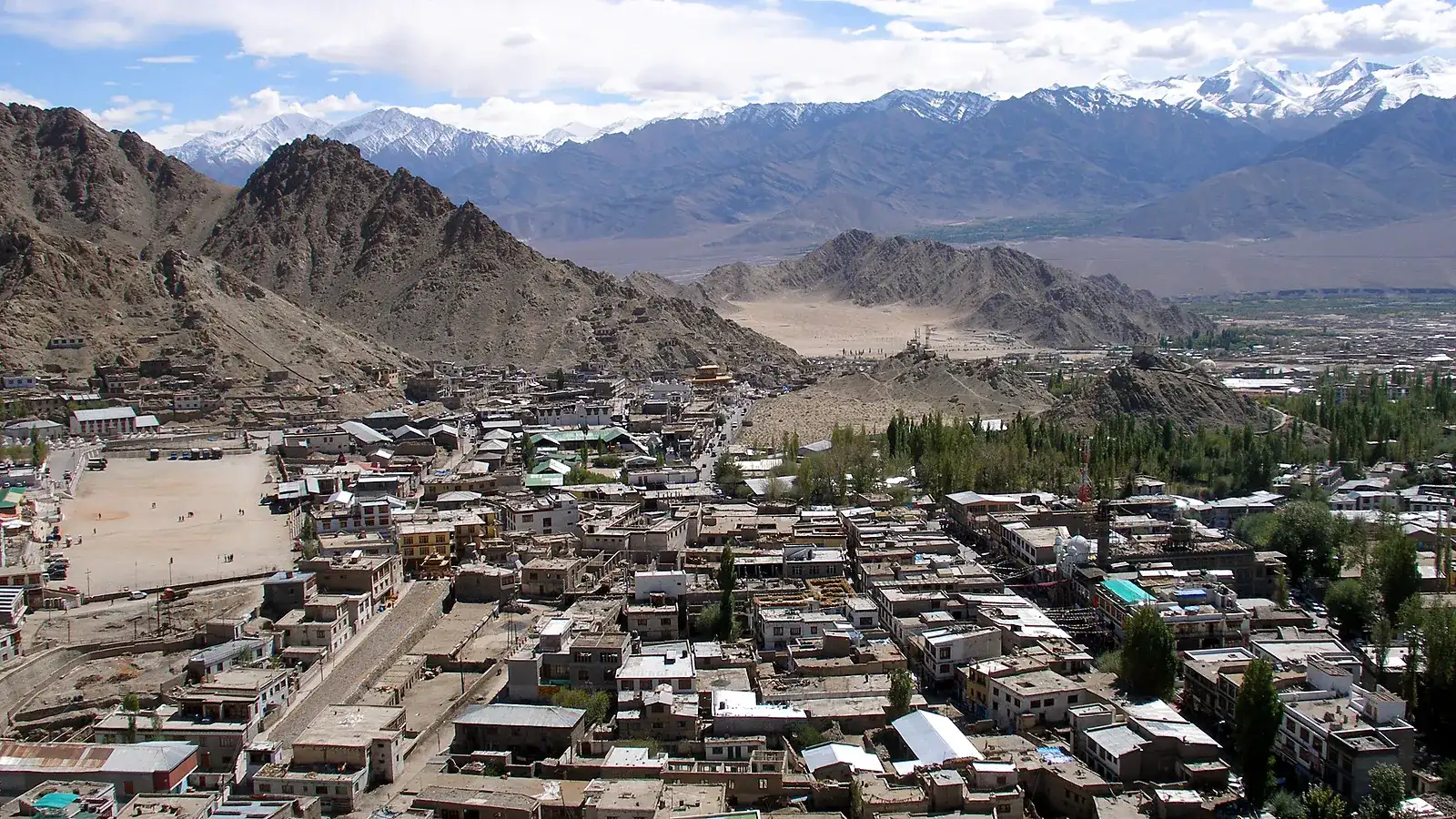
Ladakh is a Union Territory in India's far north, wedged between the Karakoram and the Great Himalayan ranges. It is a high-altitude cold desert. Leh, its main town, sits at around 3,500 metres. Most of the region lies between 3,000 and 5,000 metres, and the passes you will ride over go well above 5,000 metres.
Three facts shape every decision you make here:
- The air is thin. At Leh there is roughly a third less oxygen in each breath than at sea level, and on the high passes it is closer to half. Your body needs time to adjust.
- The climate is extreme. Summer days can be hot in direct sun, while nights drop close to freezing, and weather on the passes can turn to snow in any month.
- Distances are deceptive. A 150-kilometre stretch can take six or seven hours because of mountain roads, river crossings and stops. Plan by hours, not kilometres.
The best time for a Ladakh bike trip
The riding season runs roughly from late May to mid-October, determined by when the high passes are cleared of snow and when they close again.
June is beautiful, with snow walls lining the passes and fewer crowds at the start of the month. However, snowmelt can make water crossings on some routes deep and fast in the afternoons.
July and August are peak season. All routes are generally open and the weather in Ladakh itself is dry and sunny, as the region lies in the rain shadow of the Himalaya. However, the approach roads from Manali and Srinagar pass through areas that can see heavy monsoon rain and landslides. If you ride in from outside Ladakh during these months, keep buffer days.
September is many riders' favourite month. Skies are crystal clear, the monsoon has passed, the crowds are thinner, and the poplar and willow trees along the Indus start turning gold. Nights are colder, so pack well.
Early October is stunning but risky. Temperatures drop sharply, snowfall can close passes without warning, and many camps at Pangong and in Nubra begin to shut down.
Altitude sickness and acclimatisation: the most important section
If you read only one part of this guide, read this one. Acute Mountain Sickness (AMS) is the single biggest risk on a Ladakh trip, and it can affect anyone regardless of age or fitness. Fit young riders often suffer most because they push too hard, too early.
Symptoms to watch for
- Headache that does not go away with rest and water
- Nausea, loss of appetite or vomiting
- Dizziness, fatigue and difficulty sleeping
- Breathlessness at rest
Mild symptoms are common on the first day and usually settle with rest. More serious forms, High Altitude Pulmonary Edema (fluid in the lungs) and High Altitude Cerebral Edema (swelling of the brain), are rare but life-threatening. Warning signs include breathlessness at rest, a persistent cough, confusion, loss of coordination and extreme drowsiness. The treatment is to descend immediately and seek medical help.
How to acclimatise properly
- Rest completely for the first 24 to 48 hours in Leh. If you fly in, do not go sightseeing on day one. Lie down, sleep, and let your body adjust.
- Drink plenty of water, three to four litres a day, and avoid alcohol and smoking for the first few days.
- Climb high, sleep low. Short trips to higher places during the day, returning to sleep at a lower altitude, help your body adapt.
- Do not sleep at Pangong or on a high pass until you are acclimatised. Pangong sits at about 4,350 metres, much higher than Leh.
- Talk to your doctor before the trip about preventive medication, particularly if you have any heart, lung or blood pressure condition. Do not self-medicate.
- Listen to your body. If symptoms get worse, stop, rest, and descend if needed. No viewpoint is worth your life.
Riders coming overland from Manali or Srinagar acclimatise gradually on the way, which is a real advantage. Those who fly into Leh must build in two full rest days. Every good Ladakh itinerary, including ours, does exactly that.
Permits for Nubra, Pangong and beyond
Several areas in Ladakh, including Nubra Valley, Pangong Tso, Tso Moriri and parts of the Hanle region, lie close to international borders and require permits. Indian citizens need an Inner Line Permit, which can be applied for online through the Ladakh administration's official portal, along with payment of an environmental fee and related charges. Foreign nationals need a Protected Area Permit arranged through a registered travel agent.
Carry several printed copies of your permit and your original ID. Army and police check posts along the routes will ask to see them, and they may keep a copy. Rules and fees are updated from time to time, so check the current requirements before your trip. If you travel with an organised group, the permits are arranged for you.
Choosing your motorcycle
The classic Ladakh bike is a Royal Enfield, and for good reason. They are robust, easy to repair, and mechanics across the region know them inside out. The Himalayan, with its adventure-oriented suspension, ground clearance and upright riding position, is arguably the best choice for rough roads and water crossings. The Classic 350 and Bullet remain popular for their comfort and character.
Renting in Leh
Most riders who fly into Leh rent a bike locally. Rental shops in Leh are plentiful. When choosing one:
- Inspect the bike thoroughly: tyres, brakes, chain, clutch, lights and horn.
- Take photographs and a video of the bike, including existing scratches, before you ride off.
- Confirm what is included: helmet, carrier, spare tube, tool kit and luggage straps.
- Check the rental agreement for damage charges and what happens if the bike breaks down in a remote area.
Note that local transport rules in Ladakh restrict the use of commercially rented bikes brought in from other states for sightseeing within Ladakh. Privately owned bikes ridden by their owners are fine. If you plan to rent in Manali or elsewhere and ride in, check the current rules first.
Riding at altitude
Engines lose power at high altitude because there is less oxygen for combustion. Your bike will feel sluggish on the passes, especially fully loaded or with a pillion. Ride in a lower gear, keep revs steady, and do not push the engine. On descents, use engine braking and do not ride the brakes continuously, as they can overheat. Keep a steady pace, not a fast one.
Road conditions: what to expect
Ladakh's roads range from smooth, newly laid tarmac to rough gravel, broken stretches, loose rock and water crossings. The Border Roads Organisation maintains them heroically, but high passes, landslides and snowmelt mean conditions change constantly.
- Water crossings, where snowmelt streams flow across the road, are highest in the afternoon. Cross in the morning when possible. Walk across first to check depth if unsure, stand on the pegs, keep a low gear and steady throttle, and never stop midstream.
- Gravel and sand require relaxed arms, a steady throttle and no sudden braking.
- Military convoys have priority. Pull over and let them pass.
- Black ice can form on shaded stretches of the high passes in the early morning, even in summer.
- Fuel is limited. Leh has fuel pumps, and there are pumps at Diskit in Nubra and a few other places, but they can run dry. Fill up whenever you can and carry a spare fuel can on longer routes.
The seven-day Ladakh bike itinerary
This itinerary starts and ends in Leh, flying in and out, and covers the three essential experiences: Khardung La, Nubra Valley and Pangong Tso. It includes two acclimatisation days and a support vehicle carrying luggage, spare parts, a mechanic and oxygen, which we strongly recommend for first-timers.
Day 1: Arrive in Leh and rest
Fly into Leh's Kushok Bakula Rimpochee Airport. The approach over the snow-covered Himalaya is one of the most spectacular flights in India. Transfer to your hotel and rest for the entire day. Drink water, eat light and sleep. Resist the temptation to explore, even if you feel fine.
Day 2: Acclimatisation and Leh sightseeing
After a slow breakfast, take a gentle drive around Leh. Visit the Shanti Stupa, a white dome with views over the town; the nine-storey Leh Palace, built in the 17th century; and the local market. In the afternoon, visit the Hall of Fame, an army museum honouring soldiers who defended Ladakh, which many visitors find deeply moving. Collect your bike in the evening and take a short test ride around town to get used to it.
Day 3: Monasteries, Magnetic Hill and Sangam
A gentle ride to build confidence and continue acclimatising. Head west to Gurudwara Pathar Sahib, where travellers stop to pray and share langar; Magnetic Hill, where an optical illusion makes it appear vehicles roll uphill; and the Sangam, the confluence of the green Indus and the muddy brown Zanskar rivers. Alternatively, ride east to the beautiful Thiksey Monastery, often compared to the Potala Palace in Lhasa, and Hemis, the largest and richest monastery in Ladakh. Return to Leh for the night.
Day 4: Leh to Nubra Valley over Khardung La
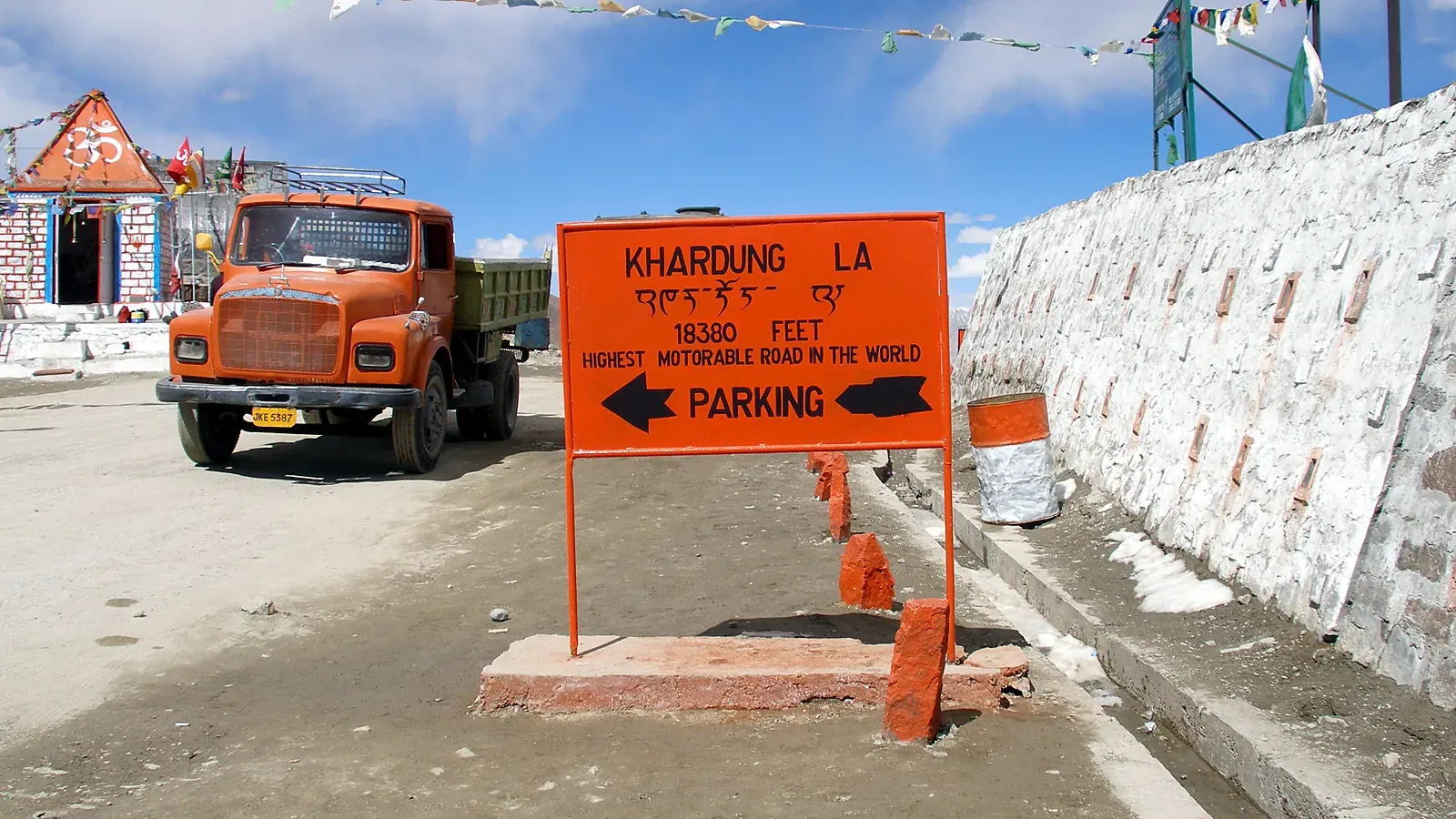
The big day. Ride north from Leh up to Khardung La, the pass whose famous signboard proclaims it among the highest motorable roads in the world, at around 5,359 metres. The climb is roughly 40 kilometres of switchbacks, with the last stretch often rough and muddy. At the top, take your photographs, but do not stay longer than 15 to 20 minutes, as the altitude is extreme. Then descend into the Nubra Valley, where the landscape changes completely: sand dunes, green oases of poplar and sea buckthorn, and the Shyok river.
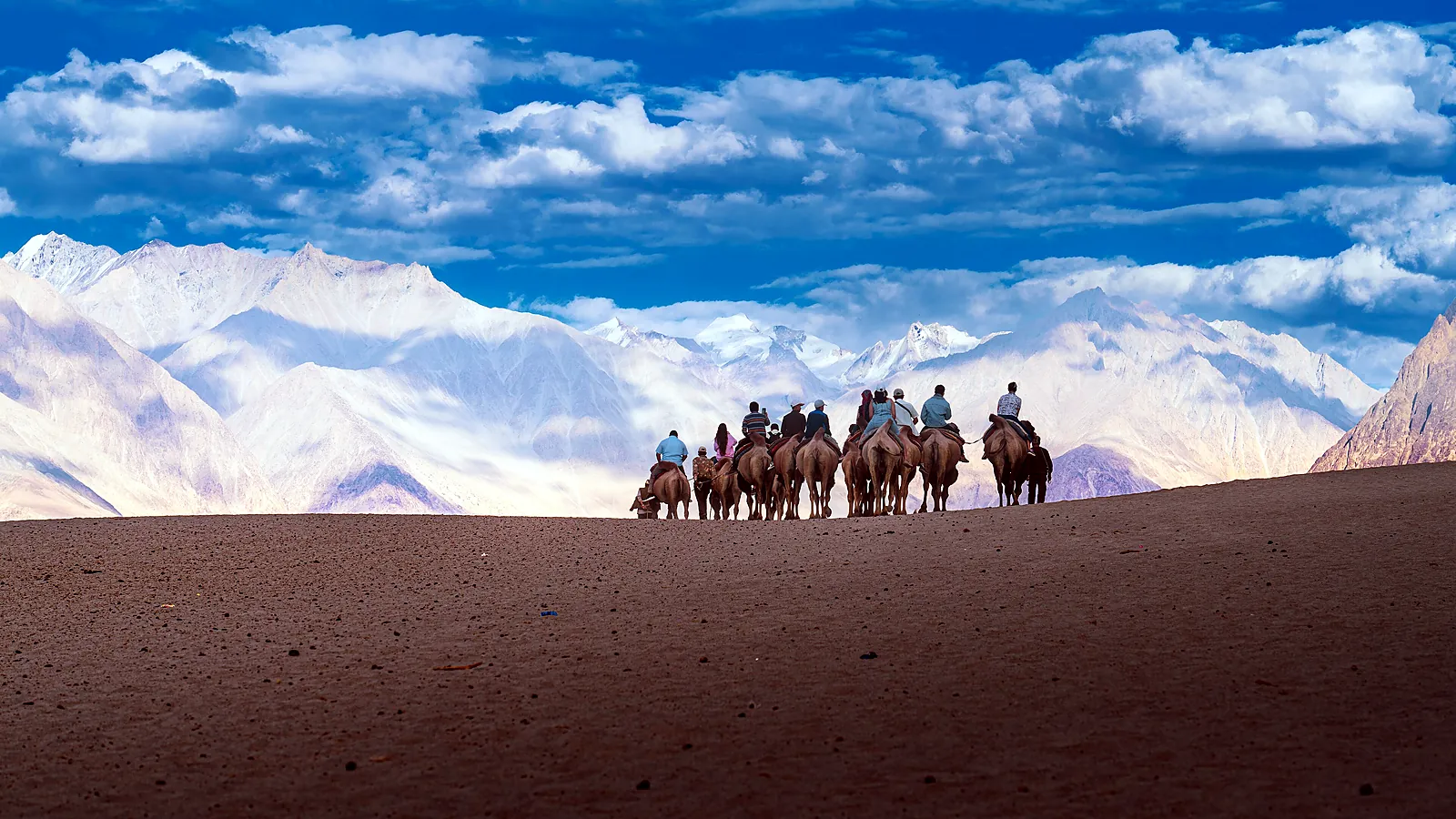
Visit Diskit Monastery, with its giant statue of the Maitreya Buddha looking down the valley, and ride on to Hunder, where you can see and ride the double-humped Bactrian camels on the sand dunes at sunset. Stay overnight in a camp or guesthouse in Hunder or Diskit, at a comfortable altitude of around 3,100 metres.
Day 5: Nubra to Pangong Tso via the Shyok route
Ride from Nubra to Pangong along the Shyok river route through Agham and Shyok village. This road is one of the most dramatic in Ladakh, running through a narrow, wild river valley, with rough patches and water crossings. Start early to cross streams before the afternoon melt.
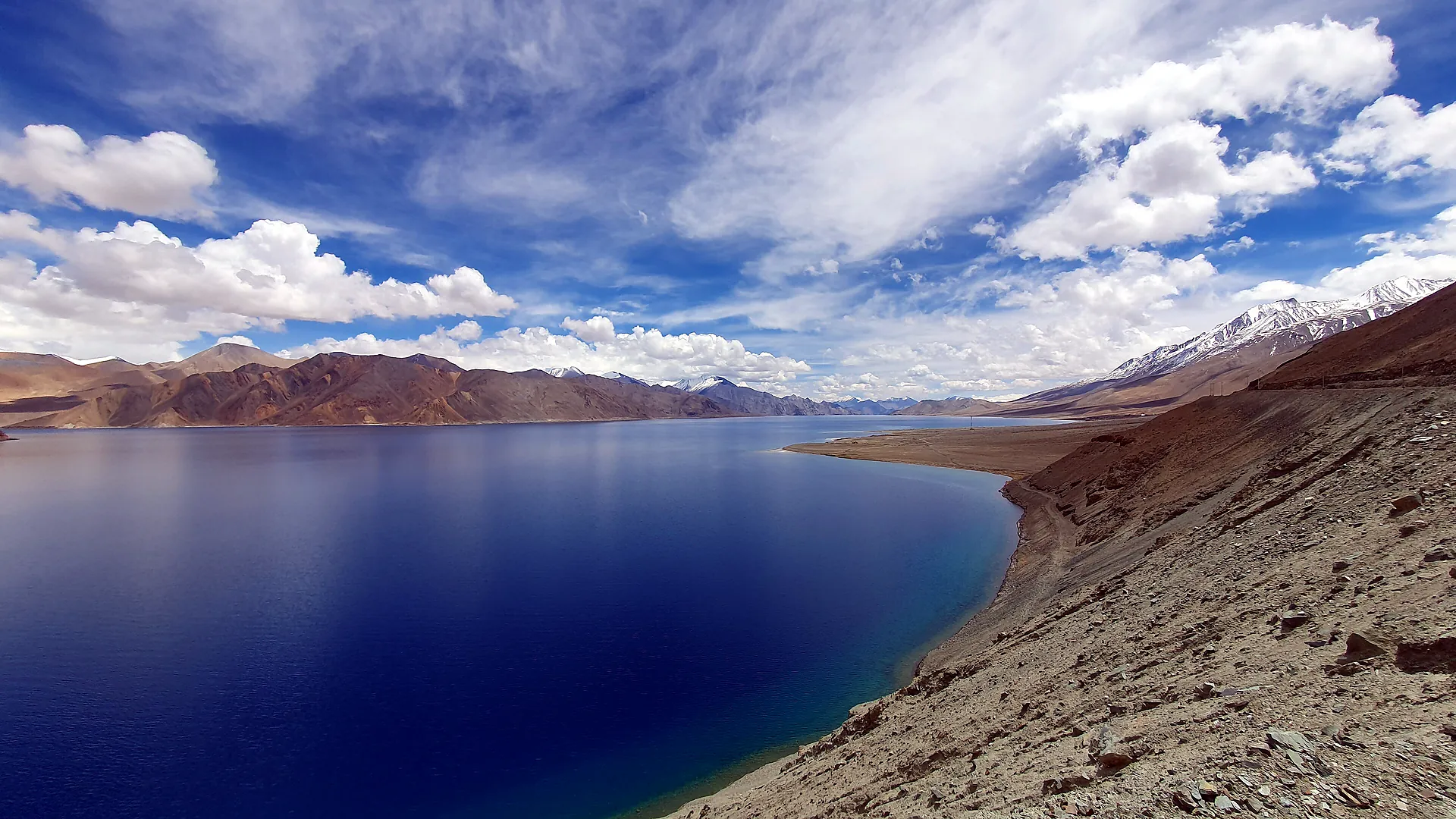
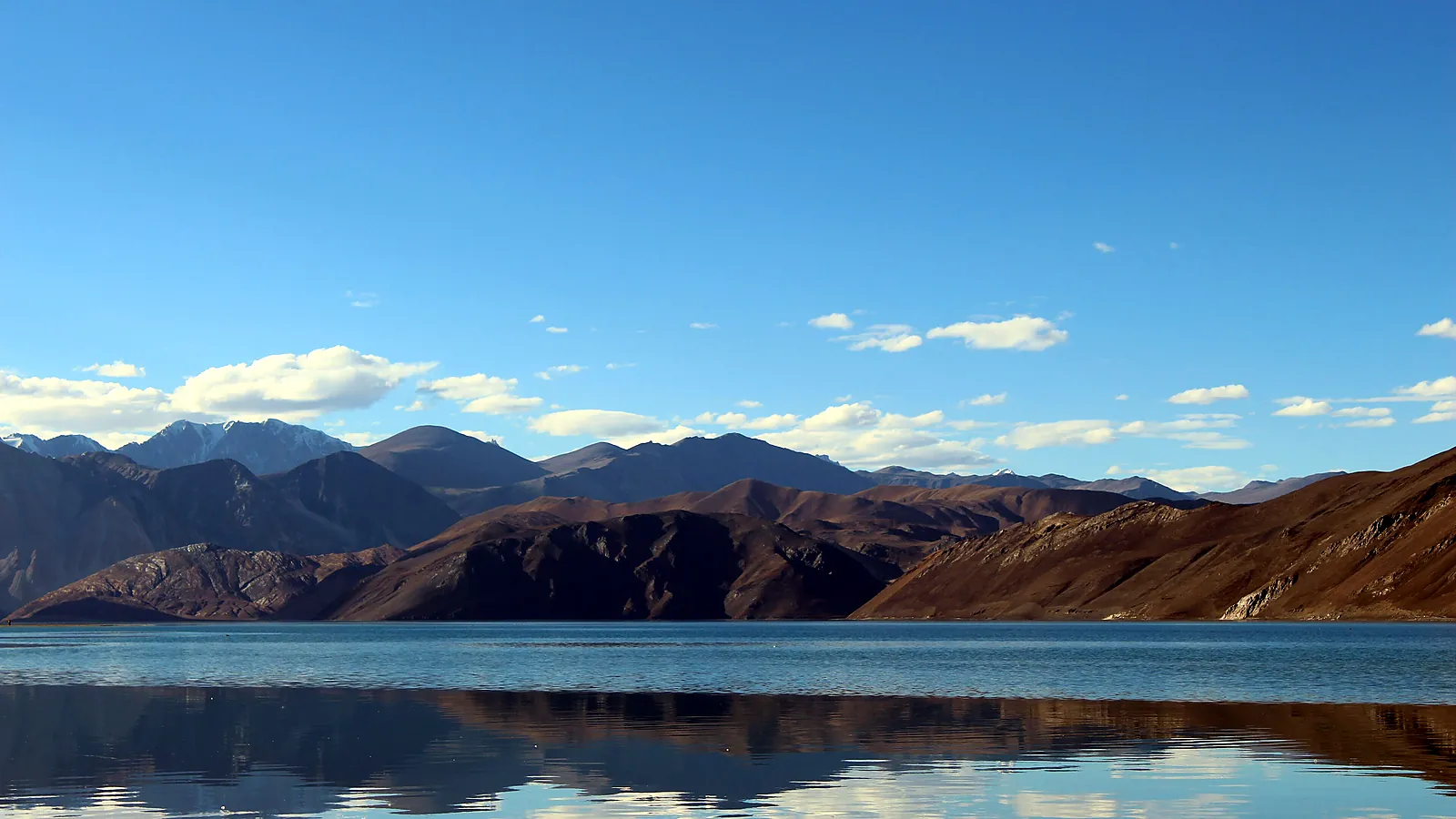
Arrive at Pangong Tso in the afternoon. Nothing prepares you for your first sight of it: a lake about 134 kilometres long, stretching into Tibet, whose colour changes from turquoise to cobalt to green as the light shifts. Spend the evening by the shore. Nights at Pangong, at around 4,350 metres, are very cold, even in summer, so wear all your layers and drink warm water. Stay overnight in a lakeside camp.
Day 6: Pangong to Leh via Chang La
Wake early to watch sunrise over the lake, one of the most magical moments of the trip. After breakfast, ride back to Leh over Chang La, another very high pass at over 5,300 metres. The descent brings you through the Indus valley, past Thiksey and Shey. Return your bike in the evening and celebrate the ride with a good dinner in Leh.
Day 7: Depart Leh
Transfer to the airport for your flight home, with a memory card full of photographs and a story you will tell for years.
If you have more time, add Tso Moriri, a quieter, higher lake in the Changthang plateau, or Hanle, home to one of the world's highest astronomical observatories and a designated dark sky reserve for stargazing.
Nubra Valley in more depth
Most riders give Nubra a single night, but it rewards a slower visit. The valley is formed where the Shyok and Nubra rivers meet, and it is lower and warmer than Leh, which makes it a comfortable place to rest.
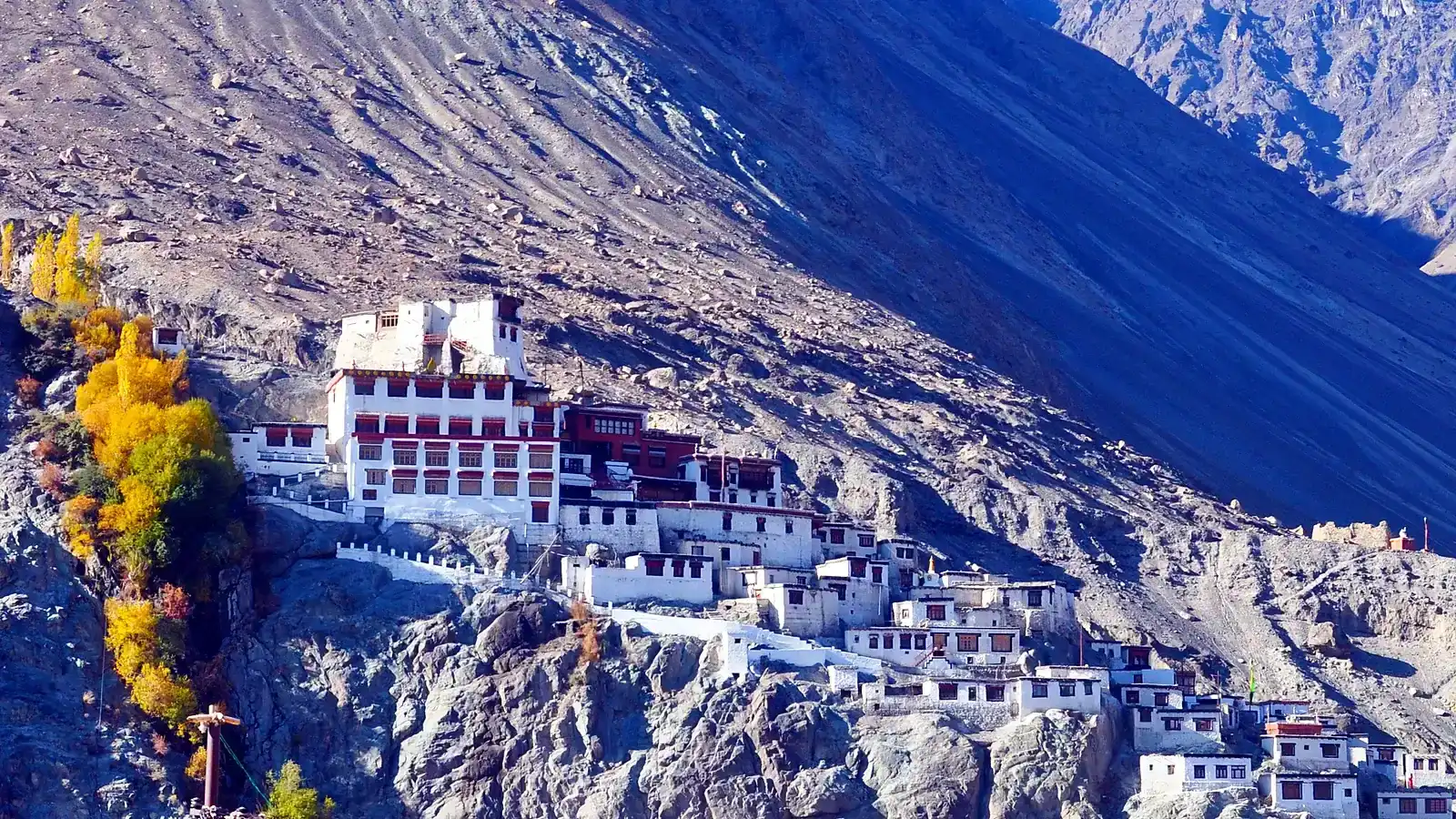
Diskit Monastery is the oldest and largest monastery in Nubra, founded in the 14th century and built dramatically into a hillside. Below it, the 32-metre statue of the Maitreya Buddha faces down the Shyok river. Visit in the early morning to catch the monks' prayers.
Hunder's sand dunes are a surreal sight: rolling white sand at over 3,000 metres, framed by snow peaks. The Bactrian camels here are descendants of animals that carried goods along the ancient Silk Route trade network between Ladakh and Central Asia. A short camel ride at sunset is gentle, fun and suitable for everyone.
With an extra day, ride to Turtuk, a Balti village close to the Line of Control that was opened to tourists only in 2010. Its apricot orchards, stone houses and warm villagers feel completely different from the rest of Ladakh. On the other branch of the valley, the Panamik hot springs are a welcome place to soak tired muscles after days of riding.
Pangong Tso: getting the most from your night by the lake
Pangong is the emotional high point of most Ladakh trips, and a few tips make it better. Arrive in the afternoon so you see the lake in full colour, which is most intense between late morning and mid-afternoon when the sun is high. Walk slowly along the shore and resist the urge to run or climb. You are at over 4,300 metres. Wrap up well before sunset, as temperatures fall rapidly once the sun drops behind the mountains.
Most camps offer heated rooms or electric blankets, and a few have insulated cottages. Ask before you book. On clear nights, the stars over Pangong are extraordinary, with the Milky Way visible to the naked eye. Set an alarm for sunrise, when the lake is calm and the light turns the mountains pink and gold. If anyone in your group feels unwell during the night, with a severe headache, breathlessness or confusion, do not wait until morning. Tell the camp staff and your trip leader immediately, and descend if needed.
Riding pillion, and women riders in Ladakh
Many couples do the Ladakh trip together on one bike, and it is a wonderful shared adventure, but riding pillion at altitude is harder than it looks. The pillion is exposed to the cold without the concentration that keeps a rider alert, and long hours on rough roads are tiring. Give your pillion proper riding gear, including a good jacket, gloves and boots; take breaks every hour; and consider letting them ride in the support vehicle on the longest, roughest day. Remember that a loaded bike with two people loses even more power on the passes.
Ladakh is also one of the most popular destinations in India for women riders, whether solo, in all-women groups or with partners. The region is known for being welcoming and safe, and Ladakhi people are respectful and helpful. The usual precautions apply: ride in daylight, share your route, carry a basic tool kit and know how to fix a puncture or ride with a group that has a mechanic. If you are new to long-distance riding, practise on hill roads closer to home in the months before the trip, including riding over gravel and short water crossings, so that your first experience of these conditions is not at 5,000 metres.
Riding in from Manali or Srinagar
Many riders choose to ride into Ladakh rather than fly, and the approach roads are epic journeys in themselves.
Manali to Leh is about 430 kilometres, typically ridden over two days with a night at Jispa or Sarchu. The route passes through the Atal Tunnel, then crosses a series of high passes, including Baralacha La and Tanglang La, and the vast More Plains. It is spectacular, remote and very high, with limited facilities and water crossings. It is usually open from around June to October.
Srinagar to Leh is about 420 kilometres via Sonamarg, Zoji La, Drass and Kargil, with a night in Kargil. It is a gentler climb in altitude, which helps acclimatisation, and passes the Kargil War Memorial at Drass and the moonscape of Lamayuru.
A popular loop is to ride in from Srinagar and out to Manali, or the reverse, which requires around 12 to 14 days in total.
What does a Ladakh bike trip cost?
For a seven-day trip starting and ending in Leh, costs per person typically break down like this:
- Return flights to Leh: ₹10,000 to ₹25,000, higher in peak season.
- Bike rental: roughly ₹1,500 to ₹2,500 per day for a Royal Enfield, depending on the model.
- Fuel: ₹5,000 to ₹8,000 for the Leh, Nubra and Pangong circuit.
- Accommodation: ₹1,500 to ₹5,000 per night for guesthouses, hotels and camps.
- Food: ₹600 to ₹1,200 per day.
- Permits and fees: a few hundred rupees.
Riding independently for a week can cost ₹35,000 to ₹60,000 per person including flights. A guided expedition adds a support vehicle, mechanic, oxygen, a trip leader, accommodation, meals and permits, which removes most of the risk and stress. Our Leh Ladakh High-Pass Motorbike Expedition starts at ₹28,500 per person for seven days and six nights, with a Royal Enfield, backup vehicle, Khardung La, Nubra Valley sand dunes and a Pangong lakeside camp included.
Food and water on the road
Ladakhi food is simple, warming and mostly vegetarian-friendly. Try thukpa (noodle soup), momos, skyu (a hearty pasta and vegetable stew), khambir (local bread) and butter tea, which takes some getting used to. Dhabas along the main routes serve dal, rice, rajma, parathas and Maggi, the unofficial fuel of every Ladakh rider. Leh has many restaurants serving North Indian, Tibetan, Israeli and continental food.
Carry dry fruits, chocolate, energy bars and electrolyte sachets on riding days. Drink water constantly, even when you do not feel thirsty; dehydration makes altitude sickness worse. Refill bottles from filtered water stations in Leh, which help reduce plastic waste in this fragile environment.
What to pack for a Ladakh bike trip
Riding gear
- A full-face helmet (or bring your own if you prefer it to a rented one).
- A riding jacket and trousers with armour, ideally with waterproof and thermal liners.
- Riding gloves, plus a warm waterproof pair for the passes.
- Ankle-high riding boots or sturdy waterproof boots.
- Knee and elbow guards if your gear does not have armour.
- A balaclava or buff for dust and cold.
Clothing
- Thermal inner layers, fleece and a down jacket for evenings.
- Woollen socks and a warm cap.
- A raincoat or poncho for unexpected weather on the approach roads.
Health and essentials
- A personal medical kit with medicines prescribed by your doctor, painkillers, anti-nausea tablets, ORS and plasters.
- High-SPF sunscreen, lip balm and polarised sunglasses. UV at altitude is intense.
- Moisturiser, as the air is extremely dry.
- A power bank, headlamp and spare batteries.
- Cash. ATMs outside Leh are rare and unreliable, and card payments often do not work.
- Printed permits and several copies of your ID.
For the bike
- A basic tool kit, spare tube, tyre repair kit and pump.
- Spare clutch and accelerator cables.
- Bungee cords and a waterproof luggage cover.
- A spare fuel can for longer routes.
Connectivity
Mobile networks in Ladakh are limited. Postpaid connections from major networks work in Leh and some other towns, but prepaid connections from other states often do not. Coverage disappears entirely on long stretches, including large parts of Nubra and Pangong. Tell your family your route and expected check-in times, download offline maps, and do not rely on your phone for navigation or emergencies.
Responsible riding in Ladakh
Ladakh's environment and culture are fragile, and the growth in tourism has put real pressure on both. Please ride responsibly.
- Carry your rubbish back to Leh. Plastic bottles and wrappers do not decompose in this climate.
- Use refill stations instead of buying bottled water.
- Do not ride off-road on the sand dunes, meadows or lake shores. It damages fragile ecosystems.
- Keep the noise down in villages and near monasteries. Modified loud exhausts are unwelcome here.
- Respect monasteries: walk clockwise around stupas and prayer wheels, remove shoes where asked, and ask before photographing monks.
- Support local businesses: homestays, local guides and Ladakhi-owned restaurants.
Mistakes first-timers make in Ladakh
Skipping acclimatisation. Flying into Leh and riding up Khardung La the next day is the most common and most dangerous mistake. Two rest days are not a luxury.
Staying too long on high passes. Photographs at Khardung La and Chang La take five minutes. Stay 15 to 20 minutes at most, then descend.
Starting late. Afternoons bring deeper water crossings, wind and fatigue. Start riding by 7 or 8 a.m.
Riding tired. Long days at altitude are exhausting. Take regular breaks, eat, drink water and never ride after dark on mountain roads.
Underpacking warm clothes. Even in July, Pangong nights and the passes can be below freezing.
Not carrying cash or printed permits. Both are essential outside Leh.
Ride Ladakh with The Vacation Code
You can ride Ladakh independently, and many experienced riders do. But for a first trip, a guided expedition removes the unknowns: the right acclimatisation plan, a well-maintained Royal Enfield, a support vehicle with a mechanic, spares and oxygen, permits sorted before you land, comfortable stays and a trip leader who knows every pass and water crossing. Our Leh Ladakh High-Pass Motorbike Expedition is designed exactly that way.
Love the mountains? Try our Hampta Pass trek guide or the Kedarkantha winter trek guide, or browse all our adventure trips.
Frequently asked questions about a Ladakh bike trip
What is the best month for a Leh Ladakh bike trip?
June to September is the main riding season. September is often the best, with clear skies, fewer crowds and no monsoon disruption on the approach roads. July and August are the busiest months.
How many days are needed for a Ladakh bike trip?
A trip starting and ending in Leh needs at least seven days, including two for acclimatisation, to cover Khardung La, Nubra Valley and Pangong. Riding in from Manali or Srinagar and back requires 12 to 14 days.
Is a Ladakh bike trip safe for beginners?
Yes, with proper preparation. Beginners should be comfortable riding a 350cc motorcycle on hill roads, acclimatise properly and ideally join a guided group with a support vehicle and mechanic.
Do I need a permit for Nubra Valley and Pangong?
Yes. Indian citizens need an Inner Line Permit for Nubra, Pangong, Tso Moriri and some other areas, applied for online through the Ladakh administration's portal. Carry printed copies for check posts.
How do I avoid altitude sickness in Ladakh?
Rest for the first 24 to 48 hours in Leh, drink three to four litres of water a day, avoid alcohol, ascend gradually and do not stay long on high passes. Consult your doctor before travelling about preventive medication.
Which bike is best for Ladakh?
The Royal Enfield Himalayan is ideal for its suspension and ground clearance, while the Classic 350 is comfortable and popular. Royal Enfields are easy to repair across Ladakh.