📌 In this guide19 sections
- A brief history of the Thunder Dragon kingdom
- Entry rules for Indians: permit and SDF
- How to reach Bhutan from India
- Best time for a Bhutan trip
- A 6-day Bhutan itinerary
- Only four days? A long-weekend version
- Bhutan with older parents
- Food in Bhutan
- How much does a Bhutan trip from India cost?
- Extending your trip: Phobjikha and Bumthang
- Festivals: the tsechu
- Understanding Gross National Happiness
- What to pack
- Photography rules
- Etiquette and practical tips
- Mistakes to avoid
- Who a Bhutan trip suits
- Plan your Bhutan trip with The Vacation Code
- Frequently asked questions
A Bhutan trip from India feels like crossing into another century. You climb for two hours through pine forest strung with prayer flags, your breath coming short in the thin mountain air, and then you turn a corner and there it is: a cluster of white temples with golden roofs clinging to a sheer cliff, 900 metres above the Paro valley. The Tiger's Nest monastery seems to hang in the clouds. Legend says Guru Rinpoche flew here on the back of a tigress in the 8th century to meditate in a cave. Standing opposite it, you almost believe it.
Bhutan, the small Himalayan kingdom between India and Tibet, is famous for measuring its success by Gross National Happiness rather than GDP. It is carbon negative, protects its forests by law, wears traditional dress in daily life and limits tourism to preserve its culture. For Indian travellers it is one of the most rewarding and accessible trips abroad: no visa, a short flight or a road crossing from West Bengal, the rupee accepted everywhere alongside the ngultrum, and a lower tourism fee than almost every other nationality pays.
This guide explains the entry permit and fee, how to get there, the best time to go, a 6-day itinerary through Paro, Thimphu and Punakha, what it costs and how to travel respectfully.
A brief history of the Thunder Dragon kingdom
Bhutanese call their country Druk Yul, the Land of the Thunder Dragon, after the thunder that echoes through its valleys. Buddhism arrived in the 7th and 8th centuries, and Guru Rinpoche, who brought Tantric Buddhism to the Himalaya, is revered everywhere. In the 17th century, the Tibetan lama Zhabdrung Ngawang Namgyal unified the country and built many of the great dzongs that still serve as both monasteries and government offices. The Wangchuck dynasty has ruled since 1907, and in 2008 the fourth king voluntarily introduced parliamentary democracy. India and Bhutan share an unusually close friendship: India is Bhutan's largest trading partner, helped build its roads and hydropower, and Indian visitors are welcomed as neighbours. Bhutan only opened to foreign tourists in 1974 and got television and the internet in 1999, which helps explain why its traditions feel so intact.
Entry rules for Indians: permit and SDF
- No visa: Indian citizens do not need a visa. You need an entry permit, issued on arrival at Paro airport or the Phuentsholing border, or applied for online in advance.
- Documents: a valid Indian passport with at least six months of validity, or a voter ID card. Children can use a passport or birth certificate. Aadhaar and PAN cards are not accepted.
- Sustainable Development Fee (SDF): Indian tourists pay ₹1,200 per person per night. Children under five are exempt, and children aged six to twelve pay half. The fee funds healthcare, education and conservation in Bhutan.
- Permits beyond Thimphu and Paro: for other districts such as Punakha, a route permit is issued in Thimphu or online; your hotel or tour operator can arrange it.
- Guides: rules on guides for Indian visitors have changed over time. Hiring a licensed guide is recommended and required for some sites and treks. Check the latest rules on the official Department of Tourism website before you go.
How to reach Bhutan from India
By air
Drukair and Bhutan Airlines fly to Paro from Delhi, Kolkata, Bagdogra, Guwahati and other cities, depending on the season. The approach to Paro, through steep Himalayan valleys, is one of the most dramatic landings in the world, and only specially certified pilots are allowed to fly it. On clear days, sit on the left side from Delhi for views of Everest and Kanchenjunga.
By road
Travel to Bagdogra or New Jalpaiguri in West Bengal, then drive about four hours to Jaigaon on the border. Cross into Phuentsholing, where you obtain your permit at the immigration office, and continue about five to six hours by road to Thimphu. The road route is cheaper and scenic, but allow an extra day.
Best time for a Bhutan trip
- March to May (spring): rhododendrons bloom across the hills, and the Paro Tsechu festival is usually held in spring.
- September to November (autumn): clear skies, mountain views and the Thimphu Tsechu festival. Considered the best season overall.
- December to February (winter): cold but clear and quiet, with snow on high passes. Black-necked cranes arrive in the Phobjikha valley.
- June to August (monsoon): green and uncrowded, but rain, cloud and occasional landslides.
A 6-day Bhutan itinerary
Day 1: Arrive in Paro, drive to Thimphu
Land in Paro and drive about an hour to Thimphu, the only capital city in the world without traffic lights; a policeman directs traffic by hand at the main junction. Visit the Memorial Chorten, where locals circle the white stupa spinning prayer wheels, and stroll the main street in the evening.
Day 2: Thimphu sightseeing
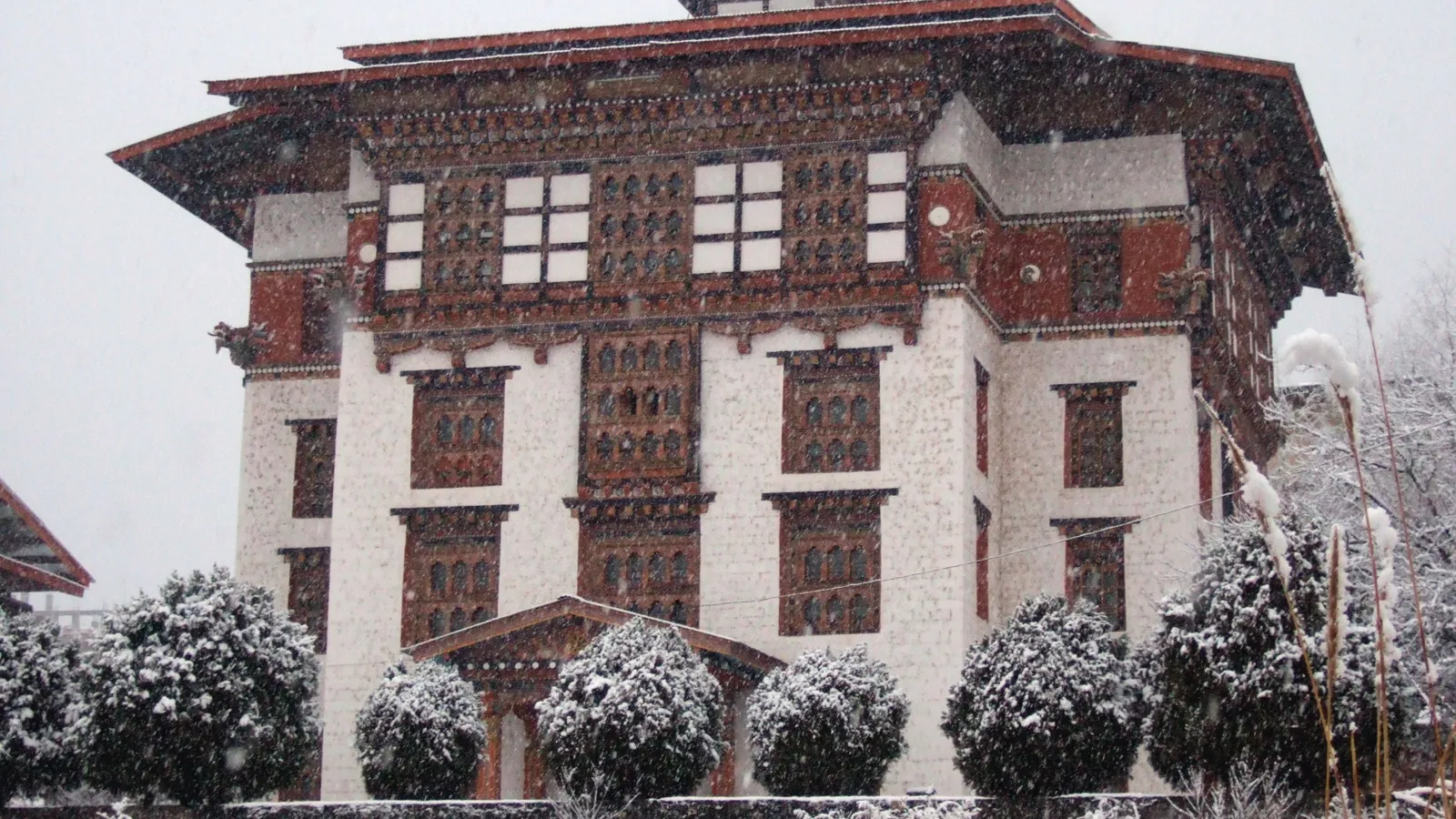
Visit the Buddha Dordenma, a giant golden Buddha statue overlooking the valley, which contains thousands of smaller Buddha statues inside. See the Tashichho Dzong, a fortress-monastery that houses the throne room and government offices. Visit the National Institute for Zorig Chusum, where students learn the 13 traditional arts, the Folk Heritage Museum and the weekend market. Try on a traditional gho or kira for photographs.
Day 3: Over the Dochula Pass to Punakha
Drive east over the Dochula Pass, at about 3,100 metres, where 108 memorial chortens stand among prayer flags, and on clear days the eastern Himalaya stretches across the horizon. Descend into the warm Punakha valley and visit Chimi Lhakhang, the fertility temple of the "Divine Madman", a walk through rice fields.
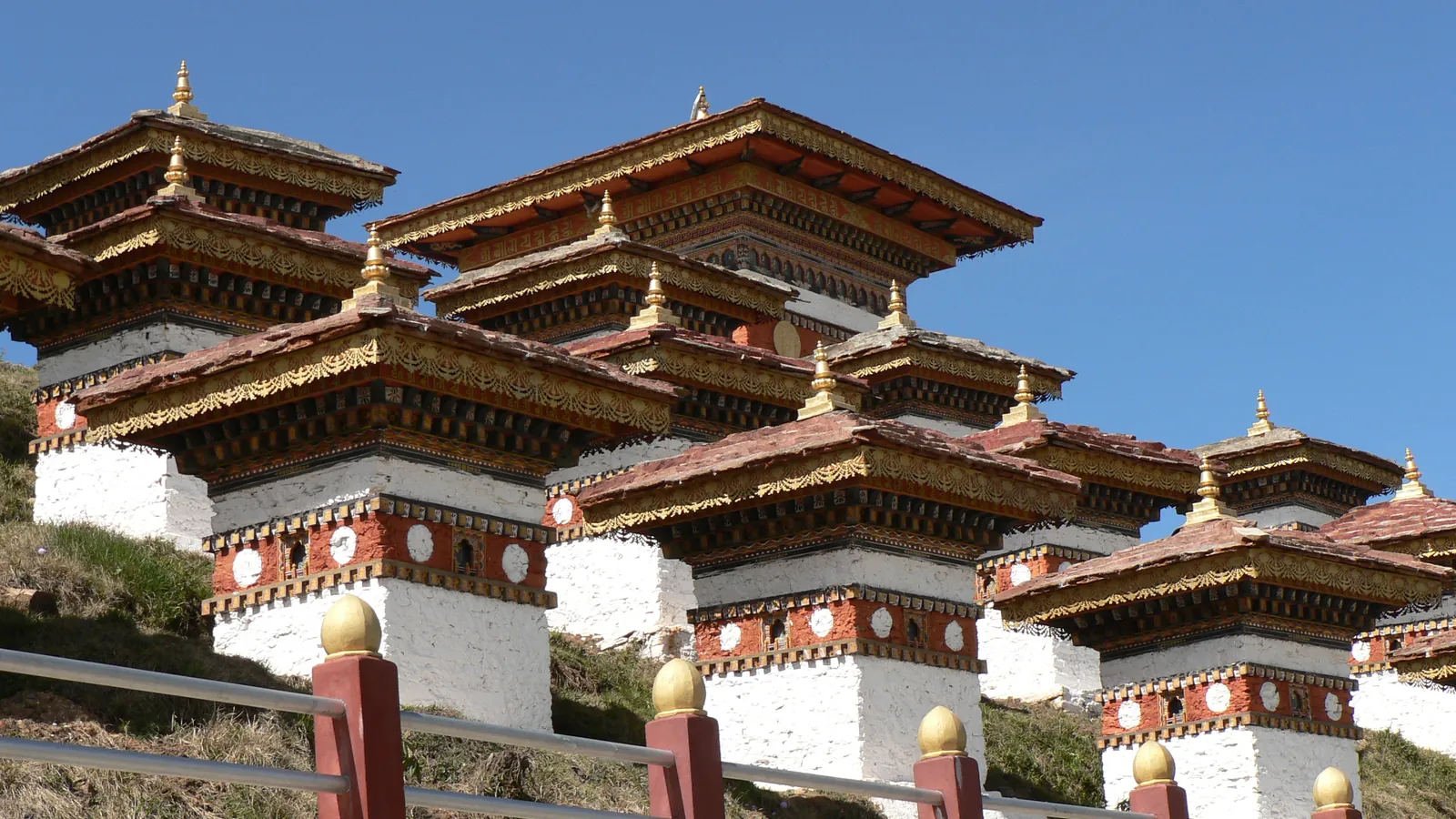
Day 4: Punakha Dzong and the suspension bridge
Visit Punakha Dzong, many people's favourite building in Bhutan, a vast whitewashed fortress at the meeting of two rivers, the Pho Chhu and Mo Chhu. It was the seat of government for centuries, and in spring its courtyards are framed by purple jacaranda. Walk across the long Punakha suspension bridge, strung with prayer flags, and optionally go river rafting. Drive back to Paro in the afternoon.
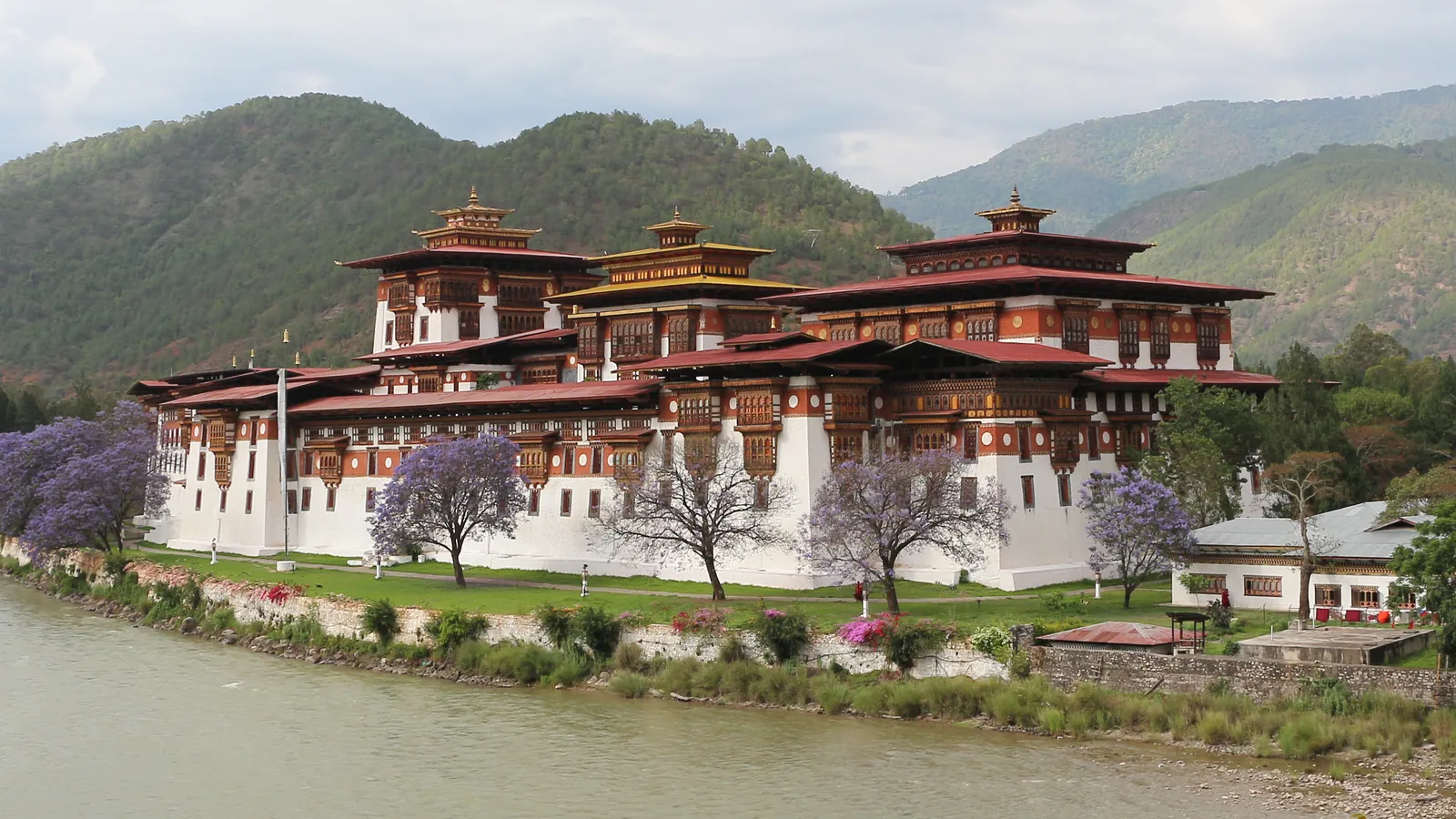
Day 5: The Tiger's Nest hike
Start early for the hike to Paro Taktsang, the Tiger's Nest. The trail climbs about 900 metres over roughly four to five kilometres each way, taking two to three hours up for most people. There is a cafeteria at the halfway viewpoint. Ponies are available for part of the ascent. Inside the monastery, photography is not allowed and you must leave bags and phones at the entrance. Allow five to six hours for the whole trip. In the evening, relax with a traditional hot stone bath, where river stones heated in a fire are dropped into a wooden tub.
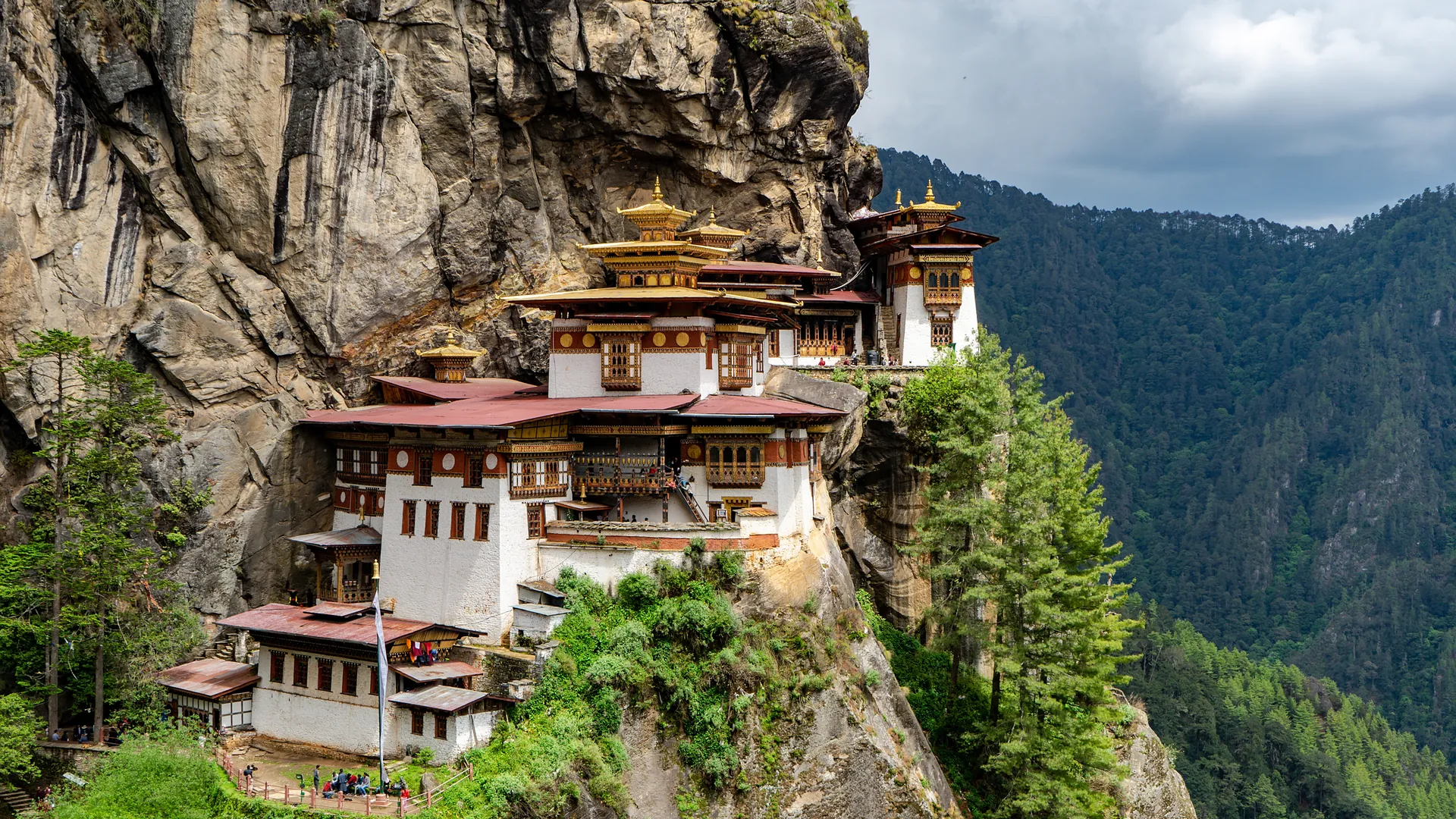
Day 6: Paro and departure
Visit Rinpung Dzong, the fortress above the Paro river, crossing the traditional covered wooden bridge, and Kyichu Lhakhang, one of Bhutan's oldest temples, before your flight home.
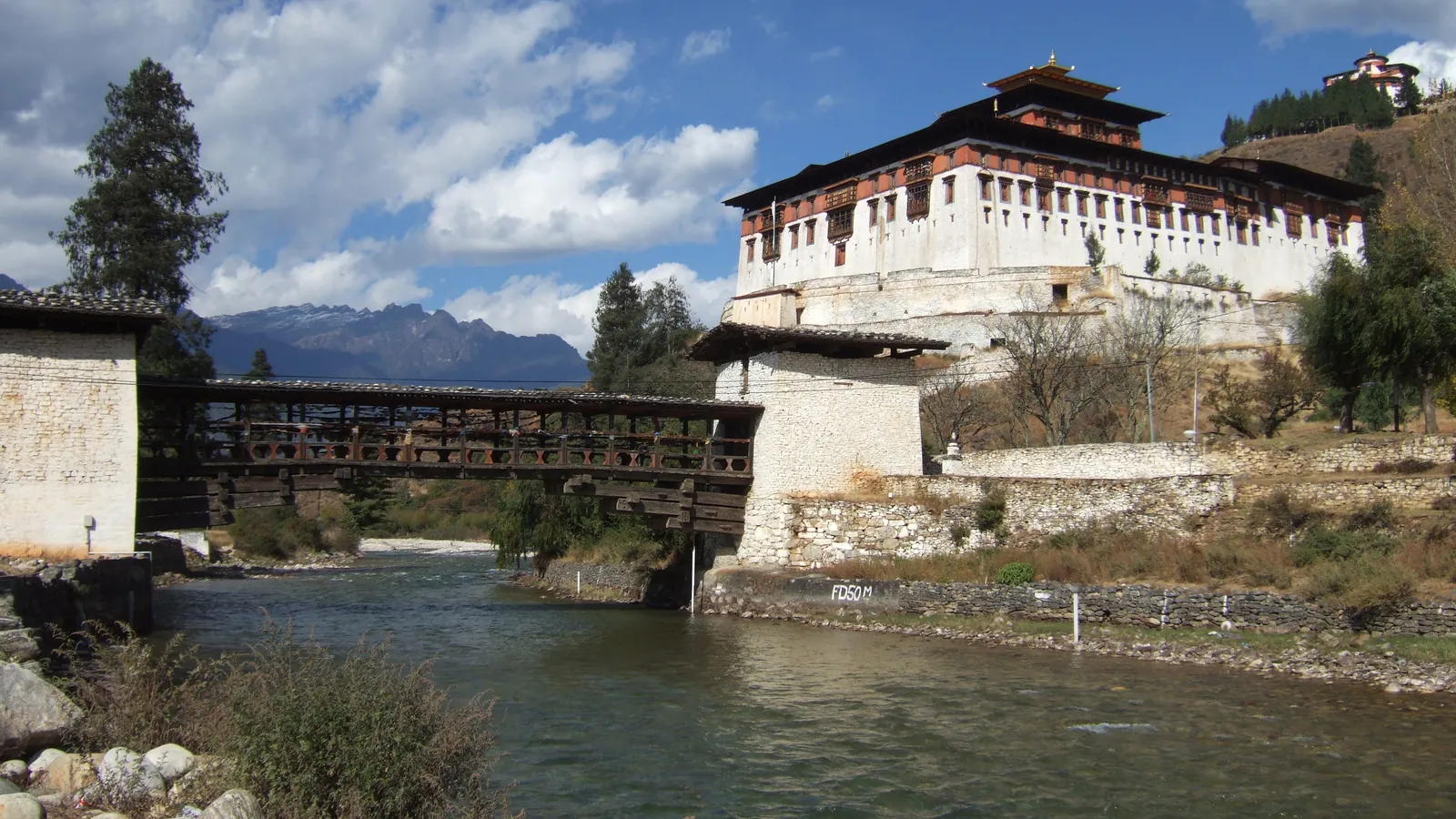
Only four days? A long-weekend version
If you only have a long weekend, fly into Paro and focus on the west. Day one: arrive and drive to Thimphu for the Memorial Chorten and Buddha Dordenma. Day two: Tashichho Dzong in the morning, then drive over the Dochula Pass to Punakha Dzong and back to Paro, a long but beautiful day. Day three: hike to the Tiger's Nest and end with a hot stone bath. Day four: Rinpung Dzong and your flight home. You will miss the slow rhythm of the longer trip, but you will still see Bhutan's three great sights.
Bhutan with older parents
Bhutan's roads are winding and drives can be long, so plan shorter days and stops for tea. Hotels are comfortable, food is mild when requested, and most dzongs have only gentle steps. For the Tiger's Nest, ponies can carry visitors to the halfway cafeteria, from where the view of the monastery is already spectacular.
Food in Bhutan
Bhutan's national dish is ema datshi, chillies cooked with cheese, and Bhutanese love chilli as a vegetable, not just a spice. Try kewa datshi (potatoes and cheese), shamu datshi (mushrooms and cheese), red rice, buckwheat pancakes and momos. Hotels serve Indian, continental and Bhutanese food, and vegetarian food is widely available. Bhutan is largely vegetarian-friendly because many Bhutanese avoid killing animals, and most meat is imported.
How much does a Bhutan trip from India cost?
- SDF: ₹1,200 per person per night; ₹6,000 for a 5-night trip.
- Flights to Paro: typically ₹15,000 to ₹35,000 return from Delhi or Kolkata; flights from Bagdogra are shorter and cheaper.
- Road route: ₹8,000 to ₹15,000 for a car from Bagdogra to Phuentsholing and onward, plus train or flight to Bagdogra.
- Hotels: ₹3,000 to ₹7,000 per night for good tourist hotels; luxury lodges cost far more.
- Car and driver in Bhutan: ₹4,000 to ₹7,000 per day.
- Guide: roughly ₹2,000 to ₹3,500 per day.
- Food: ₹1,000 to ₹2,000 per person per day.
A comfortable 6-day Bhutan trip typically costs ₹45,000 to ₹80,000 per person including flights, SDF, hotels, transport, guide and meals.
Extending your trip: Phobjikha and Bumthang
With two or three extra days, travel beyond the classic western circuit. The Phobjikha valley, a wide glacial valley about three hours from Punakha, is the winter home of rare black-necked cranes, which arrive from Tibet around late October and are celebrated with a festival at the Gangtey monastery. Further east, Bumthang is Bhutan's spiritual heartland, with some of the country's oldest temples, apple orchards, cheese and local beer. Domestic flights and long mountain roads connect these regions.
Festivals: the tsechu
A tsechu is a religious festival held in each district in honour of Guru Rinpoche. Monks and laymen in elaborate silk costumes and painted masks perform sacred dances in the dzong courtyards, while locals in their finest clothes gather to watch, picnic and receive blessings. At dawn on the final day of some festivals, a giant thangka, a religious painting several storeys high, is unrolled for a few hours. The Paro Tsechu in spring and Thimphu Tsechu in autumn are the most famous. Visitors are welcome, but dress respectfully and do not block the dancers.
Understanding Gross National Happiness
Bhutan's philosophy of Gross National Happiness guides government policy through four pillars: sustainable development, preservation of culture, conservation of the environment and good governance. You see it everywhere: the constitution requires that at least 60 percent of the country remain forested, plastic bags are restricted, traditional architecture is required for new buildings, and national dress is worn in schools and offices. The Sustainable Development Fee that visitors pay is part of the same idea: tourism should benefit the country without overwhelming it.
What to pack
- Layers: temperatures swing between warm afternoons and cold nights, especially in spring and autumn.
- A warm jacket for winter and high passes such as Dochula.
- Comfortable hiking shoes for the Tiger's Nest.
- Modest clothes with long sleeves for dzongs and temples.
- Sunscreen and sunglasses; the high-altitude sun is strong.
- Any regular medicines, and something for altitude headaches after consulting your doctor.
Photography rules
Bhutan is extremely photogenic, but photography is not allowed inside temple halls and many dzong interiors. Look for signs and ask your guide. Always ask before photographing monks or local people, and avoid flying drones without a permit, which is required.
Etiquette and practical tips
- Walk clockwise around temples, chortens and prayer wheels.
- Dress modestly in dzongs and temples: long sleeves and long trousers or skirts. Remove hats and shoes where asked.
- Do not point your feet at altars or people, and never touch religious objects without permission.
- Bhutan is tobacco-restricted. Smoking in public places is prohibited, and importing tobacco is strictly limited and taxed.
- Carry cash. Indian rupees are accepted widely, though some shops do not accept ₹500 and ₹2,000 notes. ATMs and cards are available in towns but not everywhere.
- Altitude: Paro and Thimphu are at about 2,200 to 2,300 metres. Take it easy on the first day before the Tiger's Nest hike.
- Buy local: handwoven textiles, incense, paintings and red rice make good souvenirs.
Mistakes to avoid
Carrying only Aadhaar. It is not accepted. Bring your passport or voter ID.
Doing the Tiger's Nest on day one. Acclimatise first; the climb is steep.
Ignoring festival dates. Tsechu festivals are spectacular, but hotels fill up months ahead. Plan early or avoid those dates.
Rushing. Bhutan rewards a slow pace. Six days is ideal; add Phobjikha or Bumthang if you have more time.
Who a Bhutan trip suits
Families enjoy the clean air, safe towns and cultural experiences. Couples find the valleys, hot stone baths and quiet lodges deeply romantic. Hikers love the Tiger's Nest and longer treks. Older parents enjoy the monasteries and scenery, though the Tiger's Nest hike can be demanding; ponies help part of the way.
Plan your Bhutan trip with The Vacation Code
A Bhutan trip from India is a journey into calm, colour and a very different idea of happiness. Our team can arrange permits, hotels, guides and transport. For more Himalayan journeys, read our Nepal trip guide and our guide to visa free countries for Indians, explore our Leh Ladakh expedition, or browse all our tours.
Frequently asked questions
Do Indians need a visa for Bhutan?
No. Indian citizens need an entry permit, issued on arrival or online, with a valid passport or voter ID. Aadhaar and PAN cards are not accepted.
What is the SDF for Indian tourists in Bhutan?
Indian tourists pay a Sustainable Development Fee of 1,200 rupees per person per night. Children under five are exempt and children aged six to twelve pay half.
How much does a Bhutan trip from India cost?
A comfortable 6-day Bhutan trip typically costs 45,000 to 80,000 rupees per person including flights, SDF, hotels, transport, a guide and meals.
How difficult is the Tiger's Nest hike?
It is a moderate to steep hike of about 900 metres of ascent, taking two to three hours up for most people. Ponies are available for part of the way, and there is a cafeteria halfway.
What is the best time for a Bhutan trip?
March to May and September to November are the best seasons, with clear skies, flowers or festivals. Winter is cold but clear, and the monsoon is rainy.
Can I travel to Bhutan by road from India?
Yes. Drive from Bagdogra or New Jalpaiguri to Jaigaon, cross to Phuentsholing to obtain your permit, and continue to Thimphu, about five to six hours further.
Is Indian currency accepted in Bhutan?
Yes. The Indian rupee is widely accepted alongside the Bhutanese ngultrum, though some places may refuse larger notes. Carry smaller denominations.