📌 In this guide22 sections
- A short history of Darjeeling
- Best time for a Darjeeling trip
- How to reach Darjeeling
- A 4-day Darjeeling itinerary
- Understanding Darjeeling tea
- Food in Darjeeling
- Darjeeling's people and culture
- A tea lover's guide
- Darjeeling with children
- Festivals in Darjeeling
- Shopping in Darjeeling
- The full toy train journey
- A stop in Kurseong
- Where to stay
- Getting around
- How much does a Darjeeling trip cost?
- Combining Darjeeling and Sikkim
- Who a Darjeeling trip suits
- What to pack
- Tips and mistakes to avoid
- Plan your Darjeeling trip with The Vacation Code
- Frequently asked questions
A Darjeeling trip is worth waking up at 3.30 a.m. for. You join a crowd of sleepy travellers wrapped in shawls on the summit of Tiger Hill, clutching cups of hot tea in the freezing dark. Slowly the eastern sky turns orange, and then, far away above the clouds, the snowy summit of Kanchenjunga, the third-highest mountain in the world, catches the first rays of the sun and glows pink, then gold, while the valleys below are still in darkness. The crowd gasps and claps. On very clear days, you may even glimpse Everest in the distance.
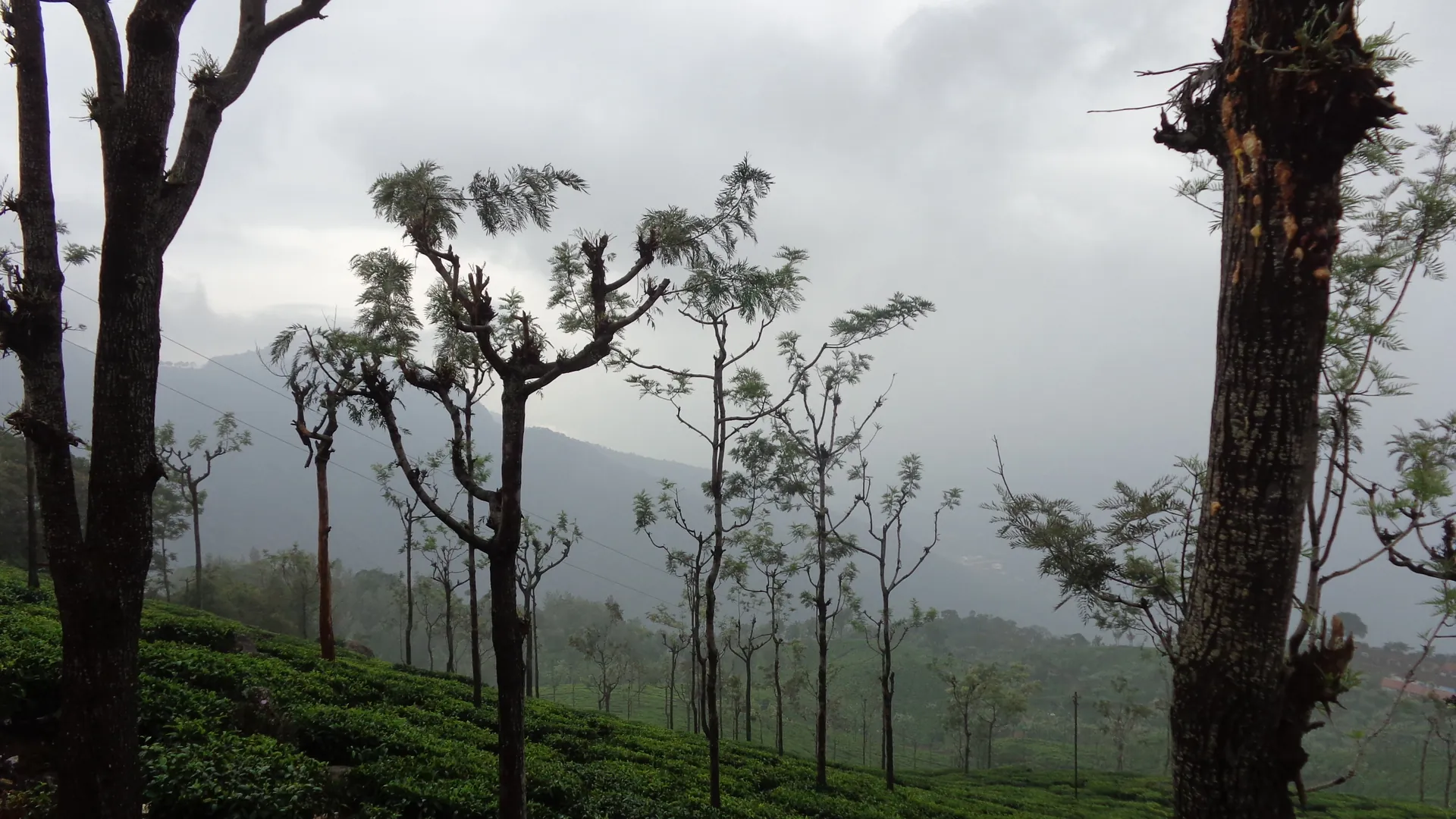
Darjeeling, at about 2,000 metres in the hills of northern West Bengal, is one of India's most famous hill stations, known as the Queen of the Hills. It is the home of the world-renowned Darjeeling tea, the UNESCO-listed Darjeeling Himalayan Railway and a rich blend of Nepali, Tibetan, Lepcha and British colonial heritage. Its winding streets, monasteries, tea estates and mountain views make it a favourite with families, honeymooners and tea lovers.
This Darjeeling trip guide covers the best time, how to reach, a 4-day itinerary, tea estates, the toy train, food, stays, costs and tips.
A short history of Darjeeling
Darjeeling was part of the kingdom of Sikkim before the British East India Company acquired it in the 1830s as a sanatorium for soldiers and officials escaping the heat of the plains. Tea planting began in the 1840s, and the region's cool climate and misty slopes produced a delicate tea with a muscatel flavour that became famous worldwide. The Darjeeling Himalayan Railway, opened in 1881, brought visitors up the steep hills, and the town grew into a summer capital with schools, churches and colonial buildings. Darjeeling tea was the first product in India to receive a Geographical Indication (GI) tag, in 2004.
Best time for a Darjeeling trip
- March to May: spring, with pleasant weather, blooming rhododendrons and magnolias, and the first flush tea season. Views can be hazy.
- October to December: autumn and early winter, with clear skies and the best chances of seeing Kanchenjunga. Arguably the best time.
- January to February: cold, sometimes below freezing, with occasional snow on nearby hills; clear views but chilly.
- June to September: monsoon, with heavy rain, mist and landslides; mountain views are rare.
How to reach Darjeeling
- By air: the nearest airport is Bagdogra, about 70 kilometres away, a drive of around three hours.
- By train: New Jalpaiguri (NJP) is the nearest major railway station, with trains from Kolkata, Delhi and other cities. From NJP, take a taxi or the toy train.
- By road: shared jeeps and private taxis run from Siliguri, Bagdogra and NJP to Darjeeling.
A 4-day Darjeeling itinerary
Day 1: Arrive and the Mall
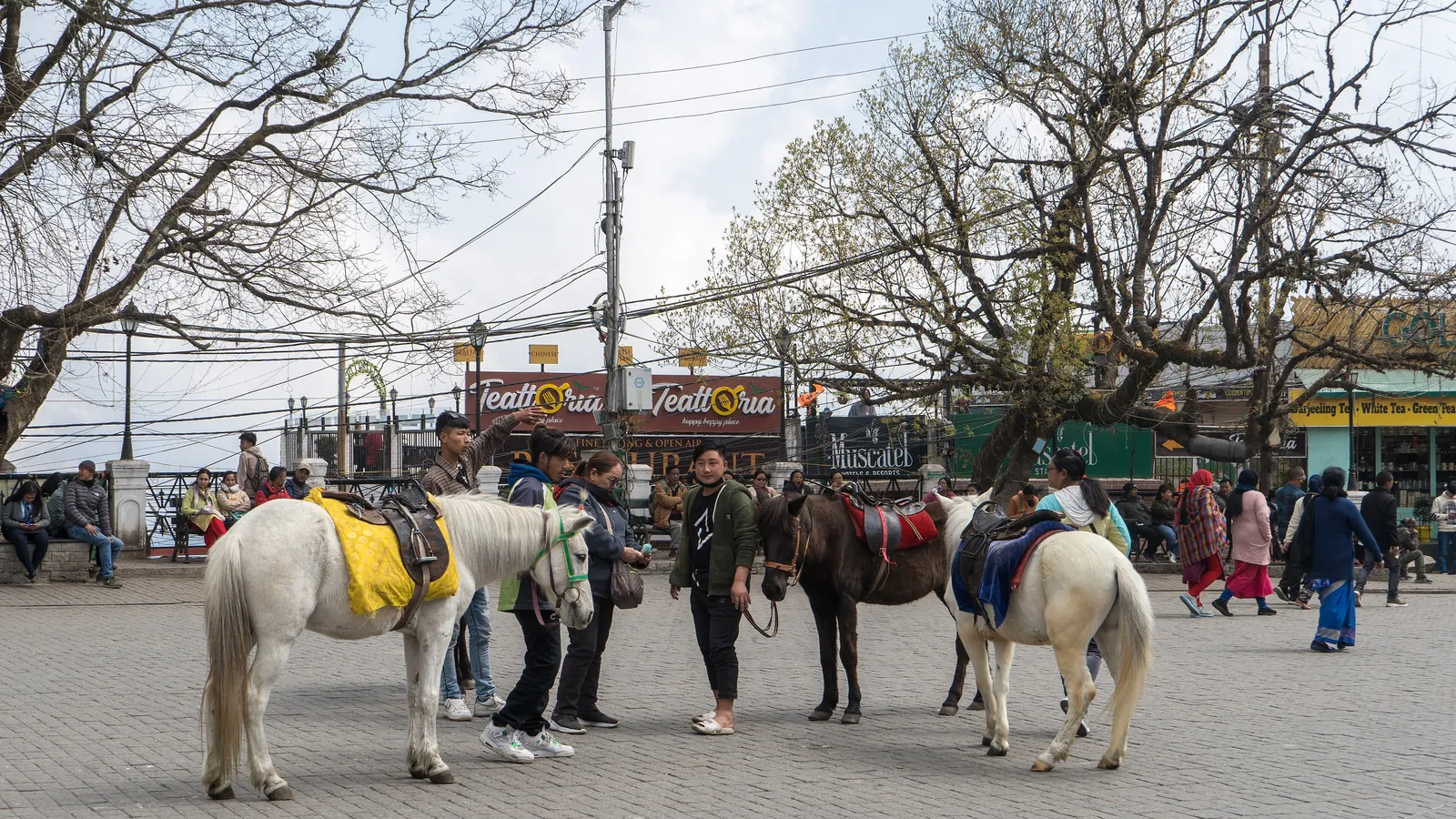
Drive up from Bagdogra or NJP through tea gardens and pine forests, passing Kurseong. In the afternoon, stroll along the Mall Road to Chowrasta, the town's main square, with views of the mountains on clear days, pony rides and cafes. Visit the historic bakeries and tea rooms that have served visitors for generations.
Day 2: Tiger Hill sunrise and Ghum
Leave at about 4 a.m. for Tiger Hill, about 11 kilometres away, to watch the sunrise over Kanchenjunga. On the way back, visit the Ghum Monastery, with its large statue of the Maitreya Buddha, and the Batasia Loop, where the toy train spirals around a garden with a war memorial and mountain views.
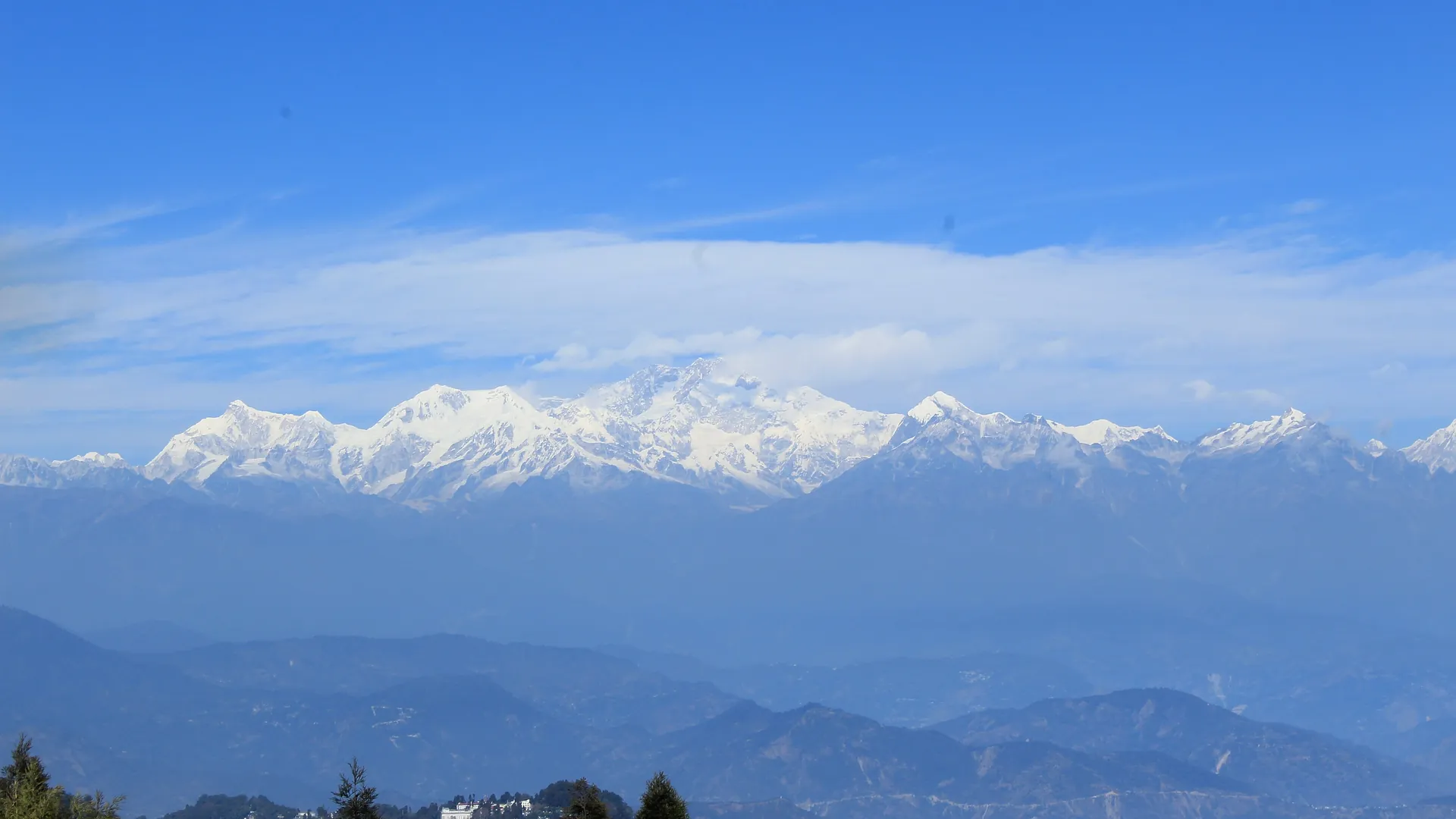
After breakfast, visit the Padmaja Naidu Himalayan Zoological Park, known for breeding red pandas and snow leopards, and the adjacent Himalayan Mountaineering Institute, founded after Tenzing Norgay and Edmund Hillary's first ascent of Everest in 1953, with a museum of mountaineering history. In the afternoon, ride the Darjeeling Ropeway over tea gardens into the Rangeet Valley.
Day 3: Toy train and tea estates
Take the Darjeeling Himalayan Railway joy ride from Darjeeling to Ghum and back, often behind a vintage steam locomotive, with stops at the Batasia Loop and the railway museum at Ghum. The railway, opened in 1881, is a UNESCO World Heritage Site.
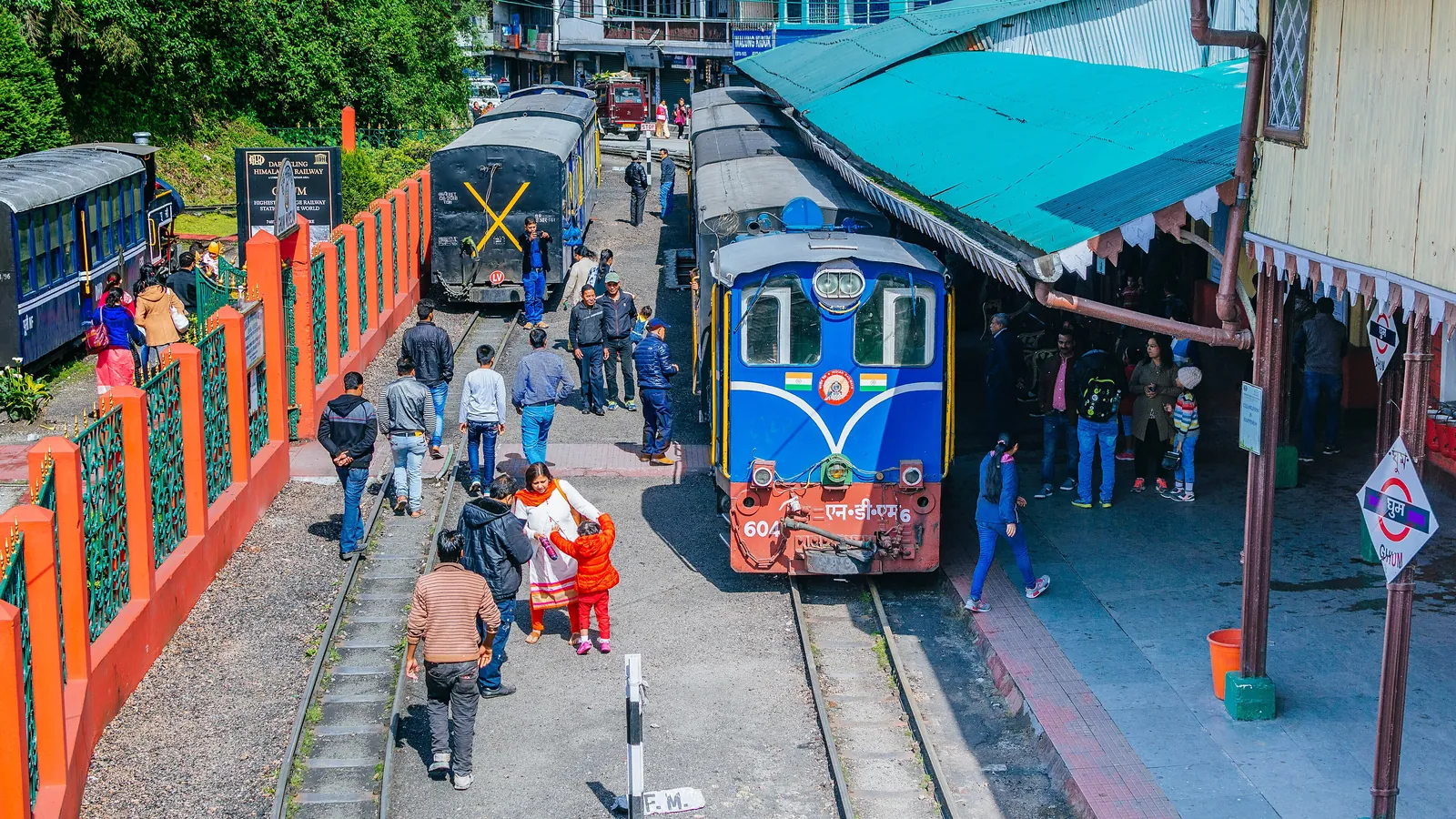
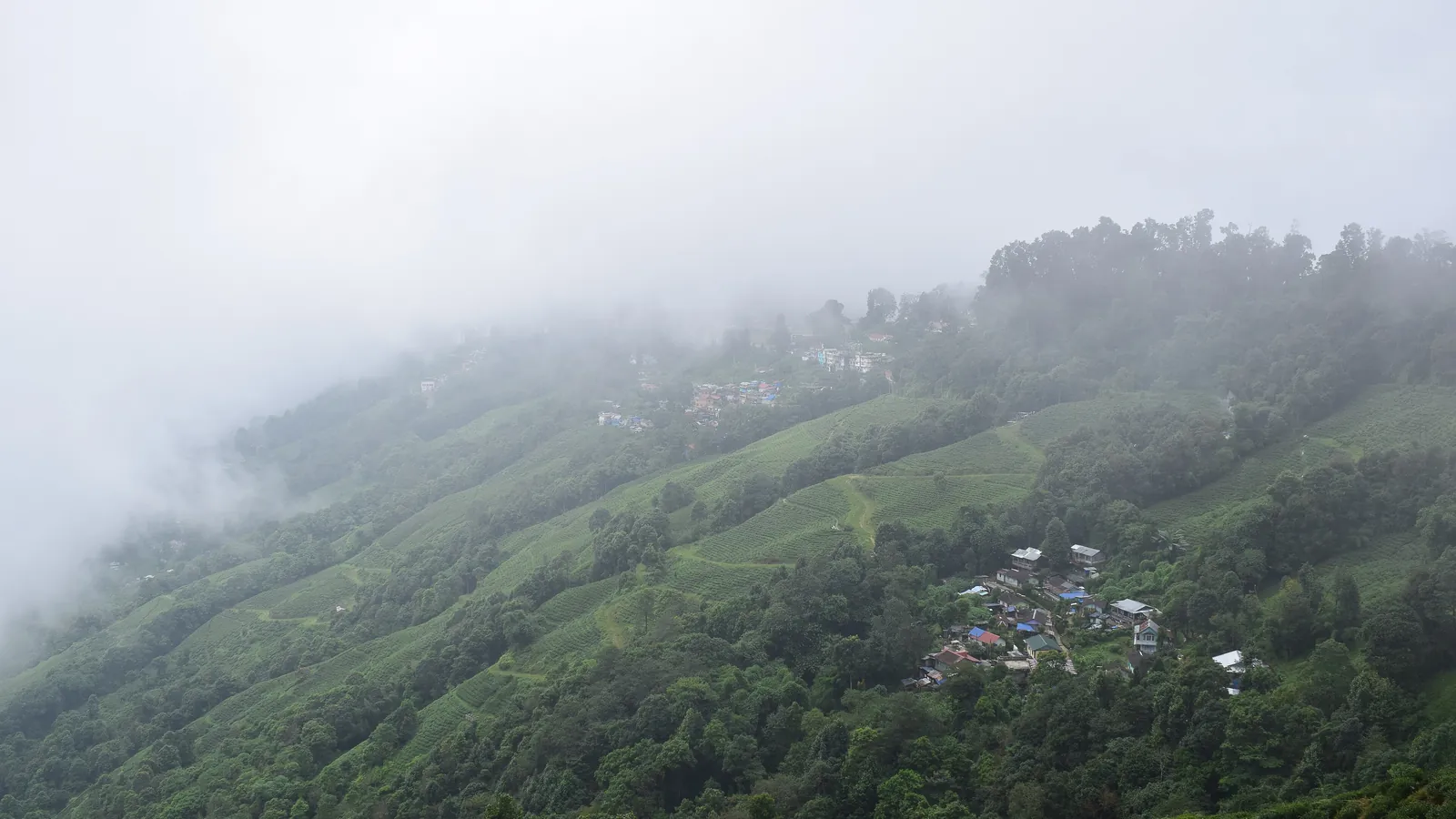
Then visit a tea estate such as Happy Valley, one of the oldest in Darjeeling, for a tour of the factory and a tasting of first, second and autumn flush teas.
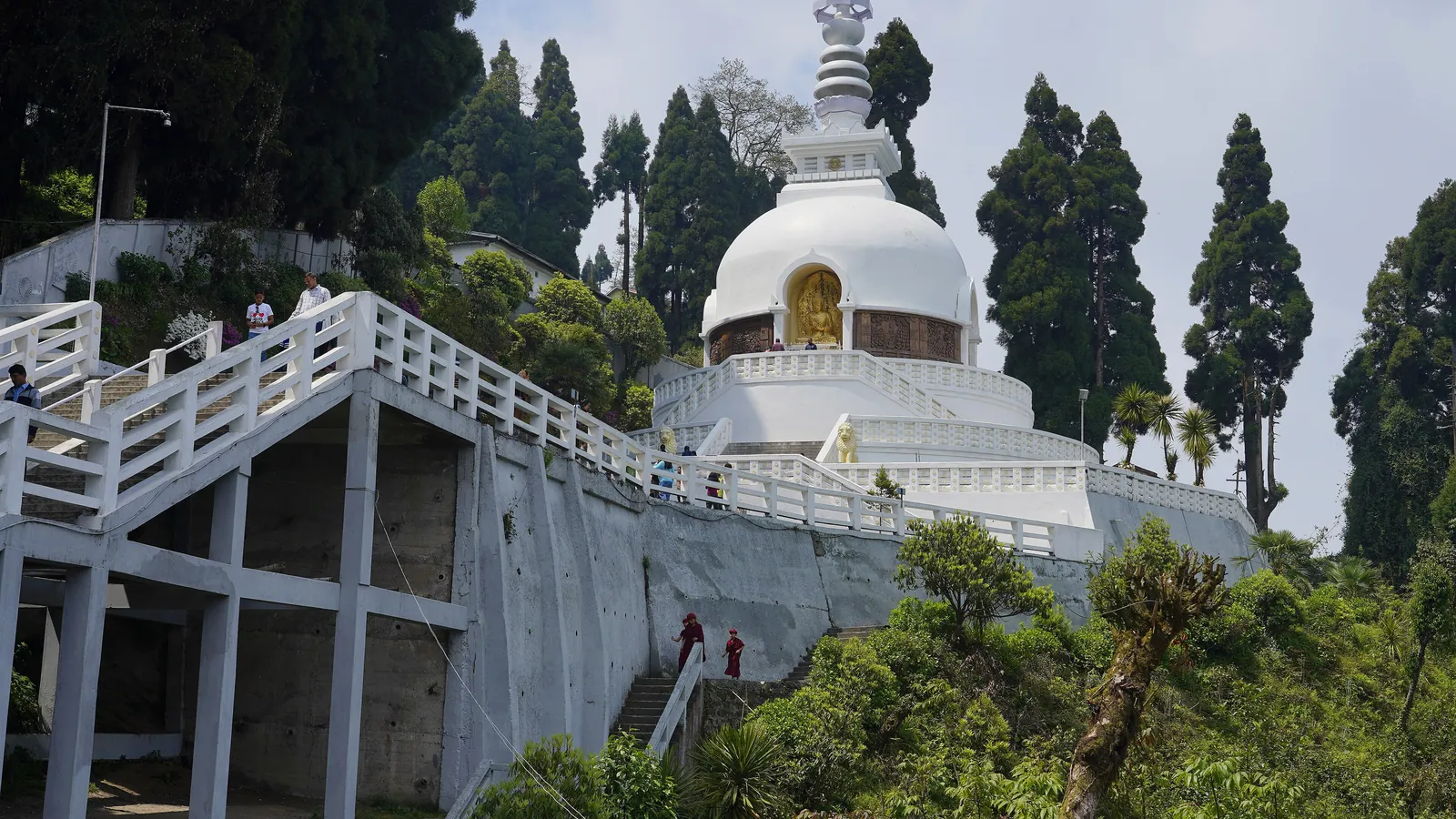
In the evening, visit the Japanese Peace Pagoda, built by the Nipponzan Myohoji Buddhist order, with white stupas and views of the town.
Day 4: Mirik or Kalimpong
Take a day trip to Mirik, about 50 kilometres away, a peaceful lake surrounded by pine forests and orange orchards, with boating and pony rides. Alternatively, visit Kalimpong, known for its nurseries of orchids and cacti, monasteries and views over the Teesta Valley. Drive back to Bagdogra or NJP for your onward journey.
Understanding Darjeeling tea
- First flush (March to April): light, floral and delicate, highly prized.
- Second flush (May to June): fuller-bodied, with the famous muscatel flavour.
- Monsoon flush (July to September): stronger and often used in blends.
- Autumn flush (October to November): mellow and rounded.
Buy tea directly from estates or reputable shops, and look for the Darjeeling tea logo to ensure authenticity.
Food in Darjeeling
Darjeeling's food reflects its mix of cultures. Try momos with vegetable, paneer or cheese fillings, thukpa noodle soup, thenthuk, sel roti and aloo dum. The town's heritage bakeries and cafes serve English breakfasts, pastries, hot chocolate and, of course, freshly brewed Darjeeling tea. Vegetarian food is widely available, and there are plenty of North Indian and Bengali restaurants.
Darjeeling's people and culture
Darjeeling's population is predominantly Gorkha, speaking Nepali, alongside Lepcha, Bhutia, Tibetan, Sherpa and Bengali communities. This mix shows in the town's festivals, food, monasteries, temples and churches. Many of the world's great Himalayan climbers, including Tenzing Norgay, lived in Darjeeling, and the Sherpa community has a proud mountaineering tradition.
A tea lover's guide
- Visit a working estate: Happy Valley is close to town, while estates around Kurseong and Makaibari offer tours and stays.
- Taste the flushes: ask to compare first, second and autumn flush teas side by side.
- Brew it right: Darjeeling tea is best without milk, steeped for three to four minutes in water just off the boil.
- Buy carefully: look for the official Darjeeling tea logo and buy from estates or reputable tea shops.
Darjeeling with children
Children love the toy train, the red pandas and snow leopards at the zoo, the ropeway over the tea gardens, pony rides at Chowrasta and the Batasia Loop. Pack warm layers even in summer, and plan short sightseeing days with plenty of snack breaks.
Festivals in Darjeeling
Dashain and Tihar in autumn, Losar at the Tibetan New Year, Buddha Jayanti in spring and Christmas at the town's historic churches are all celebrated with colour. The Darjeeling Tea and Tourism Festival, held in some years, showcases the region's tea, music and culture.
Shopping in Darjeeling
Buy tea from estates and tea shops, Tibetan carpets and thangka paintings, woollen shawls, prayer flags and handicrafts from the markets around Chowrasta and the Mall Road.
The full toy train journey
The complete Darjeeling Himalayan Railway journey from New Jalpaiguri to Darjeeling covers about 88 kilometres and takes most of a day, climbing more than 2,000 metres through zigzags and loops. The little train runs through bazaars so close to shops that you can almost touch them, past tea gardens and forests. It is slow, but a wonderful experience for rail lovers. Most visitors prefer the shorter joy ride from Darjeeling to Ghum, which captures the highlights in about two hours.
A stop in Kurseong
On the way up from Bagdogra, break the journey at Kurseong, known as the "land of the white orchid". Visit the Makaibari tea estate, one of the oldest in the region, the Eagle's Crag viewpoint, and Netaji Subhas Chandra Bose's ancestral house, now a museum. Kurseong is quieter and warmer than Darjeeling, and a pleasant alternative base.
Carry some cash, as smaller shops and taxis may not accept cards or UPI when networks are weak.
Where to stay
- Near the Mall and Chowrasta: hotels with easy access to shops, restaurants and viewpoints.
- Heritage hotels: colonial-era properties with fireplaces and mountain views.
- Tea estate bungalows: luxury stays in the middle of the gardens.
- Homestays: in surrounding villages for a quieter, local experience.
Getting around
- On foot: the town centre is compact but hilly.
- Taxis: for Tiger Hill, the zoo, Ghum and day trips; sightseeing packages are common.
- Shared jeeps: connect Darjeeling with Siliguri, Mirik, Kalimpong and Gangtok.
- Toy train: joy rides and the full route to NJP.
How much does a Darjeeling trip cost?
- Flights to Bagdogra: ₹4,000 to ₹12,000 each way.
- Taxi from Bagdogra: ₹2,500 to ₹4,000.
- Hotels: ₹2,500 to ₹6,000 per night mid-range; heritage and tea estate stays ₹8,000 and up.
- Toy train joy ride: ₹1,000 to ₹1,700 per person depending on the service.
- Local sightseeing taxi: ₹2,500 to ₹4,000 per day.
- Food: ₹600 to ₹1,500 per person per day.
A 4-day Darjeeling trip typically costs ₹15,000 to ₹35,000 per person, including flights, transport, stay and food.
Combining Darjeeling and Sikkim
Gangtok is about four hours from Darjeeling, and many travellers combine the two on a 7 to 10-day trip, adding Pelling or North Sikkim. Read our Sikkim trip guide for details.
Who a Darjeeling trip suits
Families love the toy train, zoo and ropeway. Honeymooners enjoy the colonial hotels, tea estates and sunrise views. Tea lovers come for the estates and tastings. Older parents appreciate the gentle pace, though the hilly streets can be tiring.
What to pack
- Warm layers, including a jacket, even in summer; heavy woollens in winter.
- An umbrella or raincoat.
- Comfortable walking shoes for steep streets.
- Motion sickness medicine for winding roads.
Tips and mistakes to avoid
- Go to Tiger Hill early to secure a good spot, and check the weather forecast the night before.
- Book toy train joy rides in advance during peak season.
- Avoid the monsoon if mountain views are your priority.
- Allow time for traffic; roads can be congested around weekends and holidays.
Plan your Darjeeling trip with The Vacation Code
A Darjeeling trip combines Himalayan sunrises, heritage railways and the world's finest tea. Our team can arrange transport, stays and a combined Darjeeling and Sikkim itinerary. Read about the Darjeeling toy train in our scenic train journeys guide and our honeymoon destinations in India list, explore our Leh Ladakh expedition, or browse all our tours.
Frequently asked questions
What is the best time for a Darjeeling trip?
October to December offers the clearest views of Kanchenjunga, while March to May brings spring flowers and the first flush tea season. The monsoon from June to September is rainy and misty.
How do I reach Darjeeling?
Fly to Bagdogra or take a train to New Jalpaiguri, then drive about three hours to Darjeeling, or take the toy train from NJP.
What time should I go to Tiger Hill?
Leave Darjeeling around 4 a.m. to reach Tiger Hill before sunrise and secure a good viewing spot, especially in peak season.
Is the Darjeeling toy train a UNESCO site?
Yes. The Darjeeling Himalayan Railway, opened in 1881, became a UNESCO World Heritage Site in 1999.
How many days are enough for Darjeeling?
Three to four days is enough for Tiger Hill, the toy train, tea estates, the zoo and mountaineering institute, and a day trip to Mirik or Kalimpong.
Can I combine Darjeeling and Gangtok?
Yes. Gangtok is about four hours from Darjeeling, and many travellers combine the two on a 7 to 10-day trip.
How much does a Darjeeling trip cost?
A 4-day Darjeeling trip typically costs 15,000 to 35,000 rupees per person including flights, transport, stay and food.