📌 In this guide21 sections
- Permits for a Sikkim trip
- A short history of Sikkim
- India's first organic state
- Festivals of Sikkim
- Best time for a Sikkim trip
- How to reach Sikkim
- A 7-day Sikkim trip itinerary
- More places to add
- Altitude safety
- Getting around
- Where to stay
- Food in Sikkim
- How much does a Sikkim trip cost?
- Sikkim with children and older parents
- Shopping in Sikkim
- Combining Sikkim and Darjeeling
- What to pack
- Practical tips
- Mistakes to avoid
- Plan your Sikkim trip with The Vacation Code
- Frequently asked questions
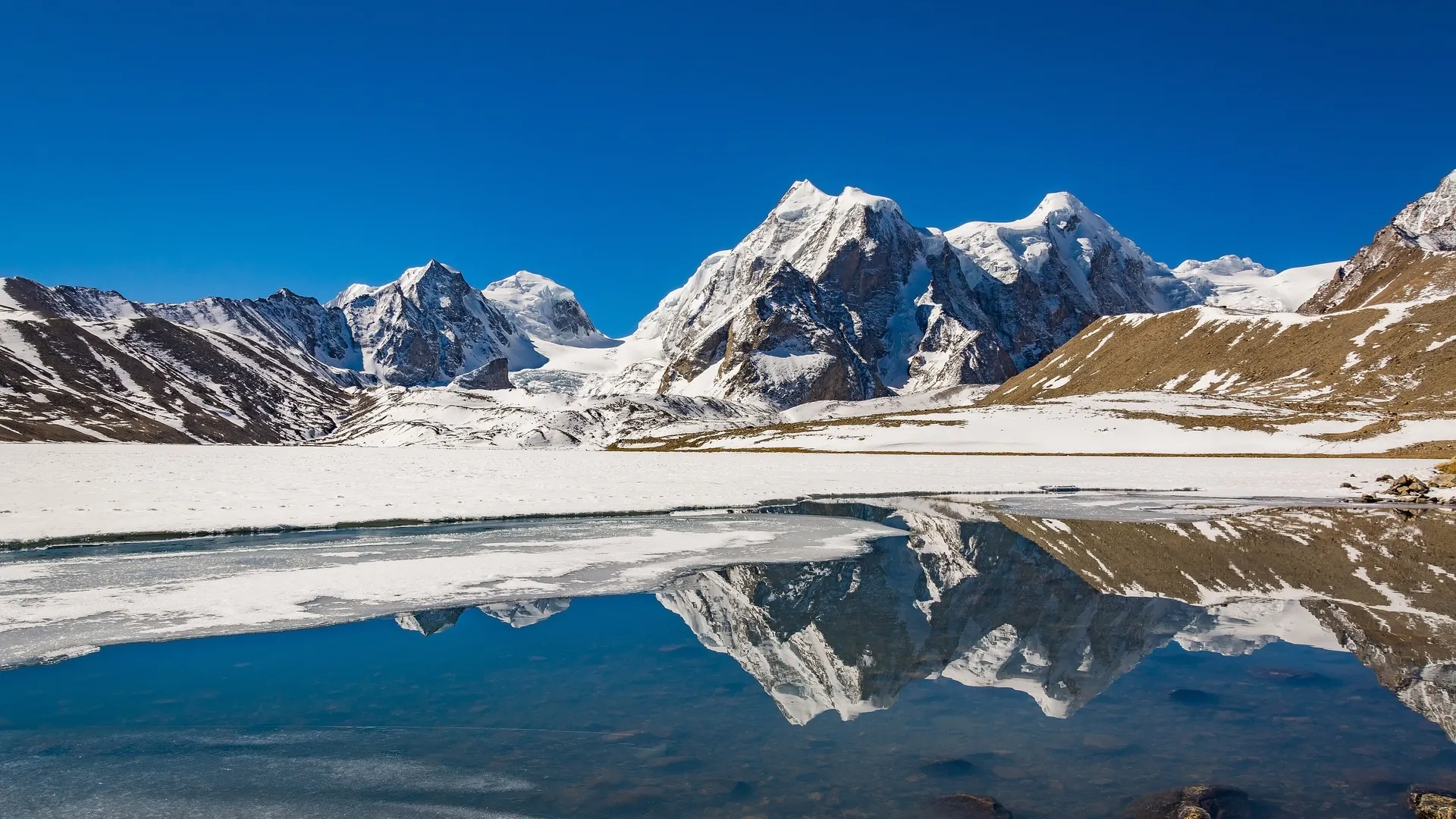
A Sikkim trip takes you to places that feel like the roof of the world. It is 7 a.m., and you stand gasping in the thin air at over 5,000 metres beside Gurudongmar Lake, one of the highest lakes in the world. The water is an impossible deep blue, framed by snow peaks, prayer flags snapping in the icy wind. Devotees say the lake never fully freezes in one corner, blessed by Guru Padmasambhava. Your lungs ache, your fingers are numb, and you would not trade the moment for anything.
Sikkim, tucked between Nepal, Tibet and Bhutan, is India's second-smallest state but one of its most spectacular. Within a few hours' drive you move from subtropical valleys of orchids and cardamom to alpine meadows, glaciers and high-altitude lakes, all beneath Kanchenjunga, the world's third-highest mountain, revered as Sikkim's guardian deity. It is also India's first fully organic state, famous for clean towns, strict plastic rules and a peaceful Buddhist culture.
This guide covers permits, the best time, a 7-day Sikkim trip itinerary, getting around, stays, food, costs, altitude safety and practical tips.
Permits for a Sikkim trip
- Indian citizens do not need a permit to enter Sikkim or visit Gangtok, Pelling and south Sikkim.
- Protected areas such as Tsomgo (Changu) Lake, Nathu La, and North Sikkim (Lachung, Yumthang, Lachen, Gurudongmar) require permits, arranged through registered tour operators and travel agents in Gangtok with ID and photographs.
- Nathu La is open only to Indian nationals on certain days.
- Foreign nationals need a Restricted Area Permit, and some areas are closed to them.
A short history of Sikkim
Sikkim was an independent Himalayan kingdom ruled by the Namgyal dynasty of Chogyals from 1642, with its capital first at Yuksom, then Rabdentse near Pelling, and finally Gangtok. Its original inhabitants, the Lepchas, know the land by a name meaning paradise, and are renowned for their deep knowledge of the forests. In 1975, Sikkim became the 22nd state of India. Its population today includes Lepcha, Bhutia and Nepali communities, and its festivals, food and architecture reflect this mix.
India's first organic state
In 2016, Sikkim became India's first fully organic state, phasing out chemical fertilisers and pesticides across its farms. It was also one of the first states to ban plastic bags and packaged drinking water in certain government functions, and it encourages visitors to carry reusable bottles. Look out for organic cardamom, ginger, oranges and buckwheat, and support local farmers' markets in Gangtok.
Festivals of Sikkim
- Losar (February or March): the Tibetan New Year, with masked dances at monasteries.
- Saga Dawa (May or June): celebrates the birth, enlightenment and passing of the Buddha, with processions in Gangtok.
- Pang Lhabsol (August or September): a unique festival honouring Kanchenjunga as the guardian deity of Sikkim, with warrior dances.
- Losoong (December): the Sikkimese harvest and new year festival.
Best time for a Sikkim trip
- March to May: spring, with rhododendrons blooming across Yumthang and the hills. Pleasant weather and good views.
- October to December: clear skies and the best views of Kanchenjunga. Cold at altitude.
- January to February: snow in North Sikkim and around Tsomgo; roads may close after heavy snowfall.
- June to September: the monsoon brings heavy rain and landslides, and North Sikkim can be cut off.
How to reach Sikkim
The nearest major airport is Bagdogra in West Bengal, about four to five hours by road from Gangtok, and the nearest major railway station is New Jalpaiguri (NJP). Pakyong Airport near Gangtok has limited flights, often affected by weather. Shared and private taxis connect Bagdogra and NJP with Gangtok.
A 7-day Sikkim trip itinerary
Day 1: Bagdogra to Gangtok
Drive along the Teesta River to Gangtok, Sikkim's capital, spread along a ridge. In the evening, stroll along MG Marg, a clean, pedestrian-only boulevard with cafes, shops and benches.
Day 2: Tsomgo Lake and Nathu La
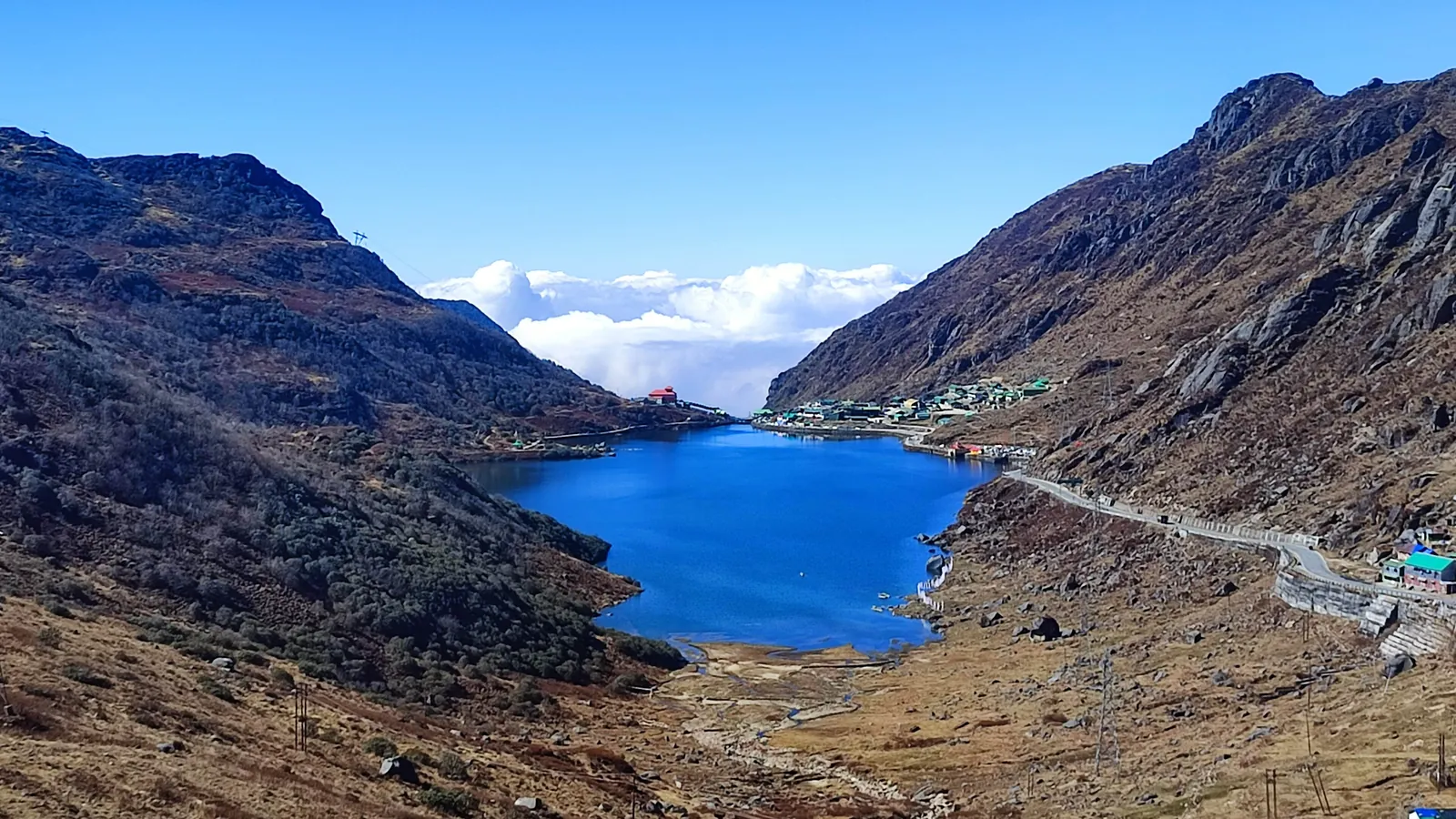
Drive about 40 kilometres to Tsomgo Lake (Changu), a glacial lake at about 3,750 metres, sacred to locals, which freezes in winter. Ride a decorated yak along the shore. Continue, with permits and on permitted days, to Nathu La, a pass on the India-China border at about 4,300 metres, and Baba Harbhajan Singh Mandir, a shrine dedicated to a soldier revered as a guardian spirit by the army.
Day 3: Gangtok to Lachung
Drive about six to seven hours into North Sikkim, past waterfalls such as Seven Sisters and Bhim Nala, to the mountain village of Lachung. Roads are winding and sometimes rough.
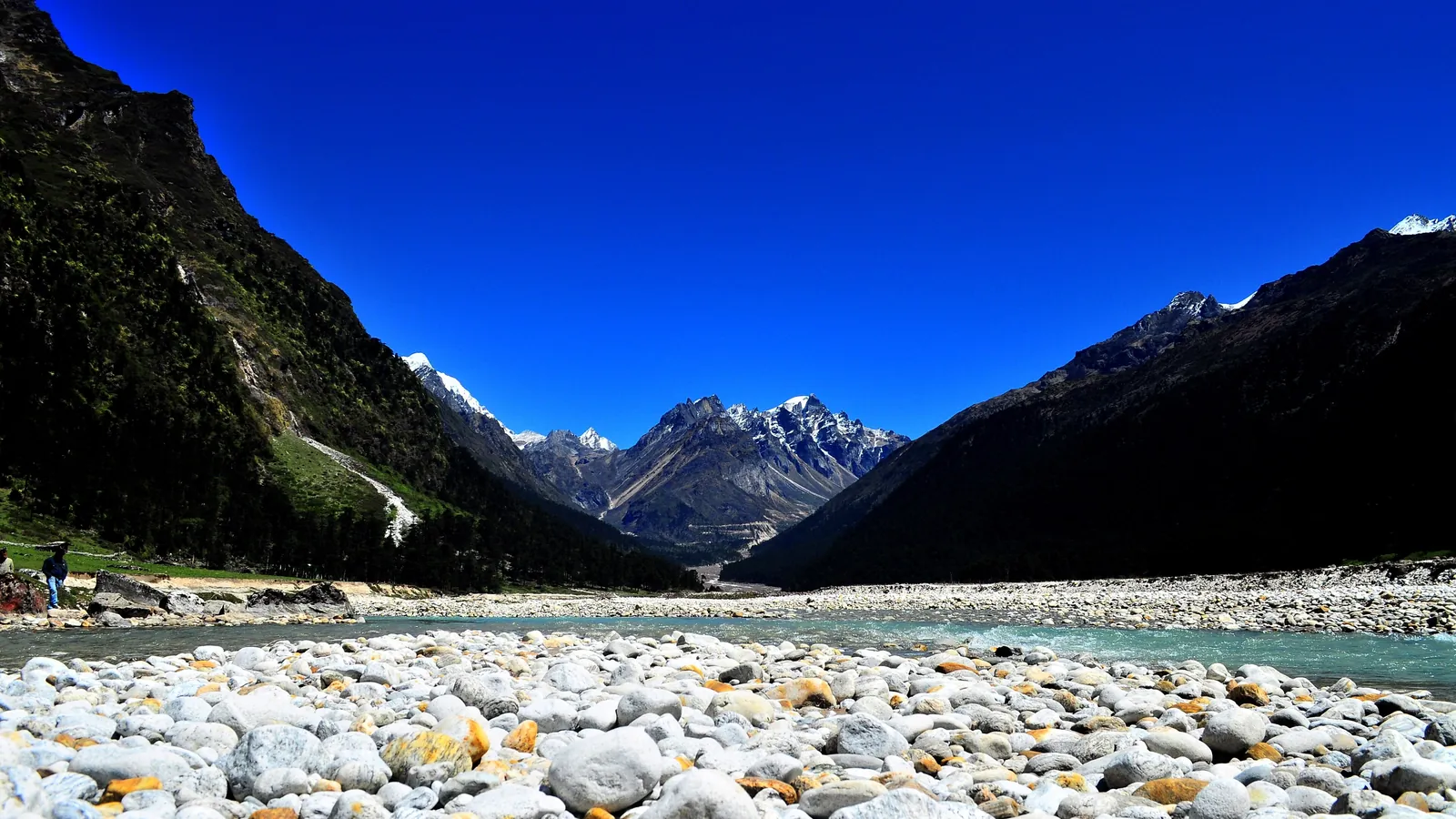
Day 4: Yumthang Valley and Zero Point
Drive to the Yumthang Valley, the "Valley of Flowers" of Sikkim, at about 3,600 metres, where rhododendrons bloom in spring and hot springs steam beside the river. In season, continue to Zero Point (Yumesamdong), where the road ends amid snowfields at about 4,700 metres. Return to Lachung, then drive to Lachen.
Day 5: Gurudongmar Lake
Leave Lachen before dawn for Gurudongmar Lake, at about 5,180 metres, sacred to Buddhists, Sikhs and Hindus. Spend only a short time at the lake because of the altitude, then return through Lachen towards Gangtok.
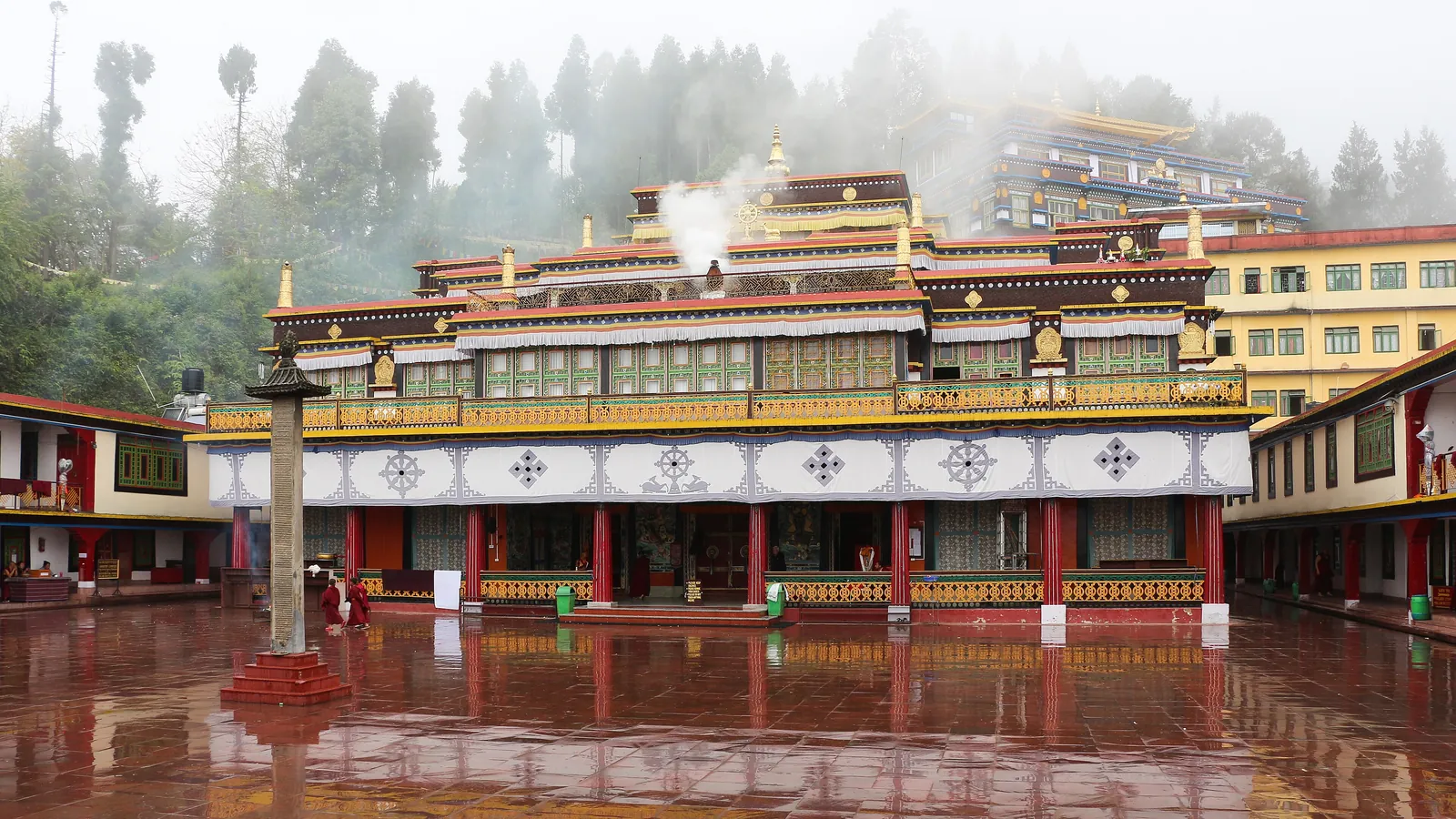
Day 6: Rumtek and Gangtok, drive to Pelling
Visit Rumtek Monastery, the seat of the Karmapa lineage of Tibetan Buddhism, with its golden stupa and colourful prayer halls, and the Enchey Monastery. Ride the Gangtok ropeway for city views. Drive to Pelling in west Sikkim, about five hours.
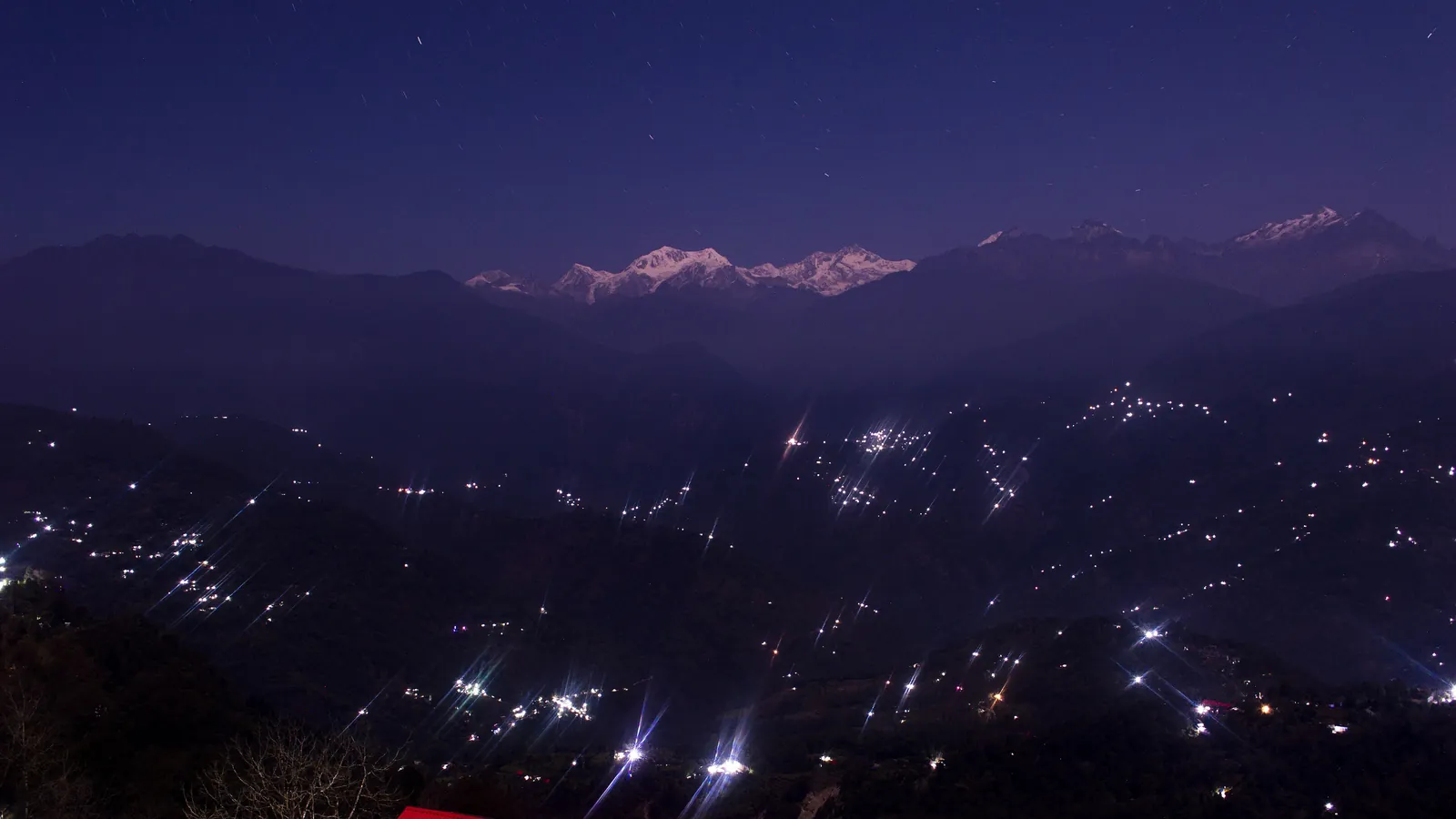
Day 7: Pelling and departure
Wake up early for sunrise over Kanchenjunga, turning gold above the clouds. Visit Pemayangtse Monastery, the ruins of Rabdentse, the former royal capital, and the Pelling Skywalk with its giant Chenrezig statue. Drive to Bagdogra for your flight home, or add a night in Darjeeling.
More places to add
- Namchi: the Char Dham complex with replicas of the four sacred shrines and a huge Shiva statue, and the Samdruptse statue of Guru Padmasambhava.
- Ravangla: the Buddha Park with a giant Buddha statue and mountain views.
- Zuluk and the Silk Route: the zigzag road through east Sikkim, part of the old trade route to Tibet.
- Goecha La trek: a challenging trek to a pass facing Kanchenjunga, for experienced trekkers.
Altitude safety
Tsomgo, Nathu La and North Sikkim are at high altitude. Acclimatise in Gangtok first, drink plenty of water, avoid alcohol, and move slowly. Gurudongmar, above 5,000 metres, can cause breathlessness and headaches even on a short visit; limit your time there, and descend if symptoms worsen. Older travellers, young children and those with heart or lung conditions should consult a doctor, and may prefer to skip Gurudongmar.
Getting around
- Taxis: Sikkim has a regulated taxi system; for North Sikkim and Tsomgo, permits and vehicles are arranged through registered operators, usually as packages.
- Shared jeeps: cheap and connect main towns.
- Self-drive: restrictions apply to private vehicles from outside the state in some protected areas; check before planning.
Where to stay
- Gangtok: hotels near MG Marg, from budget to luxury, many with mountain views.
- Lachung and Lachen: simple hotels and homestays, usually included in North Sikkim packages.
- Pelling: hotels facing Kanchenjunga.
- Homestays: across Sikkim for an authentic experience.
Food in Sikkim
Sikkimese food blends Nepali, Tibetan and Lepcha flavours. Try steaming momos with vegetable or cheese fillings, thukpa noodle soup, sel roti (a crispy rice doughnut), gundruk (fermented greens) and the local chhurpi cheese. Vegetarian food is easy to find, and Gangtok has many North and South Indian restaurants. Try the famous Temi tea from Sikkim's only tea estate.
How much does a Sikkim trip cost?
- Flights to Bagdogra: typically ₹5,000 to ₹12,000 one way.
- Taxi from Bagdogra to Gangtok: ₹3,000 to ₹5,000.
- North Sikkim package (2 nights, with permit, vehicle and meals): roughly ₹8,000 to ₹15,000 per person.
- Tsomgo and Nathu La day trip: ₹3,000 to ₹6,000 per vehicle share plus permits.
- Hotels: ₹2,500 to ₹7,000 per night.
- Food: ₹800 to ₹1,500 per person per day.
A 7-day Sikkim trip typically costs ₹30,000 to ₹55,000 per person, including flights, taxis, permits, hotels and food.
Sikkim with children and older parents
Gangtok, Pelling and south Sikkim are comfortable for families, with the ropeway, monasteries, Buddha Park in Ravangla and gentle walks. North Sikkim involves long drives on rough roads and very high altitude, so consider skipping Gurudongmar with young children or older parents, and visiting Yumthang only after acclimatising. Keep medicines, snacks and warm clothes handy in the car.
Shopping in Sikkim
Good souvenirs include Temi tea, organic cardamom and ginger, Tibetan-style carpets and thangka paintings from the Directorate of Handicrafts and Handloom in Gangtok, prayer flags, singing bowls and woollen shawls. MG Marg and Lal Bazaar are the main shopping areas.
Combining Sikkim and Darjeeling
Darjeeling is about four hours from Gangtok, and the two combine perfectly on a 9 to 10-day trip. Add Darjeeling's toy train, Tiger Hill sunrise and tea estates to the end of your Sikkim itinerary, then fly out of Bagdogra. Read our Darjeeling trip guide for details.
Photography tip: the clearest views of Kanchenjunga usually come just after sunrise, before clouds build up. Set an alarm in Pelling and Gangtok, and check the sky before going back to sleep.
Sikkim is also one of the safest and cleanest states in India, with a strong culture of politeness; queueing, keeping streets clean and speaking softly in monasteries are all appreciated.
Mobile signal is weak in North Sikkim, so download offline maps before leaving Gangtok.
What to pack
- Warm layers, a down jacket, gloves and a cap for North Sikkim, even in summer.
- Sunglasses and sunscreen for high-altitude glare.
- Comfortable shoes with grip.
- Motion sickness tablets for winding roads.
- ID proofs and passport-size photos for permits.
- Cash, as ATMs are limited in North Sikkim.
Practical tips
- Carry reusable bottles and bags; Sikkim restricts plastic.
- Respect monasteries: walk clockwise and ask before photographing.
- Keep buffer days for landslides and road closures.
- Book North Sikkim early in peak season through registered operators.
Mistakes to avoid
Going to Gurudongmar without acclimatising. Spend at least a day in Gangtok first.
Visiting North Sikkim in the monsoon. Landslides frequently cut off roads.
Forgetting permit documents. Carry ID copies and photographs.
Over-scheduling. Roads are slow; allow time.
Plan your Sikkim trip with The Vacation Code
A Sikkim trip combines Himalayan lakes, monasteries and Kanchenjunga views in one compact state. Our team can arrange permits, taxis and stays. Pair it with our Darjeeling trip guide and read our Meghalaya trip itinerary. For more Himalayan adventures, explore our Leh Ladakh expedition, or browse all our tours.
Frequently asked questions
Do Indians need a permit for a Sikkim trip?
Indians do not need a permit for Gangtok, Pelling or south Sikkim, but permits are required for Tsomgo Lake, Nathu La and North Sikkim, arranged through registered operators.
What is the best time for a Sikkim trip?
March to May for rhododendrons and pleasant weather, and October to December for clear Kanchenjunga views. The monsoon brings landslides.
How many days are enough for Sikkim?
Six to seven days covers Gangtok, Tsomgo Lake, North Sikkim including Yumthang and Gurudongmar, and Pelling.
How high is Gurudongmar Lake?
Gurudongmar Lake is at about 5,180 metres, making it one of the highest lakes in the world. Visitors should acclimatise first and limit their time there.
What is the nearest airport to Gangtok?
Bagdogra in West Bengal is the main airport, about four to five hours by road. Pakyong Airport near Gangtok has limited flights.
How much does a Sikkim trip cost?
A 7-day Sikkim trip typically costs 30,000 to 55,000 rupees per person including flights, taxis, permits, hotels and food.
Is vegetarian food available in Sikkim?
Yes. Vegetable and cheese momos, thukpa and Indian restaurants are widely available, especially in Gangtok.