📌 In this guide21 sections
- Part one: five scenic train journeys in India
- 1. The Konkan Railway: Mumbai to Goa and Mangaluru
- 2. The Nilgiri Mountain Railway: Mettupalayam to Ooty
- 3. The Darjeeling Himalayan Railway: the original toy train
- 4. The Kalka to Shimla Railway: 102 tunnels to the summer capital
- 5. The Pamban Bridge: a train across the open sea to Rameswaram
- What a ride on the Nilgiri toy train actually feels like
- Part two: five scenic train journeys abroad
- 6. The Glacier Express, Switzerland: the slowest express in the world
- 7. The Bernina Express, Switzerland to Italy: over the Alps to the palms
- 8. The Flam Railway, Norway: 860 metres down in 20 kilometres
- 9. The Jacobite Steam Train, Scotland: across the Harry Potter viaduct
- 10. The Jungfrau Railway, Switzerland: a train inside a mountain
- Bonus: the bullet train past Mount Fuji
- More scenic train journeys for your list
- How to book scenic trains in India
- Scenic trains in Switzerland: the pass question
- How to choose your first scenic train journey
- Tips for scenic train journeys
- Why the slow way is the best way
- Frequently asked questions
The most scenic train journeys have a strange effect on people. Somewhere above the town of Filisur in the Swiss Alps, a red train comes out of a tunnel onto a curved stone viaduct 65 metres above a ravine, and for a few seconds it seems to hang in the air. Inside, a carriage full of strangers goes quiet. Phones come out, then slowly go down again, because some things are better watched than filmed. Ten thousand kilometres away, a little blue toy train climbs through tea gardens and eucalyptus forest in the Nilgiris, and a child pressing her face to the window has exactly the same expression.
Trains do something no car or plane can. They slow the world down to the speed of looking. You are not driving, not navigating, not queuing at security. You simply sit by a big window while mountains, rivers, seas and villages roll past, and the journey itself becomes the destination.
India has some of the most remarkable railways ever built, three of them UNESCO World Heritage Sites. And some of the most famous scenic train journeys in the world lie on routes that Indian travellers already visit: Switzerland, Norway and Scotland. Here are ten of the best, five at home and five abroad, with the best seats, the best seasons and how to book. How many have you ridden?
Part one: five scenic train journeys in India
Indian Railways carries millions of passengers every day, and most of them are simply getting somewhere. But tucked into the network are lines built through impossible terrain, where the journey is the reason to go. Three of them, all narrow-gauge mountain lines from the colonial era, are listed together by UNESCO as the Mountain Railways of India. The other two are modern marvels of engineering along the coast and across the sea.
1. The Konkan Railway: Mumbai to Goa and Mangaluru
Why it is special: when it opened in 1998, the Konkan Railway was one of the greatest engineering feats in modern India. It runs for around 740 kilometres between Roha, near Mumbai, and Thokur, near Mangaluru, cutting straight across the grain of the Western Ghats. To do it, engineers built around 2,000 bridges and more than 90 tunnels, including some of the tallest viaducts in the country. The result is a journey of rivers, estuaries, paddy fields, coconut groves and red laterite cliffs, with the Arabian Sea glinting in the distance.
When to go: the monsoon, from July to September, is when the Konkan transforms. Waterfalls pour off every cliff, the hills turn an electric green, and mist drifts through the valleys. It is also when the line runs on a special monsoon timetable, so trains are slower. That is fine: you are here for the view.
Best seat: book a Vistadome coach where available, with huge windows and glass roof panels, on trains between Mumbai and Madgaon. Otherwise, choose a window seat in a chair car during daylight hours.
Bonus: on the line between Goa and Karnataka via the Braganza Ghats, trains pass right in front of the Dudhsagar Falls, a four-tiered waterfall that roars most dramatically in the monsoon.
2. The Nilgiri Mountain Railway: Mettupalayam to Ooty
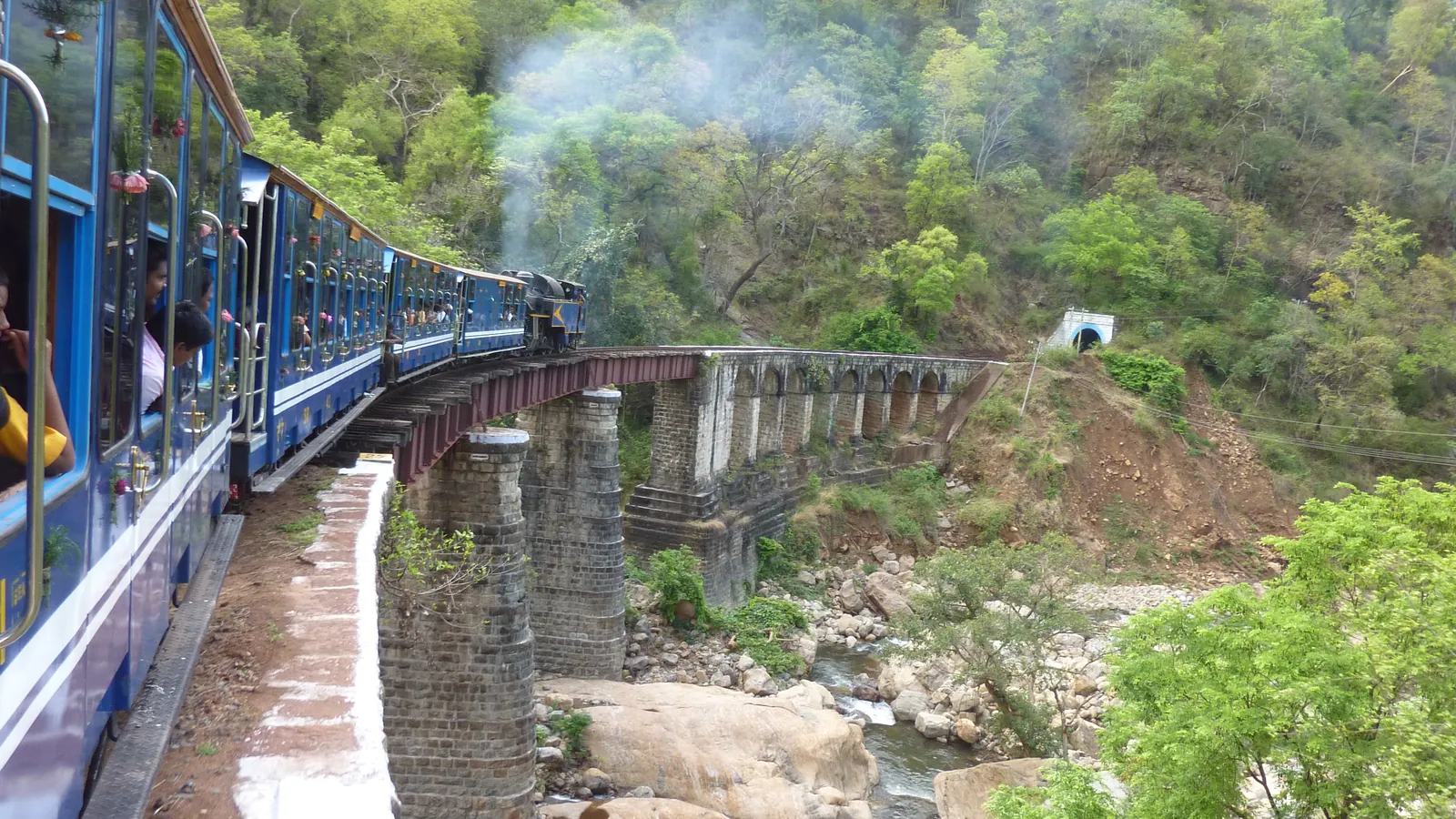
Why it is special: this metre-gauge line climbs from the plains at Mettupalayam to Udhagamandalam (Ooty) at over 2,000 metres, in about 46 kilometres. The gradient is so steep that on the lower section, the train uses a rack-and-pinion system, with a toothed rail between the tracks that the locomotive grips as it climbs. It is the only rack railway in India, and the section is still worked by steam locomotives. Along the way the train crosses more than 200 bridges and passes through 16 tunnels, with forests, waterfalls and tea estates outside the windows. It is part of the UNESCO World Heritage Site "Mountain Railways of India".
Journey time: about five hours uphill from Mettupalayam to Ooty, and a little less downhill.
Best seat: the first-class coach at the front offers the best views; seats on the right side going up are often recommended for the valley views. Book well ahead: there is usually just one through train a day in each direction and it sells out quickly.
3. The Darjeeling Himalayan Railway: the original toy train
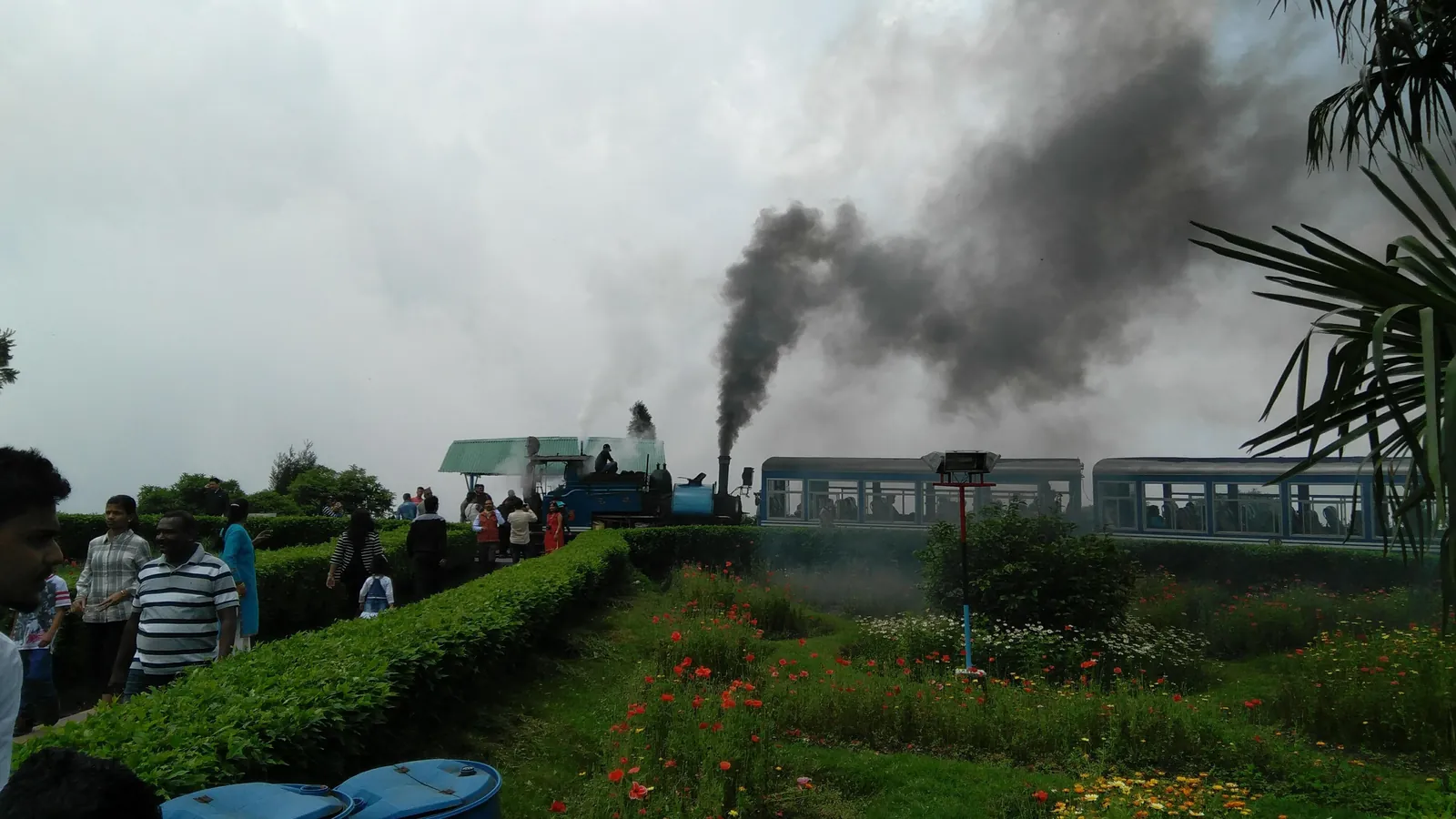
Why it is special: opened in 1881, the Darjeeling Himalayan Railway was the first hill passenger railway in India and the first to be listed as a UNESCO World Heritage Site, in 1999. Its tiny two-foot-gauge trains climb from New Jalpaiguri in the plains to Darjeeling, zigzagging up the mountain through reverse sections and spirals. The most famous is the Batasia Loop, where the track circles a garden with a war memorial, and on clear days the snowy peaks of Kanchenjunga, the third-highest mountain in the world, rise behind. Ghum, just before Darjeeling, is one of the highest railway stations in India.
Best way to ride: the full journey takes most of a day. Most visitors take the shorter "joy ride" from Darjeeling to Ghum and back, often behind a vintage steam locomotive, which includes stops at the Batasia Loop and the railway museum at Ghum.
When to go: October to December and March to May for the clearest mountain views. The monsoon can bring landslides and suspensions.
4. The Kalka to Shimla Railway: 102 tunnels to the summer capital
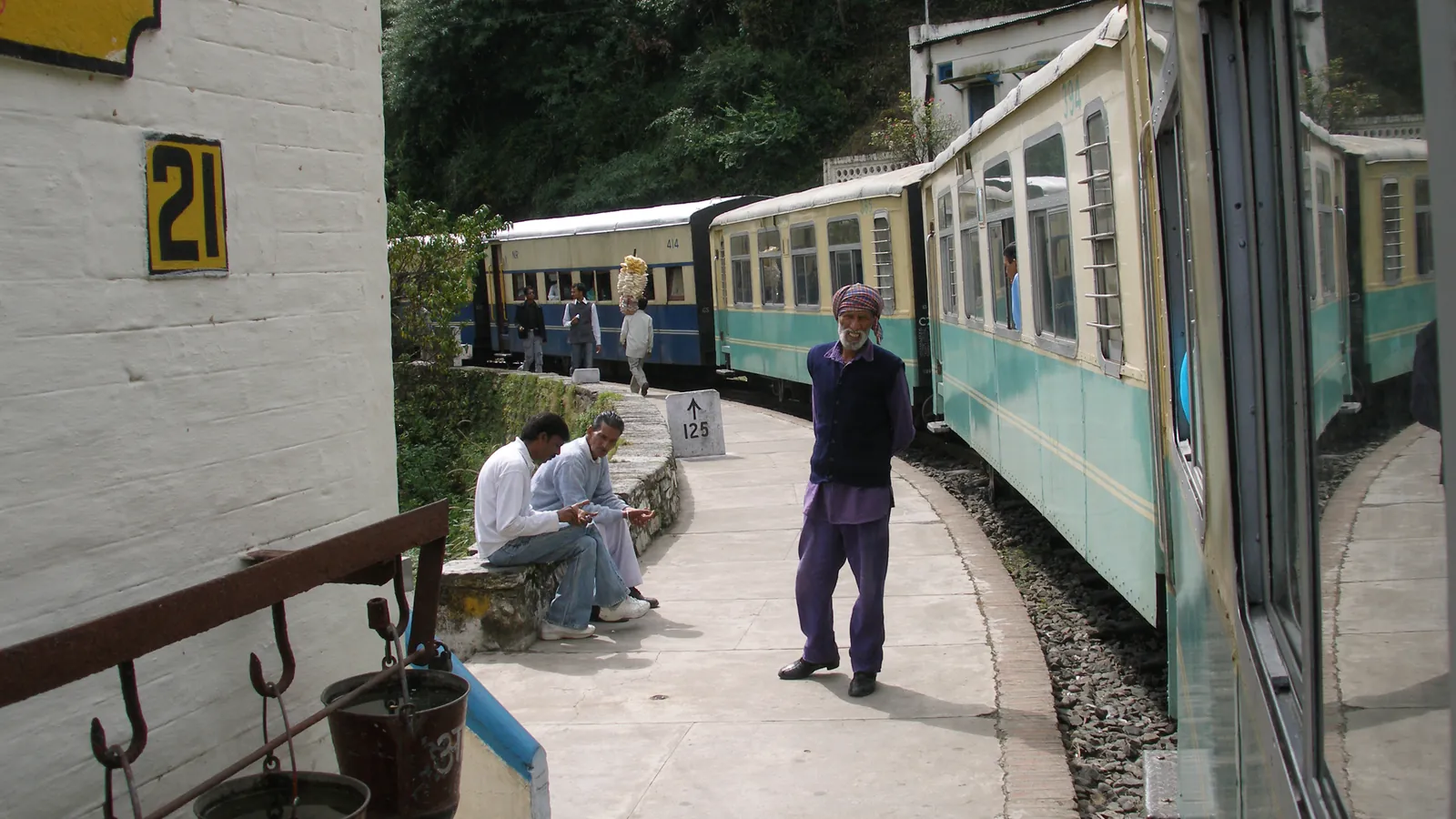
Why it is special: built in 1903 to carry the British government to its summer capital, this narrow-gauge line climbs about 96 kilometres from Kalka, near Chandigarh, to Shimla through the Shivalik hills. It passes through 102 tunnels and across more than 800 bridges, including multi-arched stone viaducts that look like Roman aqueducts. The longest tunnel, at Barog, has a famous story: the engineer who first surveyed it, Colonel Barog, is said to have taken his own life after his tunnel failed to meet in the middle, and the station and town were named after him. The line is also part of the UNESCO Mountain Railways of India.
Journey time: about five to six hours.
Best way to ride: the Shivalik Deluxe Express and the Himalayan Queen are popular. Some services include special coaches with panoramic windows. Stop for breakfast at Barog station, a tradition for generations of travellers.
5. The Pamban Bridge: a train across the open sea to Rameswaram
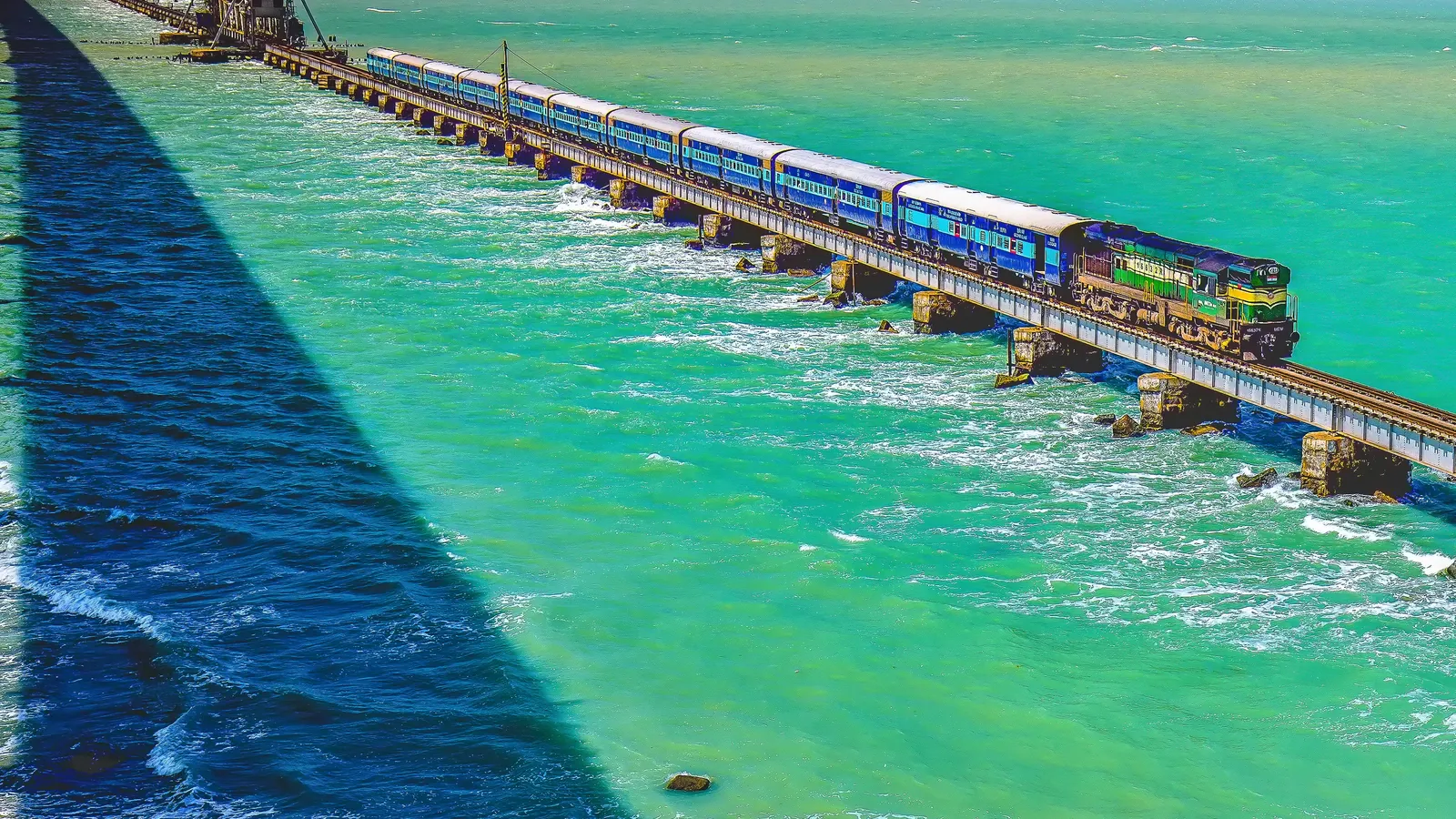
Why it is special: near the southern tip of India, the railway to the island of Rameswaram crosses the sea on a bridge about two kilometres long. For more than a century, the old Pamban Bridge, opened in 1914, carried trains so close to the water that waves sometimes splashed the carriages, and it opened in the middle to let ships through. In 2025, a new bridge opened alongside it, India's first vertical-lift sea bridge, with a central span that rises straight up for ships. The views of the turquoise sea on both sides are breathtaking.
How to ride: take any train to Rameswaram, from Chennai, Madurai or other cities. Sit on the side of the old bridge for the best photographs, and visit the Ramanathaswamy Temple and the ghost town of Dhanushkodi, which we feature in our list of unreal places in India.
What a ride on the Nilgiri toy train actually feels like
The morning train leaves Mettupalayam soon after 7 a.m., and the platform is already buzzing: families with tiffin boxes, honeymooners, railway enthusiasts with serious cameras, and schoolchildren who have been promised a ride on the "train from the film". The little blue carriages are pushed, not pulled, by a steam locomotive at the back, which huffs and hisses as the climb begins.
For the first hour, the train rolls through areca and banana plantations. Then the rack section starts, and the pace drops to little more than walking speed. The engine grips the toothed rail and the carriages tilt upward. Monkeys watch from the parapets. At Hillgrove, the train stops for water and everyone spills out for tea, vadas and photographs. Above Coonoor, the steam engine gives way to a diesel, the air turns cool and fragrant with eucalyptus, and tea gardens roll down the hills in neat green waves. By the time the train pulls into Ooty around midday, even the teenagers who spent the first hour on their phones are leaning out of the windows.
Tip: if the full journey sells out, ride the shorter Coonoor to Ooty stretch, which is easier to book and still beautiful.
Spend a night or two in Ooty or Coonoor afterwards: visit the Botanical Gardens, the tea factories and the viewpoints at Dolphin's Nose and Lamb's Rock, and ride the train back down another day with the valley views on the other side. Downhill, the steam engine works as a brake, and the gentle descent is just as lovely.
Part two: five scenic train journeys abroad
Europe is the heartland of scenic railways, and the best news for Indian travellers is that the greatest of them run through countries already on most holiday wish lists. Switzerland alone has several of the world's most famous lines, often covered by a single rail pass, and Norway and Scotland each have a journey that regularly appears on "best in the world" lists. All five below can be added to a typical Europe, Scandinavia or UK itinerary.
6. The Glacier Express, Switzerland: the slowest express in the world
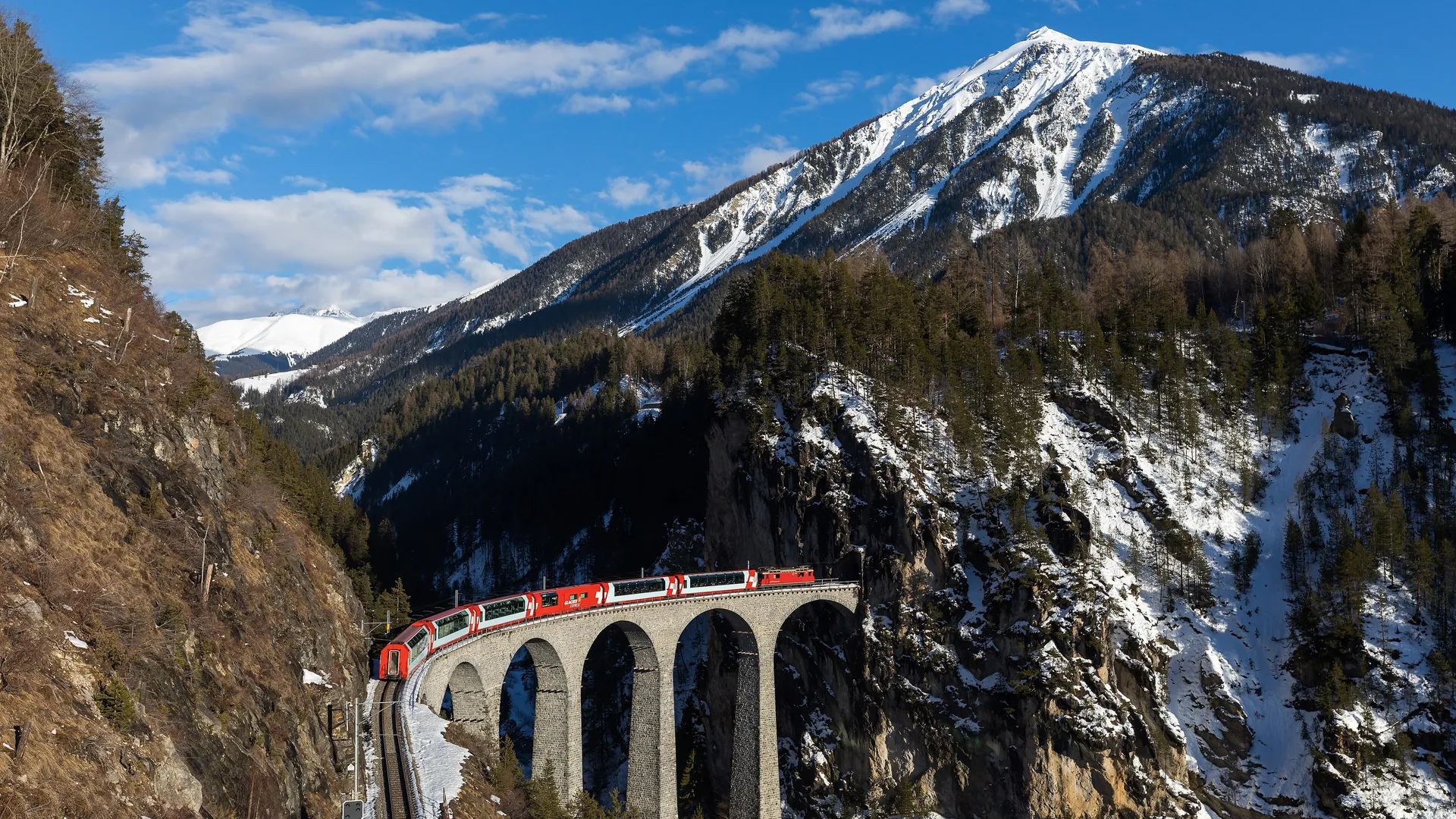
Why it is special: the Glacier Express runs between Zermatt, at the foot of the Matterhorn, and St. Moritz, taking about eight hours to cover a distance a car could drive in far less. That is the point. It crosses 291 bridges, passes through 91 tunnels, and climbs over the Oberalp Pass at 2,033 metres. Along the way it crosses the Landwasser Viaduct, where the track curves on tall stone arches straight into a tunnel in a cliff face, one of the most photographed railway scenes on earth. Part of the route, the Albula line, is a UNESCO World Heritage Site.
How to ride: panoramic carriages with windows curving into the roof are standard, and a seat reservation is required. Lunch can be served at your seat. The Swiss Travel Pass covers the fare, but not the reservation supplement.
When to go: summer for green valleys and wildflowers, winter for a snow-covered wonderland.
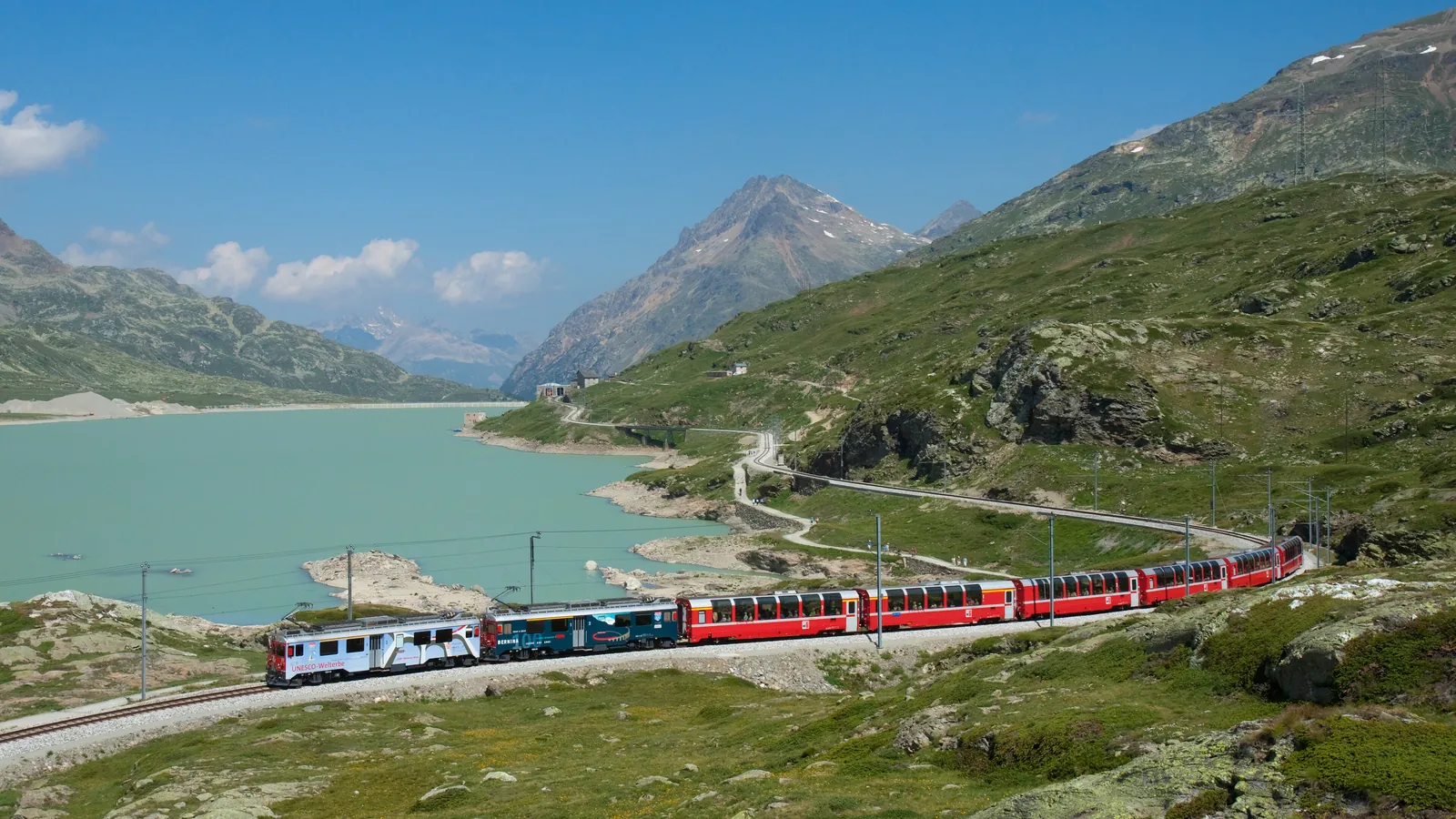
7. The Bernina Express, Switzerland to Italy: over the Alps to the palms
Why it is special: the Bernina Express climbs from Chur or St. Moritz over the Bernina Pass, reaching its highest point near 2,253 metres at Ospizio Bernina, beside the milky blue Lago Bianco and in sight of glaciers, before descending into Italy. Without using a rack, it tackles gradients of up to seven percent, among the steepest of any adhesion railway in the world. Near the bottom, at Brusio, the track spirals around a circular stone viaduct, and in a few hours you go from glaciers to palm trees and vineyards in Tirano. The line is also part of the UNESCO-listed Rhaetian Railway.
Visa note: both Switzerland and Italy are in the Schengen area, so a single Schengen visa covers the whole trip.
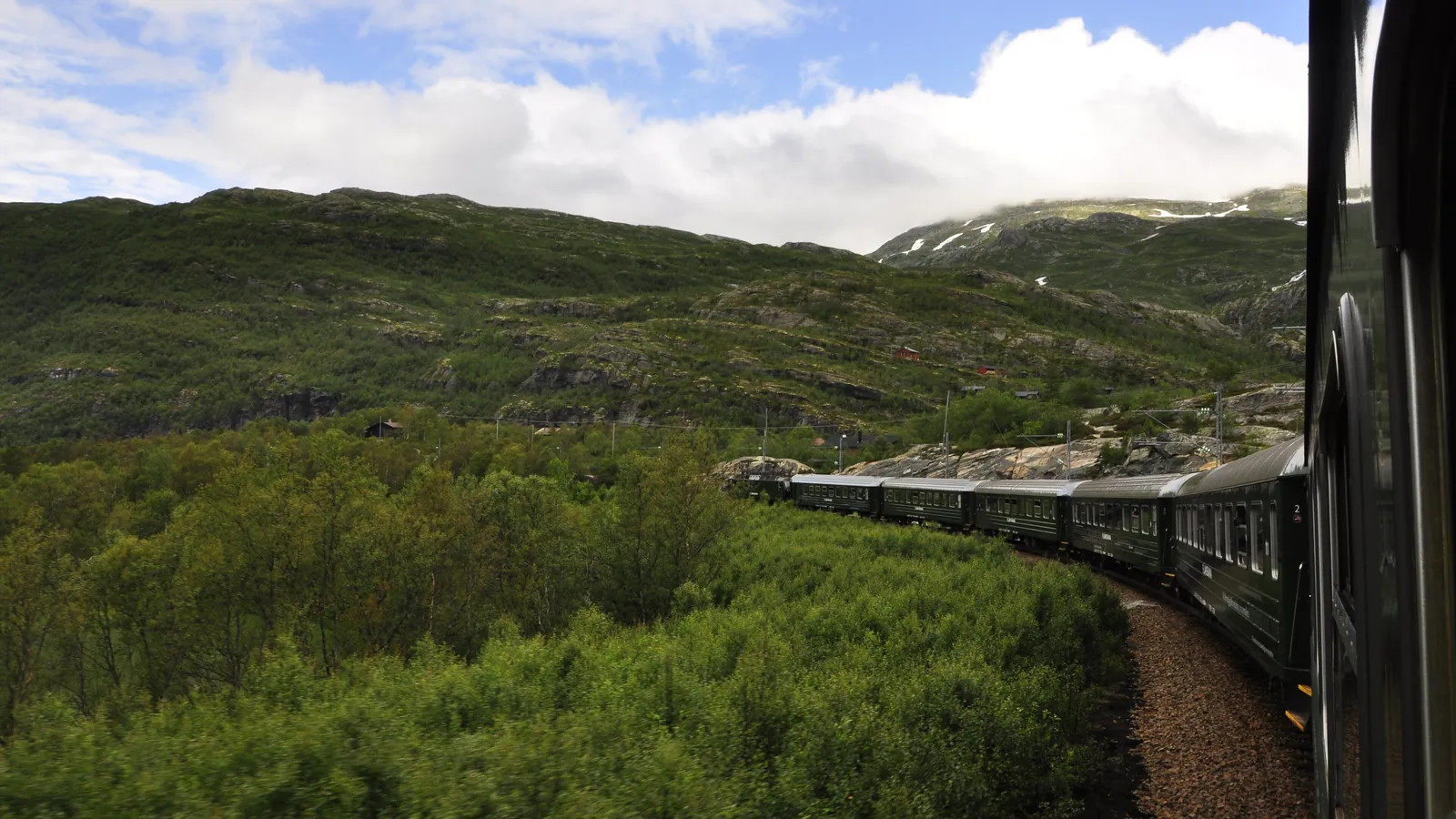
8. The Flam Railway, Norway: 860 metres down in 20 kilometres
Why it is special: the Flam Railway, or Flamsbana, descends from the mountain station of Myrdal to the village of Flam on a fjord, dropping more than 860 metres over about 20 kilometres. It is one of the steepest standard-gauge railways in the world, spiralling through tunnels, clinging to cliff edges and passing waterfalls, including Kjosfossen, where the train stops so passengers can step out and feel the spray.
How to ride: combine it with the Bergen Railway and a fjord cruise in the classic "Norway in a Nutshell" route. It is a highlight of our Scandinavia tour; read our Scandinavia tour guide for the full journey.
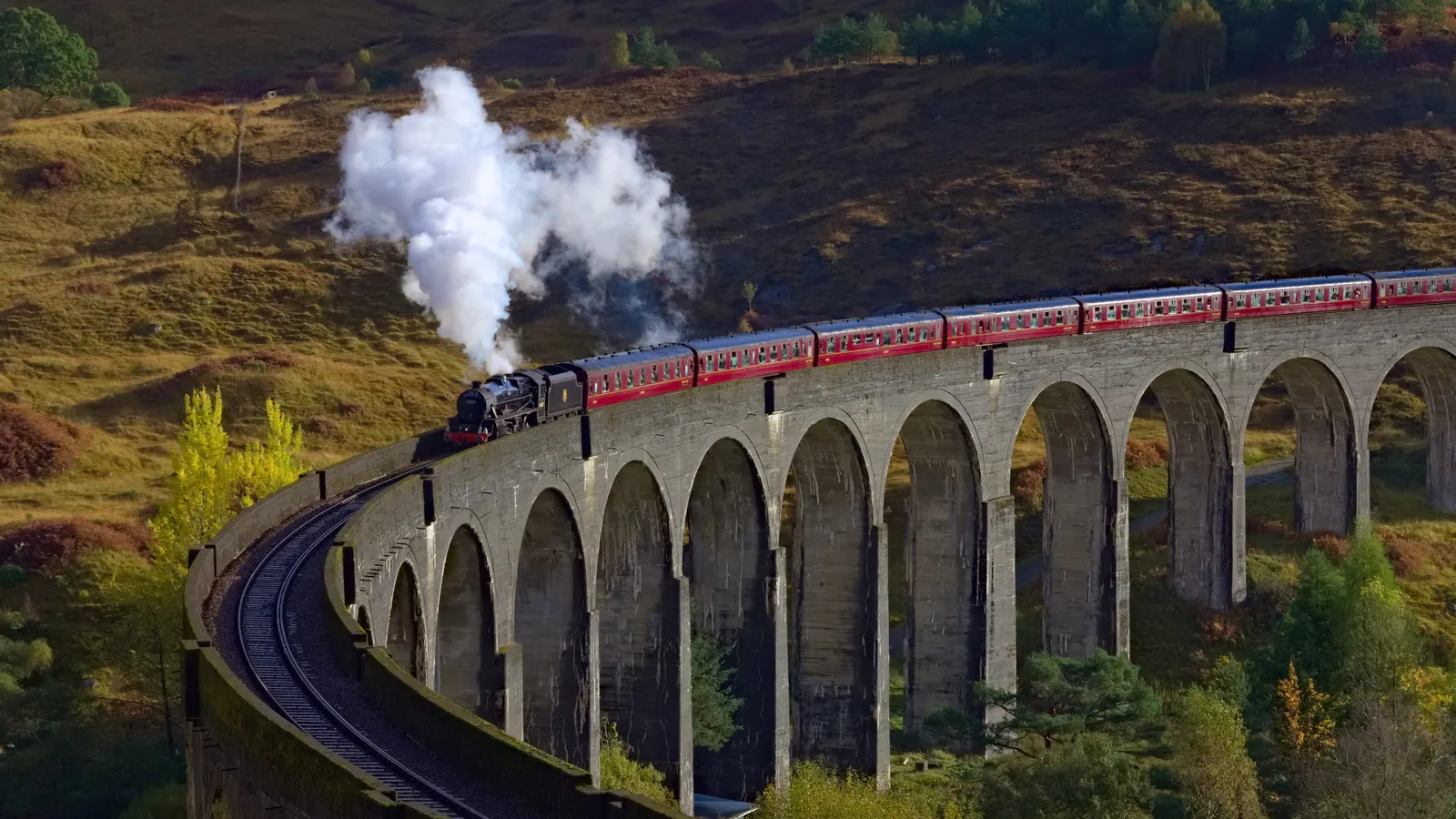
9. The Jacobite Steam Train, Scotland: across the Harry Potter viaduct
Why it is special: the West Highland Line from Fort William to the fishing port of Mallaig is regularly voted one of the most beautiful railway journeys in the world, and in summer a steam train called the Jacobite runs along it. The highlight is the Glenfinnan Viaduct, a curving bridge of 21 concrete arches completed in 1901, which millions of people know as the route of the Hogwarts Express in the Harry Potter films. Beyond it the line passes lochs, mountains and white sand beaches with views towards the isles of Skye, Eigg and Rum.
How to ride: the Jacobite usually runs from spring to autumn and sells out months in advance. Alternatively, ride the regular ScotRail trains on the same route, or watch the steam train cross the viaduct from the Glenfinnan viewpoint. Fort William is a stop on our UK: London and Scotland tour; see our UK tour from India guide.
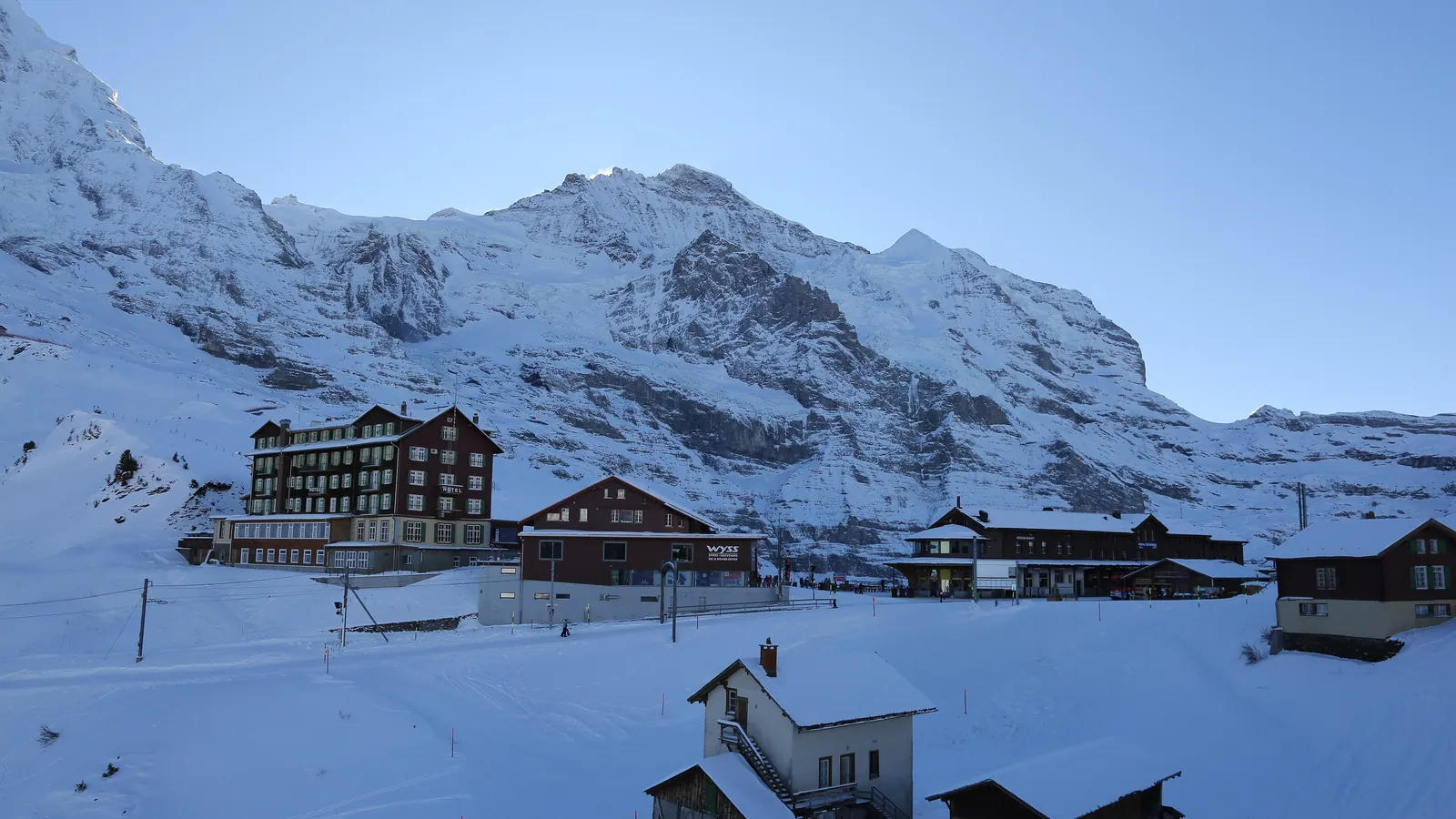
10. The Jungfrau Railway, Switzerland: a train inside a mountain
Why it is special: opened in 1912 after 16 years of construction, the Jungfrau Railway climbs from Kleine Scheidegg, beneath the famous north face of the Eiger, through a tunnel carved inside the Eiger and Monch mountains, to Jungfraujoch, at 3,454 metres the highest railway station in Europe. On the way, the train pauses at stations inside the rock where windows look out over glaciers. At the top, the "Top of Europe" offers an ice palace, a snow plateau and views of the Aletsch Glacier, the longest in the Alps.
How to ride: trains run from Interlaken via Lauterbrunnen or Grindelwald and Kleine Scheidegg. It is often offered as an optional excursion on Europe group tours, including ours; see our guide to choosing a Europe tour package from India. Many Indian visitors love the Bollywood connection: the Jungfrau region has appeared in countless films.
Bonus: the bullet train past Mount Fuji
Japan's shinkansen is not a slow scenic ride, but the Tokaido line between Tokyo and Osaka passes close to Mount Fuji, and on a clear day the view of the snow-capped cone from a train travelling at nearly 300 kilometres an hour is unforgettable. Travelling from Tokyo towards Osaka, sit on the right-hand side. Read our Japan and Korea tour guide for more.
More scenic train journeys for your list
- The Matheran toy train, Maharashtra: a tiny narrow-gauge line from Neral climbing to Matheran, a car-free hill station near Mumbai and Pune.
- The Araku Valley line, Andhra Pradesh: from Visakhapatnam into the Eastern Ghats through dozens of tunnels, with Vistadome coaches and coffee plantations at the top.
- The Kangra Valley Railway, Himachal Pradesh: a slow narrow-gauge line from Pathankot to Joginder Nagar with views of the snow-capped Dhauladhar range.
- The Rocky Mountaineer, Canada: a luxury daylight train through the Canadian Rockies, with glass-domed carriages and overnight stops in hotels.
- The Bergen Railway, Norway: across Europe's highest mountain plateau, the Hardangervidda, and the connection to the Flam line.
- The GoldenPass Express, Switzerland: from Montreux on Lake Geneva to Interlaken, via Gstaad, linking the French and German-speaking parts of the country.
How to book scenic trains in India
Most Indian scenic trains are booked through the IRCTC website or app, like any other train. A few tips make the difference between a great seat and a disappointing one:
- Book on the day reservations open. The advance reservation period for most trains is currently 60 days, so check the rules and set a reminder. Popular toy trains and Vistadome coaches can sell out within minutes in holiday seasons.
- Know the joy rides. In Darjeeling, Shimla and elsewhere, short heritage "joy rides" and special steam services are sometimes booked separately. Check the latest options before you travel.
- Look for Vistadome coaches. Indian Railways has added glass-roofed Vistadome coaches to several scenic routes, including the Konkan, Araku Valley, Kalka to Shimla and others. They are worth the extra cost.
- Have a backup plan. Mountain lines can be suspended after landslides in the monsoon. Keep a road option ready, and check running status on the day.
Scenic trains in Switzerland: the pass question
Switzerland's trains are expensive when bought one ticket at a time, which is why many travellers buy a Swiss Travel Pass. It covers unlimited travel on most trains, buses and boats for a set number of days, including the regular trains on the Glacier Express and Bernina Express routes, though the special panoramic services require an extra seat reservation. Mountain railways such as the Jungfrau Railway are usually only discounted, not free. On an escorted group tour, the key excursions are arranged for you, so you only need to decide which optional extras you want.
How to choose your first scenic train journey
- Short on time? The Darjeeling joy ride or a Kalka to Shimla day trip.
- Travelling with children? The Nilgiri toy train, the Jacobite steam train, and the Jungfrau Railway to the snow.
- Want the monsoon at its best? The Konkan Railway between July and September.
- First trip to Europe? The Jungfrau Railway, Glacier Express or Bernina Express.
- Love drama? The Flam Railway and the Pamban Bridge.
Tips for scenic train journeys
- Book early. The Nilgiri train, the Jacobite, Vistadome coaches and Glacier Express reservations sell out weeks or months ahead, especially in holiday seasons.
- Choose the right side. Research which side has the best views; it often makes a huge difference.
- Travel in daylight. It sounds obvious, but many trains run at night. Check the timetable.
- Clean your window with a tissue before the best stretches, and turn off your camera flash to avoid reflections.
- Carry snacks and water, especially on Indian toy trains, where food options are limited.
- Dress in layers. Mountain railways can start hot and end cold.
- Put the phone down. Take a few photos, then simply watch. The best stretches last only minutes.
Why the slow way is the best way
In an age of budget flights and expressways, the great scenic train journeys remind us why we travel in the first place: to look, to wonder and to feel small in a big world. Whether it is a steam engine huffing up to Ooty or a panoramic carriage crossing the Alps, these are the rides you will describe to your grandchildren.
Ready to ride? Explore our Europe group tours, our Scandinavia tour with the Flam Railway, or browse all our tours. And share this list with the friend who still gets excited at railway stations.
Frequently asked questions
Which is the most scenic train journey in India?
The Konkan Railway in the monsoon, the Nilgiri Mountain Railway to Ooty and the Darjeeling Himalayan Railway are usually considered the most scenic train journeys in India. The Kalka to Shimla line and the Pamban Bridge to Rameswaram are close contenders.
Which Indian railways are UNESCO World Heritage Sites?
Three mountain railways are listed together as the Mountain Railways of India: the Darjeeling Himalayan Railway, the Nilgiri Mountain Railway and the Kalka to Shimla Railway.
How long is the Glacier Express journey?
The Glacier Express between Zermatt and St. Moritz takes about eight hours, crossing 291 bridges and passing through 91 tunnels. A seat reservation is required.
Can I ride the Harry Potter train in Scotland?
Yes. The Jacobite steam train runs from Fort William to Mallaig across the Glenfinnan Viaduct, usually from spring to autumn. Tickets sell out months in advance, so book early.
What is the best time to ride the Konkan Railway?
July to September, during the monsoon, when waterfalls, mist and green hills make the route spectacular. Trains run on a slower monsoon timetable during this period.
Is the Jungfrau Railway worth it?
For most visitors, yes. It climbs through the Eiger to Jungfraujoch, the highest railway station in Europe at 3,454 metres, with glacier views and snow year-round. It is expensive, so it is often sold as an optional excursion on tours.
Do I need a separate visa for the Bernina Express to Italy?
No. Switzerland and Italy are both in the Schengen area, so a single Schengen visa covers the whole Bernina Express journey.