- Why Kashmir is perfect for a honeymoon
- The best time to visit Kashmir
- Spring (March to May): tulips and blossoms
- Summer (June to August): green meadows and cool escapes
- Autumn (September to November): golden chinar season
- Winter (December to February): snow and skiing
- How to reach Kashmir
- Choosing a Dal Lake houseboat
- Categories
- Dal Lake or Nigeen Lake?
- What to check before you book
- Srinagar: what to see and do
- A shikara ride at sunset
- The floating vegetable market
- The Mughal gardens
- Temples, shrines and the old city
- Shopping for Kashmiri crafts
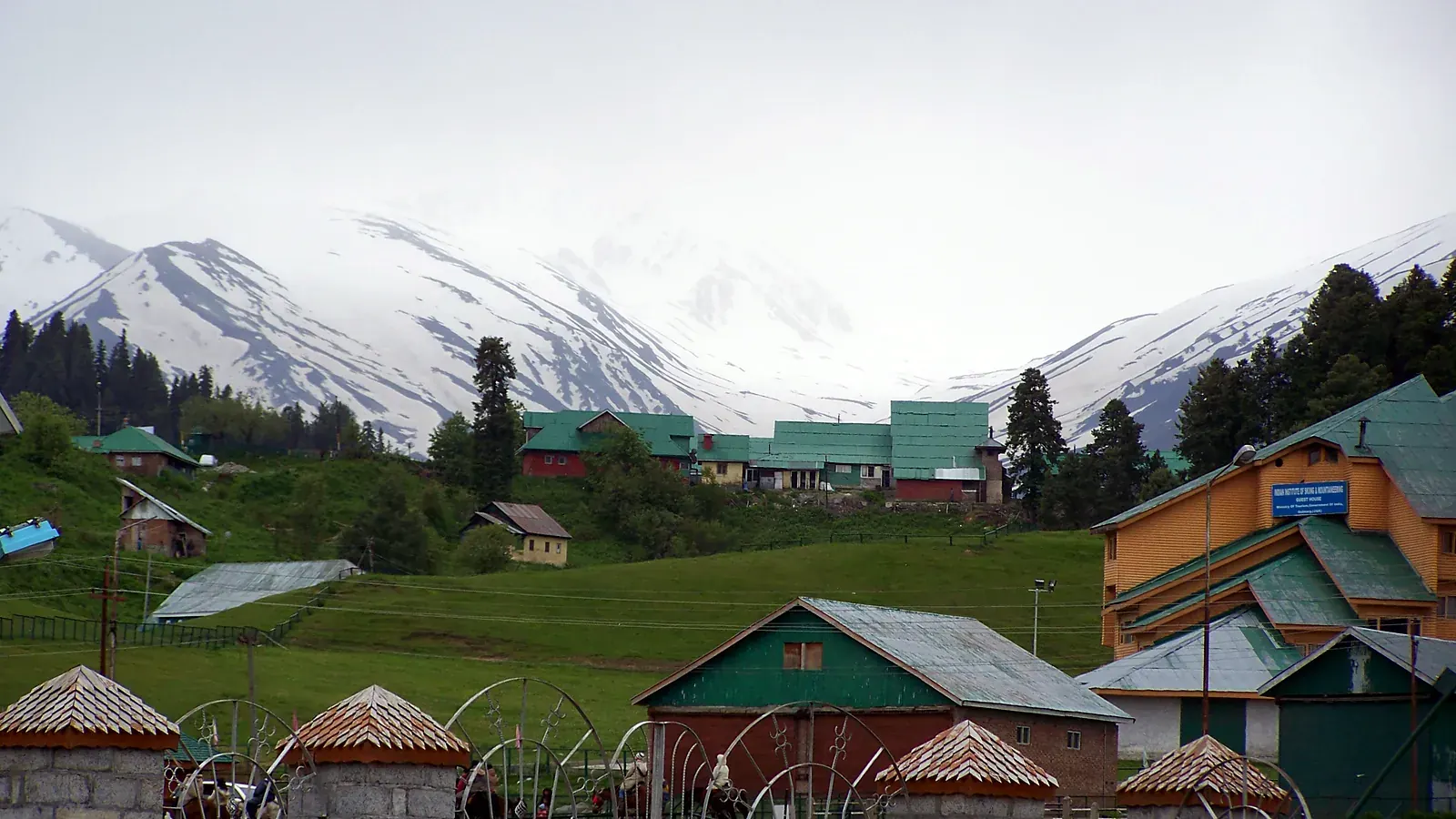
- Gulmarg: the meadow of flowers
- The Gulmarg Gondola
- Other things to do in Gulmarg
- Pahalgam: the valley of shepherds
- The three valleys
- Baisaran: mini Switzerland
- Sonamarg: the meadow of gold
- Hidden gems if you have extra days
- Food in Kashmir: what vegetarians should know
- A six-day Kashmir honeymoon itinerary
- Day 1: Arrive in Srinagar, houseboat and sunset shikara
- Day 2: Mughal gardens and Srinagar sightseeing
- Day 3: Srinagar to Gulmarg
- Day 4: Gulmarg to Pahalgam
- Day 5: Pahalgam valleys
- Day 6: Return to Srinagar and depart
- How much does a Kashmir honeymoon cost?
- Is Kashmir safe for tourists?
- Kashmir with parents and children
- The best photography spots in Kashmir
- Practical tips for Kashmir
- What to pack
- Plan your Kashmir honeymoon with The Vacation Code
- Frequently asked questions about Kashmir
- What is the best time for a Kashmir honeymoon?
- How many days are enough for Kashmir?
- Should we stay on a houseboat for the whole trip?
- How do I book Gulmarg Gondola tickets?
- Is Kashmir good for vegetarians?
- Does my mobile phone work in Kashmir?
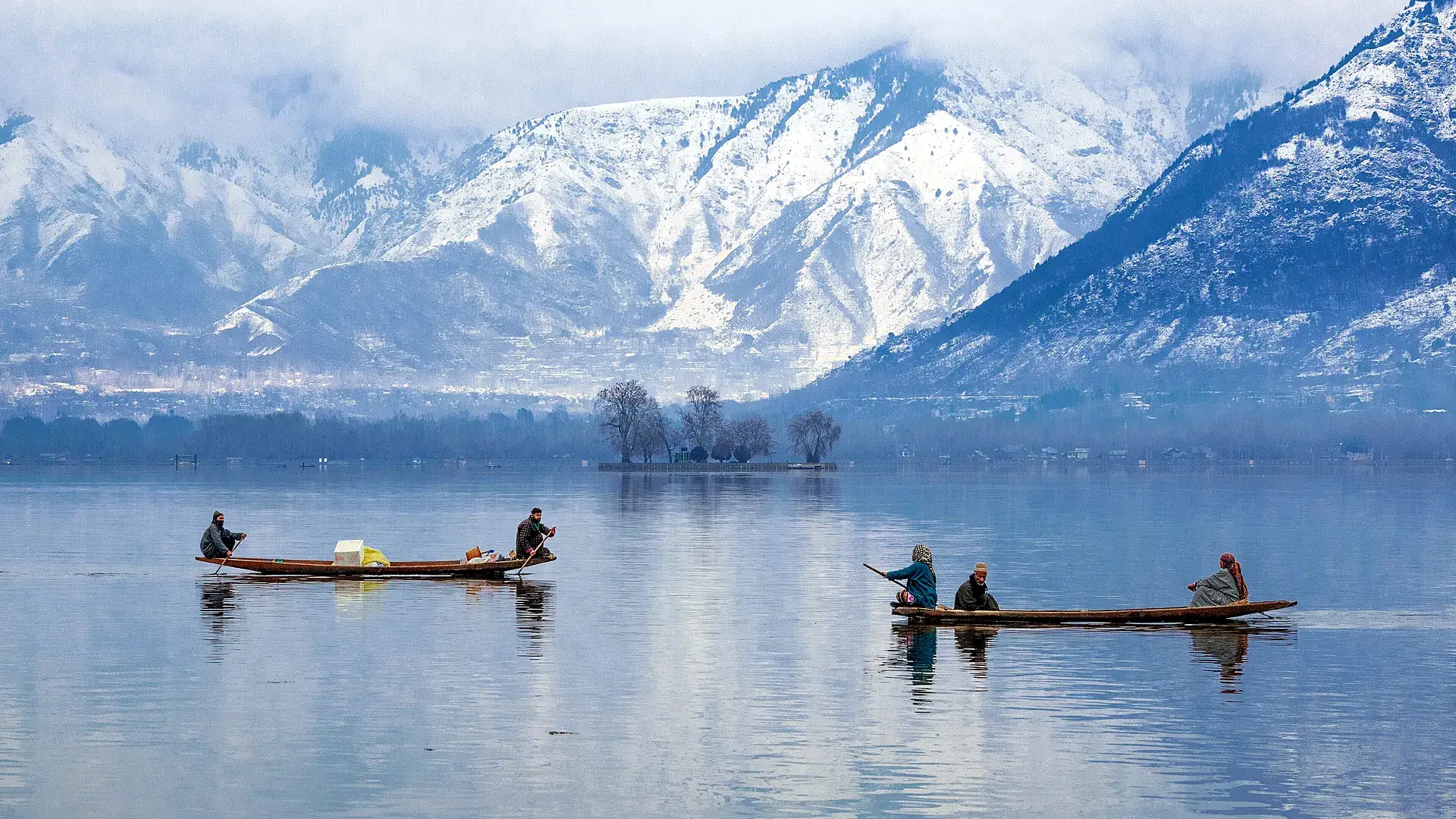
The Mughal emperor Jahangir is said to have looked out over the Kashmir Valley and declared, in Persian, that if there is paradise on earth, it is here, it is here, it is here. Four centuries later, the line still gets quoted on every tourist brochure, and most people who visit roll their eyes at it right up until the moment they are sitting in a shikara on Dal Lake at dusk. The water turns silver, the mountains behind Srinagar go blue and then purple, the call to prayer drifts across from Hazratbal, and a man in a tiny boat paddles up to sell you saffron and kahwa. At that point, it is hard to argue with Jahangir.
Kashmir is one of the most romantic destinations in India and, for many couples, a better honeymoon choice than anywhere abroad. You do not need a passport or a visa, flights are short from most Indian cities, and the scenery is on a scale that very few places in the world can match. Snow-covered meadows, pine forests, glacial rivers, Mughal gardens and a lake where you sleep on a hand-carved wooden houseboat: it all fits into a week.
This guide covers everything you need to plan a Kashmir honeymoon or family holiday: which season suits you, how to choose a houseboat without being disappointed, how the Gulmarg Gondola works, what to see in Pahalgam and Sonamarg, where to eat as a vegetarian, what it costs, how safe it is, and a tested six-day itinerary. We have also included the practical details that first-time visitors often discover the hard way, from SIM cards to the local taxi rules.
Why Kashmir is perfect for a honeymoon
There are three things Kashmir does better than almost anywhere else in India.
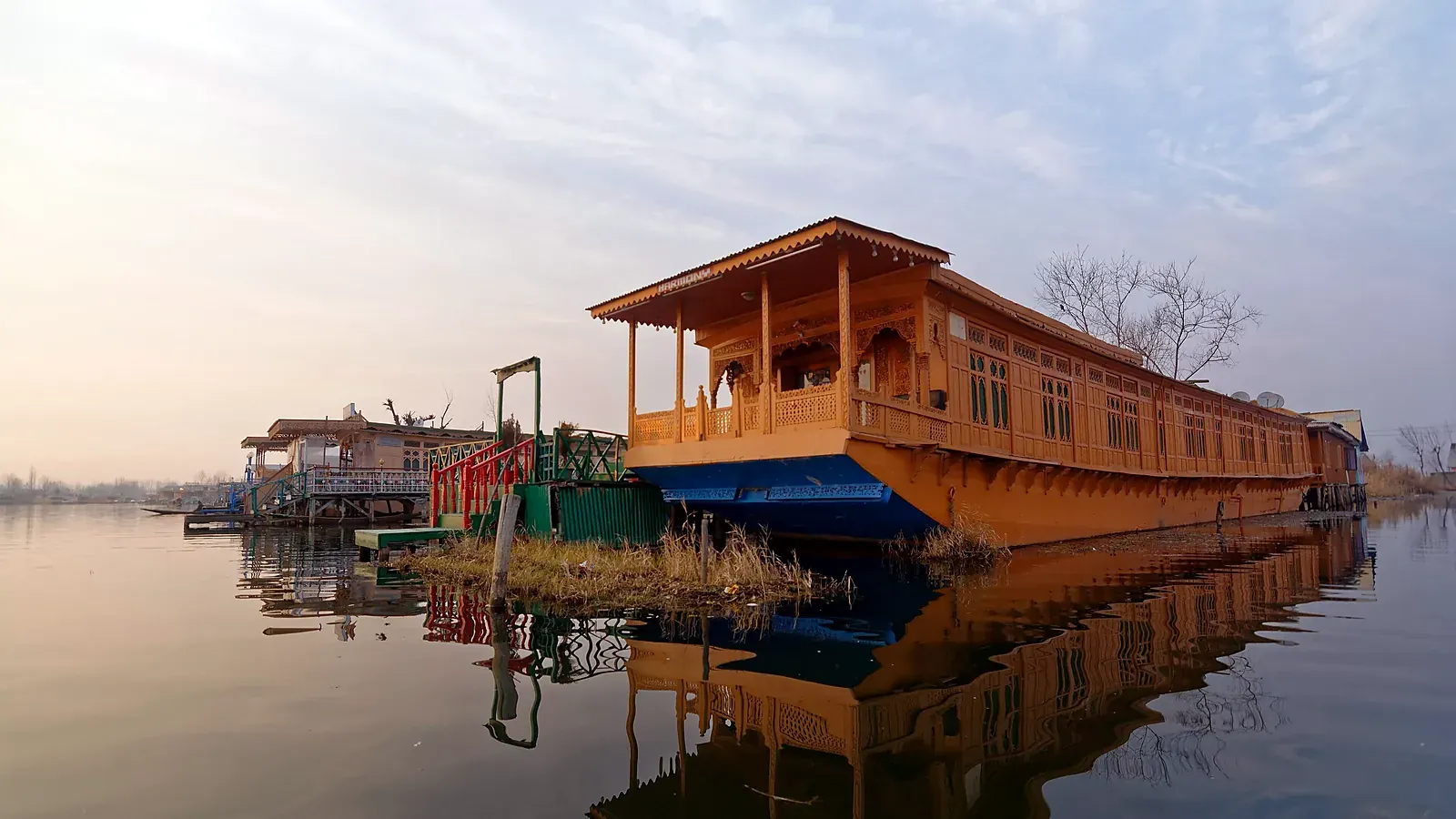
The houseboat experience. Nowhere else in the world lets you stay on an ornate, cedar-panelled houseboat moored on a Himalayan lake. The tradition dates back to the British era, when outsiders were not allowed to buy land in Kashmir and built floating homes instead. Today, a night on a Dal Lake houseboat, with carved walnut ceilings, Kashmiri carpets, a private sitting room and breakfast served on the deck as mist lifts off the water, is a genuinely unique experience.
Snow, even outside winter. For couples from the plains, seeing snow is often a highlight. In Gulmarg, the Gondola takes you up to an altitude of nearly 4,000 metres, where snow often lingers into early summer. In Sonamarg, the Thajiwas glacier keeps snow within walking distance for much of the year.
Every season is different. Kashmir looks completely different in spring, summer, autumn and winter. Tulips and almond blossoms in April, lush green meadows in July, fiery red chinar trees in October, and deep snow in January. Whenever your wedding falls, there is a Kashmir to match it.
The best time to visit Kashmir
Spring (March to May): tulips and blossoms
Spring is arguably the most beautiful time in Srinagar. Almond orchards bloom in March, and the Indira Gandhi Memorial Tulip Garden, the largest tulip garden in Asia, usually opens around late March and stays open for three or four weeks, with millions of tulips in dozens of varieties stretching in stripes of colour below the Zabarwan hills. The exact dates depend on the weather, so check before you book. Temperatures are pleasant during the day and cool at night, and there is still snow in Gulmarg for those who want it. This is peak season, so book houseboats and flights early.
Summer (June to August): green meadows and cool escapes
Summer brings warm, sunny days in the valley and cool air in the hill stations. Pahalgam, Sonamarg and Gulmarg are carpeted in green, rivers run full with snowmelt, and wildflowers bloom in the high meadows. It is the most comfortable season for families, trekking and pony rides. It is also when the Amarnath Yatra takes place, typically in July and August, which brings heavy traffic and security arrangements around Pahalgam and Sonamarg. If you are travelling in this window, plan your route around the yatra.
Autumn (September to November): golden chinar season
Autumn is the photographer's season and our personal favourite. The skies are clear, the air is crisp, and the great chinar trees turn shades of red, orange and gold, particularly in late October and early November. The Mughal gardens and the Naseem Bagh chinar grove look spectacular. Tourist numbers drop after the summer rush, and houseboats offer better rates. It is an excellent honeymoon window for couples who marry in October and November.
Winter (December to February): snow and skiing
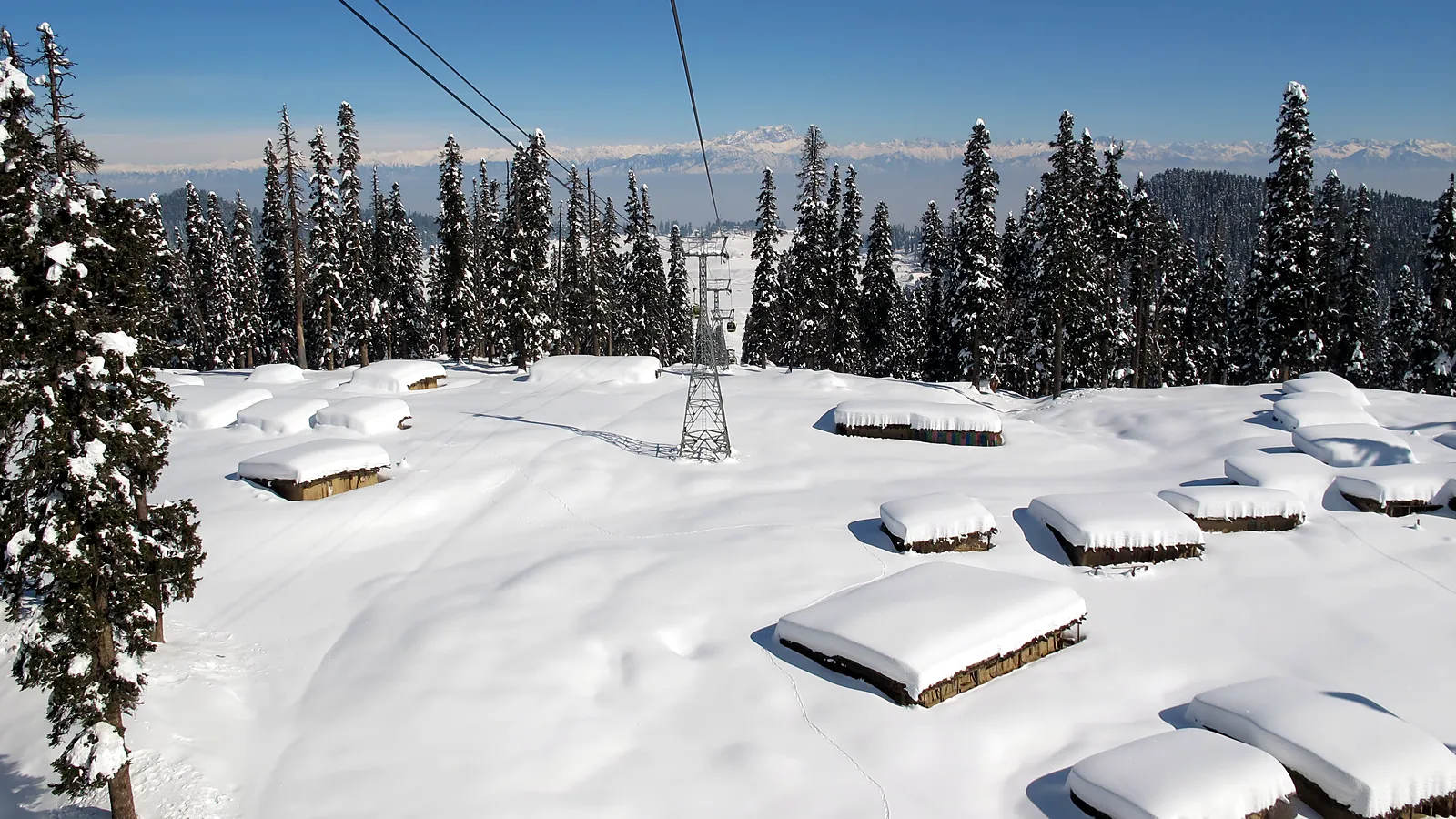
If snow is the dream, winter delivers. Gulmarg becomes one of Asia's best ski destinations, Pahalgam and Sonamarg are buried in white, and even Srinagar often gets a blanket of snow. The coldest period, known as Chillai Kalan, runs from late December to late January, when temperatures in Srinagar drop below freezing and parts of Dal Lake can freeze over. Winter trips are magical but require warm clothing and flexibility. Roads to Sonamarg may close after heavy snowfall, and flights can be delayed by fog. Honeymooners who marry in December and January will find cosy houseboats with heating, kangri fire pots and hot kahwa unbeatable.
How to reach Kashmir
By air. Srinagar's Sheikh ul-Alam International Airport (SXR) has direct flights from Delhi, Mumbai, Bengaluru, Kolkata, Chandigarh, Amritsar and other cities, and connecting flights from almost everywhere else. The flight from Delhi takes about an hour and a half, and the approach over the snow-capped Pir Panjal range is spectacular. Try to get a window seat on the left side on the way in. Airport security is thorough, so arrive early for your return flight, as there are multiple checks before you even reach the terminal.
By rail and road. The Indian Railways network now reaches into the valley, and the rail link through the mountains has transformed road-and-rail journeys into Kashmir. Many travellers also drive from Jammu, a long but scenic journey through the mountains. For a honeymoon with limited days, flying into Srinagar is by far the easiest option.
Choosing a Dal Lake houseboat
The houseboat is the heart of a Kashmir honeymoon, and it is also the part where expectations and reality sometimes do not match. A little knowledge goes a long way.
Categories
Houseboats in Srinagar are classified into categories by the tourism department, from budget up to deluxe and super deluxe. The difference is significant. A deluxe houseboat will typically have a large living room, a dining room, two to four bedrooms with attached bathrooms, carved walnut woodwork, a sun deck and a dedicated host family. Budget houseboats can be cramped and poorly maintained. For a honeymoon, stick to deluxe or luxury houseboats.
Dal Lake or Nigeen Lake?
Most houseboats are on Dal Lake, especially along its famous boulevard stretch, where the views are grand and you are close to restaurants and shops, but it can feel busy with shikaras and traffic noise from the road. Nigeen Lake, connected to Dal Lake in the north, is quieter, cleaner and more peaceful, with fewer boats and views of the mountains. Many honeymooners prefer Nigeen for its calm. Some couples do one night on each.
What to check before you book
- Private bathroom with hot water. Ask about geysers and whether hot water is available at all times.
- Heating in cold months. In autumn, winter and early spring, confirm there are electric blankets, heaters or a traditional bukhari stove.
- How you reach the houseboat. Most are reached by shikara from a landing ghat. Some on Nigeen Lake can be reached on foot.
- Meals. Most houseboats include breakfast and dinner cooked by the host family. Tell them about vegetarian or Jain requirements when you book.
- Recent reviews and photos. Houseboats vary a lot, and some photos online are many years old.
Our advice is to spend one or two nights on a houseboat rather than the entire trip. It is a wonderful experience, but a hotel in Gulmarg or Pahalgam lets you wake up in the mountains and saves long daily drives from Srinagar.
Srinagar: what to see and do
A shikara ride at sunset
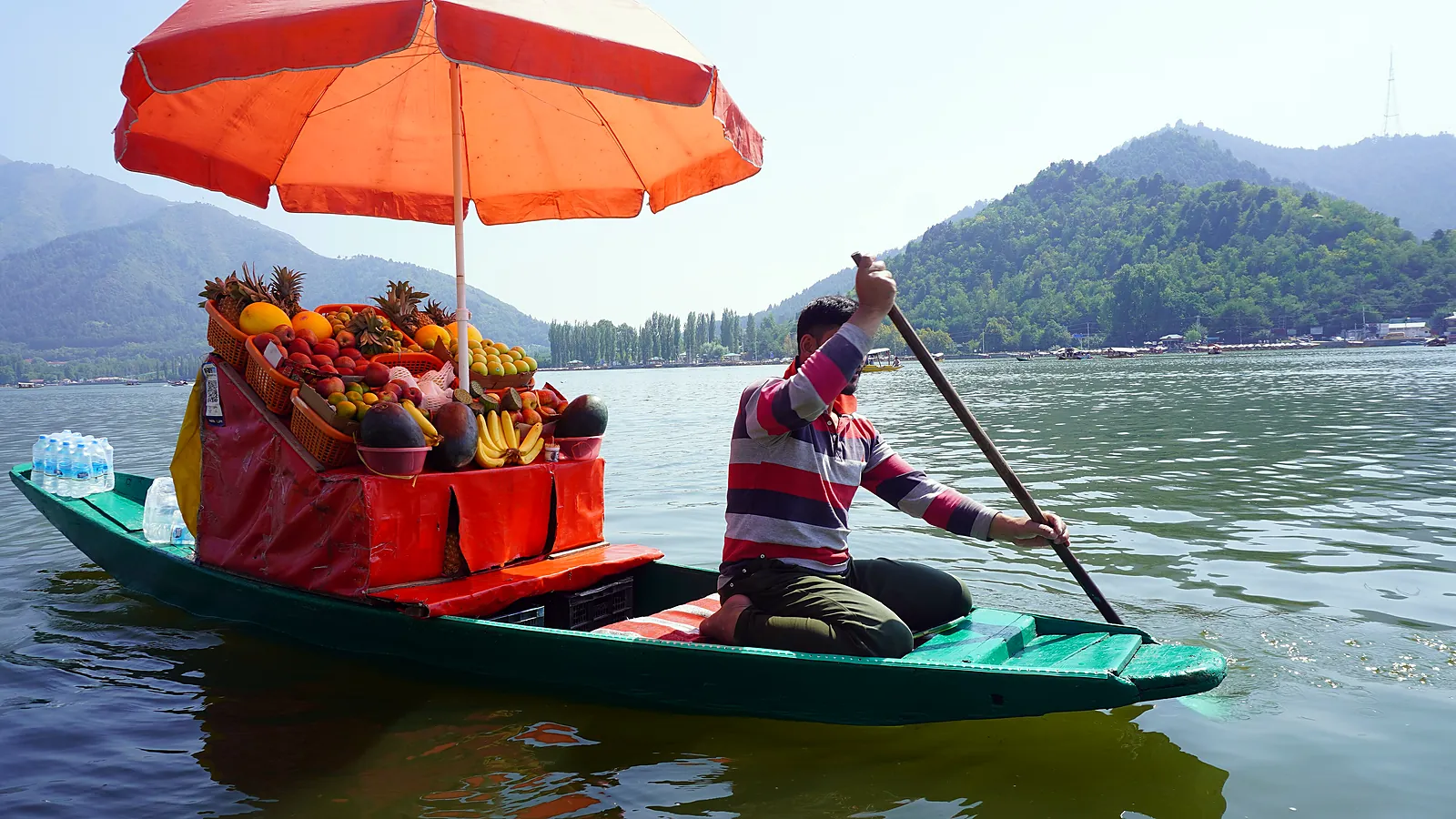
No visit to Kashmir is complete without a shikara ride, the long, canopied wooden boats paddled across Dal Lake. A one-hour ride at sunset is the classic, but a longer two to three hour ride takes you through the old floating vegetable gardens, lotus beds and the lake's hidden channels, past Char Chinar island. Rates are fixed by the tourism department and displayed at the ghats. Along the way, vendors will paddle up selling everything from kahwa and saffron to papier-mâché boxes, flowers and jewellery. It is all part of the fun.
The floating vegetable market
Get up very early one morning, around 5.30 a.m., and take a shikara to the floating vegetable market near Mir Bahri. Farmers gather in their boats to trade vegetables grown on the lake's floating gardens in the dim light of dawn. It is one of the most atmospheric experiences in Srinagar and completely different from the tourist side of the lake.
The Mughal gardens
The Mughal emperors loved Kashmir and built terraced gardens on the slopes above Dal Lake, with water channels, fountains and chinar trees. Nishat Bagh is the largest, with twelve terraces leading down to the lake. Shalimar Bagh, built by Jahangir for his wife Nur Jahan, is the most romantic. Chashme Shahi is smaller and built around a natural spring whose water is said to have healing properties. The Pari Mahal, a ruined garden palace higher on the hill, has the best view over the lake and city, particularly at sunset.
Temples, shrines and the old city
The Shankaracharya Temple, a Shiva temple on a hill above Srinagar, is reached by a climb of around 240 steps and offers panoramic views. The white marble Hazratbal Shrine on the lake's northern shore is revered for housing a relic of the Prophet. In the old city, the Jamia Masjid with its hundreds of deodar pillars is a remarkable piece of architecture. Walk the old lanes to see traditional wooden houses, spice shops and craftsmen at work.
Shopping for Kashmiri crafts
Kashmir is famous for pashmina shawls, hand-knotted carpets, papier-mâché, walnut wood carving, crewel embroidery, saffron and dry fruits. Buy from government emporiums or reputable shops and be wary of "genuine pashmina" at impossibly low prices. Real pashmina is expensive. Ask to see the certification for pashmina and the GI tag for saffron.
Gulmarg: the meadow of flowers
Gulmarg lies about 50 kilometres west of Srinagar, a drive of around one and a half to two hours. Its name means "meadow of flowers", and in summer it lives up to it. In winter, it becomes India's premier ski resort.
The Gulmarg Gondola
The Gondola is Gulmarg's star attraction and one of the highest cable cars in the world. It runs in two phases:
- Phase 1 goes from Gulmarg to Kongdoori, at about 3,080 metres. It is a meadow with views, pony rides and sledging in snow season.
- Phase 2 continues from Kongdoori to near the top of Mount Apharwat, at close to 4,000 metres. Here, snow is common for much of the year, and on clear days you can see a sweep of the Himalaya, including, on the best days, Nanga Parbat in the distance.
Book Gondola tickets online in advance through the official booking website. In peak season, tickets sell out days ahead, and buying through touts at the site costs far more. Phase 2 can close in bad weather or high winds, so keep your Gulmarg day flexible. At the top, the altitude is high, so walk slowly and stay hydrated. Rent snow boots and a jacket at the base if you have not brought them.
Other things to do in Gulmarg
- Visit the tiny St. Mary's Church and the hilltop Maharani Temple, which appeared in the film Aap Ki Kasam.
- Take a pony ride through the meadows to Seven Springs or Alpather Lake, which remains frozen until well into summer.
- In winter, try skiing or snowboarding with a certified instructor. Beginners can learn on the gentle slopes near the village.
- Stay overnight if you can. Gulmarg after the day-trippers leave, with the pine forests and the silence, is special.
Pahalgam: the valley of shepherds
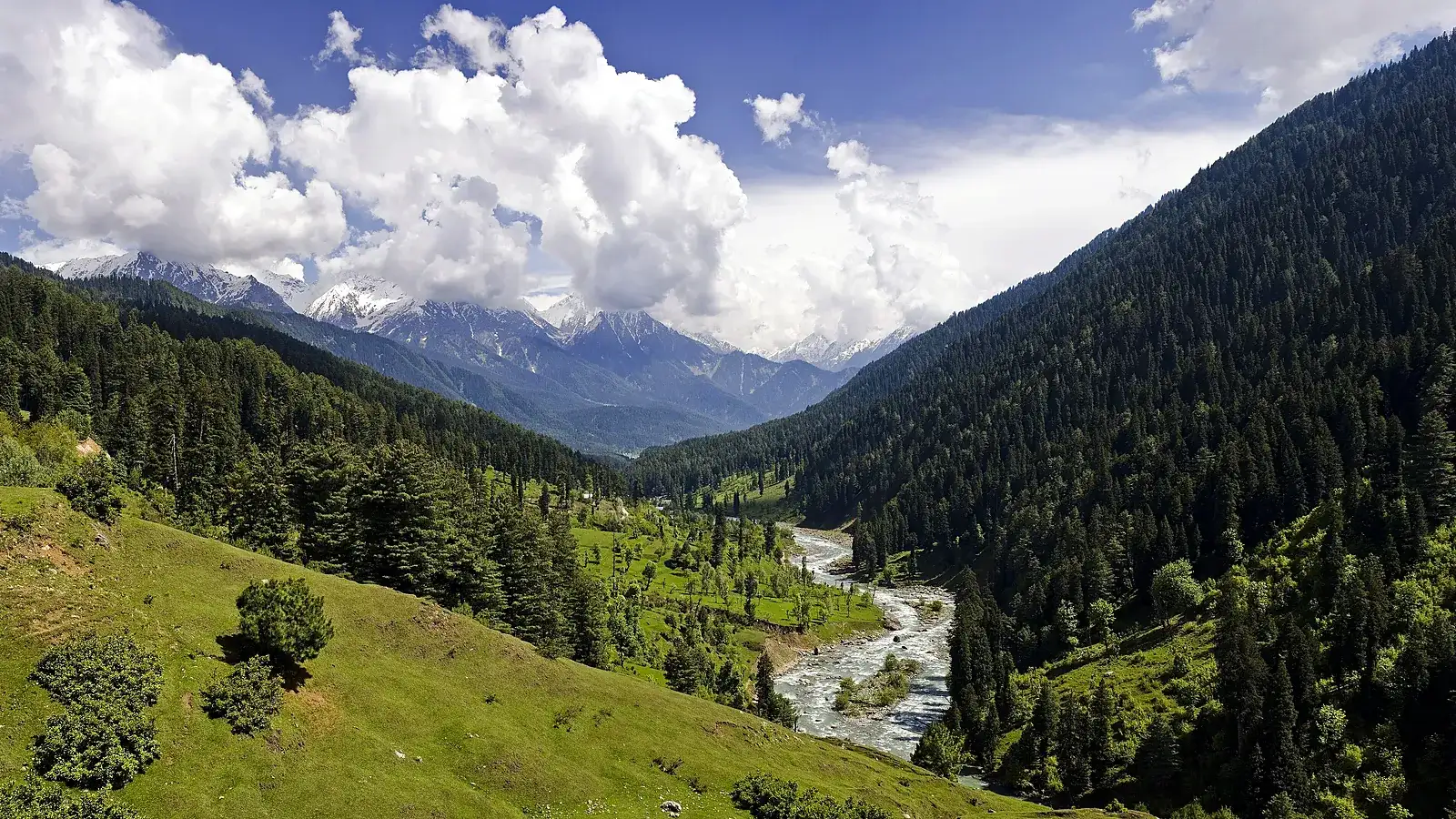
Pahalgam sits about 95 kilometres east of Srinagar, a drive of two and a half to three hours through saffron fields at Pampore, apple orchards and the Lidder river valley. It is greener, gentler and more pastoral than Gulmarg, with pine forests, rushing rivers and wide meadows. Many couples say Pahalgam was the part of Kashmir they loved most.
The three valleys
In Pahalgam, sightseeing to the surrounding valleys is done in local taxis from the Pahalgam taxi stand, at fixed rates. Your Srinagar car is not allowed to take you. The three main valleys are:
- Betaab Valley, named after the 1983 film shot here, with a river running through a green meadow surrounded by pine-covered mountains. It is the most photographed spot in Pahalgam.
- Aru Valley, a quieter meadow and village at the start of several treks, including the route to Kolahoi glacier.
- Chandanwari, the starting point of the Amarnath Yatra, where snow bridges often remain well into summer.
Baisaran: mini Switzerland
A pony ride from Pahalgam takes you up through pine forest to Baisaran, a meadow ringed by forest with snow peaks behind, often called "mini Switzerland". Pony rates are fixed and displayed on boards, and a ride usually includes several viewpoints. The ride can be bumpy, so wear comfortable trousers.
Other lovely experiences include a walk along the Lidder River, trout fishing (with a permit), riverside picnics and, for the adventurous, gentle rafting on the Lidder in summer.
Sonamarg: the meadow of gold
Sonamarg lies about 80 kilometres northeast of Srinagar on the road to Ladakh. Its highlight is the Thajiwas Glacier, reached by pony or a walk of a few kilometres from the town, where you can touch snow and go sledging for much of the year. The drive along the Sindh river is beautiful. Sonamarg works well as a day trip from Srinagar, though staying overnight in one of the hotels allows a relaxed pace. In winter, the road can close after heavy snowfall.
Hidden gems if you have extra days
- Doodhpathri, "the valley of milk", about 40 kilometres from Srinagar, has meadows and a milky-white stream and is much less crowded than Gulmarg.
- Yusmarg, a quiet meadow surrounded by pine forest, is ideal for walks and picnics.
- Gurez Valley, near the Line of Control, is remote and extraordinary but requires more time and planning.
- Verinag and Kokernag, springs and gardens in south Kashmir, are peaceful and rarely visited.
Food in Kashmir: what vegetarians should know
Kashmiri cuisine is famous for wazwan, a ceremonial multi-course feast built largely around mutton, including dishes such as rogan josh, gushtaba and rista. If you eat meat, a wazwan is an experience you should not miss.
Vegetarians need not worry, though. Kashmiri Pandit cuisine and everyday home cooking have many excellent vegetarian dishes:
- Dum aloo Kashmiri, baby potatoes in a spiced yoghurt or tomato gravy.
- Nadru yakhni, lotus stem cooked in a delicate yoghurt sauce flavoured with fennel and cardamom.
- Rajma with rice, the Kashmiri kidney beans being particularly prized.
- Haak saag, collard greens cooked simply with mustard oil.
- Chaman kaliya, paneer in a fragrant yellow gravy.
- Kahwa, green tea with saffron, cardamom, cinnamon and almonds, and noon chai, a pink, salted tea.
Srinagar has several well-known pure vegetarian restaurants and North Indian dhabas, and every hotel and houseboat can prepare vegetarian meals. Jain food is more limited, as onion and garlic are common, so tell your houseboat and hotels in advance. When you travel with us, we brief every property on dietary requirements before you arrive.
A six-day Kashmir honeymoon itinerary
Day 1: Arrive in Srinagar, houseboat and sunset shikara
Fly into Srinagar and transfer to your houseboat on Dal or Nigeen Lake. After lunch and a rest, take a sunset shikara ride through the lake's channels, past the floating gardens. Enjoy dinner on the houseboat and fall asleep to the gentle lapping of water.
Day 2: Mughal gardens and Srinagar sightseeing
After breakfast on the deck, visit Nishat Bagh, Shalimar Bagh and Chashme Shahi. In spring, add the Tulip Garden. After lunch, climb to the Shankaracharya Temple or visit Pari Mahal for sunset views. Spend the evening shopping for crafts along the boulevard.
Day 3: Srinagar to Gulmarg
Drive to Gulmarg. Take the Gondola to Kongdoori and, if the weather is clear, on to Apharwat. Spend the afternoon in the snow or on a pony ride through the meadows. Stay overnight in Gulmarg to enjoy the quiet evening in the mountains.
Day 4: Gulmarg to Pahalgam
Drive to Pahalgam, stopping at the saffron fields of Pampore, where you can buy saffron directly from growers, and at the ruins of the ancient Avantipur temples built in the ninth century. Check into your Pahalgam hotel, ideally one overlooking the Lidder river, and spend the evening walking by the water.
Day 5: Pahalgam valleys
Take a local taxi to Betaab Valley, Aru Valley and Chandanwari. In the afternoon, take a pony ride to Baisaran meadow. Enjoy a candlelit dinner at your hotel.
Day 6: Return to Srinagar and depart
Drive back to Srinagar and fly home, allowing plenty of time for airport security. If your flight is late, stop for a final kahwa by the lake.
With a seventh day, add Sonamarg as a day trip from Srinagar, or spend a second night on the houseboat to slow the pace.
How much does a Kashmir honeymoon cost?
A six-day, five-night Kashmir trip for a couple in comfortable hotels and a deluxe houseboat, with a private car, typically costs ₹55,000 to ₹1.1 lakh for two, excluding flights, depending on the season and hotel category. Return flights to Srinagar from major cities usually cost ₹10,000 to ₹25,000 per person, higher during peak spring and summer weekends.
Budget for extra costs such as Gondola tickets (Phase 1 and Phase 2 are priced separately), local taxis in Pahalgam, pony rides, shikara rides and shopping. Our Kashmir Romantic Paradise package starts at ₹24,999 per person for six days and five nights, with a luxury houseboat, a sunset shikara ride, Gulmarg, Pahalgam and Betaab Valley included.
Is Kashmir safe for tourists?
This is the question every family asks, and it is a fair one. The honest answer is that the main tourist circuit of Srinagar, Gulmarg, Pahalgam and Sonamarg sees large numbers of domestic and international visitors every year, and Kashmiris are known for their warm hospitality to tourists, on whom much of the local economy depends. There is a visible security presence, which can feel unusual at first but is normal here.
The sensible approach is the same as for any destination: check current government travel advisories before you travel and again a few days before departure, stick to established tourist areas, travel with registered drivers and operators, avoid large gatherings, and follow local advice if plans need to change. When you travel with us, our local team monitors conditions throughout your trip and will adjust the itinerary if needed.
Kashmir with parents and children
Although this guide is written with honeymooners in mind, Kashmir is one of the best family holidays in India, and many couples return later with parents or children. A few adjustments make the trip easier for everyone.
Keep drives short. Instead of day trips from Srinagar, stay overnight in Gulmarg and Pahalgam so that nobody spends five hours a day in a car. Choose Phase 1 of the Gondola for elderly parents or anyone with heart or breathing conditions, since Kongdoori is lower and still has lovely views and snow in season. Book houseboats with easy access, as some involve steep steps from the shikara, and ask for a room close to the living area. For children, the pony rides, sledging at Gulmarg and Sonamarg, trout hatcheries in Pahalgam and shikara rides are all big hits. Carry snacks for the long mountain drives, where good food stops can be far apart.
The best photography spots in Kashmir
Kashmir is one of the most photogenic places in India, and a little planning gets you the shots everyone asks about when you get home.
- Dal Lake at sunrise from a shikara, when the water is glassy and the mountains reflect perfectly.
- Pari Mahal at sunset, for a sweeping view over Dal Lake and the city lights coming on.
- Nishat Bagh's terraces, framed by chinar trees, especially in autumn.
- The Gondola cabins against the snow slopes of Apharwat, taken from the Kongdoori meadow.
- Betaab Valley from the small bridge over the river, the classic Pahalgam frame.
- Traditional pheran portraits. Photographers around Dal Lake and Gulmarg rent out Kashmiri outfits for couple photos, a fun and popular honeymoon keepsake.
Always ask before photographing local people, particularly women, and respect the answer. Photography is restricted around military and security installations, and at the airport.
Practical tips for Kashmir
- Mobile connectivity. Prepaid SIM cards issued outside Jammu and Kashmir generally do not work in the region. Postpaid connections from major providers usually do. If you only have prepaid, check with your provider before travelling, and use your houseboat or hotel Wi-Fi.
- Local taxi unions. In Gulmarg, Pahalgam and Sonamarg, sightseeing within the area must often be done in local taxis. Budget for this; it is standard practice.
- Fixed rates. Shikara, pony and taxi rates are fixed and displayed on boards. Refer to them politely if you are quoted more.
- Carry cash. ATMs are available in Srinagar, Gulmarg and Pahalgam but can run out at peak times. Card payment is less common in smaller shops.
- Layers. Even in summer, nights and high altitudes are cold. Carry a warm jacket in any season.
- Dress modestly. Kashmir is a conservative society. Loose, covered clothing is respectful and comfortable.
- Altitude. Apharwat peak is close to 4,000 metres. Walk slowly and avoid exertion if you feel dizzy or breathless.
What to pack
- Warm layers: thermals, a fleece and a down or padded jacket, even in summer for Gulmarg and evenings.
- Comfortable walking shoes with good grip. Snow boots can be rented locally in Gulmarg and Sonamarg.
- Gloves, a woollen cap and a scarf for the Gondola and snow points.
- Sunglasses and sunscreen. The sun reflecting off snow is surprisingly strong.
- Lip balm and moisturiser for the dry mountain air.
- Personal medicines, including something for motion sickness on the mountain roads.
- A power bank, as phone batteries drain quickly in the cold.
Plan your Kashmir honeymoon with The Vacation Code
Kashmir rewards good local planning: the right houseboat, Gondola tickets booked in advance, a driver who knows the roads, and hotels in Gulmarg and Pahalgam that let you wake up in the mountains instead of driving back and forth. Our Kashmir Romantic Paradise package is built around exactly that, with a hand-carved houseboat on Dal Lake, a sunset shikara ride, the Gulmarg Gondola, Pahalgam and Betaab Valley, plus vegetarian and Jain meals arranged in advance.
Planning a honeymoon and still deciding? Compare with our Bali honeymoon guide or the Udaipur romantic weekend guide for a shorter trip. You can also browse all our tour packages.
Frequently asked questions about Kashmir
What is the best time for a Kashmir honeymoon?
It depends on what you want. March to May brings tulips and blossoms, June to August green meadows and pleasant weather, September to November golden chinar trees and clear skies, and December to February snow and skiing. For most couples, April, May, October and early November are ideal.
How many days are enough for Kashmir?
Six days and five nights covers Srinagar, Gulmarg and Pahalgam comfortably. Add a day or two for Sonamarg, Doodhpathri or a slower pace.
Should we stay on a houseboat for the whole trip?
We recommend one or two nights on a houseboat and the rest in hotels in Gulmarg and Pahalgam. That way you experience the houseboat without long daily drives back to Srinagar.
How do I book Gulmarg Gondola tickets?
Book online through the official Gulmarg Gondola booking website as early as possible, especially in peak season. Phase 1 and Phase 2 are booked separately, and Phase 2 can close in bad weather.
Is Kashmir good for vegetarians?
Yes. While wazwan is meat-based, Kashmiri vegetarian dishes like dum aloo, nadru yakhni and rajma are delicious, and every hotel and houseboat can provide vegetarian meals. Inform properties in advance for Jain food.
Does my mobile phone work in Kashmir?
Prepaid SIM cards from outside Jammu and Kashmir generally do not work there. Postpaid connections from major networks usually do. Check with your provider before you travel.