- Neemrana: a fort in the Aravallis
- A little history
- Staying at the fort-palace
- Why stay in a heritage hotel?
- Zip-lining over the fort
- The Neemrana stepwell
- Other experiences at Neemrana
- Around Neemrana: Alwar, Sariska and Bhangarh
- Alwar
- Sariska Tiger Reserve
- Bhangarh Fort
- Jaipur: the Pink City
- A city built on a plan
- Amer Fort
- Jaigarh and Nahargarh Forts
- Hawa Mahal
- City Palace
- Jantar Mantar
- Other sights
- A morning walk through the old city
- Block printing in Sanganer and Bagru
- Where to stay in Jaipur
- Shopping in Jaipur
- What to eat in Jaipur
- Music, puppets and the living culture of Rajasthan
- Travel responsibly
- Best time to visit
- How to get there
- Itineraries
- Two-day weekend: Neemrana and Jaipur
- Three-day weekend
- Who this weekend suits
- How much does the weekend cost?
- Practical tips
- Mistakes to avoid
- Plan your royal weekend with The Vacation Code
- Frequently asked questions
- How far is Neemrana from Delhi?
- Can we combine Neemrana and Jaipur in one weekend?
- Is zip-lining at Neemrana safe?
- What is the best time to visit Jaipur and Neemrana?
- Where is the best sunset in Jaipur?
- Is Bhangarh Fort really haunted?
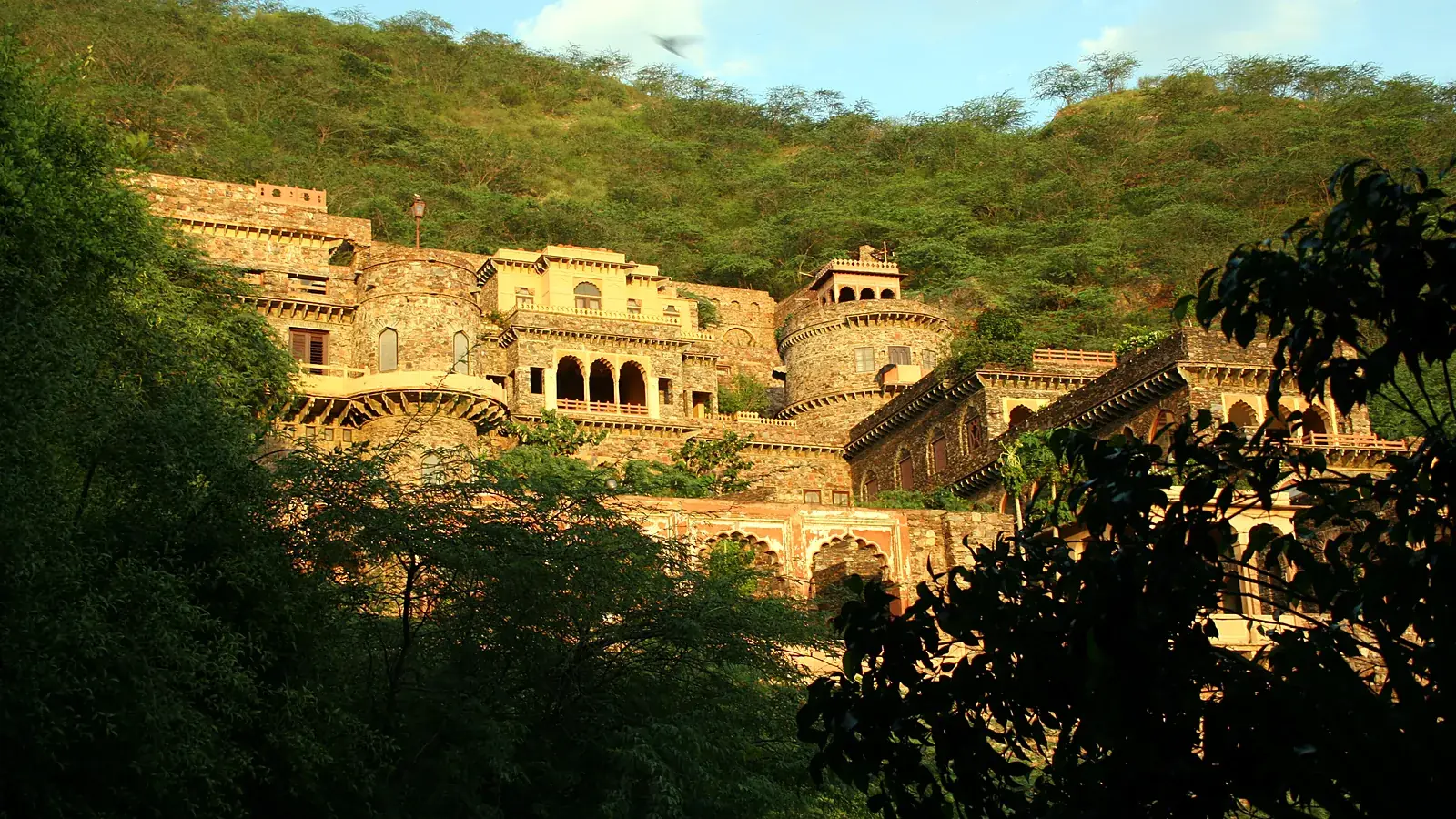
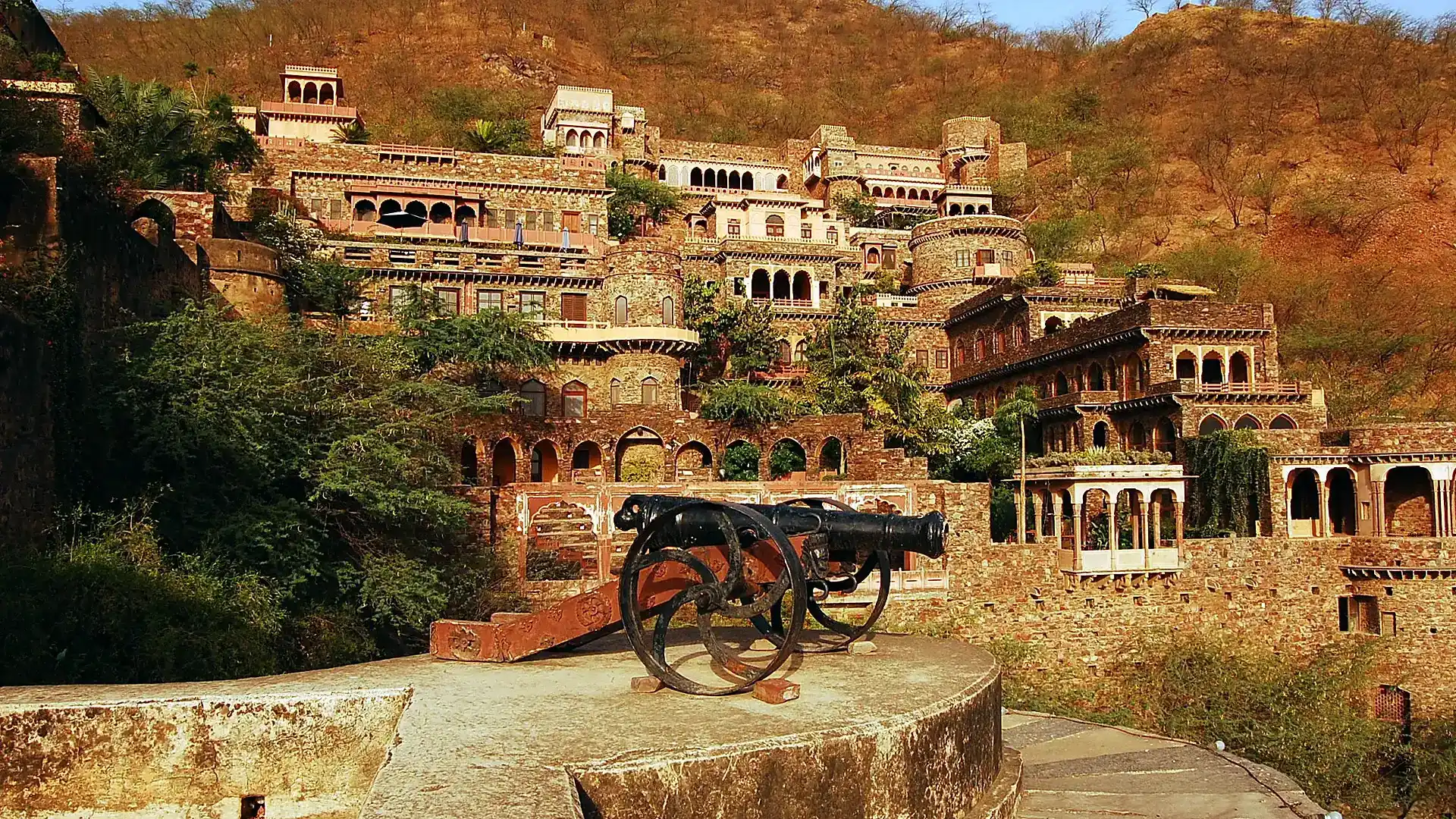
Two and a half hours from the glass towers of Gurugram, a honey-coloured fortress rises in fourteen tiers up the side of a rocky Aravalli hill. Bougainvillea spills over its walls. Peacocks call from the ramparts. In the evening, as lamps are lit in the courtyards and a musician begins to play in a hidden corner, you sit on a terrace that has watched over this plain for more than five hundred years and realise that you left Delhi only this morning.
Rajasthan is India's most romantic state, a land of forts, palaces, deserts and colour, and the good news for anyone living in Delhi and the NCR is that some of its most spectacular heritage is just a few hours away. A weekend trip that combines a night at the Neemrana Fort Palace, one of the oldest heritage hotels in India, with the forts, palaces and bazaars of Jaipur, the Pink City, gives you the full royal experience without taking leave.
This guide covers both halves of the trip. For Neemrana: its history, what to do beyond staying in the fort, and the attractions nearby, including Alwar, Sariska and the notorious Bhangarh. For Jaipur: the essential sights, how to plan your day to beat the heat and crowds, the best sunset in the city at Nahargarh, shopping and food. We also include practical itineraries for a two-day and a three-day weekend.
Neemrana: a fort in the Aravallis
A little history
Neemrana lies in the Alwar district of Rajasthan, right on the old Delhi–Jaipur highway, about 120 kilometres from Delhi. The fort-palace was built in the 15th century, around 1464, by the Chauhan Rajputs, who traced their descent from Prithviraj Chauhan, the famous 12th-century ruler of Delhi and Ajmer. After Prithviraj's defeat, his descendants moved into the Aravalli hills and eventually made Neemrana their capital.
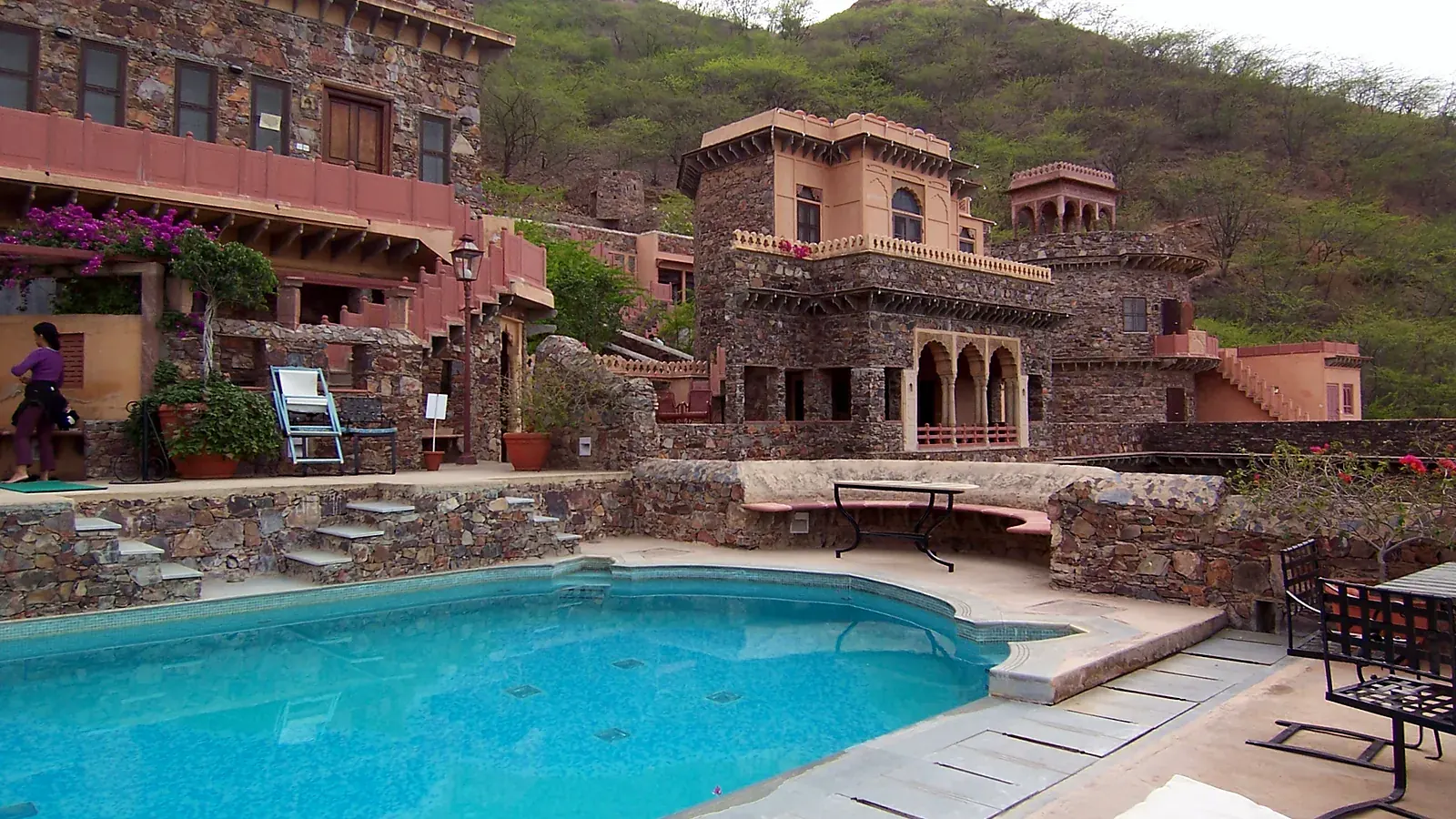
The fort was built in stages over centuries, cascading down the hillside in terraces and wings, with courtyards, pavilions, towers and hanging gardens. By the mid-20th century it had fallen into ruin. In the 1980s it was bought and painstakingly restored as a heritage hotel, becoming one of the pioneers of the heritage hotel movement in India. Today it has rooms and suites spread over its many levels, no two alike, furnished with antiques and period furniture.
Staying at the fort-palace
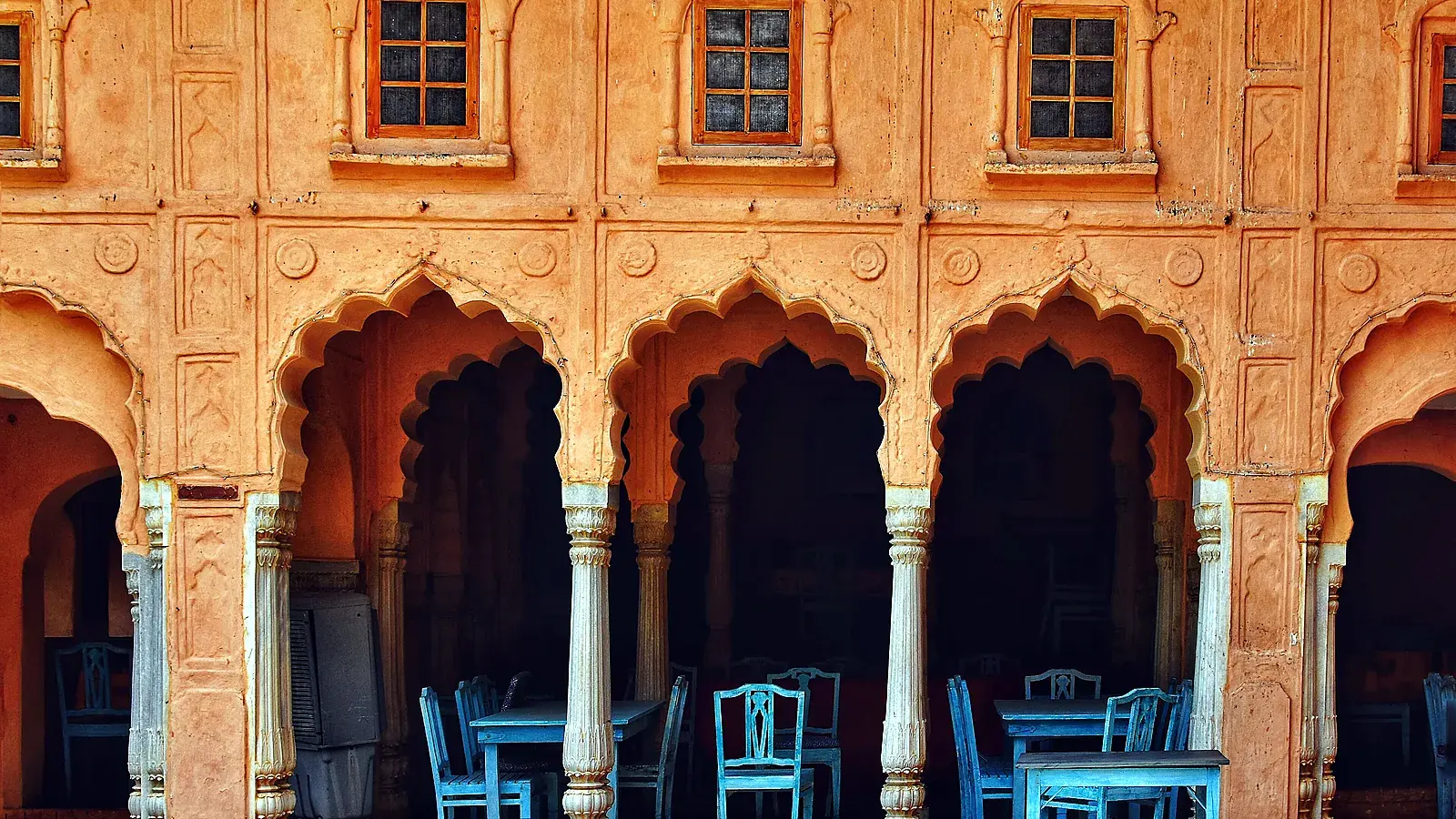
The experience of staying at Neemrana is less about luxury in the modern sense and more about atmosphere. You wander through stone corridors, up narrow staircases and out onto terraces that open unexpectedly onto views of the surrounding plains and hills. Rooms vary enormously, from compact chambers to grand suites with private terraces and balconies. There is a swimming pool on one of the terraces, spa facilities, several dining areas, and cultural performances in the evenings.
A few tips for staying at the fort:
- There are a lot of steps. The fort is built into a hillside with many levels and no lifts in most areas. Ask for a room on the lower levels if anyone in your group has difficulty with stairs.
- Rooms differ a lot. Look at the room categories and ask for one with a view or a terrace.
- Day visits are sometimes offered with a meal package, if you want to see the fort without staying overnight. Check current policies before you go.
- Book early for weekends, especially from October to March.
Why stay in a heritage hotel?
Rajasthan has hundreds of forts, palaces and havelis, and after Independence, when the princely states merged into India and royal privileges ended, many of these buildings began to decay. Maintaining a fort with dozens of rooms, walls and courtyards is enormously expensive. From the 1970s and 1980s onwards, a number of royal families and restorers began converting them into hotels, which gave the buildings a new purpose and paid for their upkeep. Neemrana was one of the early and most influential examples.
Staying in a heritage hotel is different from staying in a modern luxury hotel. Rooms may be smaller or oddly shaped, bathrooms may be tucked into old alcoves, and you may climb a lot of stairs. In return, you sleep in a piece of living history, surrounded by craftsmanship and stories, and your stay helps to keep that history standing. For many travellers, that trade is the whole point.
Zip-lining over the fort
Neemrana has one of India's best-known zip-line experiences, a series of zip lines strung over and around the fort and the surrounding hills, letting you fly over the ramparts with the fort spread out below. It is a thrilling way to see the architecture from a completely different angle. The course takes around an hour, with a short hike between lines. It is run with safety equipment and trained instructors, and there are age, weight and health requirements. Book in advance on weekends.
The Neemrana stepwell
In Neemrana town, a short drive from the fort, stands a magnificent stepwell (baori), built in the 18th century. It descends through many storeys of arched galleries to the water far below, and it is surprisingly little visited compared with more famous stepwells. It is an extraordinary piece of architecture, built to store water in an arid region, and a reminder of how ingenious water management was in old Rajasthan. Take care on the steps, which can be uneven.
Other experiences at Neemrana
- Vintage car rides through the surrounding countryside, offered at times by the fort.
- Village walks to see rural Rajasthani life, pottery and farming.
- Camel cart rides in the surrounding area.
- Evening cultural performances of folk music and dance at the fort.
- Yoga and spa sessions on the terraces.
Around Neemrana: Alwar, Sariska and Bhangarh
If you have a car and an extra day, the Alwar region around Neemrana is full of interesting places.
Alwar
The city of Alwar, about 75 kilometres from Neemrana, was the capital of a princely state. Its City Palace (Vinay Vilas Mahal) now houses government offices and a museum with miniature paintings, manuscripts and weapons. The Moosi Maharani ki Chhatri, a beautiful cenotaph beside a tank, and the hilltop Bala Quila fort are worth visiting.
Sariska Tiger Reserve
Sariska, south of Alwar, is one of Rajasthan's tiger reserves, set in the dry deciduous forests and rocky hills of the Aravallis. Tigers were reintroduced here after local extinction, and safaris by jeep or canter give you a chance to see tigers, leopards, sambar, nilgai, wild boar and many birds, as well as ruined temples and the old Kankwari Fort inside the reserve. Book safaris in advance.
Bhangarh Fort
Bhangarh, about two to two and a half hours from Neemrana, is a ruined 17th-century town and fort in the Aravallis, famous as "the most haunted place in India". Legends tell of a curse by a sorcerer or an ascetic that doomed the town. Whatever you believe, the ruins, with their temples, bazaars, havelis and palace set against the hills, are atmospheric and beautiful. The Archaeological Survey of India does not permit visitors inside the site between sunset and sunrise, which only adds to its mystique.
Jaipur: the Pink City
A city built on a plan
Jaipur was founded in 1727 by Maharaja Sawai Jai Singh II, a ruler with a passion for astronomy, mathematics and architecture. Unlike most old Indian cities, which grew organically, Jaipur was carefully planned, with a grid of wide streets and blocks based on principles of Hindu architecture and town planning, enclosed by walls with grand gates. The old walled city was recognised as a UNESCO World Heritage Site in 2019.
The famous pink colour came later. In 1876, the city was painted in a terracotta pink, the colour of hospitality, to welcome the visiting Prince of Wales, and the tradition has been maintained ever since. Today Jaipur is a bustling city of several million people, but its old core, with its bazaars, havelis and palaces, remains one of the most distinctive urban landscapes in India.
Amer Fort
About 11 kilometres north of the city, Amer Fort (also spelled Amber) is Jaipur's most spectacular sight. Built from the late 16th century by Raja Man Singh I, a general of the Mughal emperor Akbar, and expanded by his successors, it rises above Maota Lake on a ridge of the Aravallis. It is part of the UNESCO-listed Hill Forts of Rajasthan.
Inside, the fort is a sequence of courtyards and palaces blending Rajput and Mughal styles. Highlights include the Diwan-i-Aam (Hall of Public Audience), the Ganesh Pol, a gateway covered with frescoes, and the Sheesh Mahal, the Mirror Palace, whose walls and ceilings are covered with thousands of tiny mirrors that glitter like stars when a candle is lit. Allow two to three hours, go as early as possible to avoid the heat and crowds, and hire a licensed guide or audio guide. You can walk up the ramp from the lake or take a jeep. Many visitors choose not to take elephant rides because of animal welfare concerns.
Jaigarh and Nahargarh Forts
Above Amer, Jaigarh Fort was built to protect it and is connected by fortified passages. It houses the Jaivana, said to be one of the largest cannons on wheels in the world. Nahargarh Fort, on the ridge overlooking the city, was built as a retreat and defence. Its highlight is the Madhavendra Bhawan, a palace built for the king and his queens, with identical suites connected by corridors.
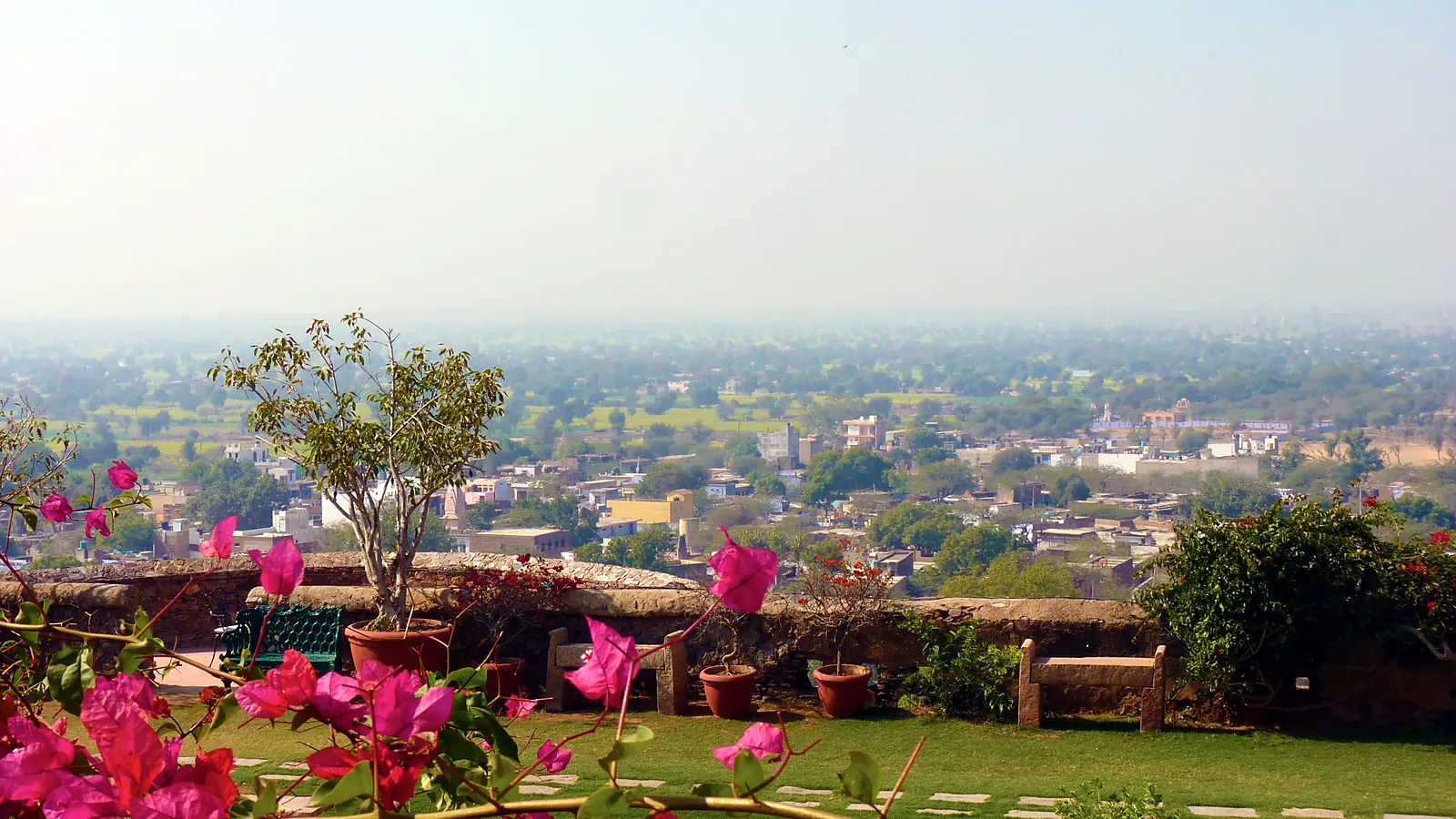
But the real reason to come to Nahargarh is the sunset. From its ramparts, the whole of Jaipur spreads out below, and as the sun sets, the city glows pink and gold, then lights up as night falls. It is the best sunset in Jaipur. Arrive at least an hour before sunset, as the road up can get congested on weekends.
Hawa Mahal
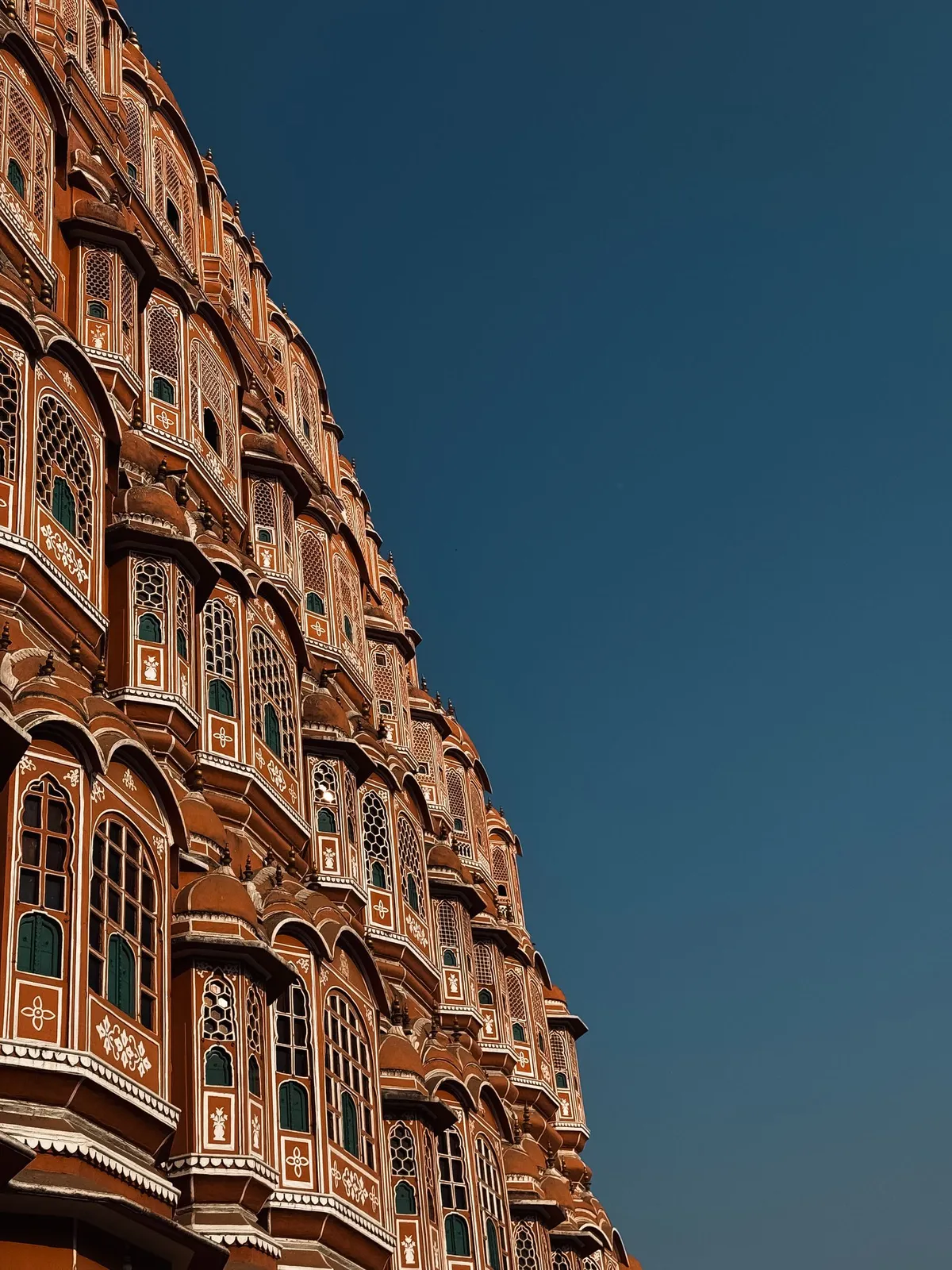
The Hawa Mahal, or Palace of Winds, built in 1799 by Maharaja Sawai Pratap Singh, is Jaipur's most photographed building. Its honeycomb facade of pink sandstone has hundreds of small latticed windows (jharokhas) that allowed the royal women to watch street processions without being seen, while the lattice work kept the air circulating. For the best view, visit early in the morning when sunlight falls on the facade, or look at it from one of the rooftop cafés opposite. You can also go inside and climb to the upper levels for views over the city.
City Palace
In the heart of the old city, the City Palace is still partly the residence of the former royal family. Its museums display royal costumes, textiles, weapons and paintings, and its courtyards and gates, particularly the four beautifully painted gateways of the Pritam Niwas Chowk representing the four seasons, are stunning. Look for the two enormous silver urns in the Diwan-i-Khas, said to be among the largest silver objects in the world, made to carry Ganga water on a royal journey to England.
Jantar Mantar
Next to the City Palace, Jantar Mantar is a collection of astronomical instruments built by Sawai Jai Singh II in the early 18th century and a UNESCO World Heritage Site. The most famous is the Samrat Yantra, a giant sundial that can tell the time to within a couple of seconds. The instruments look like modern sculptures, and a guide helps enormously in understanding how they were used to track stars and planets.
Other sights
- Albert Hall Museum, Rajasthan's oldest museum, in a grand Indo-Saracenic building, beautifully lit at night.
- Jal Mahal, a palace in the middle of Man Sagar Lake, best seen from the lakeside promenade at sunset.
- Patrika Gate, a colourful modern gateway at Jawahar Circle, popular for photographs.
- Galta Ji, the "monkey temple", a complex of temples and sacred tanks in a gorge on the edge of the city.
- Birla Mandir, a white marble temple lit beautifully in the evening.
A morning walk through the old city
The best way to feel Jaipur's old city is on foot, early in the morning, before the traffic and heat take over. Start around 7 a.m. near the Hawa Mahal, when the first sunlight turns its facade glowing pink and the street in front is almost empty. Have a cup of chai and a hot pyaaz kachori from one of the old shops nearby.
Walk into the lanes behind the main bazaars. You will pass temples where morning prayers are underway, flower sellers stringing marigold garlands, milk being delivered by bicycle and old havelis with carved doorways and faded frescoes. Look up at the balconies and the ornate facades above the shopfronts, many of which have not changed in a century. Continue towards the Tripolia Gate and the Ishwar Lat (Swargasuli), a tall minaret built in the 18th century, which you can climb for a view over the old city's rooftops. By the time the shops start opening around 10 or 11 a.m., head to the City Palace and Jantar Mantar, which are just a short walk away.
Several local organisations offer guided heritage walks of the old city, which are an excellent way to hear the stories behind the buildings, the trades and the communities that have lived here for generations.
Block printing in Sanganer and Bagru
Just outside Jaipur, the towns of Sanganer and Bagru are famous for their centuries-old tradition of hand block printing on textiles. In Sanganer, printers use fine, intricate floral designs on white and pastel backgrounds, while Bagru is known for its earthy, natural dyes and bold motifs, including prints using a resist technique with clay. Visiting a workshop is fascinating: you watch artisans carve wooden blocks by hand, mix natural dyes from plants and minerals, and print long lengths of fabric with astonishing speed and precision. Many workshops let you try printing yourself, and buying directly from the workshops supports the artisans. Sanganer is also known for its handmade paper and for an old Jain temple. Both towns make an easy half-day trip from Jaipur.
Where to stay in Jaipur
For the full royal experience, stay in a heritage haveli in or near the old city, many of them former homes of nobles and merchants, with painted courtyards, rooftop terraces and personal service at reasonable prices. Palace hotels, some still owned by the former royal family, offer unforgettable grandeur at a premium. Modern hotels near MI Road and C-Scheme are convenient for restaurants and shopping, while resorts on the Amer road put you close to the forts for an early start. Whichever you choose, a rooftop with a view of the old city at sunset is worth asking for.
Shopping in Jaipur
Jaipur is one of the best shopping cities in India. The old city's bazaars are organised by trade, a legacy of its planned layout.
- Johari Bazaar for jewellery, gemstones and traditional silver.
- Bapu Bazaar and Nehru Bazaar for textiles, mojari shoes and handicrafts.
- Tripolia Bazaar for lac bangles, brassware and household goods.
- Block-printed textiles from nearby Sanganer and Bagru, famous for their hand-printing traditions.
- Blue pottery, a Jaipur speciality with Persian origins.
- Bandhani (tie-dye) and leheriya (wave-patterned) fabrics.
Bargain politely in the bazaars, and be cautious of touts and guides who steer you to shops on commission, particularly for gems. Buy expensive jewellery and gems only from reputable, certified dealers.
What to eat in Jaipur
Jaipur is a food lover's city, and much of its cuisine is vegetarian.
- Pyaaz kachori, a flaky fried pastry stuffed with spiced onions, the city's favourite breakfast.
- Dal baati churma, the signature dish of Rajasthan.
- Gatte ki sabzi and ker sangri, classic Rajasthani vegetable dishes.
- Laal maas, a fiery mutton curry, for non-vegetarians.
- Lassi served in clay cups, thick and creamy.
- Ghevar, a disc of fried batter soaked in syrup, especially during Teej and the monsoon.
- Mishri mawa and other sweets from the old city's famous sweet shops.
- A royal Rajasthani thali, the best way to taste everything at once.
For an evening out, rooftop restaurants in the old city and near the Hawa Mahal offer views of the lit-up monuments. Jain food is widely available.
Music, puppets and the living culture of Rajasthan
Rajasthan's forts and palaces are only half the story. The state has some of the richest folk traditions in India, and a weekend here is the perfect chance to experience them. Evening performances at Neemrana and at many Jaipur hotels and restaurants feature folk musicians from communities such as the Manganiyars and Langas, whose songs have been passed down orally for generations, accompanied by the kamaicha, sarangi, dholak and khartal. Dancers may perform ghoomar, a graceful whirling dance in swirling skirts, or kalbeliya, the snake-like dance of a nomadic community, which is recognised by UNESCO as intangible cultural heritage.
Kathputli, the traditional string puppetry of Rajasthan, tells stories of kings, heroes and lovers with brightly dressed wooden puppets, and short shows are often staged for children and visitors. In Jaipur, cultural centres such as Jawahar Kala Kendra, designed by the architect Charles Correa, host exhibitions, music and theatre, while the village-themed cultural complexes on the city's outskirts offer folk performances, crafts and Rajasthani food in a single evening.
Travel responsibly
Rajasthan's monuments are fragile, and its cities are under pressure from crowds. Do not touch frescoes or mirror work, never scratch names on walls, and follow photography rules inside palaces and museums. Choose licensed guides and ethical activities, avoid rides on animals that appear mistreated, carry a refillable water bottle, and buy crafts directly from artisans and cooperatives whenever possible. Small choices help keep these extraordinary places alive for the next generation of travellers.
Best time to visit
October to March is the best time for both Neemrana and Jaipur. Days are warm and sunny, and evenings are pleasant, sometimes cold in December and January, when temperatures can drop to around 5 degrees Celsius at night. This is peak season, so book early for weekends.
April to June is very hot, with temperatures often above 40 degrees. If you visit, plan sightseeing for early mornings and evenings and spend afternoons indoors or in the pool.
July to September brings the monsoon, which cools things down and turns the Aravallis green. It is a pleasant, quieter time to visit, though humid.
Festivals: Jaipur is famous for the Jaipur Literature Festival in January, Makar Sankranti kite flying on 14 January, when the skies fill with thousands of kites, Teej in the monsoon and Diwali, when the whole city and its bazaars are illuminated.
How to get there
- Delhi to Neemrana: about 120 kilometres on the Delhi–Jaipur highway (NH48), roughly two and a half to three hours depending on traffic through Gurugram.
- Neemrana to Jaipur: about 150 kilometres, around three hours on the same highway.
- Delhi to Jaipur directly: about 280 kilometres. The newer expressway has reduced driving time significantly. There are also fast trains, including Shatabdi and Vande Bharat services, taking around four to four and a half hours, and short flights.
Itineraries
Two-day weekend: Neemrana and Jaipur
Day 1: Leave Delhi early, reaching Neemrana by mid-morning. Check in at the fort, explore its terraces and courtyards, and do the zip-line tour. In the afternoon, visit the stepwell in Neemrana town. Watch sunset from the fort's ramparts and enjoy dinner and a cultural performance.
Day 2: Leave after an early breakfast and drive to Jaipur, arriving by late morning. Visit Amer Fort, then the Hawa Mahal, City Palace and Jantar Mantar in the afternoon. End with sunset at Nahargarh and dinner in the city. Take the late train back to Delhi, or stay overnight and drive back the next morning.
Three-day weekend
Day 1: Neemrana, as above.
Day 2: Drive to Jaipur. Afternoon at the City Palace, Jantar Mantar and Hawa Mahal, then the bazaars. Sunset at Nahargarh. Stay in a heritage haveli in Jaipur.
Day 3: Early morning at Amer Fort and Jaigarh, a stop at Jal Mahal, then a pyaaz kachori and lassi before driving back to Delhi.
Who this weekend suits
Couples will love a night in a fort-palace suite, the zip line for a shared adrenaline rush, a candlelit dinner on the ramparts, and a sunset at Nahargarh. In Jaipur, a heritage haveli with a rooftop view adds to the romance.
Families with children find forts endlessly exciting, especially the maze of corridors at Neemrana, the cannons at Jaigarh and the giant sundial at Jantar Mantar. Keep days short, build in pool time and plan meals around children's hours. Older children usually love the zip line.
Older parents will enjoy the palaces, museums and bazaars, but plan around the steps. At Neemrana, request a room on a lower level; at Amer, take a jeep up to the entrance rather than walking; and consider a car with a driver for the whole trip so that everyone can rest between sights.
Groups of friends and corporate teams can make the most of Neemrana's zip lines and cultural evenings, then enjoy Jaipur's rooftop restaurants and bazaars. Heritage properties around Neemrana and Alwar also host group dinners and offsites.
How much does the weekend cost?
- Neemrana Fort Palace: rooms typically range from around ₹8,000 to ₹25,000 or more per night, often with meals, depending on the room and season.
- Zip-lining: a few thousand rupees per person.
- Jaipur heritage haveli: ₹4,000 to ₹15,000 per night; luxury palace hotels cost much more.
- Car and driver for the trip: ₹8,000 to ₹14,000 for two to three days.
- Entry fees and guides in Jaipur: ₹2,000 to ₹4,000 for two. A composite ticket covers several monuments.
- Food: ₹2,000 to ₹4,000 per day for two.
Our Neemrana Fort Palace Royal Heritage Weekend starts at ₹6,499 per person for two days and one night, and our Jaipur Royal Haveli & Nahargarh Sunset Weekend starts at ₹5,999 per person for two days and one night. Together, they make a perfect long weekend.
Practical tips
- Start early. Beat the Gurugram traffic by leaving Delhi before 7 a.m., and reach Amer Fort by opening time.
- Buy a composite ticket in Jaipur, which covers entry to several major monuments and saves money and queuing.
- Use licensed guides. Unlicensed touts often lead to commission-driven shopping stops.
- Dress comfortably and modestly. Wear good walking shoes; forts involve a lot of walking and steps.
- Carry water, sunscreen and a hat, even in winter.
- Bargain politely in the bazaars, and buy gems only from certified dealers.
- Respect animals. Consider walking or taking a jeep at Amer instead of an elephant ride.
Mistakes to avoid
Reaching Amer Fort at midday. It is hot and crowded. Go at opening time.
Trying to see all of Jaipur in half a day. Choose the highlights and save the rest for another trip.
Missing the Nahargarh sunset. It is the best view in the city.
Booking a Neemrana room without checking the level. If stairs are difficult, ask for a lower-level room.
Leaving Delhi late on a Saturday. Highway traffic through Gurugram can add hours.
Plan your royal weekend with The Vacation Code
A royal Rajasthan weekend is easy to plan and hard to forget. Our Neemrana Fort Palace Royal Heritage Weekend and Jaipur Royal Haveli & Nahargarh Sunset Weekend take care of the heritage stays, transport, guides and meals, and we can combine them into one seamless long weekend.
Love heritage? Read our Udaipur romantic weekend guide for the City of Lakes, or browse all our weekend getaways.
Frequently asked questions
How far is Neemrana from Delhi?
Neemrana is about 120 kilometres from Delhi on the Delhi–Jaipur highway, a drive of roughly two and a half to three hours depending on traffic.
Can we combine Neemrana and Jaipur in one weekend?
Yes. Spend the first day and night at Neemrana, then drive about three hours to Jaipur on the second day for Amer Fort, the Hawa Mahal, City Palace and a Nahargarh sunset. A three-day weekend is more relaxed.
Is zip-lining at Neemrana safe?
The zip-line tour at Neemrana is run with safety equipment and trained instructors. There are age, weight and health requirements, so check them when booking.
What is the best time to visit Jaipur and Neemrana?
October to March offers the most pleasant weather. April to June is very hot, and the monsoon from July to September is green and quieter.
Where is the best sunset in Jaipur?
Nahargarh Fort, on the ridge above the city, offers the best sunset view over Jaipur. Arrive at least an hour early on weekends.
Is Bhangarh Fort really haunted?
Bhangarh is famous for its legends, but it is a protected archaeological site of great historical interest. Visitors are not allowed inside between sunset and sunrise, and the ruins are best explored in daylight.