- Lonavala and Khandala: what is the difference?
- Why it rains so much here
- When to visit
- How to reach Lonavala
- Viewpoints over the valley
- Tiger's Point (Tiger's Leap)
- Lion's Point
- Rajmachi Point
- Duke's Nose
- Waterfalls, dams and lakes
- Bhushi Dam
- Kune Falls
- Lonavala Lake and Tungarli Lake
- Pawna Lake
- History: caves and forts
- Karla Caves
- Bhaja Caves
- Lohagad Fort
- Visapur Fort
- Rajmachi
- The fireflies of Rajmachi
- The Bhor Ghat railway
- Beyond Lonavala: places nearby
- Other things to do
- Food: what to eat in Lonavala
- Where to stay
- A monsoon Saturday in Lonavala, hour by hour
- Lonavala for families, friends and couples
- A two-day Lonavala itinerary
- Day 1: Arrival, viewpoints and the ghat
- Day 2: Caves, forts and home
- How much does a Lonavala weekend cost?
- Staying safe in the monsoon
- Travelling responsibly
- What to pack
- Mistakes to avoid
- Monsoon nature: what to look for
- Photography in the rain
- Lonavala, Matheran or Mahabaleshwar?
- Plan your Lonavala escape with The Vacation Code
- Frequently asked questions about Lonavala and Khandala
- What is the best time to visit Lonavala?
- How far is Lonavala from Mumbai and Pune?
- Is Bhushi Dam safe to visit?
- What are the best treks near Lonavala?
- What is Lonavala famous for?
- How many days are enough for Lonavala and Khandala?
Every Mumbaikar and Punekar knows the feeling. It has been raining for three days straight, the city is grey and flooded, and then someone in the family WhatsApp group posts a photo: green hills, clouds sitting on the road, a waterfall tumbling off a cliff, a plate of hot bhajiyas steaming in the rain. "Lonavala this weekend?" Within an hour, everyone is in.
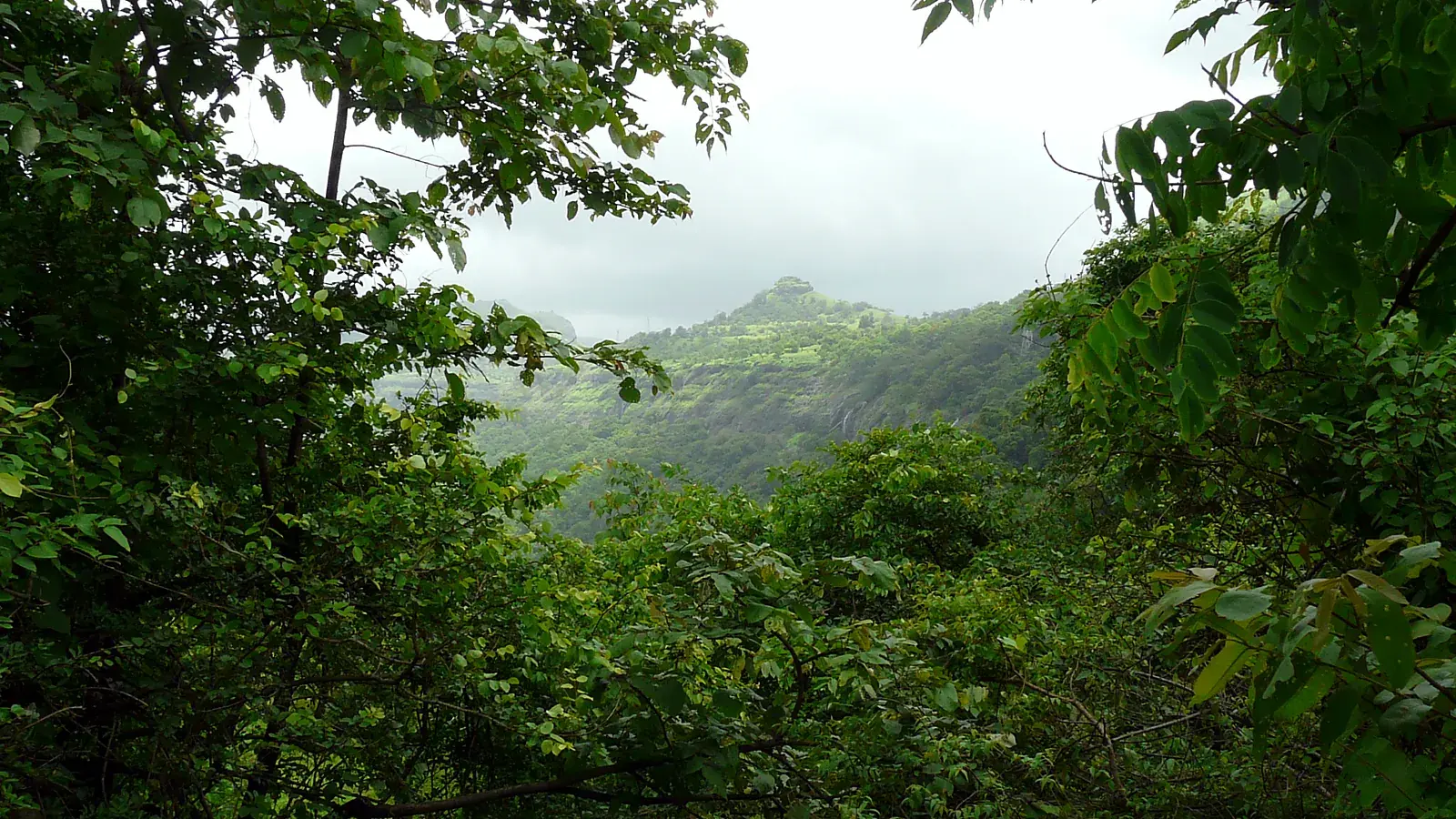
Lonavala and Khandala, the twin hill stations in the Sahyadri mountains between Mumbai and Pune, are the classic monsoon escape for western India. They have been popular getaways since the 19th century, when British officers and wealthy Mumbai families built bungalows here to escape the summer heat. Today they are a two-hour drive from Mumbai and an hour and a half from Pune, and in the monsoon they turn into a landscape of astonishing green, hundreds of waterfalls and clouds rolling through the valleys.
But Lonavala is more than just a monsoon spot. It has 2,000-year-old Buddhist caves, hill forts built by Maratha kings, some of the most popular treks in Maharashtra, lakeside camping and, of course, the famous chikki and fudge. This guide covers everything: when to go, what to see, how to stay safe around the monsoon waterfalls and dams, where to trek, where to stay and eat, and a relaxed two-day plan.
Lonavala and Khandala: what is the difference?
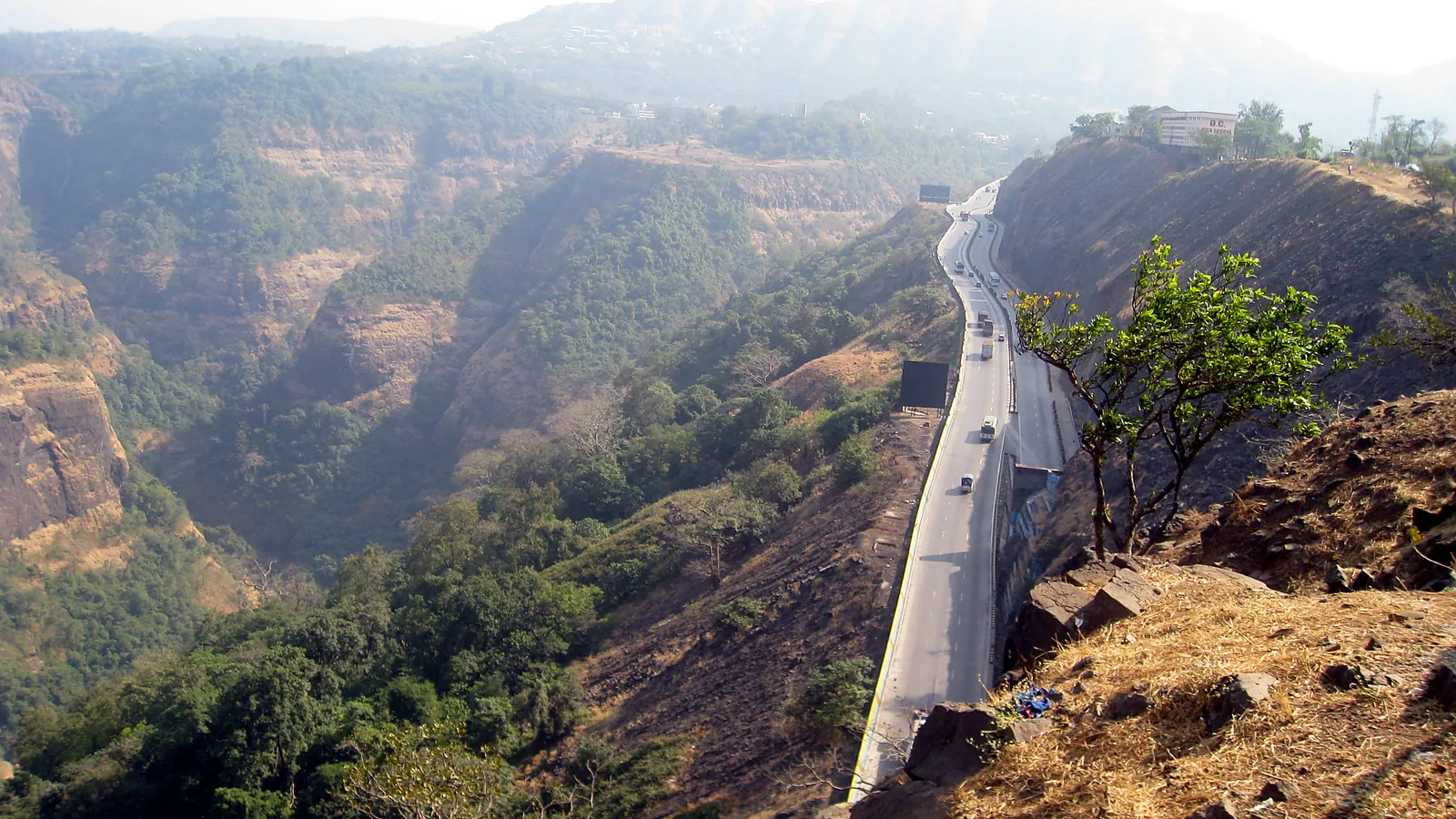
The two towns sit just a few kilometres apart on the old Mumbai–Pune highway at the top of the Bhor Ghat, the steep pass that climbs from the Konkan coast onto the Deccan plateau. Lonavala is the larger town, with most of the hotels, restaurants, shops and the railway station. Khandala, a little closer to Mumbai at the edge of the ghat, is smaller and quieter, with some of the best viewpoints over the valley. Most visitors treat them as one destination, and so will we.
Both sit at around 600 metres above sea level, which is not very high, but high enough to catch the monsoon clouds as they sweep in from the Arabian Sea. That is why they receive some of the heaviest rainfall in Maharashtra, and why the monsoon here is so dramatic.
Why it rains so much here
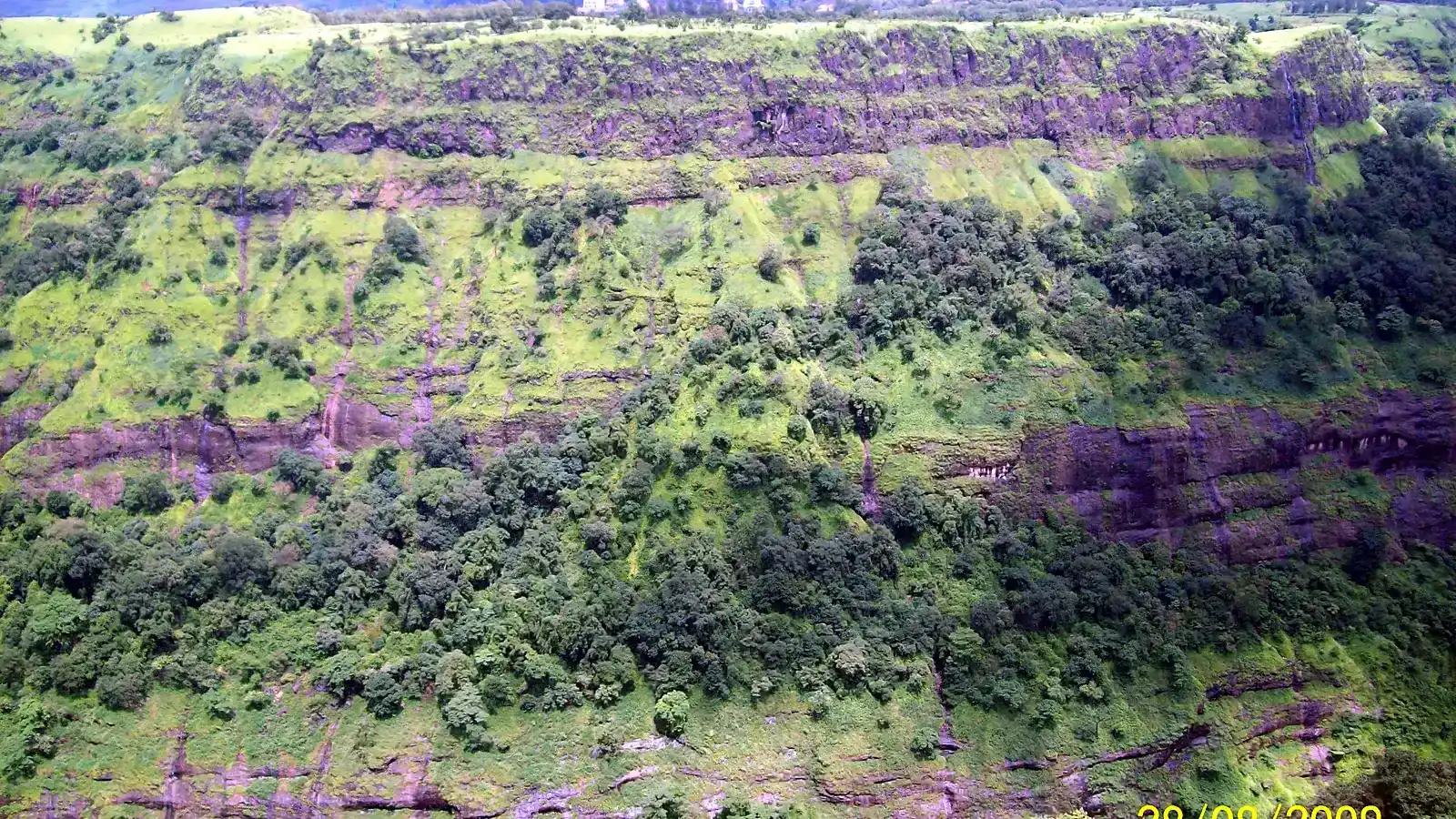
The Sahyadri range, also called the Western Ghats, runs parallel to India's west coast like a wall. Every June, the southwest monsoon winds arrive from the Arabian Sea heavily loaded with moisture. When they hit the steep western face of the Sahyadris, they are forced upwards, cool rapidly and release huge amounts of rain on the crest of the ghats. Lonavala and Khandala sit right on that crest, which is why they can receive several times more rain than Pune, just 65 kilometres further east on the drier Deccan plateau.
This geography explains everything that makes a Lonavala monsoon so special. The cliffs of the ghat turn into hundreds of temporary waterfalls. Clouds, pushed up the slopes, drift across roads and viewpoints so that you are literally walking inside them. And the thin soil on the basalt rock sprouts a carpet of grass, ferns, mosses and seasonal wildflowers almost overnight. It also explains the risks: streams can swell within minutes after a cloudburst upstream, and the heavy rain makes rocks and trails extremely slippery.
When to visit
The monsoon (June to September) is Lonavala's star season. The Sahyadri hills turn an unbelievable shade of green, waterfalls appear on every cliff, streams cross every road and the valleys are filled with drifting cloud. July and August are the wettest and most dramatic. Expect heavy rain, fog on the roads, and very large weekend crowds. Weekdays are far more pleasant.
Post-monsoon (October to November) is a lovely time. The hills are still green, the waterfalls are flowing, the skies clear up and the crowds thin out. It is excellent for treks and sightseeing.
Winter (December to February) brings cool, dry, sunny weather that is perfect for exploring caves and forts and for camping at Pawna Lake. The landscape turns golden-brown.
Summer (March to May) is warm, though cooler than Mumbai and Pune. It is a good time for water parks and resorts with pools. In late May and early June, just before the monsoon, the forests around Rajmachi light up with fireflies, a magical sight that draws campers from across the region.
How to reach Lonavala
- From Mumbai: about 85 kilometres, roughly two hours via the Mumbai–Pune Expressway, longer on weekends and in heavy rain.
- From Pune: about 65 kilometres, around one and a half hours.
- By train: Lonavala station is on the main Mumbai–Pune line, and many express trains stop here. Local trains also connect Lonavala with Pune. The train journey through the Bhor Ghat, with tunnels, bridges and waterfalls beside the tracks, is spectacular in the monsoon.
- By air: the nearest airports are Pune and Mumbai.
Tip: on monsoon weekends, traffic on the Expressway and the old highway near Lonavala can be very heavy. Leave early on Saturday morning, and return on Sunday afternoon rather than evening. Or take the train.
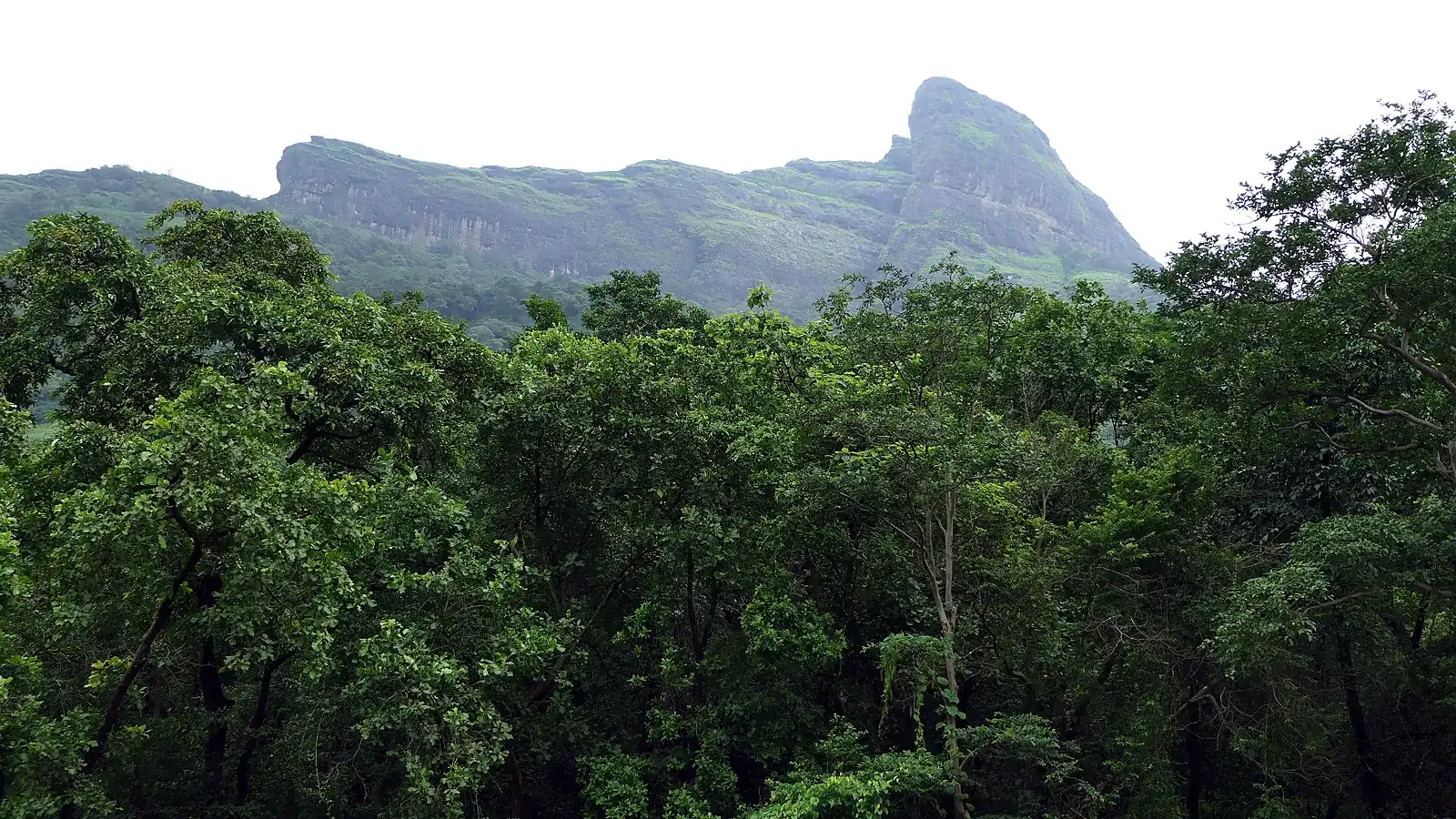
Viewpoints over the valley
Tiger's Point (Tiger's Leap)
The most famous viewpoint in Lonavala is a cliff with a sheer drop of hundreds of metres into the valley below. Its name comes from the shape of the rock, which is said to resemble a tiger leaping into the valley. In the monsoon, the view over waterfalls pouring off the surrounding cliffs and clouds drifting beneath you is extraordinary. Stalls at the top sell hot corn, bhajiyas and tea, which taste twice as good in the rain. The edge is dangerous, especially when wet and misty, so stay behind the railings and never climb on slippery rocks for photographs.
Lion's Point
A little further along the same road, Lion's Point offers similarly sweeping views over the valley and is a popular sunset spot. In the monsoon, clouds sometimes roll up the cliff and over the road, completely engulfing you in mist.
Rajmachi Point
In Khandala, Rajmachi Point looks out over the valley towards the twin forts of Rajmachi and the railway line winding through the ghat below, including trains emerging from tunnels.
Duke's Nose
Visible from the Khandala ghat, Duke's Nose is a rock pinnacle named after the Duke of Wellington, whose prominent nose it supposedly resembles. Locally it is called Nagphani, the cobra's hood. It is a popular spot for trekking and rappelling with adventure groups.
Waterfalls, dams and lakes
Bhushi Dam
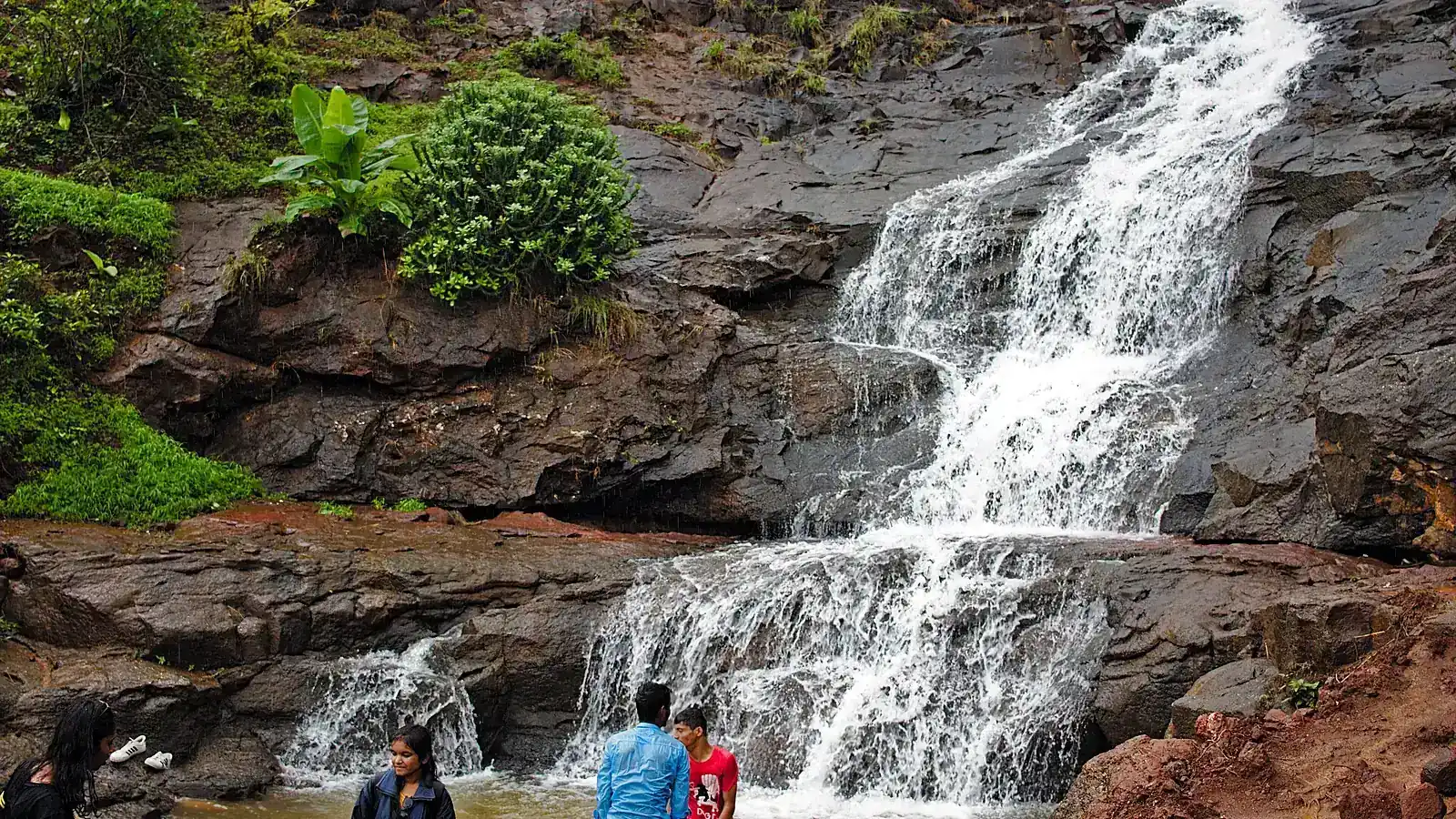
In the monsoon, water overflows the Bhushi Dam and cascades down a series of stone steps, where visitors sit and let the water rush over them. It is one of Lonavala's most famous monsoon sights and is enormously popular on weekends.
An important safety note: Bhushi Dam and the streams around it can become extremely dangerous very quickly after heavy rain upstream. There have been tragic drownings here and at other monsoon spots around Lonavala over the years. The authorities often restrict access or impose rules during peak monsoon. Always follow official instructions, never enter fast-flowing water, keep children close, and leave immediately if the water level rises.
Kune Falls
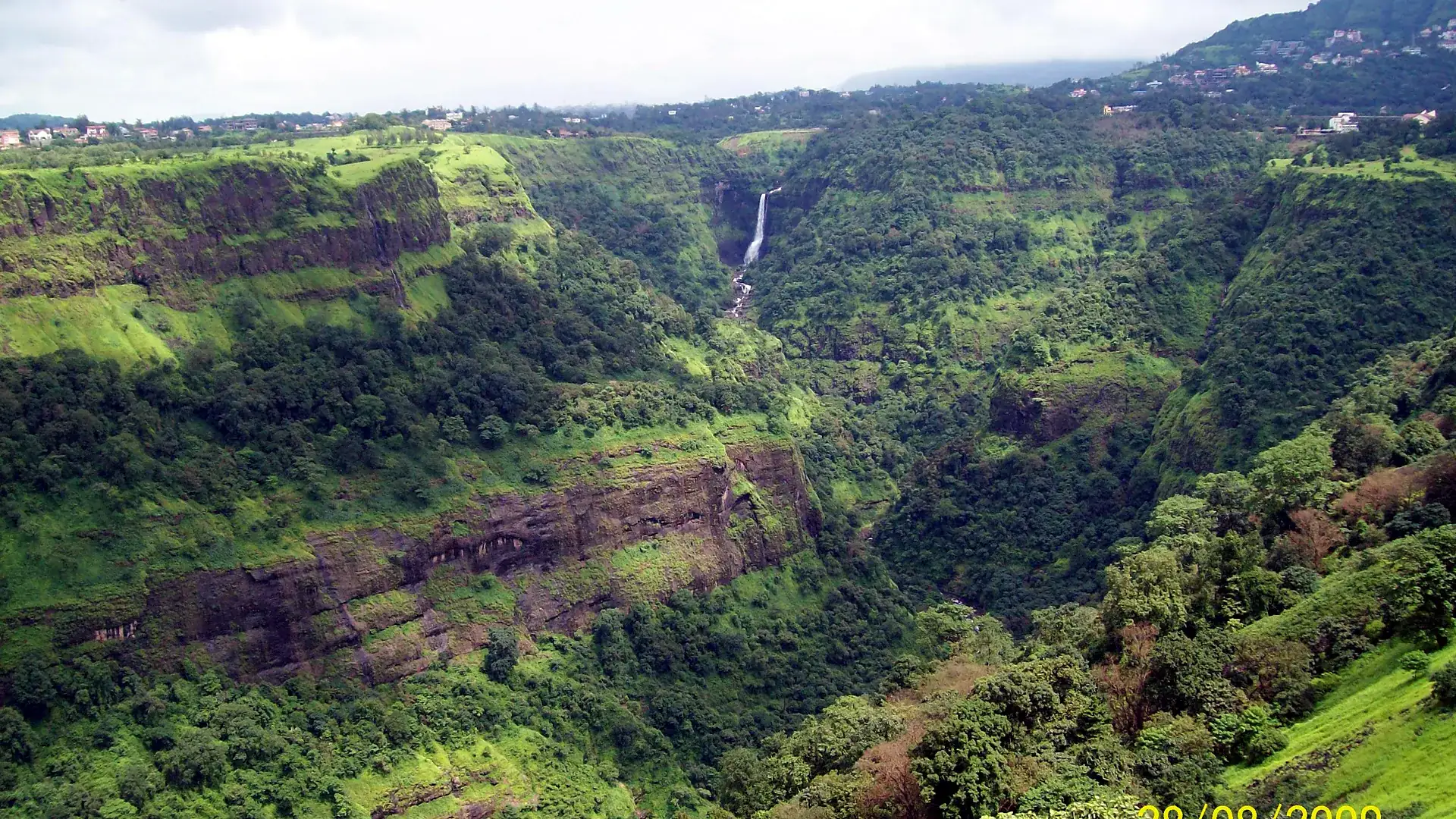
Near Khandala, Kune Falls is one of the tallest waterfalls in the region, plunging down the cliffs in several tiers. It is best viewed from a distance during the monsoon, when it is at its most powerful.
Lonavala Lake and Tungarli Lake
Tungarli Lake, on a hilltop near Lonavala, is a peaceful reservoir surrounded by hills, lovely at sunrise and sunset. Lonavala Lake fills up in the monsoon and is a quiet place for a walk.
Pawna Lake
About 20 kilometres from Lonavala, Pawna Lake is a large reservoir surrounded by hills and forts. It has become one of the most popular camping spots in Maharashtra, with lakeside tents, barbecues, bonfires and stargazing. It is best from October to May; in the peak monsoon, many camps close or scale down.
History: caves and forts
Karla Caves
About 10 kilometres from Lonavala, the Karla Caves are among the oldest and finest examples of Buddhist rock-cut architecture in India, dating back more than 2,000 years. The highlight is the great chaitya, a prayer hall carved from solid rock, with a vaulted ceiling supported by wooden ribs that have survived for centuries, rows of pillars topped with carved elephants and riders, and a stupa at the far end. It is one of the largest rock-cut chaityas in India. The climb up to the caves involves a few hundred steps. Near the caves, the Ekvira Devi Temple is an important shrine for the Koli fishing community of Mumbai.
Bhaja Caves
Across the valley from Karla, the Bhaja Caves are even older, dating to around the 2nd century BCE. The group includes a chaitya, several viharas (monasteries) and a remarkable cluster of stupas. In the monsoon, a waterfall pours off the cliff beside the caves. They are quieter than Karla and very atmospheric.
Lohagad Fort
Lohagad, meaning "iron fort", is a hill fort that was used by several dynasties and later became part of the Maratha empire under Chhatrapati Shivaji Maharaj. Its most distinctive feature is Vinchu Kata, the scorpion's tail, a long, narrow fortified spur stretching out from the fort. The climb from the base village of Lohagadwadi takes around 45 minutes to an hour on stone steps and is suitable for beginners. The views, especially in the monsoon, are spectacular.
Visapur Fort
Next to Lohagad, Visapur is a larger fort on a higher plateau. The monsoon trail up a rocky gully, where water flows down the path like a staircase waterfall, is one of the most popular monsoon treks near Pune and Mumbai.
Rajmachi
The twin forts of Shrivardhan and Manaranjan, together known as Rajmachi, sit on a ridge overlooking the Bhor Ghat. The trek from Lonavala, about 15 kilometres through forests and plateaus, is long but relatively gentle and can be done over a day or with an overnight stay in the village. Rajmachi is famous for its fireflies in late May and early June.
The fireflies of Rajmachi
For a few weeks each year, usually from late May into early June, just before the monsoon breaks, the forests around Rajmachi, Bhandardara and other parts of the Sahyadris come alive with fireflies. After dark, thousands of them light up the trees in synchronised flashes, so that entire trees seem to twinkle like Christmas decorations. It is one of the most magical natural spectacles in India.
Firefly camping trips from Lonavala take you to Rajmachi village, usually with an evening trek and an overnight stay in tents or a homestay. To protect the insects, which are sensitive to light, avoid torches and phone flashlights once you reach the viewing area, do not catch or disturb them, and stay on the paths. Ask your organiser about the current season, since the timing depends on the arrival of the pre-monsoon showers.
The Bhor Ghat railway
The railway that climbs the Bhor Ghat to Lonavala is one of the great engineering feats of 19th-century India. When the Great Indian Peninsula Railway set out to link Bombay with the Deccan, the steep wall of the ghat was the biggest obstacle. Building the line took years of labour, with thousands of workers carving tunnels through basalt and building viaducts across ravines. It opened in the 1860s and, for many years, trains had to reverse at a switchback station to climb the steepest section.
Today, the line remains one of the most scenic train journeys in the country, especially in the monsoon. Between Karjat and Lonavala, trains pass through dozens of tunnels and cross bridges beside waterfalls, with views down into the Konkan valleys. Heavier trains still need extra "banker" locomotives attached at the back to push them up the incline. If you travel by train, take a window seat on the side facing the valley and keep your camera ready.
Beyond Lonavala: places nearby
- Kamshet, about 20 kilometres towards Pune, is one of India's best-known paragliding sites. Tandem flights with certified pilots run from October to May, when the winds are right.
- Tikona Fort, near Pawna Lake, is a pyramid-shaped hill fort with a short, steep climb and superb views over the lake.
- Kondana Caves, near Rajmachi, are a small group of ancient Buddhist caves with a carved chaitya facade and a waterfall pouring in front of them in the monsoon.
- Tamhini Ghat, a little further south, is another stunning monsoon drive with waterfalls on both sides of the road.
- Andharban, the "dark forest", is a popular monsoon trek through dense forest along the edge of the ghat.
Other things to do
- Adventure parks: Lonavala has adventure parks with activities such as zip lines, ATVs, paintball and rope courses.
- Theme and water parks: a large theme park and water park near Khopoli, at the foot of the ghat, is popular with families.
- Wax museum: a small wax museum near Lonavala is a fun stop for children.
- Shopping: the main market in Lonavala is famous for chikki (brittle made with jaggery and nuts), fudge in dozens of flavours, and jellies. Dozens of shops sell them, and taking a box home is practically compulsory.
Food: what to eat in Lonavala
Lonavala in the rain is all about snacks. Along the roads and at every viewpoint, stalls sell hot bhajiyas (onion, potato and chilli fritters), vada pav, roasted corn rubbed with lime, salt and chilli, masala chai and maggi. Eating them under a plastic sheet while the rain pours down is one of the defining experiences of a monsoon weekend.
For proper meals, Lonavala has everything from Maharashtrian thalis, with dishes like misal pav, pithla bhakri and sabudana vada, to Punjabi dhabas, Gujarati restaurants, cafés and resort buffets. Vegetarian food is abundant. And do not leave without chikki and fudge.
Where to stay
Resorts and hotels: Lonavala and Khandala have a large number of hotels and resorts, many with pools, gardens and valley views. Resorts on the edges of town are quieter and better for families.
Villas and bungalows: renting a private villa with a pool is extremely popular for groups of friends and extended families. Many old bungalows have been converted into holiday homes.
Camping: at Pawna Lake, lakeside camps offer tents, meals and bonfires from October to May.
Book early for monsoon weekends, when prices rise and the best properties sell out.
A monsoon Saturday in Lonavala, hour by hour
To give you a feel for a perfect monsoon day, here is how one might unfold.
6.30 a.m. Leave Mumbai as the city is waking up. By the time you reach the Expressway, the rain is steady and the hills ahead are wrapped in cloud.
8.30 a.m. Climb the ghat. Waterfalls appear on the cliffs to your right, and you stop at a roadside stall in Khandala for vada pav and cutting chai while the rain drums on the tin roof.
10 a.m. Drive to Tiger's Point. The valley is invisible at first, then the clouds part for a few seconds to reveal a drop of hundreds of metres and a dozen waterfalls. Everyone gasps. Then the clouds close again.
12 noon. Check into your resort, change into dry clothes and eat a Maharashtrian thali while watching the rain from the verandah.
3 p.m. Drive to the Karla Caves. The climb is wet and slippery, but inside the great chaitya, it is dry, dim and silent, and the sound of the rain outside becomes a distant hum.
5.30 p.m. Stop at a viewpoint for roasted corn with lime and chilli. The light turns silver as the evening clouds roll in.
7 p.m. Visit the market for chikki and fudge, then head back to the resort for dinner, a board game and an early night, listening to the rain on the roof.
Lonavala for families, friends and couples
Families will enjoy the viewpoints, the wax museum, adventure parks and the nearby theme and water parks, plus an easy climb to the Karla Caves. Choose a resort with a pool, play area and indoor activities for rainy afternoons. With children, avoid dams and waterfalls with fast-flowing water entirely in peak monsoon.
Groups of friends tend to rent a private villa with a pool, trek to Lohagad or Visapur, camp at Pawna Lake or go paragliding at Kamshet. Book villas well in advance for monsoon weekends.
Couples can pick a resort with valley views, time their visit for a weekday in the monsoon, and spend unhurried hours at viewpoints, in cafés and on the verandah. A lakeside camp at Pawna under the stars is a lovely romantic option in winter.
Older parents will be most comfortable in a resort close to town, visiting the viewpoints by car and avoiding the steep climbs to forts. The Karla Caves involve several hundred steps, so take them slowly.
A two-day Lonavala itinerary
Day 1: Arrival, viewpoints and the ghat
Leave Mumbai or Pune early. Stop at Khandala for breakfast and the Rajmachi Point and Duke's Nose viewpoints. Check into your resort, have lunch, and rest. In the afternoon, drive to Tiger's Point and Lion's Point for the valley views and hot snacks at the stalls. In the monsoon, visit Bhushi Dam if it is open and safe. Spend the evening in the market buying chikki and fudge.
Day 2: Caves, forts and home
After breakfast, visit the Karla Caves and then the Bhaja Caves. Energetic travellers can instead climb Lohagad Fort for a morning trek. After lunch, drive back, stopping at a view point on the ghat. Leave by mid-afternoon to avoid the worst of the Sunday traffic.
With a third day, add a Pawna Lake camp or the Rajmachi trek.
How much does a Lonavala weekend cost?
- Hotels and resorts: ₹3,000 to ₹15,000 per night for a double room, higher on monsoon weekends.
- Private villas: ₹10,000 to ₹40,000 per night for a group, depending on size and facilities.
- Pawna Lake camping: around ₹1,500 to ₹3,000 per person, including meals.
- Car and driver from Mumbai or Pune: ₹4,000 to ₹7,000 for a two-day trip.
- Food and entry fees: ₹1,500 to ₹3,000 per day for two.
Our Lonavala & Khandala Fast Monsoon Escape starts at ₹3,999 per person for two days and one night, with a resort stay, meals and guided sightseeing of the viewpoints, waterfalls and caves.
Staying safe in the monsoon
The monsoon is Lonavala's most beautiful season, but it also brings real risks. Please take them seriously.
- Never enter fast-flowing water at dams, streams and waterfalls. Water levels can rise suddenly with rain upstream.
- Stay behind railings at viewpoints, especially in fog, and never climb on wet rocks for photographs.
- Follow official restrictions. Authorities sometimes close popular spots or restrict access during heavy rain.
- Drive carefully in fog and rain on the ghat roads, with headlights on and at low speed.
- Avoid alcohol near water and on treks.
- Trek with experienced groups in the monsoon, and check weather alerts before setting out.
Travelling responsibly
Lonavala's popularity comes at a cost. On busy monsoon weekends, viewpoints, dams and trails are left strewn with plastic bottles, wrappers and broken glass, and loud music and drunken behaviour at waterfalls ruin the experience for others and put lives at risk. Please be part of the solution: carry a bag for your rubbish, refill water bottles instead of buying new ones, keep music off in nature, respect restrictions on water spots, and support local stall owners and villagers whose livelihoods depend on these hills.
What to pack
- A good raincoat or poncho and an umbrella.
- Quick-dry clothes and an extra set of dry clothes in a plastic bag.
- Waterproof sandals or trekking shoes with good grip.
- A waterproof phone pouch.
- A light jacket for winter evenings.
- Insect repellent and a torch for camping.
Mistakes to avoid
Visiting only on monsoon weekends. Traffic and crowds can spoil the experience. Go on a weekday, or in October and November.
Ignoring safety at water spots. Every year, tragedies happen at monsoon waterfalls and dams. Respect the water.
Trying to do Lonavala as a day trip on a Sunday. You will spend most of it in traffic. Stay overnight.
Missing the caves. Karla and Bhaja are among the most remarkable ancient monuments near Mumbai and Pune.
Littering. Monsoon crowds leave behind huge amounts of plastic. Carry your waste back.
Monsoon nature: what to look for
The monsoon transforms the Sahyadris into a living landscape. Look closely on your walks and you will see things that exist only for a few weeks a year: tiny orchids clinging to rocks, carpets of seasonal wildflowers on the plateaus in August and September, bright red velvet mites crawling through the grass, crabs crossing wet roads, and frogs of astonishing colours calling from every pool. Birdlife is rich too, including the Malabar whistling thrush, whose song echoes through the forests at dawn, and hornbills in the denser woods. Walk slowly, look down as well as up, and leave everything where you find it.
Photography in the rain
- Protect your gear. Use a waterproof pouch for your phone and a rain cover or plastic bag for a camera. Carry a microfibre cloth for the lens.
- Use the clouds. Mist and moving clouds make moody, dramatic photographs. Wait a few minutes at a viewpoint and the scene will change completely.
- Frame the waterfalls. A slower shutter speed on a camera, or the long-exposure mode on some phones, turns waterfalls into silky ribbons.
- Look for trains. A train crossing a bridge in the ghat, with waterfalls behind it, is the classic Lonavala shot.
- Stay safe. No photograph is worth standing on a wet rock at the edge of a cliff.
Lonavala, Matheran or Mahabaleshwar?
These are the three classic hill-station weekends from Mumbai and Pune, and they are quite different. Lonavala and Khandala are the easiest to reach, busy and lively, with the most dramatic monsoon scenery, plus caves and forts. Matheran, closer to Mumbai, is Asia's only automobile-free hill station, reached by a toy train or on foot, with red-earth paths, horses and quiet forest walks; it is peaceful but closes some trails in the heavy monsoon. Mahabaleshwar and Panchgani, further south, are higher and cooler, famous for strawberries, lakes and sweeping viewpoints over the Krishna valley, and best from October to May. For a monsoon weekend, choose Lonavala. For a winter strawberry trip, read our Mahabaleshwar and Panchgani guide.
Plan your Lonavala escape with The Vacation Code
Lonavala is easy to reach and hard to beat in the monsoon, but a little planning makes it much better: a good resort, safe and open spots to visit, and a driver who knows the ghat. Our Lonavala & Khandala Fast Monsoon Escape takes care of all of it.
Looking for more weekend escapes from Mumbai and Pune? Read our Mahabaleshwar and Panchgani guide and our Alibaug weekend guide, or browse all our weekend getaways.
Frequently asked questions about Lonavala and Khandala
What is the best time to visit Lonavala?
The monsoon, from June to September, is the most beautiful time, with waterfalls and green hills. October and November are pleasant and less crowded. Winter is ideal for caves, forts and camping.
How far is Lonavala from Mumbai and Pune?
Lonavala is about 85 kilometres from Mumbai, roughly two hours by road, and about 65 kilometres from Pune, around one and a half hours.
Is Bhushi Dam safe to visit?
It can be visited safely when conditions allow, but water levels can rise suddenly in heavy rain. Follow official instructions, stay out of fast-flowing water and leave if levels rise. Access is sometimes restricted in peak monsoon.
What are the best treks near Lonavala?
Lohagad is ideal for beginners, Visapur is a popular monsoon trek, and Rajmachi offers a longer forest trek with fireflies in late May and early June.
What is Lonavala famous for?
Lonavala is famous for its monsoon landscapes and waterfalls, viewpoints like Tiger's Point, the ancient Karla and Bhaja caves, hill forts and its chikki and fudge.
How many days are enough for Lonavala and Khandala?
Two days are enough to see the main viewpoints, waterfalls, caves and a fort. Add a day for Pawna Lake camping or the Rajmachi trek.