📌 In this guide18 sections
- Best time for a Meghalaya trip
- How to reach Meghalaya
- A 6-day Meghalaya trip itinerary
- Caving in Meghalaya
- Festivals of Meghalaya
- Meghalaya with children and older parents
- Understanding Khasi culture
- Beyond Shillong and Sohra: the Garo Hills
- Meghalaya in the monsoon
- Getting around Meghalaya
- Where to stay
- Food in Meghalaya
- How much does a Meghalaya trip cost?
- What to pack
- Practical tips
- Mistakes to avoid
- Plan your Meghalaya trip with The Vacation Code
- Frequently asked questions
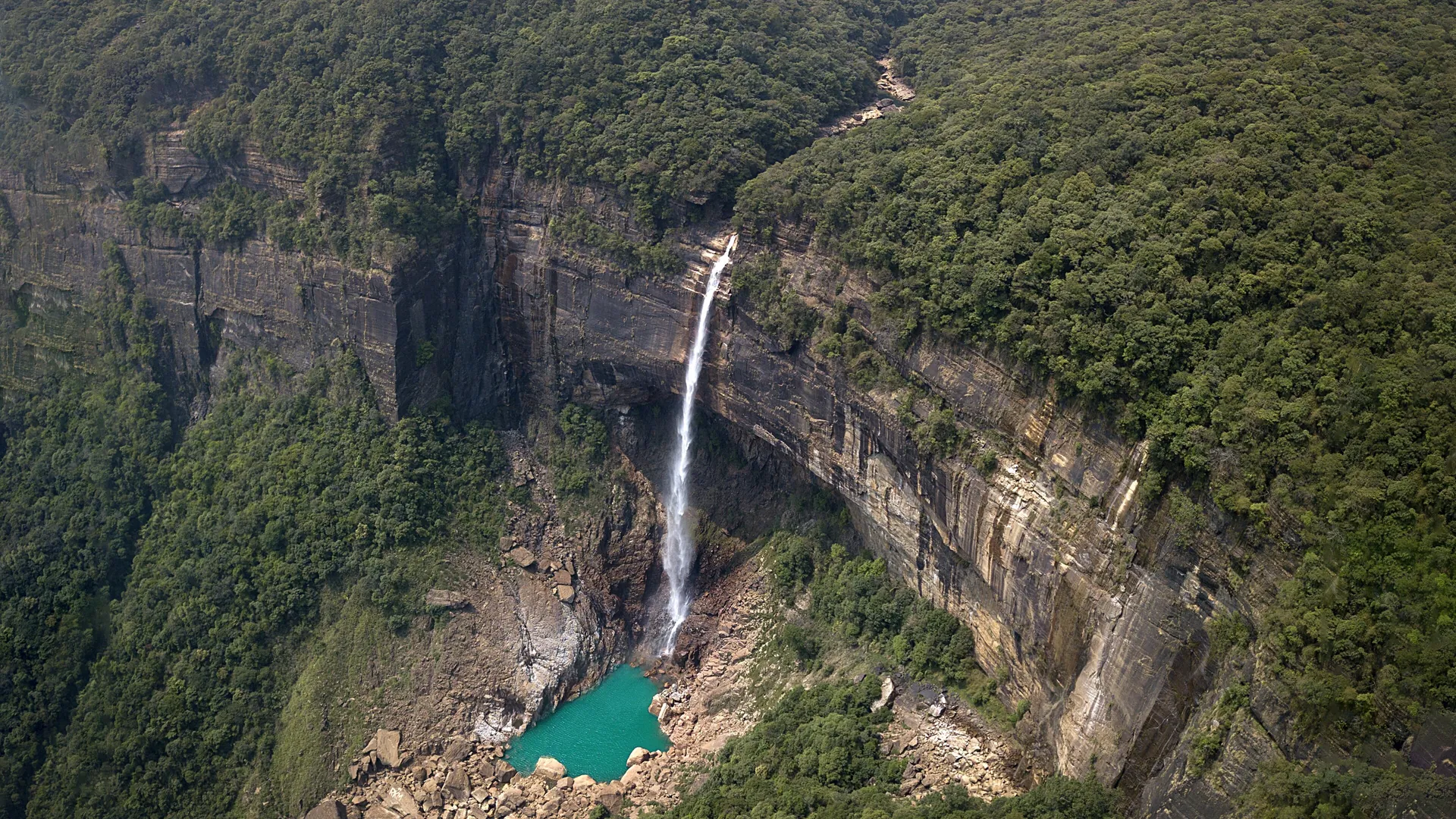
A Meghalaya trip starts with the sound of water. You stand at the viewing point at Nohkalikai as the clouds part, and a single white ribbon of water drops more than 300 metres off a sheer green cliff into a turquoise pool far below. Mist rises from the gorge, the wind carries spray onto your face, and the clouds close again as suddenly as they opened. In Meghalaya, "the abode of clouds", the landscape seems to breathe with the weather.
Meghalaya, in India's northeast, is one of the wettest places on earth: Cherrapunji and Mawsynram hold records for the highest rainfall in the world. That rain has carved a landscape of plunging waterfalls, deep caves, gorges and emerald forests, and the Khasi and Jaintia people have lived with it ingeniously for centuries, growing living bridges from the roots of rubber fig trees. Add the colonial hill town of Shillong, the crystal-clear Umngot River and villages famous for their cleanliness, and you have one of India's most beautiful and underrated destinations.
This guide gives you a 6-day Meghalaya trip itinerary, the best time to visit, how to get there, where to stay, what to eat, costs, packing and practical tips.
Best time for a Meghalaya trip
- October to April: pleasant, mostly dry weather, clear views and safer trails for trekking to root bridges. The best time for most travellers. Winter mornings in Shillong can be cold.
- June to September (monsoon): Meghalaya at its most dramatic, with thundering waterfalls and lush green hills, but heavy rain, mist that hides views, slippery trails and occasional landslides. The Umngot River at Dawki becomes muddy.
- March to May: warm and green, with some pre-monsoon showers.
How to reach Meghalaya
The nearest major airport and railway station is Guwahati in Assam, about 100 kilometres or three hours by road from Shillong. Shillong's small Umroi airport has limited flights. Shared taxis and private cabs connect Guwahati airport and railway station with Shillong throughout the day.
A 6-day Meghalaya trip itinerary
Day 1: Guwahati to Shillong
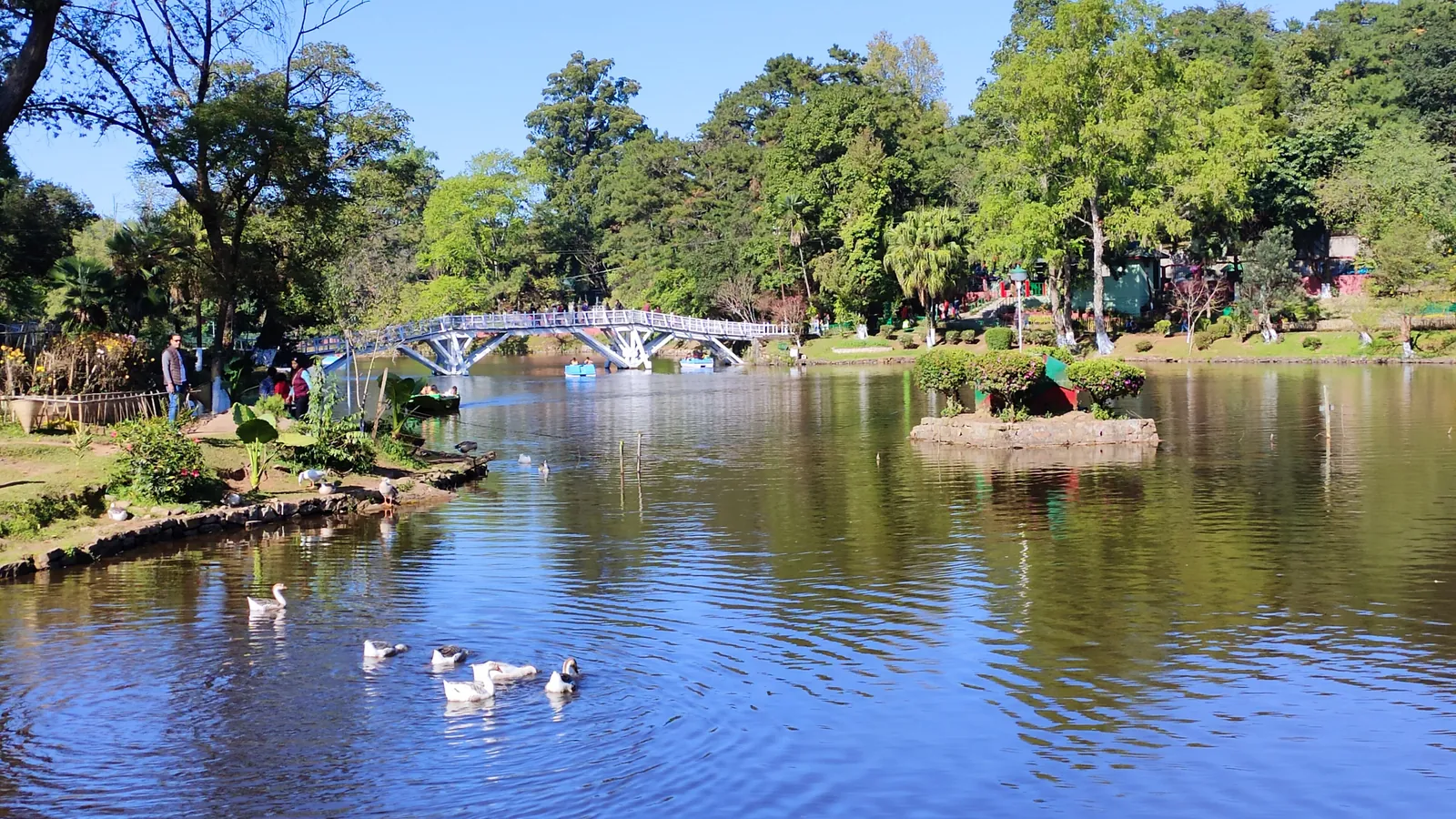
Drive from Guwahati to Shillong, stopping at Umiam Lake, a large reservoir surrounded by pine-covered hills. In Shillong, the "Scotland of the East", walk around Ward's Lake, with its wooden bridge and gardens, and explore the busy Police Bazaar. Shillong is famous for its music scene and cafes, so enjoy live music in the evening.
Day 2: Shillong to Cherrapunji (Sohra)
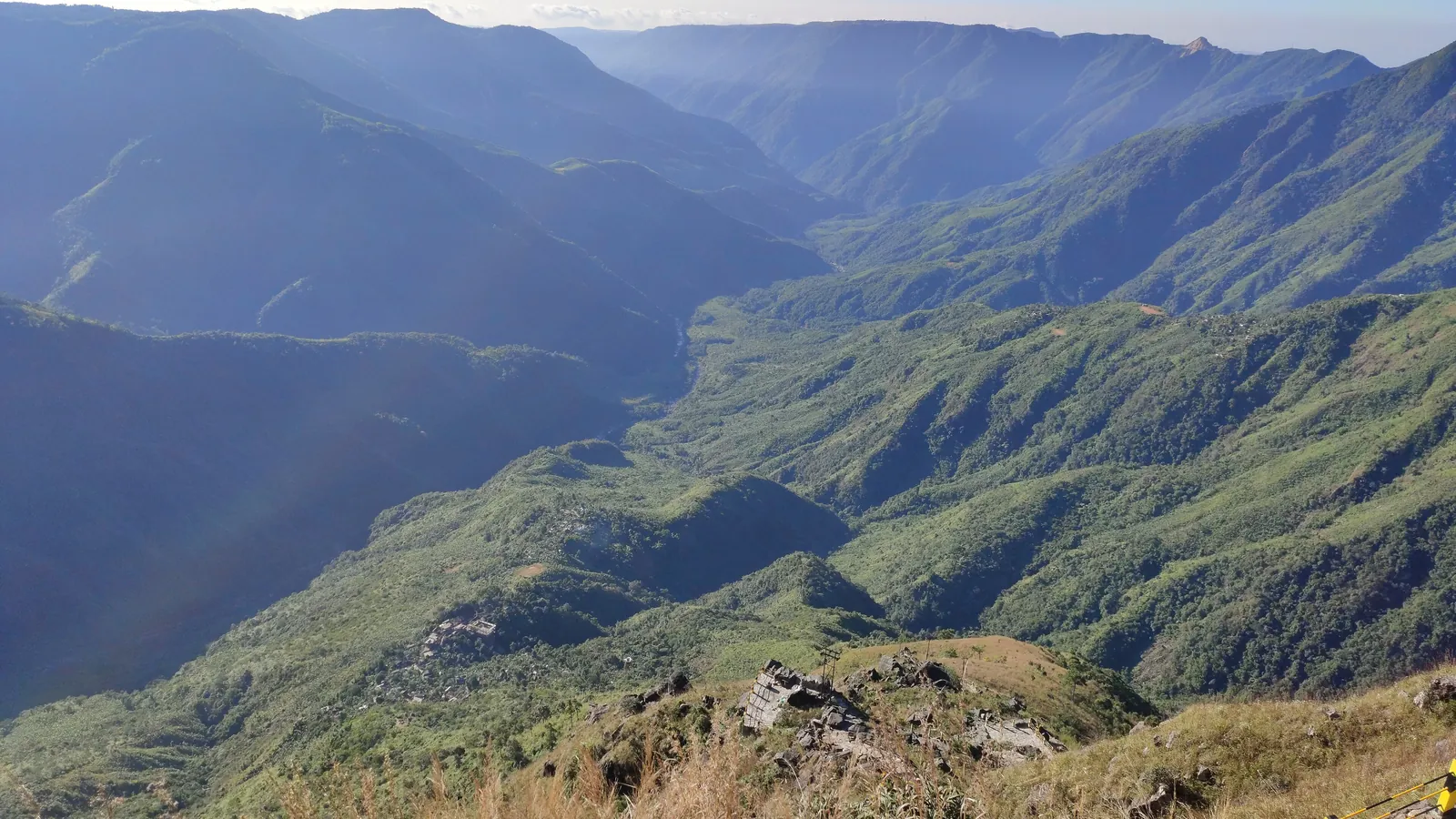
Drive about two hours to Sohra, better known as Cherrapunji, stopping at the Laitlum Canyons, where grassy ridges drop into vast gorges, and the Duwan Sing Syiem viewpoint.
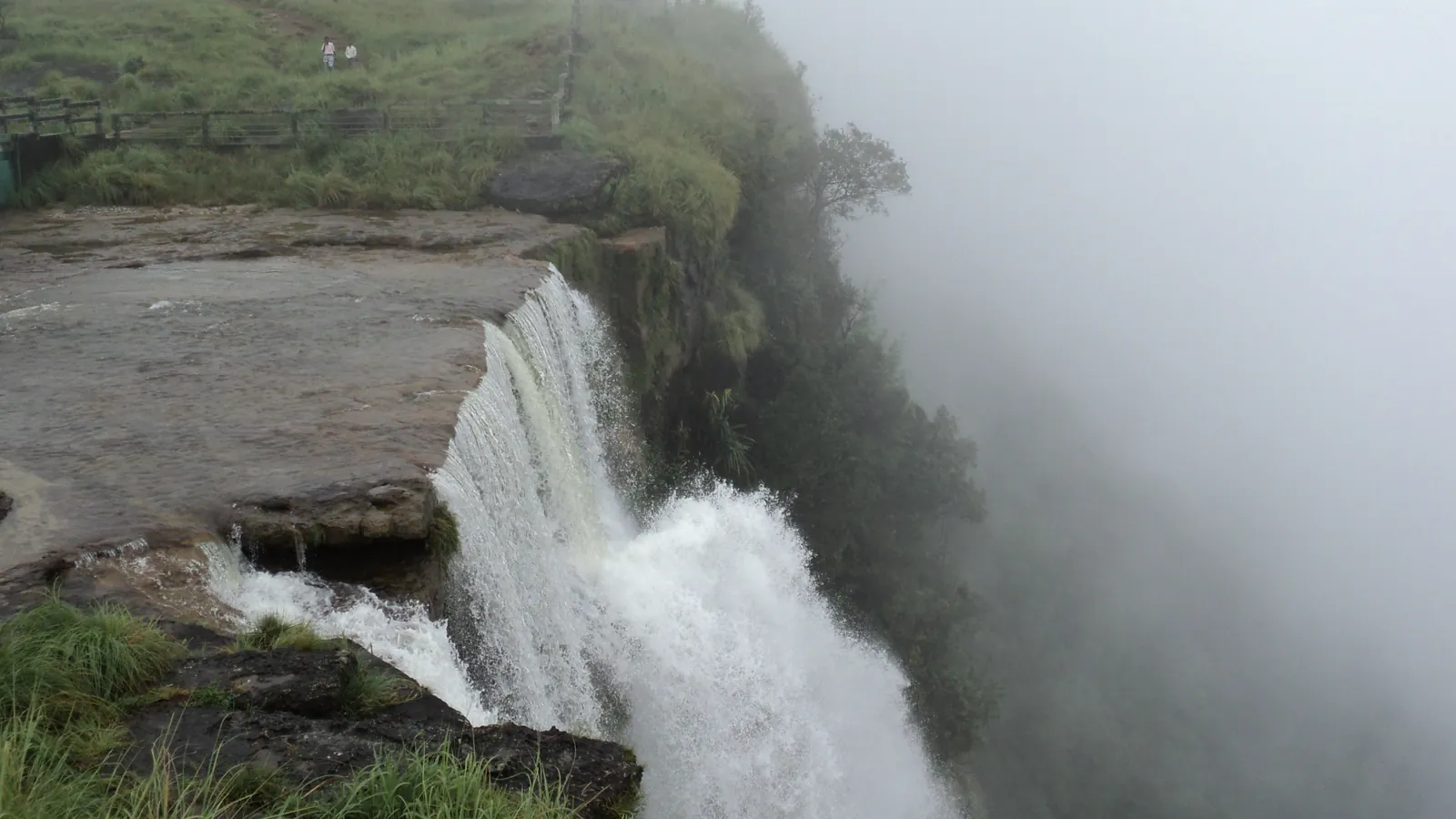
Visit Nohkalikai Falls, the tallest plunge waterfall in India, and the Seven Sisters Falls (Nohsngithiang), which pour in seven streams off the cliffs in the rainy season.
Explore Mawsmai Cave, a limestone cave with stalactites and stalagmites, and the Arwah Cave with its fossils.
Day 3: The double-decker living root bridge
Start early for the trek to Nongriat from Tyrna village, descending roughly 3,000 or more stone steps through forest to the famous double-decker living root bridge, two levels of intertwined roots of rubber fig trees spanning a stream. Continue to the Rainbow Falls and its blue pool if you have energy. The climb back up is steep and tiring, so stay overnight in a Nongriat homestay if you prefer a gentler pace. Carry water, snacks and good shoes.
Day 4: Mawlynnong and the Dawki river
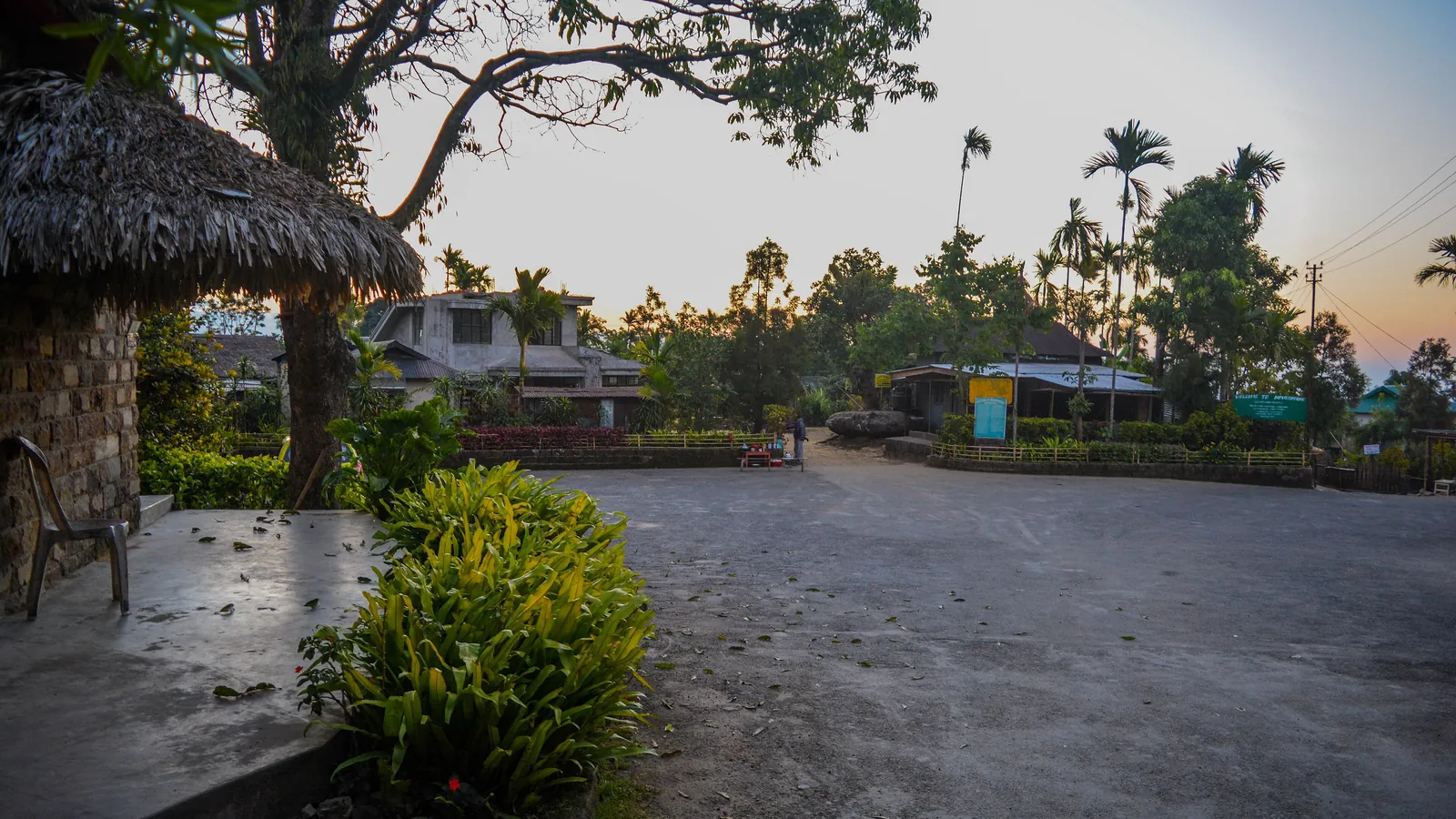
Drive to Mawlynnong, a Khasi village that has been called one of the cleanest villages in Asia, with bamboo dustbins, flower gardens and neat houses. Visit its living root bridge at Riwai and climb the bamboo Sky View tower for a glimpse of the plains of Bangladesh. Continue to Dawki on the Umngot River, where in the dry season the water is so clear that boats appear to float in mid-air. Take a boat ride at Shnongpdeng, go kayaking or snorkelling, and camp by the river.
Day 5: Krang Suri and the Jaintia Hills
Head into the Jaintia Hills to Krang Suri Falls, a stunning waterfall with a turquoise pool where you can swim in the dry season. Visit the monoliths at Nartiang, a field of standing stones erected by the Jaintia kings. Return to Shillong.
Day 6: Shillong and departure
Visit the Don Bosco Museum, one of the best museums of northeast Indian cultures, and Elephant Falls, then drive to Guwahati for your flight or train. With extra time in Guwahati, visit the Kamakhya Temple, one of the most important Shakti peeths in India.
Caving in Meghalaya
Meghalaya's limestone hills hide some of the longest and deepest caves in India. Krem Liat Prah in the Jaintia Hills is considered the longest known cave in the country, with tens of kilometres mapped by international expeditions, while Siju Cave in the Garo Hills is famous for its bats and river passages. Casual visitors can explore the lit, easy caves of Mawsmai and Arwah near Sohra, while adventure operators offer guided caving trips with helmets and lights for those who want to go deeper.
Festivals of Meghalaya
- Shad Suk Mynsiem (April): a Khasi thanksgiving dance festival in Shillong, with dancers in traditional finery.
- Behdienkhlam (July): a Jaintia festival to drive away disease and pray for a good harvest.
- Wangala (November): the Garo harvest festival, famous for its "100 drums" celebration.
- Cherry blossom season (November): Shillong's streets turn pink as cherry trees bloom.
Meghalaya with children and older parents
Families can enjoy Meghalaya by choosing sights with short walks, such as Nohkalikai viewpoint, Mawsmai Cave, Ward's Lake, Elephant Falls and the boat rides at Dawki, and skipping or splitting the long trek to Nongriat. Older travellers should avoid the steep root bridge treks and choose comfortable hotels in Shillong or Sohra with good road access.
Understanding Khasi culture
Meghalaya is home mainly to the Khasi, Jaintia and Garo peoples. The Khasi and Jaintia follow a matrilineal system: family names and property pass through the mother's line, and the youngest daughter traditionally inherits the family home and looks after her parents. Most people are Christian, with churches in every village, while traditional Khasi beliefs honour nature and sacred forests, such as the Mawphlang sacred grove near Shillong, where nothing may be removed. Visitors are warmly welcomed, and English is widely spoken.
Beyond Shillong and Sohra: the Garo Hills
Western Meghalaya's Garo Hills are far less visited, with dense forests, rivers and the Nokrek National Park, a UNESCO biosphere reserve home to wild citrus species, elephants and hoolock gibbons. Balpakram National Park, with its deep canyon, is surrounded by Garo legends. Tura is the main town. It is an adventurous extension for travellers who want to go off the beaten track.
Meghalaya in the monsoon
Many travellers deliberately visit in the monsoon to see Meghalaya at its most dramatic. Waterfalls that are thin trickles in winter become roaring torrents, clouds drift through the valleys at eye level, and every surface turns an intense green. If you go between June and September, pack serious rain gear, allow extra time for slow roads, choose viewpoints that are close to the road, and skip long treks on slippery steps. The rewards are unforgettable, but flexibility is essential.
Tip: hire the same driver for the whole trip. Local drivers know which viewpoints are clear at which time of day and can adjust the plan around the weather.
Also carry small change for village entry fees, parking and root bridge maintenance charges, which help local communities look after the sites.
Getting around Meghalaya
- Private taxi: the most convenient way to cover Sohra, Dawki and the Jaintia Hills; hire from Shillong or Guwahati for the whole trip.
- Self-drive: possible, but roads are winding, often misty and narrow.
- Shared taxis: cheap and run between main towns, but not to remote viewpoints.
- On foot: many of the best sights involve walking or trekking, so plan for stairs.
Where to stay
- Shillong: hotels, boutique stays and homestays around Police Bazaar and Laitumkhrah.
- Sohra: resorts and homestays with valley views; wake up above the clouds.
- Nongriat: simple homestays near the root bridge.
- Dawki and Shnongpdeng: riverside camps and homestays.
Food in Meghalaya
Khasi cuisine is simple and flavourful. Jadoh, rice cooked with spices, is usually made with meat, and tungrymbai is a fermented soybean dish. Vegetarians will find dal, rice, vegetables, momos, thukpa and North Indian food in Shillong's many restaurants, and homestays can prepare vegetarian meals on request. Shillong's cafe culture is excellent, with bakeries and live music venues. Try local tea and fresh pineapples and oranges in season.
How much does a Meghalaya trip cost?
- Flights to Guwahati: typically ₹5,000 to ₹12,000 one way from major cities.
- Private taxi: roughly ₹3,500 to ₹5,000 per day.
- Hotels: ₹2,000 to ₹6,000 per night; homestays ₹1,200 to ₹3,000.
- Entry fees and boat rides: small fees at most sights; Dawki boat rides cost a few hundred to a thousand rupees per boat.
- Food: ₹600 to ₹1,500 per person per day.
A 6-day Meghalaya trip typically costs ₹25,000 to ₹45,000 per person, including flights, taxi, hotels and food.
What to pack
- A good rain jacket or poncho and an umbrella, in any season.
- Sturdy trekking shoes with grip for wet steps.
- Light layers and a warm jacket for Shillong evenings, especially in winter.
- A waterproof bag for phones and cameras.
- Insect repellent.
- Cash; ATMs are scarce outside Shillong and Sohra.
Practical tips
- Start early; mist often rolls in by afternoon and hides waterfalls and viewpoints.
- Allow buffer time for weather and landslides in the monsoon.
- Respect local customs and ask before photographing people.
- Carry your rubbish back; villages take cleanliness very seriously.
- Check tourist registration requirements with the Meghalaya tourism department before travel, as rules can change.
Mistakes to avoid
Underestimating the Nongriat trek. Thousands of steps down means thousands back up.
Visiting Dawki in the monsoon expecting clear water. Go between November and April.
Packing too much into one day. Roads are slow and weather unpredictable.
Skipping rain gear in winter. Showers can come any time in the abode of clouds.
Plan your Meghalaya trip with The Vacation Code
A Meghalaya trip is a journey into waterfalls, caves, living bridges and warm hospitality. Our team can plan taxis, stays and treks. For more incredible places, read our list of unreal places in India and our Sikkim trip guide, explore our Kabini jungle safari, or browse all our tours.
Frequently asked questions
What is the best time for a Meghalaya trip?
October to April is the best time for pleasant weather, clear views and safer treks. The monsoon from June to September makes waterfalls spectacular but brings heavy rain and mist.
How many days are enough for Meghalaya?
Five to six days covers Shillong, Cherrapunji, the double-decker root bridge, Mawlynnong, Dawki and the Jaintia Hills.
How do I reach Meghalaya?
Fly or take a train to Guwahati in Assam, then drive about three hours to Shillong. Shillong's small airport has limited flights.
How difficult is the Nongriat root bridge trek?
It involves descending and climbing roughly 3,000 or more stone steps. It is manageable for reasonably fit people, and staying overnight in Nongriat makes it easier.
When is the Umngot River at Dawki clearest?
The Umngot River is clearest from about November to April, when boats appear to float. In the monsoon it becomes muddy.
How much does a Meghalaya trip cost?
A 6-day Meghalaya trip typically costs 25,000 to 45,000 rupees per person including flights, a private taxi, hotels and food.
Is vegetarian food available in Meghalaya?
Yes. Shillong has many restaurants serving vegetarian and North Indian food, and homestays can prepare vegetarian meals on request.