📌 In this guide15 sections
- 1. Roopkund, Uttarakhand: the lake of skeletons
- 2. Kuldhara, Rajasthan: the village that vanished in one night
- 3. Tanot Mata Temple, Rajasthan: the shells that did not explode
- 4. Bhangarh Fort, Rajasthan: the fort you cannot enter after dark
- 5. Lepakshi, Andhra Pradesh: the pillar that does not touch the ground
- 6. Lonar Crater, Maharashtra: the lake that turned pink overnight
- 7. Jatinga, Assam: where birds fall from the night sky
- 8. Karni Mata Temple, Rajasthan: the temple of 25,000 rats
- 9. Magnetic Hill, Ladakh: where cars roll uphill
- 10. Shani Shingnapur, Maharashtra: the village without doors
- 11. Kodinhi, Kerala: the village of twins
- Plan a road trip to the mysterious places in India
- How to visit mysterious places in India responsibly
- Why mysteries make the best journeys
- Frequently asked questions
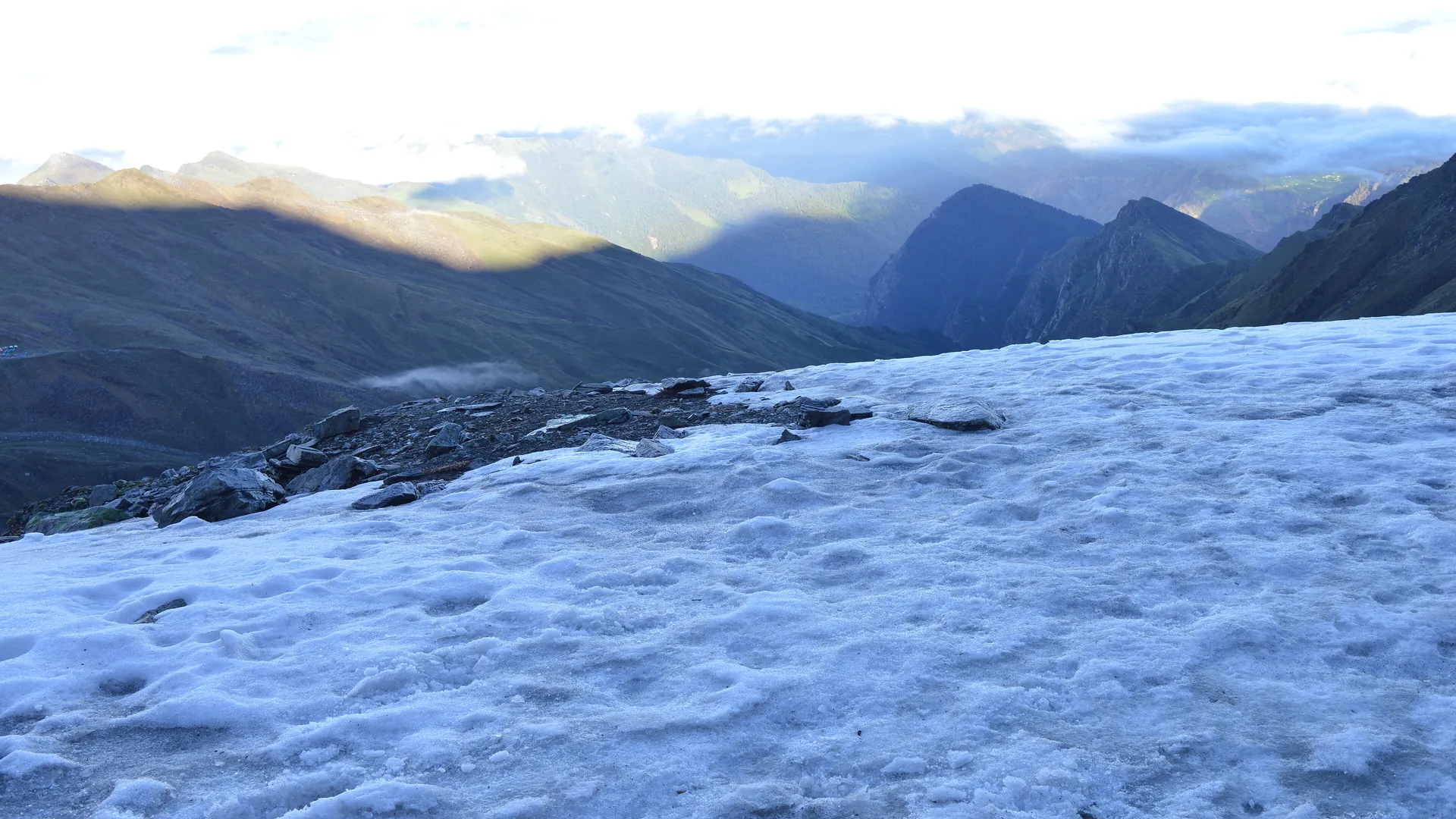
Some of the most mysterious places in India have puzzled travellers, priests and scientists for centuries. In 1942, a forest ranger patrolling the high Himalaya in Uttarakhand looked down into a small frozen lake at around 5,000 metres and saw something that made him stop. As the summer sun melted the ice, bones began to appear. Hundreds of them. Skulls, spines, leather sandals, the remains of people who had died together on a mountain where almost nobody lives.
For decades nobody could say who they were. Soldiers lost in a war? Pilgrims caught in a storm? A cursed royal procession? The answer, when modern science finally delivered it, turned out to be stranger than any of the legends.
That lake is just the beginning. Across India there are villages that emptied overnight, forts you are officially not allowed to enter after dark, temples ruled by rats, a hill where cars seem to roll uphill, and a village where twins are born far more often than anywhere else. Some of these puzzles have been solved. Some have only been half-explained. And a few still leave experts arguing.
Here are 11 of the most mysterious places in India, with the legend, what we actually know, and how you can see each one for yourself. Save this list for your next road trip, and share it with the friend who loves a good story.
1. Roopkund, Uttarakhand: the lake of skeletons
The legend: local folk songs tell of a king named Jasdhaval who set out on a pilgrimage to the goddess Nanda Devi with a noisy, extravagant royal party, including dancers and servants. The goddess, angered by their disrespect, sent a storm of iron-hard hail that killed them all.
What science found: for years, the most popular theories were a lost army, perhaps soldiers of General Zorawar Singh returning from Tibet in the 1840s, or Japanese troops in the Second World War. Both were wrong. Early studies of skulls found injuries consistent with blows from small, round, hard objects, which gave the hailstorm story surprising support. Then in 2019, an international team published DNA analysis of dozens of skeletons in the journal Nature Communications, and the mystery deepened. The bones belonged to at least three distinct groups, and they did not all die at the same time. One group, with ancestry related to people of South Asia, died around the 7th to 10th centuries. Another group, with ancestry resembling people of the eastern Mediterranean, died roughly a thousand years later, around the 1800s. How a group of people with Mediterranean ancestry came to die at a remote Himalayan lake remains an open question.
Can you visit? Roopkund was one of India's most famous high-altitude treks, passing the spectacular Ali and Bedni meadows. In recent years, court rulings and forest regulations have restricted camping on the high meadows and access to the lake itself, so check the current rules with the Uttarakhand forest department before planning. If you love Himalayan trekking but want something open and beginner-friendly, read our Kedarkantha winter trek guide.
2. Kuldhara, Rajasthan: the village that vanished in one night
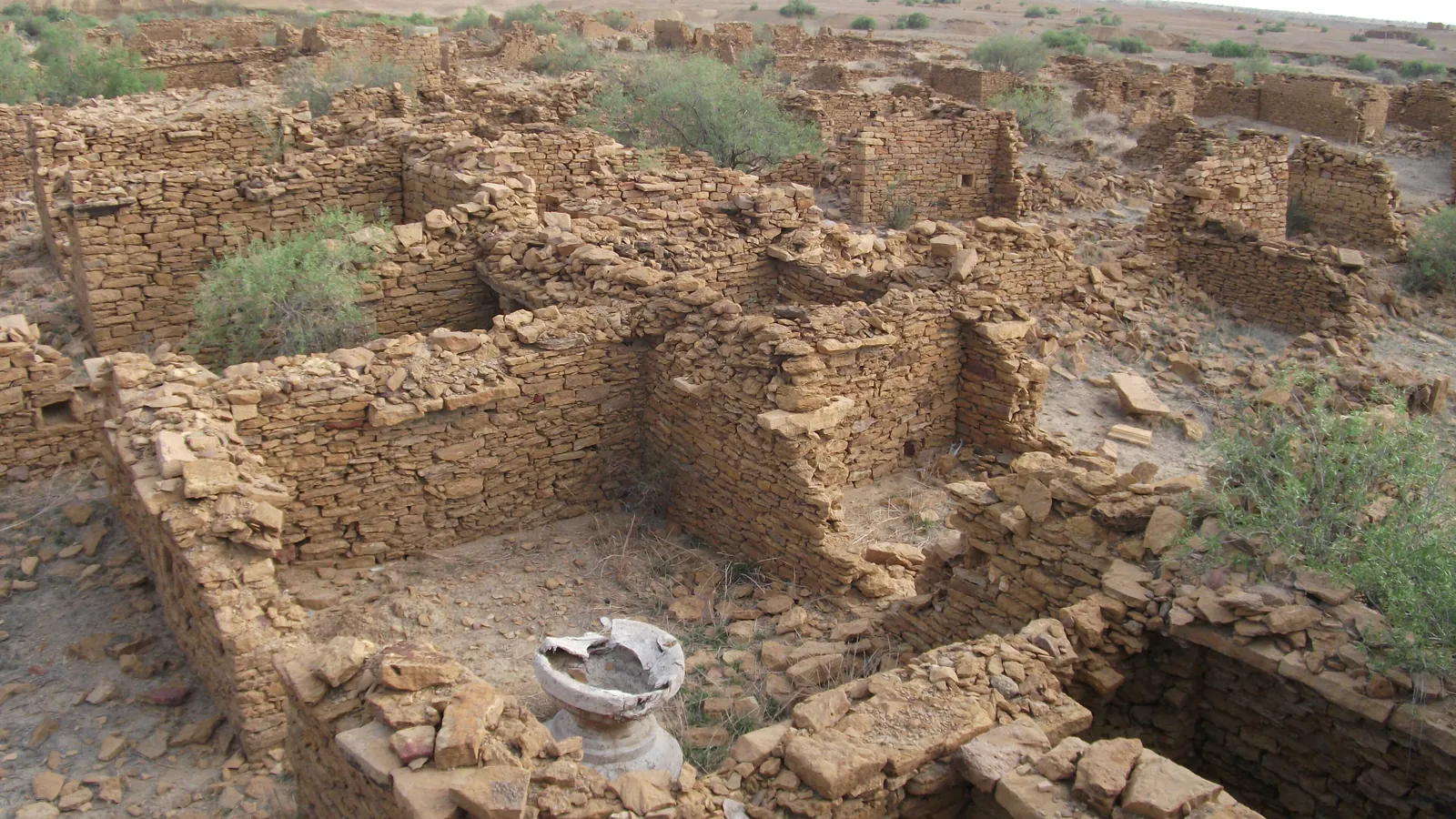
About 18 kilometres from Jaisalmer, rows of roofless sandstone houses stand in silence under the desert sun. Streets are laid out in a neat grid. There are doorways, shelves cut into walls and the remains of a temple. But no one has lived here for about 200 years.
The legend: Kuldhara was one of a group of prosperous villages founded centuries ago by Paliwal Brahmins, skilled farmers who could grow crops in the desert. Around the early 19th century, the story goes, a cruel minister of the Jaisalmer state demanded to marry the daughter of the village chief and threatened heavy taxes if refused. Rather than give in, the people of Kuldhara and dozens of neighbouring villages met in secret, and in a single night they all walked away, leaving their homes, their fields and a curse: nobody would ever be able to live here again.
What historians say: the overnight exodus makes a dramatic story, but most historians think the decline was slower and had practical causes, such as falling water supplies, crushing taxes and possibly earthquakes. What is certain is that Kuldhara was never resettled.
Can you visit? Yes. Kuldhara is a protected heritage site with an entry fee, easily visited on a half-day trip from Jaisalmer, often combined with the Sam sand dunes. It is most atmospheric in the golden hour before sunset. Local guides love to tell the curse story; enjoy it with a pinch of salt.
3. Tanot Mata Temple, Rajasthan: the shells that did not explode
Deep in the Thar Desert, about 120 kilometres from Jaisalmer and close to the border with Pakistan, stands a small temple with a story that soldiers still tell with awe.
The legend: during the 1965 war, the area around Tanot came under heavy shelling. According to the account preserved at the temple, thousands of shells were fired at the area, and many that landed around the temple failed to explode. The soldiers defending the post credited the goddess with protecting them. Some of the unexploded shells are displayed in a small museum at the temple today.
What we know: nobody can verify every number in the story, and unexploded ordnance was not unusual in the conflicts of that era. But the faith of the soldiers is very real. The temple is looked after by the Border Security Force, and jawans perform the daily aarti.
Can you visit? Yes, Tanot is open to visitors and makes a memorable day trip from Jaisalmer, often combined with the Longewala battle site of the 1971 war. Carry identification, as you are close to the international border and further areas require permission.
Visiting at dawn or dusk, when the desert glows orange and the temple bells ring out across the empty sand, is an experience that stays with you. On the way, look out for camels, desert foxes and the occasional chinkara gazelle.
Quick fact: the 1971 Battle of Longewala, fought not far from Tanot, inspired the Bollywood film Border. A small war memorial and museum stand at the site.
4. Bhangarh Fort, Rajasthan: the fort you cannot enter after dark
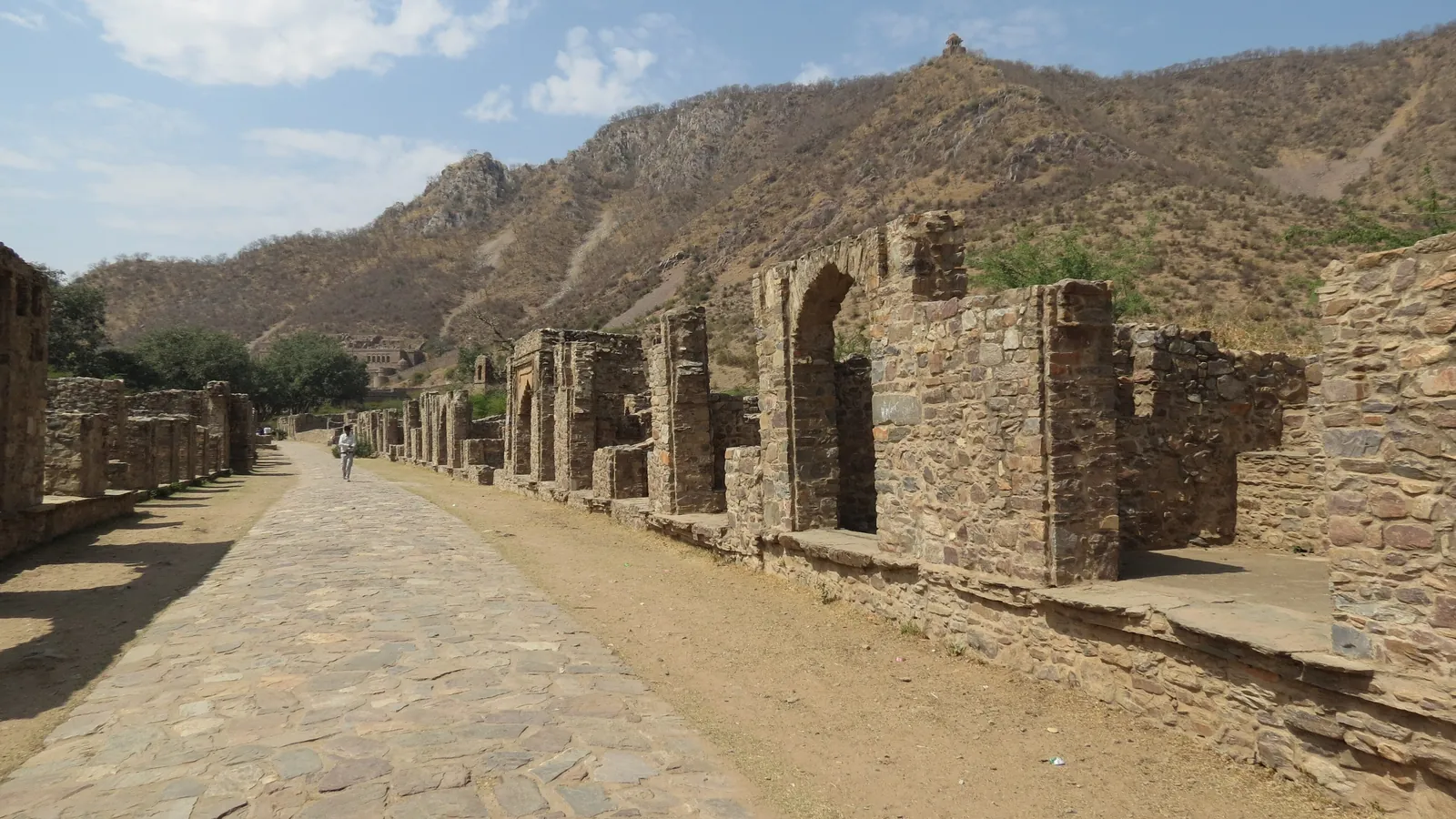
Between Jaipur and Alwar, on the edge of the Sariska tiger reserve, lie the ruins of a 16th-century town: a bazaar lined with crumbling shops, temples, havelis and a palace climbing a hillside. At the entrance, a signboard from the Archaeological Survey of India warns that entry before sunrise and after sunset is prohibited. That sign has made Bhangarh famous as the "most haunted place in India".
The legend: in one version, a sorcerer fell in love with the beautiful Princess Ratnavati and tried to trap her with a love potion. She saw through the trick, and as he died, he cursed the town to be destroyed and left without life. In another version, a hermit named Guru Balu Nath allowed the fort to be built only if its shadow never touched his home; when a later ruler built too high, the town was doomed.
What historians say: Bhangarh was built in the late 16th century by the Kachhwaha rulers of Amer and was gradually abandoned, possibly after famine and the decline of the dynasty's branch that ruled it. The dusk-to-dawn rule applies at many ASI sites in remote areas, mainly for safety and to protect the monuments, although at Bhangarh it has become part of the legend.
Can you visit? Yes, in daylight. Bhangarh is roughly two to two and a half hours from Jaipur. It fits beautifully into a royal Rajasthan weekend; our Neemrana and Jaipur weekend guide covers the route, and our Neemrana Fort Palace Royal Heritage Weekend puts you close by.
5. Lepakshi, Andhra Pradesh: the pillar that does not touch the ground
Just two hours from Bangalore, the Veerabhadra Temple at Lepakshi is a masterpiece of Vijayanagara art, with a ceiling covered in 16th-century paintings and an enormous monolithic Nandi carved from a single rock nearby. But the thing everyone comes to see is one pillar among the roughly 70 in the temple's dance hall.
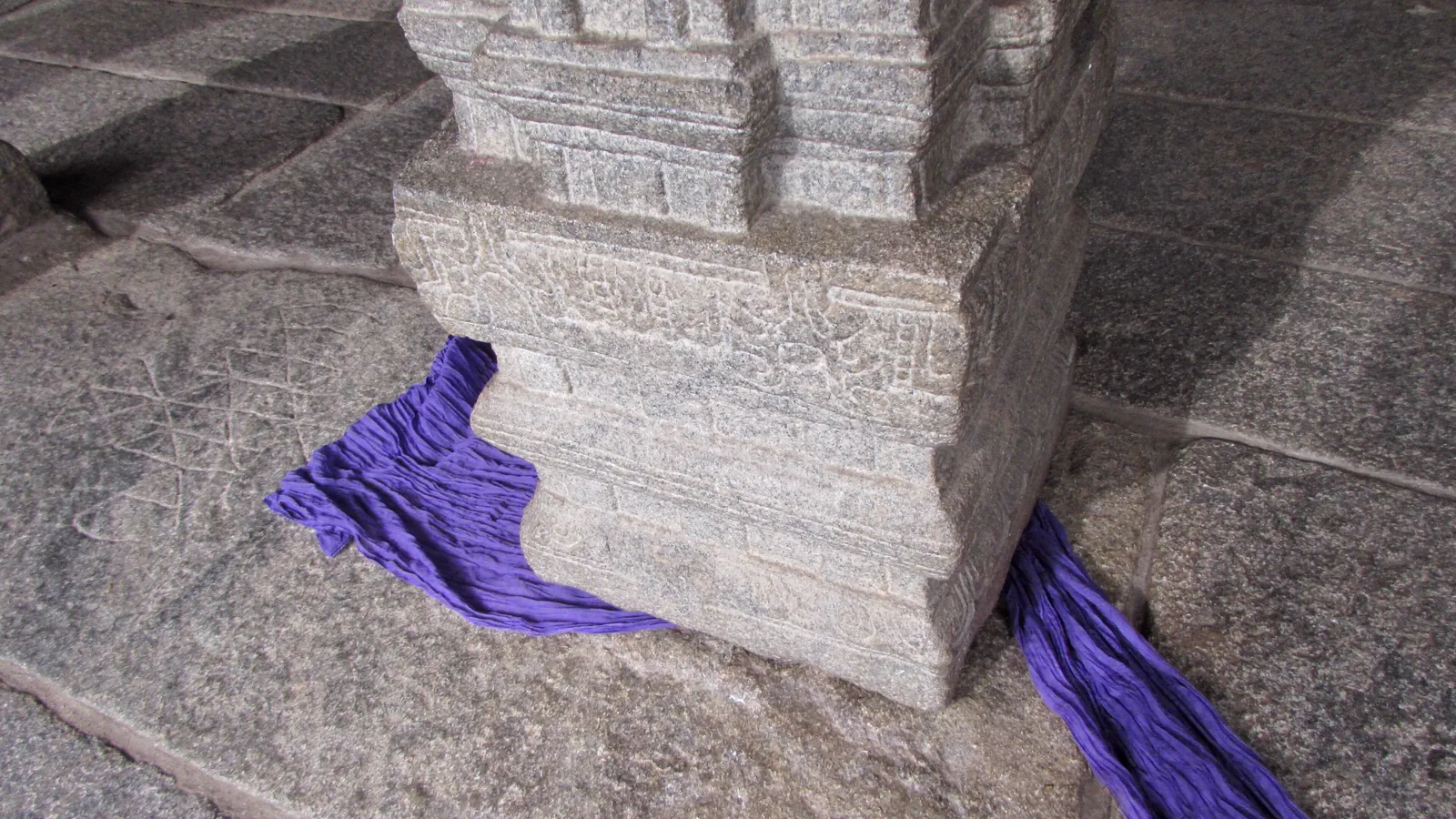
The mystery: this "hanging pillar" does not rest fully on the floor. Visitors slide a thin cloth or a sheet of paper under its base, from one side to the other, and it passes through. Local guides say that during the colonial period, a British engineer tried to discover how the temple roof was supported and moved the pillar slightly, which is why it now hangs.
The explanation: the pillar is most likely a deliberate showpiece of the builders' skill, or a pillar that shifted slightly over time while the roof load was carried by the others. Either way, it is a wonderful demonstration of the precision of Vijayanagara engineers. Please pass the cloth gently: centuries-old stone deserves care.
Can you visit? Yes, easily, as a day trip from Bangalore along the Hyderabad highway. Go early to avoid the heat and weekend crowds, and do not miss the giant Nandi and the unfinished "wedding hall" of carved pillars.
6. Lonar Crater, Maharashtra: the lake that turned pink overnight
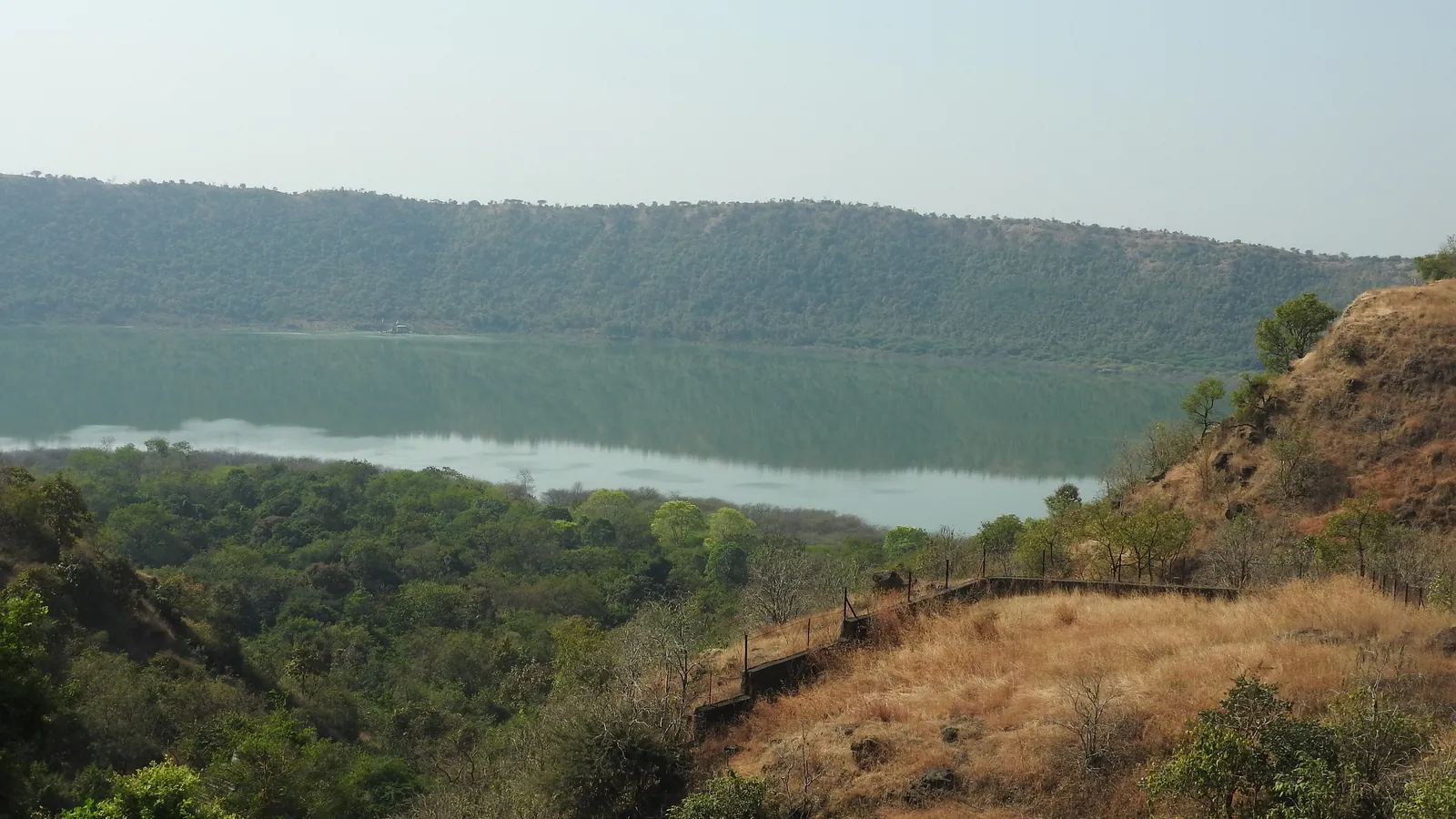
In the Buldhana district of Maharashtra, a nearly circular hollow almost two kilometres wide and well over 100 metres deep holds a green, salty lake surrounded by forest and ancient temples. It was made by a visitor from space.
The science: Lonar was formed when a meteorite struck the earth. It is one of very few known impact craters in basalt rock anywhere on the planet, which makes it precious to scientists who study craters on the Moon and Mars. Estimates of its age vary widely depending on the dating method, from tens of thousands to more than half a million years. The lake water is both salty and highly alkaline, and it supports unusual microbial life.
The mystery that went viral: in June 2020, the lake turned a startling shade of pink, almost overnight. Photos spread across India. Scientists later linked the colour to salt-loving microorganisms, which multiplied as low water levels and heat raised the lake's salinity. Within weeks, the colour faded again.
Can you visit? Yes. Lonar is about four hours by road from Chhatrapati Sambhajinagar (Aurangabad), and it combines well with the Ajanta and Ellora caves. Walk the rim trail down to the lake, visit the Daitya Sudan temple in the town, and look for the small temples scattered around the crater. Lonar Lake is also a protected Ramsar wetland.
7. Jatinga, Assam: where birds fall from the night sky
The mystery: in the hills of Dima Hasao district in Assam, the small village of Jatinga became famous for a strange phenomenon. On certain dark, foggy nights, usually between September and November, birds of many species fly towards the lights of the village and crash to the ground, dazed. For generations, villagers believed the birds were falling from the sky to die, and many were caught and eaten.
The explanation: ornithologists who studied Jatinga concluded that the birds, many of them local species disturbed from their roosts, become disoriented by a combination of fog, strong winds and low cloud on moonless nights, and are then drawn towards lights on the ridge. It is not mass suicide, as it was once described, but a deadly mix of weather, geography and human lights. Awareness campaigns have since helped to protect the birds.
Can you visit? Jatinga is several hours by road from Guwahati and is best visited with local guidance. There is a watchtower for bird lovers. Go to observe respectfully, not to disturb the birds.
8. Karni Mata Temple, Rajasthan: the temple of 25,000 rats
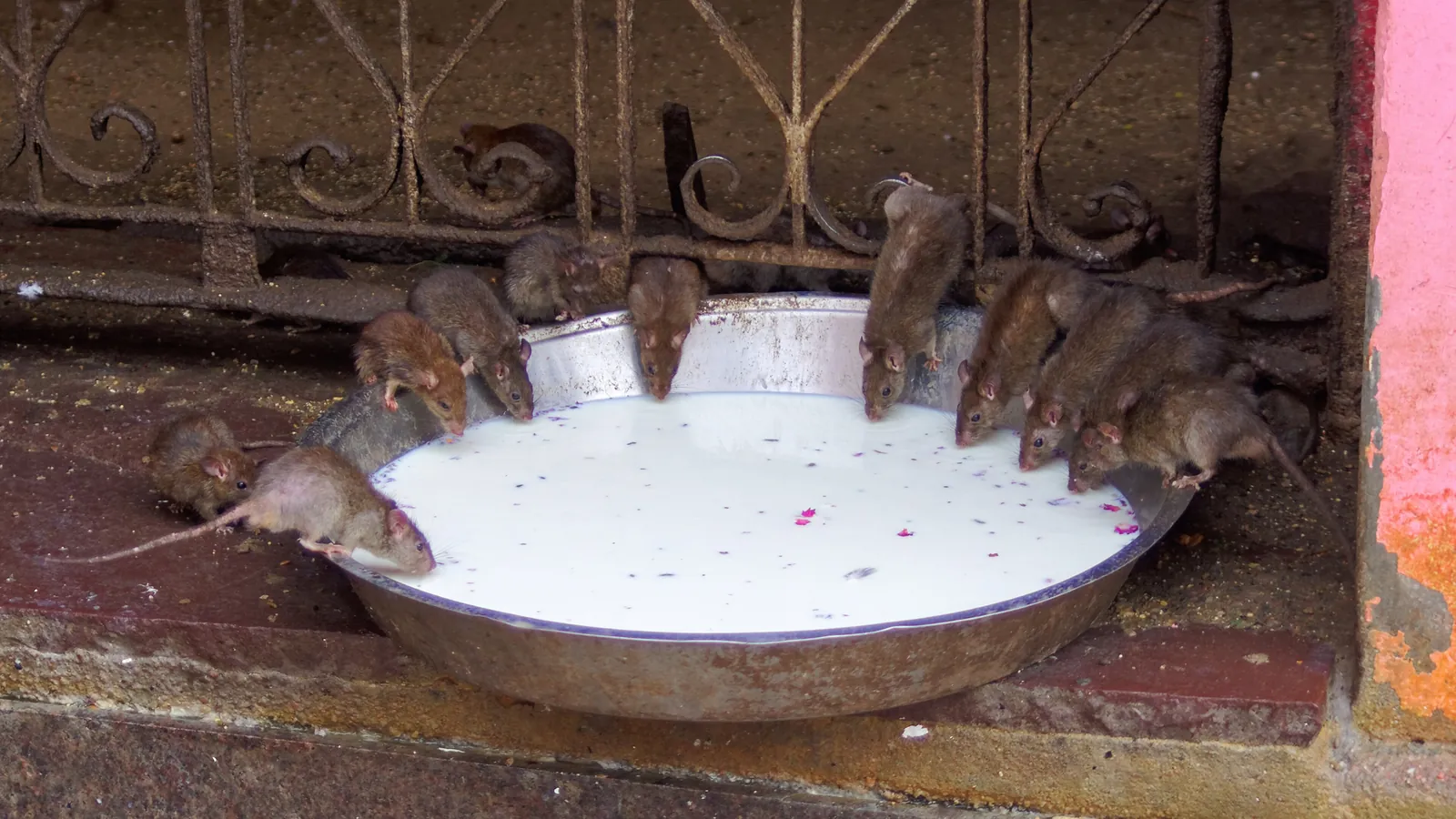
In the town of Deshnoke, about 30 kilometres from Bikaner, a beautiful marble temple with silver doors is home to one of the strangest sights in India: thousands upon thousands of rats, often estimated at around 20,000 to 25,000, running freely across the floors, drinking from great bowls of milk and nibbling sweets offered by devotees.
The belief: the temple is dedicated to Karni Mata, a revered 14th-century sage and an incarnation of the goddess Durga. According to legend, she asked Yama, the god of death, to restore the life of a young boy from her family. The rats, called kabbas, are believed to be members of her clan, reborn. They are protected and fed, and food touched by them is considered blessed.
The luckiest sight: among the thousands of dark rats live a few white ones, believed to be the forms of Karni Mata and her sons. Spotting one is considered very auspicious, and devotees wait patiently for a glimpse.
Can you visit? Yes, easily from Bikaner. You must remove your shoes, so wear socks if you are squeamish. Walking gently is part of the etiquette: harming a rat, even accidentally, is taken seriously.
9. Magnetic Hill, Ladakh: where cars roll uphill
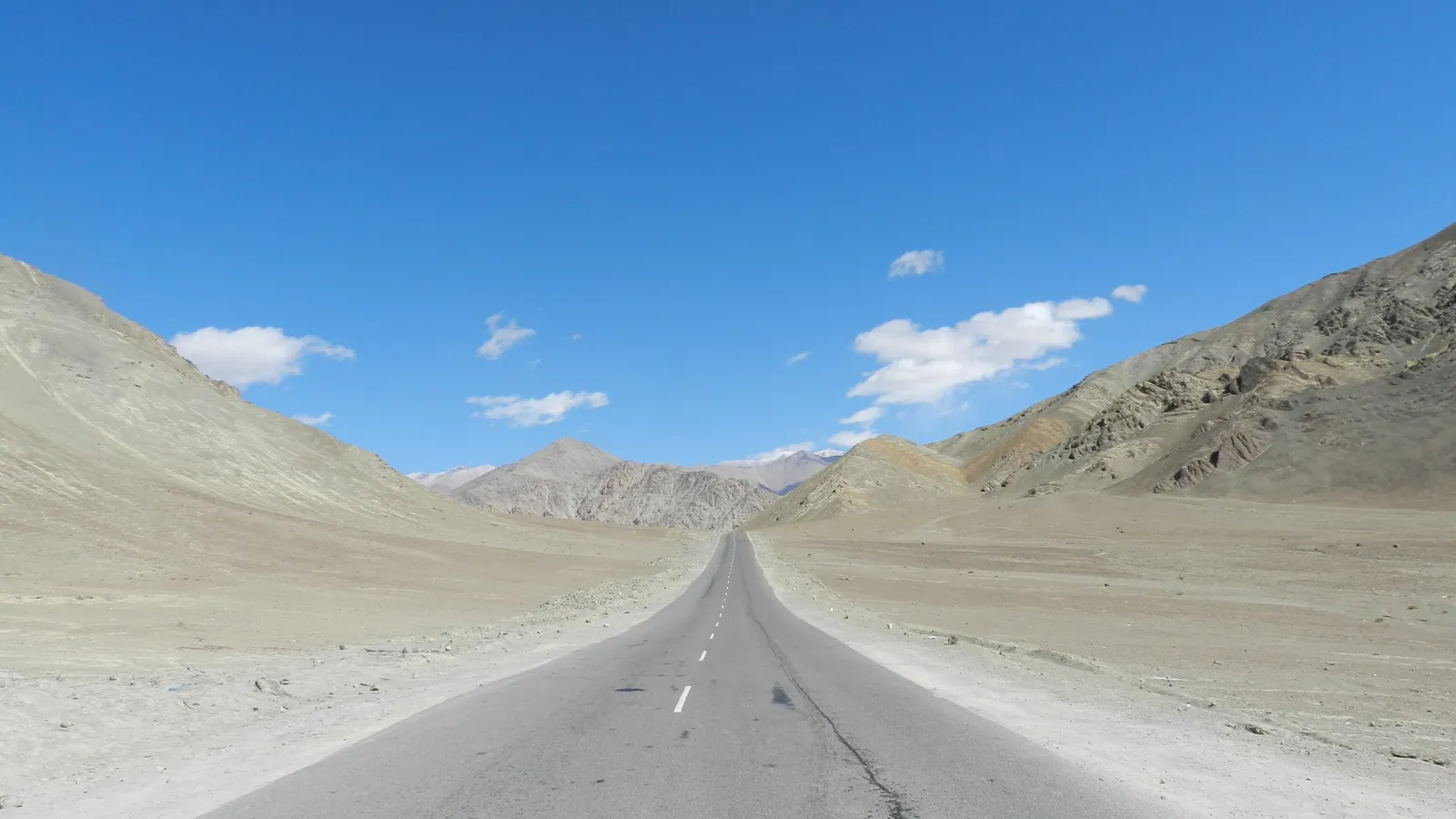
About 30 kilometres from Leh on the highway towards Kargil, a yellow signboard announces "Magnetic Hill: the phenomenon that defies gravity". A box is painted on the road. Drivers stop inside it, shift into neutral, release the brakes, and their vehicles slowly start to roll uphill.
The legend: the hill is said to have a magnetic force so strong that it pulls vehicles upward, and even that aircraft flying overhead raise their altitude to avoid it.
The science: it is a gravity hill, a kind of optical illusion found in many places around the world. The surrounding landscape hides the true horizon, so a road that is actually sloping gently downhill looks as though it is climbing. Your car is rolling downhill after all. There is no magnetic force strong enough to affect cars or planes. Knowing the answer does not spoil the fun: it genuinely looks impossible.
Can you visit? Yes, it is a standard stop on the Leh to Kargil road, often combined with the confluence of the Indus and Zanskar rivers and the Gurudwara Pathar Sahib. Read our Leh Ladakh bike trip guide or ride it with our Leh Ladakh High-Pass Motorbike Expedition.
10. Shani Shingnapur, Maharashtra: the village without doors
The belief: in this village in the Ahilyanagar (Ahmednagar) district, many houses have traditionally been built without front doors, and shops and homes were left without locks. Villagers believe that Lord Shani, whose self-manifested black stone stands on an open platform in the village, protects them, and that anyone who steals will be punished swiftly. In 2011, a bank opened a branch here that was widely reported as India's first "lockless" bank branch.
The reality today: as the village has grown with pilgrim traffic, some newer buildings have added doors and locks, and not every home follows the old custom. But the tradition is still strongly felt, and many homes have only a curtain or a simple frame. The temple itself is unusual too: the deity has no roof over it, and after a long public campaign and a 2016 court ruling, women are now permitted onto the platform alongside men.
Can you visit? Yes. Shani Shingnapur is about 75 kilometres from Shirdi and is often visited on the same trip. Saturdays, the day sacred to Shani, and Shani Amavasya are extremely crowded.
11. Kodinhi, Kerala: the village of twins
The mystery: in the Malappuram district of Kerala, the village of Kodinhi has an extraordinary number of twins. Local surveys have counted hundreds of pairs among a population of a few thousand families, a rate several times higher than the national average. Walk past a school at home time and you may see pair after pair of identical faces. The village even has an association for twins and their families.
What science says: researchers from India and abroad have collected samples and studied diet, water and genetics, looking for an explanation. So far, none has been conclusively proven. Some think a genetic factor in local families may play a role, but Kodinhi remains one of the genuine unsolved puzzles on this list.
Can you visit? Kodinhi is a normal residential village, not a tourist attraction, so any visit should be respectful and low-key. Please do not photograph children without their parents' permission.
Plan a road trip to the mysterious places in India
| Place | State | Nearest base | Best time |
|---|---|---|---|
| Roopkund | Uttarakhand | Lohajung | May to June, September to October (check access rules) |
| Kuldhara and Tanot | Rajasthan | Jaisalmer | October to March |
| Bhangarh | Rajasthan | Jaipur or Alwar | October to March |
| Lepakshi | Andhra Pradesh | Bangalore | October to February |
| Lonar Crater | Maharashtra | Chhatrapati Sambhajinagar | July to February |
| Jatinga | Assam | Haflong | September to November |
| Karni Mata | Rajasthan | Bikaner | October to March |
| Magnetic Hill | Ladakh | Leh | May to September |
| Shani Shingnapur | Maharashtra | Shirdi | Year-round, avoid Saturdays if you dislike crowds |
Three mystery itineraries
- The desert circuit (5 to 6 days): Jaipur, Bhangarh, Bikaner and Karni Mata, then Jaisalmer with Kuldhara, the Sam dunes and Tanot.
- The Deccan weekend (3 days): Shirdi and Shani Shingnapur, then Lonar Crater, and the Ellora caves on the way back.
- The Bangalore day trip: Lepakshi and its hanging pillar, with lunch on the highway and home by evening.
How to visit mysterious places in India responsibly
- Follow the rules. If a site closes at sunset, it closes for good reasons. Never try to sneak into Bhangarh or any protected monument after dark.
- Respect faith. Places like Karni Mata, Tanot and Shani Shingnapur are active places of worship. Dress modestly, remove shoes where asked, and do not mock beliefs.
- Protect fragile heritage. Do not scratch names on walls, remove stones or bones, or climb on ruins.
- Respect people. In villages like Kodinhi and Shani Shingnapur, people live ordinary lives. Ask before taking photos.
- Stay safe. Remote sites have little mobile signal and few facilities. Travel in daylight, carry water, and tell someone your plans.
Why mysteries make the best journeys
The best travel stories are rarely about a hotel, and that is exactly why the mysterious places in India stay with you long after the trip. You remember the moment you slid a cloth under a 500-year-old pillar, or watched your car roll "uphill" in Ladakh, or stood in a silent desert village and wondered where everybody went. Mysterious places make you curious, and curiosity is the best travel companion there is.
If this list has made you want to see India differently, read our guide to unreal places in India that look like another planet, or browse all our tours and weekend getaways. And if you know a friend who cannot resist a ghost story, send this to them.
Frequently asked questions
What is the most mysterious place in India?
Roopkund in Uttarakhand is often considered the most mysterious, because DNA studies showed its skeletons came from different groups who died centuries apart, including people with eastern Mediterranean ancestry. Kodinhi, the village of twins in Kerala, is another genuinely unsolved puzzle.
Is Bhangarh Fort really haunted?
There is no evidence that Bhangarh is haunted. It is a 16th-century town that was gradually abandoned, and the Archaeological Survey of India prohibits entry between sunset and sunrise, as it does at many remote monuments. The legends make it famous.
Why do cars roll uphill at Magnetic Hill in Ladakh?
Magnetic Hill is an optical illusion called a gravity hill. The surrounding landscape hides the horizon, so a road that slopes gently downhill appears to climb. Vehicles are actually rolling downhill.
Why did Lonar Lake turn pink?
In June 2020, Lonar Lake turned pink because salt-loving microorganisms multiplied as low water levels and heat raised the salinity. The colour faded again within weeks.
Can you visit Kuldhara at night?
Kuldhara is a protected heritage site that is visited in daytime. It is most atmospheric around sunset. Follow local rules on opening hours and do not enter after closing.
Does the Lepakshi hanging pillar really float?
The pillar does not rest fully on the floor, so a thin cloth can be passed underneath it. It is most likely a showpiece of Vijayanagara engineering or a pillar that shifted slightly over time while the roof is carried by the other pillars.
Is Roopkund trek open?
In recent years, court rulings and forest regulations have restricted camping on high-altitude meadows and access to Roopkund Lake. Check the latest rules with the Uttarakhand forest department before planning.